
EPISODE · Jul 28, 2025 · 51 MIN
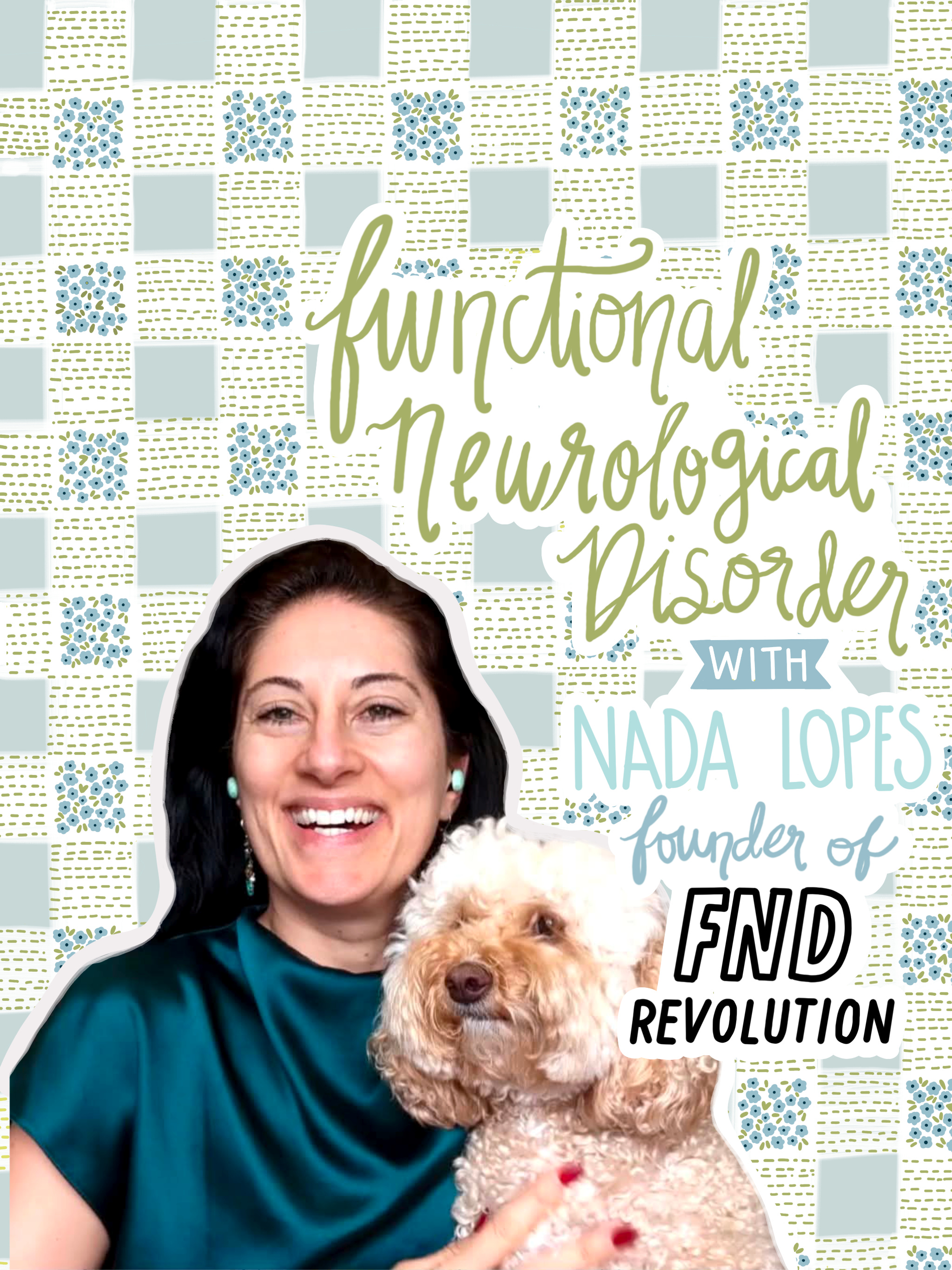
Functional Neurological Disorder
from Fem & STEM Podcast · host JoCee
Special Thanks to Dr. Ingrid Hoeitzauer who was played on this episode in her appearance on the Podcast Neuropodcases, I highly recommend you listen to the full thing. She was also one of the authors on the research paper Functional Neurological Disorder is a Feminist Issue by Caoimhe McLoughlin et. alI thought I was a good feminist.I knew about hysteria—the infamous “women’s disease” from centuries ago. I knew it was rooted in the Greek word hystera, meaning womb. I knew that ancient physicians believed a woman’s uterus could literally wander around her body, causing madness, seizures, fainting spells, paralysis, or anything “hysterical” or “dramatic”I knew about the horrifying treatments—ice baths, institutionalization, hysterectomies, the obsession with sex and doctors treating hysterical patients by providing sexual relief and even invented the vibrator as one of their tools for this.I knew that the diagnosis was used to dismiss, silence, and abuse women who didn’t conform—women with trauma, with opinions, with symptoms no one wanted to understand.And I thought the story ended there. I thought that when hysteria was finally removed from medical textbooks in the 1970s, it was a victory. That getting rid of this sexist label meant we’d moved on—that the disease had been discredited, exposed as the patriarchal invention it was.But I was wrong.Because while the word “hysteria” disappeared, the patients didn’t. The symptoms didn’t. The suffering didn’t.What I didn’t know is that hysteria never went away. It wasn’t a fake disease, it was real.Today, it’s called Functional Neurological Disorder—or FND.And this rebranding from hysteria to FND, hasn’t erased the stigma. If anything, it’s made the condition easier to ignore. The same sexist history that shaped hysteria continues to haunt FND. And now, both women and men with this condition are being dismissed by a medical system that still doesn’t fully understand it—or take it seriously.So what is FND?FND is a neurological condition where the brain struggles to properly send and receive signals from the body. People with FND can experience seizures, paralysis, numbness, tremors, vision or speech issues—even memory loss. But unlike stroke or epilepsy, these symptoms don’t show up on typical brain scans. There is nothing physically wrong with the body.And that’s a confusing but fundamental part of this disease: FND is inconsistent. This inconsistency doesn’t just happen, it’s part of the diagnosis. It is the disease.A person with FND might be unable to walk but they can run. They can’t move their arm until they close their eyes. Of someone can’t walk but they can use thier legs to drive just fine.These inconsistencies don’t follow the laws of physics or the patterns we expect from other diseases. And these inconsistencies are admittably confusing which has historically led doctors, families, and society to doubt people with FND—to accuse them of faking, exaggerating, or just being “hysterical.”One example that really drove this home for me is how FND symptoms can be inconsistent even with the laws of physics. Take vision loss, for instance. Someone with FND might describe seeing through a tunnel—like the edges of their vision have just disappeared, leaving a perfectly circular “tube” of sight.But that’s not how human vision works.Our visual field is shaped like a cone, not a cylinder. So if someone were losing vision due to a problem with the eyes or the optic nerve, it wouldn’t fade into a tunnel—it would blur or darken in a cone-shaped pattern from the periphery inward. The problem lies in how the brain is interpreting visual signals—not in the eye itself.FND is what happens when the software of the brain glitches, not the hardware. There is no physical damage. Brain signals just aren’t working as expected, arent’ triggering the correct response.That’s why someone with FND might be unable to walk—but can suddenly run. Or why a limb might seem paralyzed in one moment, but move effortlessly when the person is distracted. The brain’s normal motor pathways are still there—they’re just not being accessed correctly.Because it doesn’t follow the “rules” of traditional neurology, FND has long been dismissed as a psychological problem. But psychology didn’t know what to do with these patients, they considered this a neurological problem and tried passing these patients back. so FND was left out of both fields and dropped entirely.Today, FND is rarely researched, rarely funded, and in many places, not even recognized. In the US you won’t get disability insurance for FND. Right now, there are only 10 clinical trials underway for FND compared to hundreds for epilepsy or Parkinson’s.And yes, women are disproportionately affected—as they are with so many poorly understood conditions. Around 70% of FND patients are women. Some of that may be biology, or social conditioning since women just go to the doctor more, but this is also because of truama. Major traumatic experiences such as sexual assault is a known major risk factor for FND, an experience that is more prevalent in women.And I know what some people will say about that “If trauma is a risk factor, shouldn’t men who return from the horrifically traumatic experience of war also get FND at a higher rate.”And I’m glad you point that out, because what is Shell Shock, if not these same symptoms. Because of the sexist history of FND, doctors might be reluctant to diagnos men with a woman’s disease — FND. So men aren’t getting treatment or support either — an example of how these patriarchal systems hurt men as well.So FND isn’t just a medical topic, this is a feminist topic.Because the way we’ve historically talked about this disease reflects the way we’ve talked about women’s bodies. As mysterious. Unstable. Emotional. Dangerous. Hysterical. And when those narratives take root in medicine, and systems are built around these beliefs, it causes ripple effects to today.But there is a bright note here — things are starting to change. FND is getting more funding then before, but still not enough, but more, and FND is back in medical textbooks. Some even say, we’re in a bit of a “second wave” of FND awareness. I mean if you want to understand the software of the brain, then this disease where the software doesn’t work is probably the best place to start right?But also, more doctors are learning how to diagnose it, more researchers are studying it, and more patients are finally being believed. And this not just because of new current interest in the brain, it’s because more women are becoming doctors, and female doctors do believe female patients. A win for everyone.FND reminds us just how fragile our cultural definitions of health, womanhood, and legitimacy really are.….-JoCee This is a public episode. If you would like to discuss this with other subscribers or get access to bonus episodes, visit femstem.substack.com
NOW PLAYING
Functional Neurological Disorder
No transcript for this episode yet
Similar Episodes
Mar 26, 2026 ·1m
Jan 2, 2026 ·47m
Dec 21, 2025 ·46m