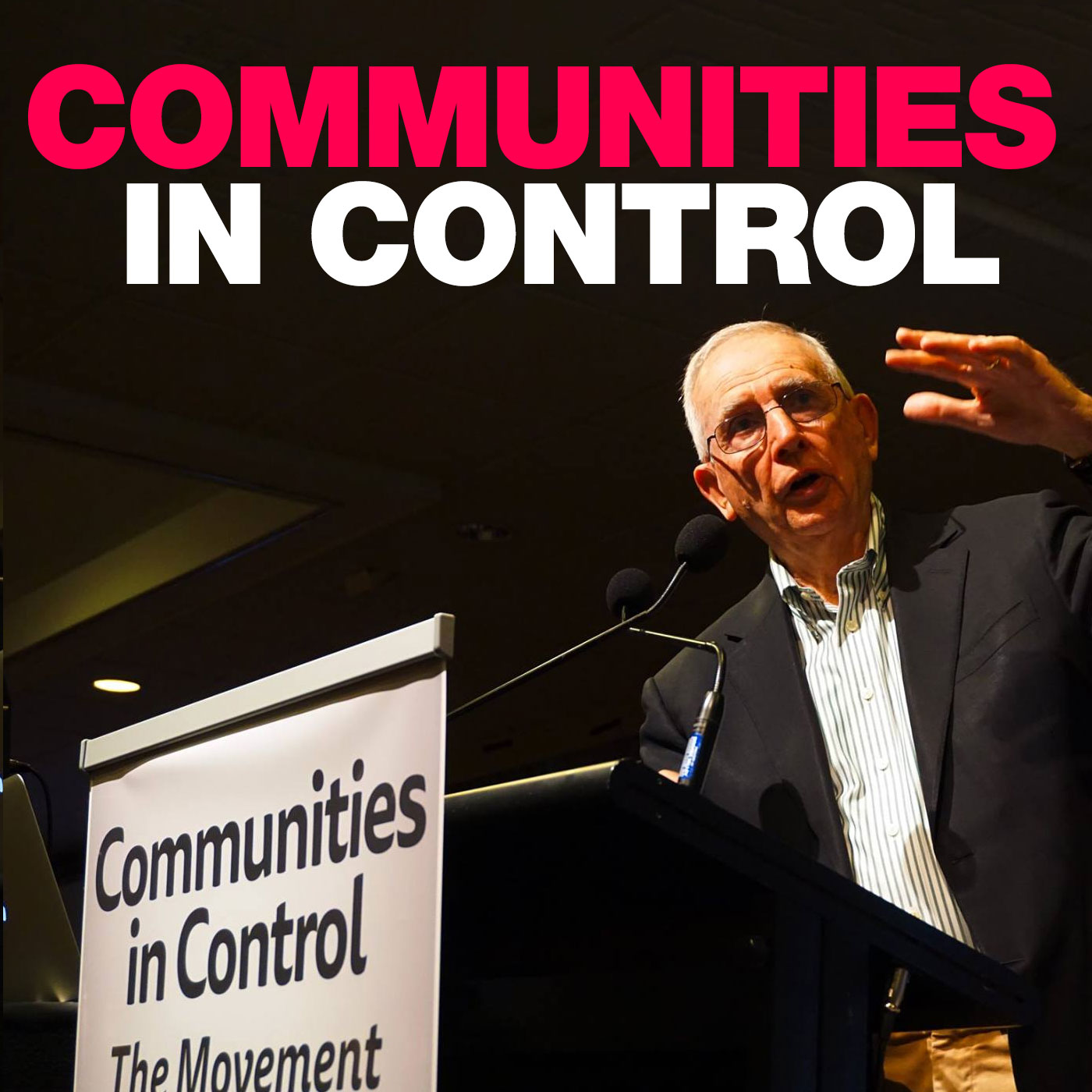
Here's another inspiring speech recorded at Communities in Control, Australia's biggest and best annual community sector gathering. As Cathy said, I am coming to you from my home in Sydney and I would like to acknowledge the traditional owners of the land who are the Cameragal people of the Eora Nation and I would like to pay my respects to their elders past, present and emerging. Now, I also have to say that I have happily just received a negative COVID test, my first COVID test for 2020. It's the first time I've been sick this weekend, but it actually makes me very grateful that this event is virtual for some of us because it means I can still speak to you without giving you any of my yucky germs.
So, yeah, as Cathy said, at age 24, my life was pretty rosy. It was almost a little bit of a cliche, I would say. I had six years of study behind me. I had moved to Sydney. I was in a plumb job as a junior solicitor in the city. I was living with a lovely boyfriend. I had lovely friends and the world was seemingly at my feet. From the outside, it definitely looked charmed. But from the inside, it was not. I was really miserable and I was chronically ill. I was panicked and strung out and I was determined to not be any of those things.
For 12 months, I ignored the worsening symptoms of my Crohn's disease. Crohn's disease is an autoimmune condition and it is very unpleasant. It is probably the most polite way of describing it is that it's a bit like having barley belly, but without the nice holiday in barley. And there's no cure. So give or take nasty medication. It is pretty permanent.
So when I was diagnosed with Crohn's at 19, I was a university student and I was determined from that moment that I would not let it interrupt my life. I went to all my doctor's appointments and I took all the medication, did all of the treatments, all of the procedures, but I was determined that my health would exist in one corner and the rest of my life would exist over here and that they would never need to meet. And for years I thought that approach worked, but then it didn't. When I moved to Sydney and started working full-time, my Crohn's disease got considerably worse. I was very, very anxious all the time. I was in a heightened state of stress all of the time. And emotionally and physically, I was really struggling. And I sort of woke up day after day and just kept pretending I was okay. And I thought that if I pretended for long enough that I was okay, I would be okay.
but I wasn't. And it came to a head one night when I fell over in my office with a spell of vertigo and it happened really quickly. And I assumed that I would feel better, you know, the next morning, but I didn't. The vertigo gathered momentum and within a few weeks, my life had crumbled around me and I experienced a full-blown nervous breakdown. I spent the next four months in bed, in and out of hospitals, unable to function because of this debilitating dizziness. I had a migraine. I was nauseous. I was unsteady on my feet.
I took an extended period of leave without pay from work, which I knew I was incredibly lucky to even have the option of doing. I moved back in with my parents in northern New South Wales because I couldn't look after myself. And the tiny apartment that I shared with my boyfriend was not suitable for another person to come and live with me. So I moved in with mum and dad. And while I absolutely adore my mum and dad, living on their couch wasn't really where I'd envisage myself at age 24. That's where I was. My head was spinning and my world went with it.
Over the next four months, I saw five GPs, two ear, nose and throat specialists, three neurologists, three gastroenterologists, a gynaecologist, a physician, a counsellor, an acupuncturist, a naturopath, a yoga guru, osteopath, a dietician. I told and retold my story over and over. I had an MRI, an MRA, I had a CT scan, colonoscopies, audiology tests, neurological assessments, blood tests. I was on every different diet in order to man. I was sugar-free, gluten-free, dairy-free, salicylate-free, alcohol-free, caffeine-free. And I was almost all of those things at the one time, which you can imagine was pretty boring. But there was no answer. I was still so dizzy and I was as terrified as ever. With every day and week and then month that passed, my mental state deteriorated. I became increasingly anxious and developed depression.
I was unable to make sense of what was happening and who I was. One day it seemed that I was an ordinarily functioning member of society and the next I was being admitted to a psychiatric hospital. How did it happen? What went so wrong? These were the questions I examined forensically when I was admitted to a psychiatric hospital and they were subjects I returned to regularly in the months, weeks and years afterwards. My breakdown quickly became a landmark in my life that I couldn't and didn't want to forget.
The phrase nervous breakdown is not used in medicine anymore and there is no agreed upon medical definition. It is an umbrella term that describes a period of intense mental distress where physical and emotional stress becomes intolerable and it impairs a person's ability to function effectively. That description matches my experience sufficiently well for me to say with confidence that I suffered a breakdown. And it didn't happen because I had a traumatic childhood or because I suffered from abuse or endured anything ghastly. I didn't fall apart because I had a nasty autoimmune condition or because I was working around the clock in a highly competitive legal environment. It didn't happen because I was a natural born warrior. I didn't even fall apart because I had anxiety. I fell apart and suffered a breakdown because I did not cut myself a break ever about anything, not about my health, not about my work, certainly not about my mind. The consequences of this habit accumulated over time and were eventually devastating. I unraveled physically, mentally and emotionally. Knowing how lucky and privileged I was only proved to be corrosive.
I believe that because I had been so lucky in so many of life's lotteries, I had no justification for struggling or suffering. The turning point for me came when I saw a very kind 70-year-old physician. When I went to the appointment, I had no expectations. For four months, I had been to so many appointments and had tests and pinned my hopes on this person being able to give me an answer or give me a solution or just give me hope. But it hadn't happened. And so I arrived at this appointment with no expectation that this would amount to anything. But this appointment was different.
He read the bundle of papers in front of him, all of the referrals that I had, all of the medical assessment tests that I'd had, all of the blood test results. And he looked me in the eye and he said, Georgie, I'm so sorry for what you are experiencing. It's really awful. And that sentence alone was enough to almost make me cry because it was the most compassion I had felt from a health professional throughout my difficult period. And he said, this vertigo was my body's way of telling me something. He said, in his experience with nearly 50 years of treating patients, he said, unexplained physical symptoms are always a symptom of stress. He said, Dodgy, I'm not saying this isn't happening. It is happening. It's real. But I think we need to explore the impact that stress is having on your body. And like when other doctors had asked if I was feeling stressed or anxious, when he said this, I didn't want to scream at him and say, of course, I'm feeling stressed because I'm 25 and I haven't walked properly for months. This time I listened and I knew it was true.
I resigned myself to the fact there was no magical cure for my spinning head. Up until that point, I believed I was losing my mind because I had lost my body. Ironically, I was losing my body because I had lost my mind. Now, this physician suggested that I see a psychiatrist very quickly, as in the next morning, and that I begin medication for anxiety as a starting point, but also that I consider having a stint as an inpatient in a psychiatric facility. Now, when he said that, the fact that I felt relief.
was very compelling to me that I needed to be in a psychiatric facility. Because even just four months earlier, when I had that first spell of vertigo, the idea of calling the office and saying that I needed a sick day was enough to make me retoil in fear. I hated having to take a day off work because I was sick. And now I was being told that I needed to spend time in a psychiatric hospital. And rather than feeling afraid, I felt relief because I knew that that's what I needed to do. I needed to go somewhere. Something had to change because what I was doing wasn't working.
So I went to a psychiatric hospital. I spent two weeks as an inpatient in a facility and it was the most difficult experience of my life, but also the best thing I could have done because I was immersed in care, the kind of care that I needed, psychiatric care, psychological assessments and support. I was put on medication. I took part in group therapy. I learned a lot about anxiety and depression and about perfectionism. And slowly the dizziness started to subside. And within a few weeks, I felt like I had disembarked this boat ride from hell.
It wasn't that I started taking medication one day and woke up the next day feeling better. It wasn't that fast. But I started taking medication and I started doing therapy. And I realised what I needed to do and my life started to feel different. My idea of a successful day went from surviving an 18-hour day in a law firm, escaping the wrath of pathological partners without bursting into tears, to washing my hair and getting out of my pyjamas. After my stint in the hospital, I moved back to Sydney and I eased myself back into life. I resigned from a law firm. And when I called to resign, I didn't lie. I said to the partner,
I explained to him that I had been in a psychiatric facility, that I was being treated for anxiety. And that for me, working in that environment was not going to be sustainable with trying to look after myself in the way I needed to do. The fact that this all sounds cliched makes it no less effective. Escaping the clutches of anxiety that had escalated from moderate as a teenager to major as a young adult was unbelievably liberated. I came to recognise the expectations, the relentless expectations I had wielded over myself. And for the first time, I rested myself free from them. I came to understand that I was essentially a battered mind.
I was uncompromising in feeding myself a constant stream of fiercely negative feedback. I learned the hard way that there was no reward for this habitual criticism. I had to dismantle the pattern and the difference was life-changing. It didn't take me long to recognise how I had landed where I did. I had been living in denial of my health. I was dogged in pursuing what I thought I ought to be doing with little regard to what I wanted to be doing and what was working for me. So after my breakdown, I had to rebuild my life and I did it this time with stronger foundations based on who I was and what I actually wanted.
and an appreciation of what I could reasonably expect. As Cathy said, now these days I work as a journalist and a speaker. I suppose lately I would describe myself as a troublemaker with a capital T. The credible women hashtag that Cathy referenced is a point that came about after I received a phone call from the Prime Minister's office the day after the budget was handed down. And they were disappointed that I was critical of the budget failing to deliver for women. And I was told, when I suggested that lots of people were making that remark, making those comments, I was told that no one credible was. And so behind the scenes, I set up a little private chat with a number of different highly credible women.
who were making similar comments and it ended up becoming the number one trending hashtag on Twitter for about 24 hours. And the reason that I reference that now is because the life that I have now as somebody who does speak out, who works hard and does make trouble, I wouldn't have been able to have this life with the 25 version of myself because the 25-year-old version of myself was terrified. For me, ultimately, living with anxiety was living with fear every single day. Not rational fear, irrational fear. It was pervasive and it was impossible to escape.
And despite the years that have passed since that time, so I'm 38 now, so this happened 13 years ago, I can still remember so vividly the hopelessness that I felt at that time, the shame I felt that I had fallen apart. I can remember how desperately alone I felt. And I felt alone despite the fact I wasn't alone. I had the love and support of family and friends who were able to be with me mentally and physically. But I felt like I was alone because it didn't feel like anybody else understood what was happening to me. No one knew how isolated I felt. No one knew how difficult I found each day and how much I detested myself for finding those days difficult because I was so aware of how privileged I was to even be having a period out of the workforce where I was able to be with my parents and not worry about how the bills were going to be paid because I had a safety net.
And the thing is, after my nervous breakdown, I did begin writing about it anonymously at first, but about two years after the breakdown, I wrote quite a long piece that was published on a women's website and it went viral. And there were about a hundred comments on it within 24 hours. And what struck me was that so many of the comments were from people who had experienced something similar to what I did, that they had fallen apart, that their physical and mental health had collided in a way that was not sustainable and they couldn't function. But what I found so fascinating was that we don't see that. We don't see these breakdowns that people have. And there's a good reason for that because when you're in the middle of having a breakdown, you don't have capacity to share that. It's not something that you can easily talk about. But since that very first time I started writing about it anonymously and then speaking about it and then last year writing my book about it, there is not a week that goes by where I'm not contacted by someone who has read either my book or something that I've, one of the pieces that I've written online and has said that they are going through something similar right now. And that was even before COVID hit.
And I think we know that not everyone will land themselves in a psychiatric hospital because of falling apart. But most of us will encounter something that's difficult in life. Lots of us will encounter something that feels like a breaking point where we have the wind knocked out of us. And for some, the aftermath of that isn't fleeting, but it's lonely and it's difficult. And it is often invisible because it's not an experience you can talk about at the time.
And yet I have this image in my head all the time of the number of people that are at this very moment, whether it's their daughter or their grandson or their niece or their nephew or the work colleagues that they have and love and can't help. I think about how many people there are every single day that are struggling and struggling in a way that's difficult to define. It's difficult to describe because it doesn't feel fair. I know it didn't feel fair to me when I broke down. I felt guilty for breaking down because I knew how lucky I was. I had been dealt so many solid hands.
And so I suppose that's why I talk about what happened to me and why I always will, because I think that what I learned is that it is possible to break even really badly. And it is possible to feel like you won't ever be healthy or happy again and you will recover. And the good and the bad news is that there probably isn't a single pill or guru who can make it all better. It's really unlikely. I'm afraid that there's a single, you know, acupuncturist or diet or yoga guru who can just resolve the turmoil that you might be experiencing. If there was, I would like to have thought I would have found him because we were trying really hard, him or her.
But what I learned was that the stint in the trenches won't necessarily last forever. And there is and there will be light at the end of the tunnel, even if right now you don't believe that. And my hope is that by being totally honest about falling apart, others will know that they're not alone if and when it happens to them or if and when it happens to their children or their work colleagues. So there's a couple of quick little lessons that I often talk about when I explain how I went from being someone who was one day functioning to the next being admitted to a psychiatric hospital and then being able to rebuild a life.
The first one is that in my experience, the drugs, the medically prescribed drugs do help. Now, I'm not a medical professional, not a health professional. I've got absolutely no qualifications. So please don't. I'm sure you would not consider this medical advice. But what I will say is that for a long time, I was very reluctant to believe that medication could change the way a person feels. Now, in hindsight, I think it's quite funny that someone without any scientific qualifications felt qualified to say that a particular medication could never work because I had no idea. But for me, starting medication was a circuit breaker.
And I know that for lots of people, it can be a circuit breaker that other things can't be. And so my advice to anyone who is feeling that not just having a bad week, but feeling like nothing they ever do is good enough or enough and that every day feels more difficult than easy, then it is worth speaking to a medical professional because it might be worth having a conversation about some time on medication if that is the right thing for you. I'm still surprised actually to this day that because I did write a chapter on this in my book and it is one of the things that a lot of people still say to me that they felt like it gave them permission to go and ask for this help and that it's not a sign of weakness that if you are struggling with a mental health condition seeking help is not a weakness it's actually a strength and I know that that paradigm can feel very different to that but that is worth trying. The second thing that I learned in my breakdown was that professional help helps.
Again, I think that before I had my breakdown, I sort of had this image in my head of what it might be like to go and see a psychiatrist or a psychologist. And again, the stumbling block in my mind was how could talking to somebody help you feel better? And what I didn't realise was that psychologists and psychiatrists have got a number of different quite practical tools and exercises that they can take you through that might help you change some of the... toxic habits that you might be in. Because certainly for me, as somebody with anxiety, but also with perfectionism, I was constantly berating myself. And I didn't realize that there was another way to be. I didn't know there was another option. But through fairly intensive psychological help, I was able to master cognitive behavioral therapy. I mean, it's a work in progress. But what I found was that seeing a professional and committing myself to the therapy that they wanted me to.
complete made a huge difference. One of the smallest tricks that I was taught when I was in the rehab facility was that each night, just before I went to sleep, when I put my head on the pillow, I had to think of three things that made me feel something positive that day. And they could be very small, but the point was to try and start falling asleep with a different framework. So not going to sleep and thinking about the phone calls that you didn't make or the emails you missed or the person you might've offended 10 years ago or the person that you've upset that day, but instead think about something that made you feel good. And it was this small little habit, but I started it. And I don't think, I think it probably was about 18 months before I stopped consciously doing that exercise each night when I went to sleep. And for me, it was such a small habit, but it made a huge difference because I found very quickly that the next day, my mind wasn't scanning for things I'd done wrong or done badly, but I would actually scan for things that made me feel good. And whether it was just making someone laugh or whether it was sitting down and having a gorgeous coffee, something small, but if it made me feel good, that's what I tried to focus my mind on.
so again if you are someone that's finding life difficult or you've got people in your life who you know are finding life difficult professional help is a great place to start and again it requires a little bit of a paradigm shift that seeking help is not a weakness it's actually a sign of strength and one of the things that I often say to people is that I know seeking help can be really difficult. I know myself that even though I had the breakdown that I did many years ago, I still have troubles. And I know there was a time about four years ago where I wasn't in a good place and I really knew that I needed help, but I really didn't want to tell my GP that I was struggling because I liked my GP thinking that I was a competent mother of three who was looking after herself and looking after her children.
And I did have the difficult conversation. And afterwards, you know, I remembered how hard it is to make yourself vulnerable. And I say that as someone who knows firsthand the incredible value that you can get from seeking help. And what I always try to tell myself and say to others that no matter how hard it feels to ask for help, I promise it's easier than not getting help. Because living with untreated anxiety and living with an unsustainable level of stress in your life is much harder than it is to seek help. So it's hard, but try, be vulnerable. And I promise there is strength in showing that vulnerability.
The other lesson that I learned was that perfectionism is not a humble brag. It's toxic. I grew up, like lots of people, I think, believing that saying that you're a perfectionist was sort of shorthand for saying, I've just got fantastically high standards and I'm really good at doing all the jobs I do. That's not actually what perfectionism is. And this is where it's, perfectionism is the pervasive sense that nothing you ever do is good enough, that there's always something you're not doing. And it's not just wanting to do well in a particular thing. It's needing to do well, because if you don't.
then that's failure and you can't bear the idea of failing. Not because you don't want to make a mistake, but because the idea of failure goes to your very identity and you can't cope with that. And I didn't know that, again, there was any other way to be. And when I was in the rehab facility, that was one of the issues that came up and the more I learned about perfectionism. And again, the more I learned practical tips around challenging the sort of framework and paradigm was so helpful. And it helped me reconcile between two things that I can still be driven and ambitious and want to do well.
without needing to be ambitious and needing to do well and needing to succeed at absolutely everything because not succeeding is failure. It's really kind of getting at the heart of what is motivating you in any given moment. And for a perfectionist, the motivation is the fear. It's not the desire to do well. And I talk in my book, there's a good chapter in there where I talk about some of the practical techniques about challenging that paradigm. And I still return to that if I find myself feeling particularly vulnerable and I think that I'm being hard on myself, I have to sort of turn myself back to those practical tips. And the thing is, it works. It's a habit, but it does work.
Now, the final thing, the final little lesson that I like to share in my sort of cliff's note version of how I recovered from a breakdown is around self-care. And there's a quote that I love from Brianna West. And she writes, true self-care is not bubble baths and chocolate cake. It's making a choice to build a life you don't need to regularly escape from. And I read that quote after my breakdown and after I had fallen apart.
But to me, it just perfectly summarised what I learnt when I got sick and fell apart because I had believed that looking after yourself was something that people could only do at the end of the month when they got half an hour free where everything else on the perpetual to-do list was ticked off. And what I realised that, and this was particularly critical for me because I do have, I did have and I still have chronic illness, that if I'm not embedding self-care into every single day, then I'm not looking after myself. And if I don't look after myself, I will be vulnerable to falling apart again. And that's too difficult. And so, you know, self-care isn't about having these elaborate massages, you know, once every six months. It is about looking at each week and each day and seeing how you can prioritise looking after yourself physically, mentally, emotionally.
It's that thing where, and I think Jo actually touched on this a little bit in her talk just before, that you think when things are good, there are certain things you think you can put off to another time. And for me, self-care was certainly something I thought I could put off until a time when I had more time to spare, to look after myself. And I realised there actually is no time without looking after myself. Nothing else matters. And so I would encourage...
each and every one of you and for the people around you to be thinking about self-care in that way that how can you put in the layers in each day to make sure you're looking after yourself um and if you are feeling like the life you are living is one that you constantly need to escape from um then that is when it is worth seeking professional help even if it's not psychiatric help or psychological help it might be things like seeking out a mentor or um speaking to people around you about the way you're working and if it's if it's not sustainable um and again i always think it's scarier to not have those hard conversations because um I'm a cautionary tale of what happens when you just ignore those questions and think you can get away with not answering them. So that's my story. That's the story of how I worried myself sick and then how I have tried to recover. We hope you've enjoyed this highlight from the Communities in Control library. If you did, we'd love you to rate or review this podcast in the iTunes store and for you to share it with your friends. For further information about Communities in Control, visit communitiesincontrol.com.au.