
PODCAST · government
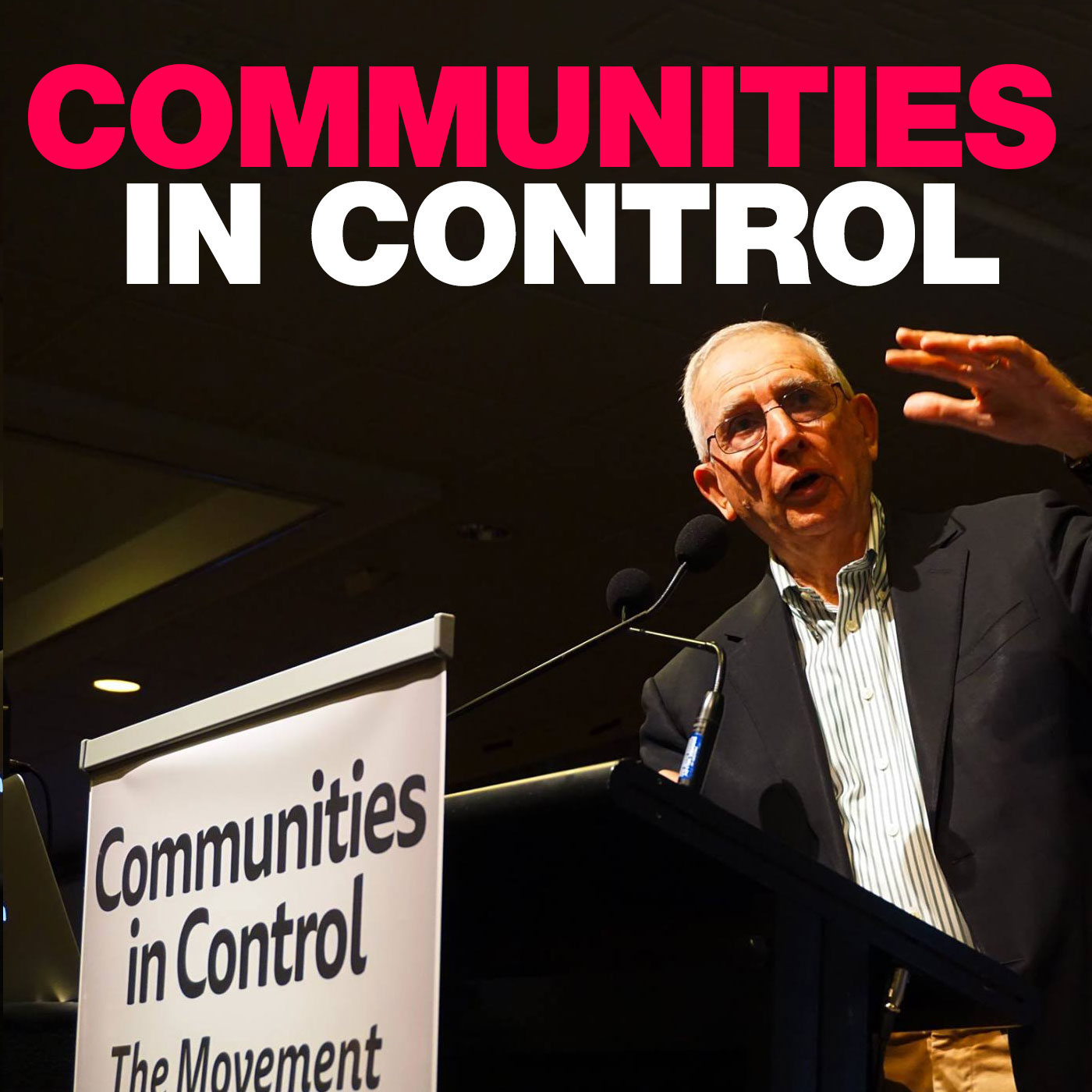
Communities in Control
by Our Community
Communities in Control is Australia's most inspiring social movement, each year bringing together many hundreds of community sector workers, volunteers and supporters and an A-list of speakers to listen, debate, network, exchange strategies, and recharge. Between conferences, the movement fans out to transform communities into thriving, inclusive towns, cities and suburbs.
Episodes
-
FROM THE ARCHIVES: Fiona Smith - Imagine the Leaders we Need and Deserve
Disability rights activist and lawyer Fiona Smith presented at the 2005 Communities in Control Conference
-
Senator the Honourable Penny Wong – Joan Kirner Social Justice Oration 2021
“It took a pandemic for our State and Federal governments to admit that the JobSeeker payments weren’t enough to live off, that homelessness needed to be (and could be) tackled, and that the level of insecure work in this country is hitting crisis point. Despite this, every solution has focused…
more -
Senator the Honourable Penny Wong – Joan Kirner Social Justice Oration 2021
“It took a pandemic for our State and Federal governments to admit that the JobSeeker payments weren’t enough to live off, that homelessness needed to be (and could be) tackled, and that the level of insecure work in this country is hitting crisis point. Despite this, every solution has focused…
more -
Jess Scully – Glimpses of utopia
“You don’t wake up and find a Utopia fully realised and perfectly formed. It happens a little bit at a time, unevenly, erratically, but if we know how to look, we can see glimpses of it emerging all the time, everywhere. Utopia doesn’t happen by accident. It must be nudged into shape through the...
-
Jess Scully – Glimpses of utopia
“You don’t wake up and find a Utopia fully realised and perfectly formed. It happens a little bit at a time, unevenly, erratically, but if we know how to look, we can see glimpses of it emerging all the time, everywhere. Utopia doesn’t happen by accident. It must be nudged into shape through the...
-
Andrew Wear – Sometimes the solutions are closer than we think
“If you take a look around the globe, you will find some remarkable success stories. Denmark will reach 100 per cent renewable electricity by 2030. Iceland has topped gender equality rankings for a decade and counting. Singaporean students beat almost all others in maths and reading. South…
more -
Andrew Wear – Sometimes the solutions are closer than we think
“If you take a look around the globe, you will find some remarkable success stories. Denmark will reach 100 per cent renewable electricity by 2030. Iceland has topped gender equality rankings for a decade and counting. Singaporean students beat almost all others in maths and reading. South…
more -
Daniel Teitelbaum – Stop playing around and start playing seriously
“Play is not just fun and games. Our deep drive to play has shaped our cultures and our philosophies, our working lives, and our civilizations since we first started playing. No part of human history is untouched by the way we play. In this session, Daniel Teitelbaum will convince you that our...
-
Daniel Teitelbaum – Stop playing around and start playing seriously
“Play is not just fun and games. Our deep drive to play has shaped our cultures and our philosophies, our working lives, and our civilizations since we first started playing. No part of human history is untouched by the way we play. In this session, Daniel Teitelbaum will convince you that our...
-
Dr Tim Thornton – Better economics for a better world
“Whether by intention or accident, economic ideas and analysis often diminish society’s expectations of what can be achieved. Such failings are not inherent to economics per se, rather they are the result of outdated economics dominating analysis and public discussion. The problematic nature of...
-
Dr Tim Thornton – Better economics for a better world
“Whether by intention or accident, economic ideas and analysis often diminish society’s expectations of what can be achieved. Such failings are not inherent to economics per se, rather they are the result of outdated economics dominating analysis and public discussion. The problematic nature of...
-
Dr Ramona Vijeyarasa – Gender equality in a generation?
“How do we make taxation fair for single-parent households? How do we ensure that planning decisions consider the different ways in which women use our communities? How can we ensure that glass ceiling is not a barrier to the corner office? How can we ensure that we do not forgo the talents women...
-
Dr Ramona Vijeyarasa – Gender equality in a generation?
“How do we make taxation fair for single-parent households? How do we ensure that planning decisions consider the different ways in which women use our communities? How can we ensure that glass ceiling is not a barrier to the corner office? How can we ensure that we do not forgo the talents women...
-
Hugh Mackay – Restoring hope, rebuilding trust and inspiring optimism
“Revolutions never start at the top. If we dare to dream of a more loving country – a kinder, more compassionate, more cooperative, more respectful, more inclusive, more egalitarian, more harmonious, less cynical country – there’s only one way to start turning that dream into a reality: each of…
more -
Hugh Mackay – Restoring hope, rebuilding trust and inspiring optimism
“Revolutions never start at the top. If we dare to dream of a more loving country – a kinder, more compassionate, more cooperative, more respectful, more inclusive, more egalitarian, more harmonious, less cynical country – there’s only one way to start turning that dream into a reality: each of…
more -
Robert Fitzgerald – Reimagining the community sector
“Community sector workers usually start with the best of intentions but are too often met by outdated systems and poorly conceived rules and laws that prevent them from achieving the best results. There is no denying the sector is in need of a serious shake-up, but what does reform on this scale...
-
Robert Fitzgerald – Reimagining the community sector
“Community sector workers usually start with the best of intentions but are too often met by outdated systems and poorly conceived rules and laws that prevent them from achieving the best results. There is no denying the sector is in need of a serious shake-up, but what does reform on this scale...
-
Paul Bongiorno – The 2020 Joan Kirner Social Justice Oration
“After a surprise election victory in May 2019, Scott Morrison thanked the ‘quiet Australians’ for sticking by his side. Since then, it appears that our government is hell-bent on making the entire population quiet. Journalists are being pressured by the Australian Federal Police to cooperate or...
-
Paul Bongiorno – The 2020 Joan Kirner Social Justice Oration
“After a surprise election victory in May 2019, Scott Morrison thanked the ‘quiet Australians’ for sticking by his side. Since then, it appears that our government is hell-bent on making the entire population quiet. Journalists are being pressured by the Australian Federal Police to cooperate or...
-
Lucinda Hartley – Using people-centred data to remake cities and towns
“Cities and towns should be built for the communities that will inhabit them. There is a trove of data on the demographics of any given town, but do we spend enough time consulting this data, and the people the data represents, to give us a better understanding of what the community needs? It’s...
-
Lucinda Hartley – Using people-centred data to remake cities and towns
“Cities and towns should be built for the communities that will inhabit them. There is a trove of data on the demographics of any given town, but do we spend enough time consulting this data, and the people the data represents, to give us a better understanding of what the community needs? It’s...
-
Nicholas Gruen – The iron law of business-as-usual
“In Australia, policy agendas come, tip everything upside down, and then they go, swept away by the next fad. New Zealand has garnered world attention for its ‘Wellbeing Budget’ but Australia had a wellbeing framework a decade ago. It was quietly scrapped a few years ago and no-one noticed the...
-
Nicholas Gruen – The iron law of business-as-usual
“In Australia, policy agendas come, tip everything upside down, and then they go, swept away by the next fad. New Zealand has garnered world attention for its ‘Wellbeing Budget’ but Australia had a wellbeing framework a decade ago. It was quietly scrapped a few years ago and no-one noticed the...
-
Danielle Wood – Inequality in Our Communities: Why are so many missing out?
“We hear a lot about the rising divides in economic opportunities and wealth in Australia: between country and city, young and old and the top 1% and ‘everyone else’. What do we know about rising inequality in our communities and what can we do about it?"
-
Danielle Wood – Inequality in Our Communities: Why are so many missing out?
“We hear a lot about the rising divides in economic opportunities and wealth in Australia: between country and city, young and old and the top 1% and ‘everyone else’. What do we know about rising inequality in our communities and what can we do about it?"
-
Professor Kristy Muir – Understanding the Social Progress Index
“The Social Progress Index is used to measure how well the environmental and social needs of citizens are being met. Currently, Australia ranks 12th in the world. That’s great, but what exactly does it mean? How do you measure social progress? What are we learning from the results?"
-
Professor Kristy Muir – Understanding the Social Progress Index
“The Social Progress Index is used to measure how well the environmental and social needs of citizens are being met. Currently, Australia ranks 12th in the world. That’s great, but what exactly does it mean? How do you measure social progress? What are we learning from the results?"
-
Peter Colacino – Building a Community: Bringing social infrastructure into the conversation
“When we hear the word ‘infrastructure’ most of us automatically think of roads, railways and bridges. But we all know that it takes much more than that to build a community. As a society, we need to shift the conversation to ensure that social infrastructure is brought into the mix. If we fail,...
-
Peter Colacino – Building a Community: Bringing social infrastructure into the conversation
“When we hear the word ‘infrastructure’ most of us automatically think of roads, railways and bridges. But we all know that it takes much more than that to build a community. As a society, we need to shift the conversation to ensure that social infrastructure is brought into the mix. If we fail,...
-
Georgina Dent – Breaking Badly: How I worried myself sick
“Working in the community sector can often be emotionally draining. How do community workers balance their life with the long hours and stresses of the job without breaking down? How do you keep it together when tackling some of society’s darkest issues? What is required to remain in control?…
more -
Georgina Dent – Breaking Badly: How I worried myself sick
“Working in the community sector can often be emotionally draining. How do community workers balance their life with the long hours and stresses of the job without breaking down? How do you keep it together when tackling some of society’s darkest issues? What is required to remain in control?…
more -
Professor Hilary Bambrick – Climate and Communities: Adapting to the new normal
“We all know that climate change is damaging our natural environment, but what impact is it having on our communities? A future defined by climate change will bring new issues and obstacles that the community sector will need to face and overcome. We have to. There is no Planet B."
-
Professor Hilary Bambrick – Climate and Communities: Adapting to the new normal
“We all know that climate change is damaging our natural environment, but what impact is it having on our communities? A future defined by climate change will bring new issues and obstacles that the community sector will need to face and overcome. We have to. There is no Planet B."
-
Dr Fiona Kerr – Replacing alert and alarmed with informed and engaged
“The world is a scary place. Or so our media would have us believe. Who controls the narrative we see on our television screens, or read online or in the paper? Why does it feel everything is going wrong? Governing for a population of alert and alarmed voters is vastly different to governing for…
more -
SPECIAL EDITION: 2019 Conference Highlights Part 3
Here's a special compilation of highlights from the 2019 Communities in Control conference, recorded by conference convenors Our Community and produced for radio, and reproduced here with permission, by Community Radio Network. In this package, we'll hear from Mariam Veiszadeh and David Manne.
-
SPECIAL EDITION: 2019 Conference Highlights Part 2
Here's a special compilation of highlights from the 2019 Communities in Control conference, recorded by conference convenors Our Community and produced for radio, and reproduced here with permission, by Community Radio Network. In this package, we'll hear from Father Rod Bower and Professor Lea...
-
SPECIAL EDITION: 2019 Conference Highlights Part 1
Here's a special compilation of highlights from the 2019 Communities in Control conference, recorded by conference convenors Our Community and produced for radio, and reproduced here with permission, by Community Radio Network. In this package, we'll hear from Tracey Spicer, Helen Milroy and…
more -
SPECIAL EDITION: 2019 Conference Highlights Part 1
Here's a special compilation of highlights from the 2019 Communities in Control conference, recorded by conference convenors Our Community and produced for radio, and reproduced here with permission, by Community Radio Network. In this package, we'll hear from Tracey Spicer, Helen Milroy and…
more -
Professor Lea Waters - Strengths at Work: Unlocking energy and engagement
"Strengths are more than just something that you are good at. Strengths have three elements: high performance, high energy and high use. Strengths are something you do well, do often and do with energy. Professor Lea Waters' presentation will help you identify and amplify your true strengths so...
-
Father Rod Bower - All Justice is Social
"What does a just society look like? Many of us could probably give our own answer to that question. But how do we go about creating one? Here is where things get a bit more difficult. Father Rod Bower discusses the barriers preventing us from achieving an inclusive and respectful community, and...
-
Dr Jason Fox - Change the Game: Craft a culture fit for the future
"Sometimes it's a question of momentum: how can an organisation hold onto all the best elements of its culture in the midst of rapid growth? Other times, it's a question of direction: how can we pivot our enterprise culture so that it's more aligned with our strategy? If you want your people to…
more -
Mariam Veiszadeh - Identifying Privilege
"People with the most privilege often don't admit or aren't even aware they have it. But the inability to recognise personal privilege has serious consequences, acting as a roadblock to diversity. Is there a solution that will make people recognise their privilege and level the playing field?"
-
Professor Helen Milroy - The 2019 Joan Kirner Social Justice Oration
"How can we improve as a society if we avoid taboo topics of discussion? How can we improve as a society if our default is denial and disbelief? The wicked issues of our time will never go away until we as a society face them head on and pledge to address them. It's time to make some noise."
-
Community Innovations Panel
"Who builds stronger communities? The community! Sometimes the best advice you can get is from your peers: someone who's been there, done that, and knows what works. In this session you'll hear from a hand-picked selection of innovative community leaders who will showcase their lessons in…
more -
Professor Lea Waters - Strengths at Work: Unlocking energy and engagement
"Strengths are more than just something that you are good at. Strengths have three elements: high performance, high energy and high use. Strengths are something you do well, do often and do with energy. Professor Lea Waters' presentation will help you identify and amplify your true strengths so...
-
Professor Helen Milroy - The 2019 Joan Kirner Social Justice Oration
"How can we improve as a society if we avoid taboo topics of discussion? How can we improve as a society if our default is denial and disbelief? The wicked issues of our time will never go away until we as a society face them head on and pledge to address them. It's time to make some noise."
-
Mariam Veiszadeh - Identifying Privilege
"People with the most privilege often don't admit or aren't even aware they have it. But the inability to recognise personal privilege has serious consequences, acting as a roadblock to diversity. Is there a solution that will make people recognise their privilege and level the playing field?"
We're indexing this podcast's transcripts for the first time — this can take a minute or two. We'll show results as soon as they're ready.
No matches for "" in this podcast's transcripts.
Loading reviews...
ABOUT THIS SHOW
Communities in Control is Australia's most inspiring social movement, each year bringing together many hundreds of community sector workers, volunteers and supporters and an A-list of speakers to listen, debate, network, exchange strategies, and recharge. Between conferences, the movement fans out to transform communities into thriving, inclusive towns, cities and suburbs.
HOSTED BY
Our Community
CATEGORIES
Loading similar podcasts...
Frequently Asked Questions
How many episodes does Communities in Control have?
Communities in Control currently has 98 episodes available on PodParley. New episodes are automatically indexed when they're published to the podcast feed.
What is Communities in Control about?
Communities in Control is Australia's most inspiring social movement, each year bringing together many hundreds of community sector workers, volunteers and supporters and an A-list of speakers to listen, debate, network, exchange strategies, and recharge. Between conferences, the movement fans out...
How often does Communities in Control release new episodes?
Communities in Control has 98 episodes. Check the episode list to see recent publication dates and frequency.
Where can I listen to Communities in Control?
You can listen to Communities in Control on PodParley by clicking any episode. We provide an embedded audio player for direct listening, and you can also subscribe via your preferred podcast app using the RSS feed.
Who hosts Communities in Control?
Communities in Control is created and hosted by Our Community.
URL copied to clipboard!