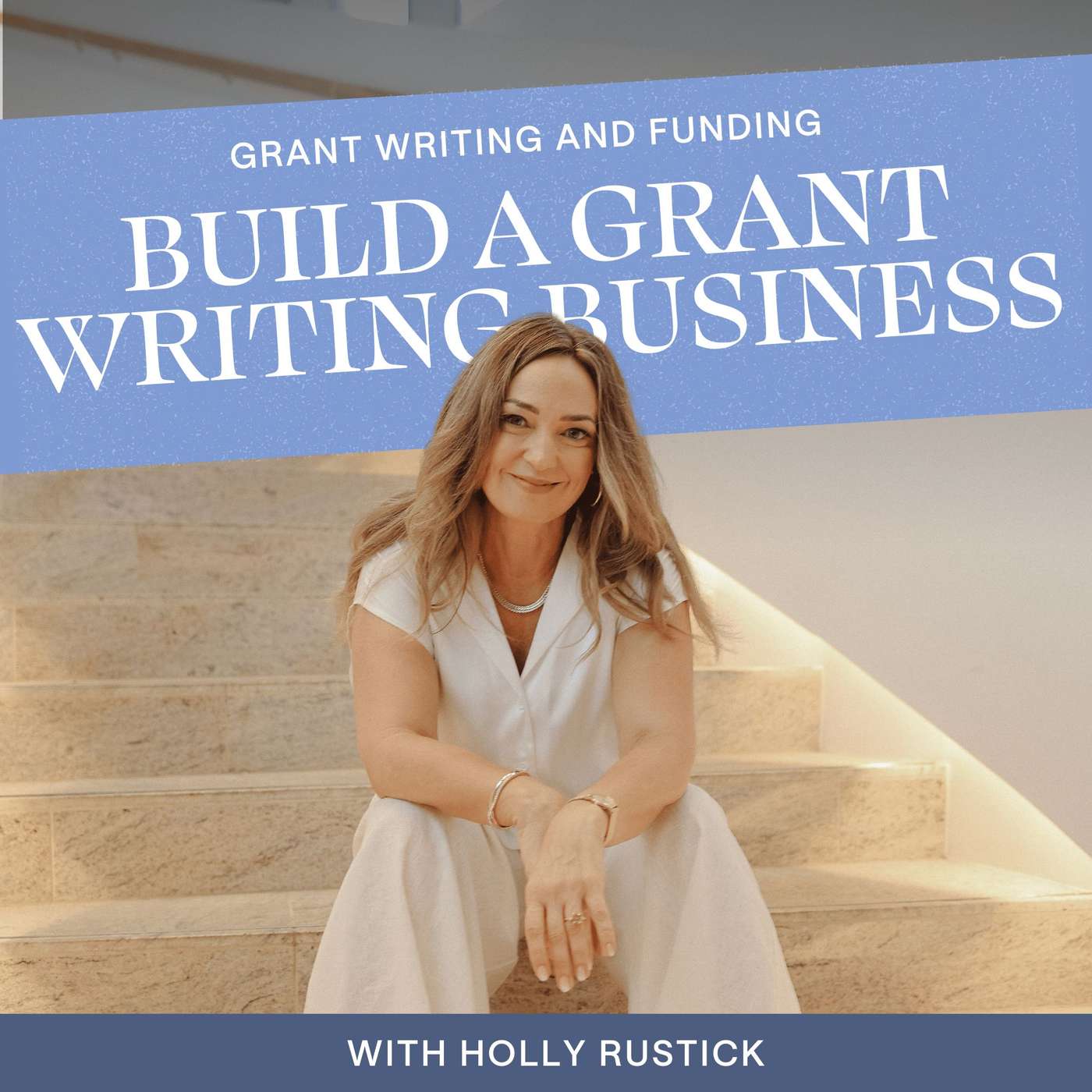
Get Clients as a Grant Writer 5-Part Series: #5 Stop Basing Your Success on Grants Won episode artwork

EPISODE · Oct 9, 2025 · 14 MIN

Get Clients as a Grant Writer 5-Part Series: #5 Stop Basing Your Success on Grants Won

from Grant Writing & Funding · host Holly Rustick

A lot of grant writers feel like they are in an impossible situation when asked about their ‘grant writing success rate’. As if the only measurement of your success as a grant writer is based on the grants you have won.Some places on the internet state that there are ‘good’ percentage win rates for grant writers. Honestly, ‘grant writer success rates’ are crap. If you are working with start-up nonprofits, chances are your wins could be less than working with larger, established nonprofits that already receive grant funding. If you are working with certain cause areas, it might not be as ‘sexy’ to fund the cause area during these times as funding another cause area. If you are working in certain geographic areas, it may not be as easy to win grants for that area vs. other areas.There are so many reasons outside of a grant writer's control that make ‘grant success rates’ bogus.Not convinced yet? Let’s flip it on its head. Holly has only ever written one grant and it gets awarded for $500.Jonathan wrote 100 grants and got 70 awarded for a total of $13 million. Holly has a 100% grant success rate vs. Jonathan with a 70% grant success rate.See how this can be flippant?What is a better measurement of success are your deliverables.1. Helping nonprofits develop and build relationships with fundersBecause of the work that our students have done with helping their nonprofit clients develop relationships with funders, in 2025 those funders reached directly out to their clients and offered more money or unrestricted funding (without the nonprofit even asking).One student said “My equity-focused client had a Foundation reach out to them to award an emergency $100K grant with NO action needed to receive it (no application!) just because of the political climate, recognizing that now is the time they need support.”2. Developing Master Grant Templates that help the organization get clarityWhen you are creating Master Grant Templates for your clients, this will help ground a visionary Executive Director and engage the board in more effective ways. This is VERY valuable,  even if you never write grants for the organization, because you help the organization stop mission drifting and burning everyone out. The board also gets clear on what needs to get done, how much funding is actually needed (instead of ambiguous figures), and they become more involved.3. Getting things organized to preserve institutional knowledgeWhat does this mean? Well, you get all the documents organized (or developed) that nonprofits need when submitting grants. I can’t tell you how many nonprofits don’t know where their IRS Tax Exemption letter is, haven’t developed a budget for a program, or have bios for their board members.Even if they do, chances are it is all on one person’s computer, in folders only that one person can understand, and if that person leaves (or their old computer crashes) everything is lost.4. Creating a grant prospecting calendar with aligned fundersHaving a strategy to submit to 15-20 aligned funders over a period of time vs. 100 applications over a weekend is a surer strategy to get funding.This is hugely valuable to know how to find funders that align and will be competitive to get funding.5. Not burning out the entire Executive Director with (last minute) grant writing Having a grant writer, actually write grants, instead of an Executive Director working an entire weekend is VERY valuable. Even if all of your grants don’t get awarded, you are doing the work so they don’t have to. When you go into a Sales Call as a grant writer, you need to emphasize the other value of work (not just grant wins). Remember, you are not just a grant writer. You are a grant strategist. Even if you never win a grant (which many organizations won’t get in their first year), you are building the capacity for grants, and other types of funding, for the nonprofit. They will be READY to receive any type of funding and be able to manage and implement it.Find out more about the Freelance Grant Writer Academy: https://grantwritingandfunding.com/freelance-grant-writer-academy/

A lot of grant writers feel like they are in an impossible situation when asked about their ‘grant writing success rate’. As if the only measurement of your success as a grant writer is based on the grants you have won.Some places on the internet state that there are ‘good’ percentage win rates for grant writers. Honestly, ‘grant writer success rates’ are crap. If you are working with start-up nonprofits, chances are your wins could be less than working with larger, established nonprofits that already receive grant funding. If you are working with certain cause areas, it might not be as ‘sexy’ to fund the cause area during these times as funding another cause area. If you are working in certain geographic areas, it may not be as easy to win grants for that area vs. other areas.There are so many reasons outside of a grant writer's control that make ‘grant success rates’ bogus.Not convinced yet? Let’s flip it on its head. Holly has only ever written one grant and it gets awarded for $500.Jonathan wrote 100 grants and got 70 awarded for a total of $13 million. Holly has a 100% grant success rate vs. Jonathan with a 70% grant success rate.See how this can be flippant?What is a better measurement of success are your deliverables.1. Helping nonprofits develop and build relationships with fundersBecause of the work that our students have done with helping their nonprofit clients develop relationships with funders, in 2025 those funders reached directly out to their clients and offered more money or unrestricted funding (without the nonprofit even asking).One student said “My equity-focused client had a Foundation reach out to them to award an emergency $100K grant with NO action needed to receive it (no application!) just because of the political climate, recognizing that now is the time they need support.”2. Developing Master Grant Templates that help the organization get clarityWhen you are creating Master Grant Templates for your clients, this will help ground a visionary Executive Director and engage the board in more effective ways. This is VERY valuable,  even if you never write grants for the organization, because you help the organization stop mission drifting and burning everyone out. The board also gets clear on what needs to get done, how much funding is actually needed (instead of ambiguous figures), and they become more involved.3. Getting things organized to preserve institutional knowledgeWhat does this mean? Well, you get all the documents organized (or developed) that nonprofits need when submitting grants. I can’t tell you how many nonprofits don’t know where their IRS Tax Exemption letter is, haven’t developed a budget for a program, or have bios for their board members.Even if they do, chances are it is all on one person’s computer, in folders only that one person can understand, and if that person leaves (or their old computer crashes) everything is lost.4. Creating a grant prospecting calendar with aligned fundersHaving a strategy to submit to 15-20 aligned funders over a period of time vs. 100 applications over a weekend is a surer strategy to get funding.This is hugely valuable to know how to find funders that align and will be competitive to get funding.5. Not burning out the entire Executive Director with (last minute) grant writing Having a grant writer, actually write grants, instead of an Executive Director working an entire weekend is VERY valuable. Even if all of your grants don’t get awarded, you are doing the work so they don’t have to. When you go into a Sales Call as a grant writer, you need to emphasize the other value of work (not just grant wins). Remember, you are not just a grant writer. You are a grant strategist. Even if you never win a grant (which many organizations won’t get in their first year), you are building the capacity for grants, and other types of funding, for the nonprofit. They will be READY to receive any type of funding and be able to manage and implement it.Find out more about the Freelance Grant Writer Academy: https://grantwritingandfunding.com/freelance-grant-writer-academy/

NOW PLAYING

Get Clients as a Grant Writer 5-Part Series: #5 Stop Basing Your Success on Grants Won

0:00 14:35

No transcript for this episode yet

We transcribe on demand. Request one and we'll notify you when it's ready — usually under 10 minutes.

The Ultraspeaking Podcast Tristan de Montebello, Michael Gendler The Ultraspeaking Podcast explores modern-day solutions to greater confidence, skill, and ease when speaking at work. Each episode features the founders, Tristan and Michael, as they detail unconventional strategies to thrive under pressure and speak with less preparation. Working on hand-gestures and eye contact is OUTDATED advice. Writing a script or creating a structure is a TRAP.It’s time for a better way. Join the Ultraspeaking movement and you’ll never look back. WW2 - the Key Questions, answered by Laurence Rees. Laurence Rees A former Head of BBC TV History programmes, Laurence has specialized in writing books and making television documentaries about World War Two, the Nazis and Stalinism for thirty years. He won a BAFTA and a Peabody for his TV series 'The Nazis: A Warning from History' and a British Book Award for his book on Auschwitz, which is also the world's best selling book on this notorious camp. His book 'the Holocaust: A New History' was described by the Times as 'exemplary' and by the Daily Telegraph as 'the best single volume account of the atrocity ever written'. Educated at Oxford University, for several years he was a visiting senior fellow at the London School of Economics, London University. He holds honorary doctorates from the University of Sheffield and the Open University. Professor Robert Service, of Oxford University, described Rees as 'one of the world's experts on the Second World War'. Sir Max Hastings wrote in the Sunday Times, in a review of Laurence Rees' 'World War Two: Behi Hot Copy Kate Toon & Belinda Weaver The Hot Copy podcast is a collaboration between seasoned copywriters Belinda Weaver and Kate Toon.Tune in for copywriting tips, shortcuts, writing resources, interviews and laughs. All focused on helping you become a better copywriter. The Writers' Show Geoff Hughes A podcast about writing, featuring interviews with authors and songwriters at all levels of success.Inspiring and successful authors reveal the secrets about writing, creativity and the business of independent publishing and songwriting.Featuring interviews with successful authors and songwriters excited to share the journey from idea to published book and song.Host Geoff Hughes is the founder of Madhouse Media PublishingMore info on the Writers Show Website

Frequently Asked Questions

How long is this episode of Grant Writing & Funding?

This episode is 14 minutes long.

When was this Grant Writing & Funding episode published?

This episode was published on October 9, 2025.

What is this episode about?

A lot of grant writers feel like they are in an impossible situation when asked about their ‘grant writing success rate’. As if the only measurement of your success as a grant writer is based on the grants you have won.Some places on the internet...

Can I download this Grant Writing & Funding episode?

Yes, you can download this episode by clicking the download button on the episode player, or subscribe to the podcast in your preferred podcast app for automatic downloads.
URL copied to clipboard!