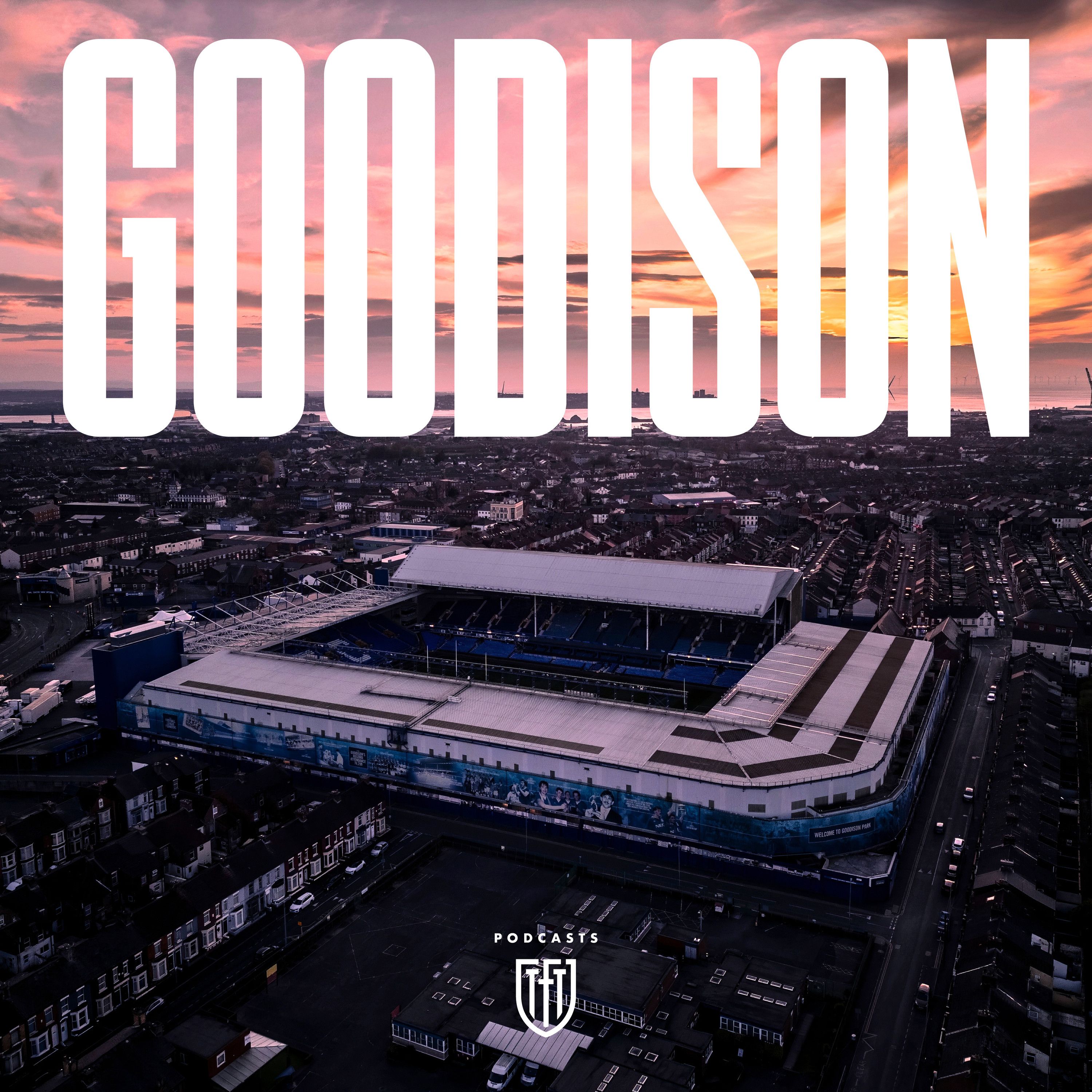
Welcome to The Lobb, your home of in-depth coverage and analysis by These Football Times, a movement of journalism you can trust. Each week we endeavour to bring you the very best coverage of the game, exploring stories from the past and present with analysis by expert guests from around the world. Find more of our award-winning content online and in print. In the meantime, enjoy the podcast. Welcome to The Lobb podcast from These Football Times. We've got a special edition today. You come to the end of the season and quite often you'll lose a player or two or a manager or league or something like that. It's not often that you have to say farewell to your home, to your ground.
which of course is what's facing Everton in the coming couple of weeks. So we can't miss this opportunity to get to talk to Paul McParlane about all these millions of memories of Goodison Park over the years. So good evening, Paul. Good evening, David. And thank you for giving me the opportunity to kind of look back at my experience at Goodison Park, a stadium I've attended for more years than I care to remember. But yeah, it is quite an historic day in the life of the football club. And in my life as well. I'm in particular for Evertonians of my generation who've kind of been going there for over five, six decades. And I've got so many memories associated with the stadium. And I think there's still a feeling amongst a number of us.
It's not really going to happen, is it? We've got to turn up, as per routine, in August to stand outside Goodison Park and Wunderby. There's not a game going on there. I suppose the best place to start is at the beginning and your first games going to Goodison Park and your first impression to the place when you were a youth. I'm going to give you a three-part answer to this, Dave, right? Because I think my first game might have been in the 60-61 season when I was about five. But I don't remember anything about it, apart from the fact I've got this lingering memory that I saw Everson play Chelsea. I remember the score was one each. It's one of these things we've talked about with Stephen a few times about asking your parents things while they're still here. And I just really regret it. I never checked with that. Did I actually look at that game, Dad? Because I've got this memory here somewhere that was there. But apart from the scoring, I've had Chelsea wearing red shirts. I can't remember that much about it. So first real memory would be the 62-63 season and kind of two answers to this.
62, 63. I'd been to my first Devison game away at Blackburn in November, and I wanted to go to a home game, but one of my friends wanted to go to a home game as well. So my dad was quite happy to pay for me to go to the ground, but couldn't quite afford to pay for the two of us. So he suggested we went in the boys' pen, which didn't turn out quite the way we expected it. It was quite a grim experience, which I'll come back to a little bit later if you wish. But it ended up with me and my friend, Alan, left after 10 minutes, penniless. All our suites had been stoned. I heard I'd been pulled everywhere, closed with him. And we came out crying our eyes out and stood outside the ground for the next 18 minutes, waiting for the match to end so I could beat up with my dad again. So I didn't miss much, actually. It was Everton nil, Wolves nil.
Plus, my first game that I do really remember, I don't quite know how I ended up going to this one, but it was towards the end of the 62-63 season. It was Everton's second last home game of the season against Bozal Monders. When we were going with the Champions that season, we needed to win as many games at home as possible to keep our hopes alive. I don't know why, but my dad told me that game. He told me in the stands for that game. So it had to be in about six or seven, something like that.
And we beat both wonders 1-0. But because I've been to an Everson away game, I had some idea what to expect from a football stadium. And so, yeah, I mean, it's just, you go up those steps into the stands, you get your seat, and you just look out at the playing area, the vastness of the arena, all the crowd. You're mesmerized by the faces, the characters, and then the noise when the team comes out. It's almost eardrum-splitting level. And then the fervor, and then discovering a whole new vocabulary of swear words I've never heard in the playgrounds at all. It was a real eye-opener on every level.
From the moment the game starts, no matter how old or young you are, you just wrap up with the game, you get involved the most. And because you take your leave from your parents, I'm watching my dad, his reaction, I need to do this, I need to do that, that type of thing. So yeah, it was just an absolutely fabulous experience. And I'm sure people listen to this have got their own personal memories of their first game. And some may, like me, have them a bit confused about what actually was the first game with the passage of time. But yeah, you can't, going to your first proper football match for the full 90 minutes is an experience that kind of stays with you. And yeah, I'm just so thankful for that. I think my dad took the wise decision to...
He bought me tickets for the stand that day, so I was actually sitting down, because everything I'd be in the gladiaries in, like, £55,000-plus, I really wouldn't have seen the thing. It would have been like the Bois 10 again. So I'm kind of eternally grateful for him that he prepared to despise out a bit of money to make it a far more memorable and enjoyable day for me. And Everson won 1-0. I think I mentioned with Bois Verdon who scored, and the final home game after that would be fun for one to win the league title. Not a bad place to start. Going back to people who are vintage, so I would say, you didn't see football on television in the same way that you did. I mean, it's there all the time there. You can't avoid football on television. And if you did see it on television, it was in black and white.
And to actually go into a stadium in the colour and the grass was there and all that, I mean, it was an overwhelming thing, wasn't it? I was one of these sad footballing people who spent my whole life collecting picture cards, collecting programmes, reading all the matriculars, getting all the magazines like Soccer Star, Charles Buchan's Football Monthly. I devoured all of these things. So I always had this mental image in my mind of what these players would be like when you saw them. But you're right, Dave, when you actually went there for the first time and saw them in the flesh, in colour, in the monochrome.
because even the Patreon monitor, the very few ones in colour pictures and such. And it's just, I remember how splendid the Royal Blue Jays look, how it just stood out, the contrast in the background. And yeah, there's just something about seeing something live, experiencing it, rather than being in a grieving mood. I mean, so much of TV these days is, you know, the game might be on the TV, but you think nothing, going out to go to the toilet, make yourself a cup of tea, come back, you know, you can pause the action and go back to it. It's just not the same as being there live. And I think as well,
At that time, people didn't get up routinely every five minutes like they do now to go and get a burger, go and get a pizza, go and get a hot dog. People sat in the seats the whole way through. If you were standing, you didn't move because you'd lose your breath. You couldn't afford to take that vital space you've got for yourself that you might have queued for for 90 minutes before the game to get in to get that space. So people were much more, less mobile. And because of that, we're much more involved in the game. Remember to say it correctly as well, half-time's only 10 minutes, not 15 minutes. And so if you want to move half-time, you couldn't do that because by the time you got down the gangway, the second half was starting again. So yeah, it was a whole different experience. But you're right, it was the transition from...
reading about it in black and white, seeing the football magazine in black and white, so actually being there and seeing it all in colour, seeing the scarves, seeing the rosettes, seeing the memorabilia, and even kind of outside the ground, because I was always madly interested in football programmes, on Goodison Road, there were three or four different programme shops, so before the game, I could just spend an hour in there going through all the different programmes trying to buy, so it's just a real shame that that kind of has also disappeared from the football experience as well. Goodison Park itself, it's a very idiosyncratic ground, it doesn't look like any other football ground, you know, you can have your arguments about modern build stadiums and whether they all look a bit like they've come from Legoland or whatever, but Goodison Park. You know where you are when you look at Goodison Park. What were your first impressions walking around the stands and seeing all the various elements to it?
Well, I think the first impression that I've seen, because at the time when I first started going, I was kind of living on one of the new Greenfield estates on the outer suburbs of Liverpool. So I didn't have much experience in the city of Liverpool. So the first thing that kind of strikes you is when you're walking towards the ground, how cramped and narrow the roads were, all the terraced streets as well, people sitting outside the houses, it sort of wasn't quite used to. And then as you walk up the stadium, the first thing I struck you was, why is there a church by the football stadium? No one told me there's a church here, but what's it doing? Surely they can't be having mass today when the game's on. I remember just leaning outside of St Luke's church thinking, well, this is pretty unique, isn't it? Having a church outside the ground, of course, that church is still there today. And it's still on the...
you mentioned about how memorable and unique in many ways good as a park is, but the fact they've still got a church outside the stage in the corner makes it absolutely so different to any other compatible stage in England. And yeah, it's just walking around the ground. First thing that kind of hit you was the queues, massive queues outside the turnstiles. People fumbling around for the cash to get in, people queuing to get in. And from when I was a youngster, I'm sure I wasn't alone in this as well. The pre-match experience was quite different in many ways to what the modern day experience is because...
Quite often, my dad would get the bus from our estates, the 52. It takes about 20, 25 minutes to get to the bus stop by Goodison Park. And then, of course, if we were there, let's say, about 20 past two, my dad in Eversbury always wanted to go for a pre-match drink. So he would go to one of the local hostilities on County Road where he'd meet up with all his friends. And I'd be shoved outside with a bottle of pop in the back of Chris, waiting for them to come out. But for me, this is great because there are always four or five similar urchins like me, all sitting outside guzzling your pop, eating your Chris, talking amongst each other about, you know, do you call me an author? Do you hear that type of thing? And every now and again, the door would open to the pub and you'd look in and see this cloud of smoke and all these people there.
when I first got started in the football games. The noise, and then at about 10 to 3, there was kind of a mass exit, the door swung, and Madaba grabbed me, I'm off the game now. And inevitably, we'd get in there about one minute to three, if we were lucky. And Madaba, quite a good trick at the time, was that because the Gladys Street Terraces was kind of split into a lower section, upper section, there was a bar rise in front of the upper section, so he generally, we'd fight our way in, and he'd shove me in front of the bar, tell me to hang on for the day of life, and he'd go around and stand behind. So he used to have a really good...
a good viewpoint for most games. Well, I couldn't afford to celebrate with both arms because I wouldn't have fallen off back into the cards. Yes, how very different life is nowadays. Within the ground as well. I mean, you know, talking just before about the Archibald Leach, you know, built standard and all that kind of stuff. And that, again, is one of those great features of English football, isn't it? It is, yeah. Yeah, I mean, we're in New York about 2012, something like that. We're doing one of these sissy tours.
And the tour guy goes, a flat over there is where someone called Archibald Leach lived. Does anyone know who he is? Do you remember who he is? Yeah, Archibald Leach, he designed all the football stadiums, didn't he? Yeah, he designed the Everson, he designed the Everson. I went on for five minutes here, having the coach look around, I went, who's this loon here? No, I don't mean who you're talking about. I mean, Archibald Leach became Cary Grant, the film star. That's what I'm referring to here. And at which point I was waiting for security to come and scope me off the bus, but I think she saw the funny side of it. Yeah, what football stadiums did Cary Grant design? Exactly, exactly.
I mean, that story about the boys' pen, football was kind of raw in tooth and claw, wasn't it, back then? I mean, you know, I suppose it contributed to the atmosphere. I suppose it also contributed to the danger as well, I suppose. Yeah, very much today. I mean, looking back, it was just simply brutal on every level. I mean, I was like six or seven first time in the boys' pen, which I referenced before. I remember seeing the sign on the entrance saying you had to be under the age of 16 to gain a missence. And I was looking behind this guy there with a beard, another guy there smoking away in his flags. Most people behind me seemed like six foot one, six foot two, or like a leather jacket. And looking at the type of people you didn't want to fall out with, particularly. So that gave me an inkling of what to expect. And we kind of climbed up the stairs. The boys' pen was in the left-hand side of Goodison Park, upper section towards the buttons around the stand, had railings in front of it to stop.
people getting out but one of the things one of the regular sports was that young kids would get down to the front trying to climb over the railing and they got to the top they purged and they jump into the Gladys Street to be greeted with rounds of applause when people just hit them before the police would come in and remove them. But yeah, for me, it was a terrifying experience because I think we walked in, someone grabbed me, got any money in line? So before I knew my pockets would be empty, my pocket money disappears, my squeeze got taken off me, and then I saw some girls in the corner, I thought, I'll go stand by the girls, surely they're going to be always. They were actually on a different level to most of the males there, so they started kicking me, pulling me, screaming at me, and by this stage, the worst thing I could do was start crying, but I couldn't help it, and that just triggered me up for more, and I just looked at my friend and I said, can we get out of here, please? I don't want to stay here.
anymore. And the two was kind of clambered out and stood aside the stage. But yeah, the boys' pen was, as the name implies, females weren't being expected of football games at that time. And you can imagine now in a new stage recording and they did the pen, like the shadow or something like that, it just wouldn't happen anymore, would it? But yeah, I mean, the boys' pen stayed in place as good as part until about the start of the 1977-78 season. And by that time, there'd been a few changes to it in that. I mentioned the ratings, the kids used to climb over. In the end, the cage, that hint. So how many health and safety regulations did that bring? No idea. But I meant that once you only couldn't get out. And the reason why they did that was one of the activities that
people used to do. There's a water tap at the back of the boys' pen where you can go to get a drink. I don't know if you remember a day, it used to be like an orange drink called Jubilee, but you do this like a triangular shape and you'd suck on it and suck on it to all the juice when I was, well, they were hugely popular. People would be tasting it in the boys' pen, but once they would empty, they'd go back to the tap, fill up the water, and they'd just throw them into the Gladys' center. People were getting drenched by all these projectiles coming over the fences. So yeah, it was quite a horrific experience. So that was another reason why the case hit.
And in the end, the only reason why the club actually got rid of the boys' pen was because there was some kind of new health and safety directive from the governance about the number of access points on the stage. And Everson didn't have enough access points on the Cloud Street terraces, which meant the capacity was going to be reduced from 50,000 to 37,000 or something like that. And the first game of the season was against Nottingham Forest. And the club were kind of deftly trying to find a way around this. And then they hit the point and they were, hang on, if we close the boys' pen, that creates another exit point. And because they did that, the boys' pen disappears. The capacity was increased back to a traditional level. But it meant a piece of football history had just completely disappeared and been wiped away.
You started going in the 60s, which wasn't a bad time to start going and watching Everton. Harry Patrick's teams and league championships and all of that. And being stuck in there with 50,000 people week after week. I mean, that must have been some experience seeing the Holy Trinity, Joe Royal and the Golden Vision and all of that. That must have been fantastic years.
Yeah, I think when you're young, you kind of take that for granted a bit. You kind of think it's got to be like this every year. You know, you're going to win the league title every year. You're going to be seeing these great players every year. And of course, at that time, everyone was kind of known as the Mersey Millionaires because they were spending big transfer fees out to bring top quality players to the club. And yeah, you're right. I mean, looking back, having the privilege of watching, you know, Howard Kendall, Colin Harvey, Alan Ball, you know, the Holy Trinity operating at their best. It was just an absolute pleasure and a privilege to watch that. And it's compared to now, the difference in going to home games.
fully expecting an Everson win, fully expecting a good display. I need to be lost fully expecting it to be a narrow defeat because, you know, a controversial referee, and this is not something along those lines. So, yeah, but I think for me, the big difference is when you get to, like, I think, like most people, you first start going to match with your parents. It's not always your dad's first time, your mum takes you, or even grandparents in some cases. And as you get to about eight or nine or 10, you start to want to be sconed by yourself with your own friends. So when you're about 12 or 13, you tend not...
I'd go towards the ground with my dad, but I'd meet my friends outside the ground and go to watch the match with them. And the good thing then was like, all your friends from school, about eight or nine, you could all go together. You didn't need to be a part of the membership scheme. You didn't need to accumulate points or vouchers from home games you've been to. You didn't need any ID. You didn't need a credit card check. You turned up with your cash. You went through the tennis stuff, but you could stand with your friends all the way through the game, which to me is one of the things that really quite frustrated about modern football because I look at the modern stadium now and I think...
I don't know what the average age of a Premier League fan is, but it must be 40 plus for some clubs I would have thought. Whereas then, it was a very young audience. There were loads of people under the age of 25 going to work. I mean, it's a baby boomer generation, so there were loads of us all young and wants to go and watch football matches. And I just think that a modern youngster watching Premier League football who spends, has to sit.
in the same seats every week. It's about the same people every week, as opposed to sit with their friends. It's really lost something. I think I'd also make the case, maybe that's why there's been a kind of bit of a resurgence in non-league football at the moment, because youngsters are finding they can go to watch their non-league team, stand with their friends during the game, and almost have a similar experience now to what I was having in the 60s and 70s. Being on the Terry season, Gladys Street, and whatever, and watching Everton in full credit, and being part of that surge as the whole 15,000 of you all fell forward at one point and went back. I mean, you look at it now on the foot, you think, it must have been mental.
But I mean, at the time, it was just such a thrilling thing to be a part of, wasn't it? Yeah, it really was. And you really felt as though you were kind of making your effort to get the team over the line as well with the support. But I guess it's like most things like this, Dave. You kind of adapted to it. You just knew when to move forward. You knew when to move back. You anticipated when the Serge was going to come. So you just...
You just rode the waves of the serves, the two-ing and throwing. And as you got a little bit older, you'd be able to fend for yourself a bit more. So if you were in that position, you'd knock yourself back into position. But yeah, it was quite a life skill because, quite frankly, if you hadn't anticipated those surges, then you'd end up on the floor with people chomping all over you. So you had to adapt pretty, pretty quickly to make sure you were safe. But you just couldn't beat the fun, the joy of those surges, particularly after you score, when everyone's jumping around, surging forward, dancing around the place. It was just an experience like no other.
It's not quite the same stadium in the stands because you haven't got the same proximity to people worse than the terraces. You're crammed right up next to people as well. So, yeah, it's an experience that's sadly been lost to the modern world in many ways. Like most of us, you start out by standing up, as you said, at games for the most part when you're a teenager or whatever a minute. Where were you in the stadium then and where did you move around to over the years? Yeah, I think over the years I've probably stood, you know, I've stood or sat in every part of the stadium. So, yeah, first experience, the first time I met that topic was in the upper bottom stands. Then most of the time I spent on the Gladys Street terraces. Occasionally there were...
we'd go in the stand-up above the Gladys Street tennis as well, and for the park stand-up at the opposite end. I think when I was a teenager, I was having kind of the first few rances and things like that, because I was taking the girls, watching the Davidson game, we'd always stand at the paddock by the main stand, rather than subjecting to the Gladys Street tennis. And then once the kind of the old CESA stadium became a thing from 1991, we kind of tried different parts of the stadium just to find the place that kind of suits us at all the best. So I probably sat in all four of the CESA areas of the stadium as well. For the 66 World Cup, I was in the Gladys Street tennis for all those games also. You mentioned the 66 World Cup, so we might as well come to that next.
Having the World Cup come to your football ground and Pele being one of the players that would come, my God, that's the definition of football heaven at the age of 12, 13, whatever it was. Yeah, I was 10 at the time, David. And yeah, it was one of those things where I had no idea I'd be going to watch the World Cup. I just assumed my dad and all the friends would be going. And I just remember about two weeks before the conferences and starts, I woke up one morning and I'm on the bedside table as an envelope. And I opened it and in there were like five tickets for all the games through to the semifinal stage. So I was absolutely thrilled and delighted. And yeah, we talked before, haven't we, about, you know, seeing things in colour. The sight of walking down the Gladys Street before the Brazil-Bulgaria game. And all these young Brazilian fans with their tan skin, you know, they just looked...
Compared to like monochrome Liverpool at the time, they just put this whole vibe of colour to the city. And the All-Wore replica shares, of course, trying to get a replica share in the mid-60s was well-known possible. I think most of the supporters, of course, would just buy a plain blue shirt and stick a badge onto it. You just couldn't, clubs just didn't understand what that market was. Yeah, so it was the colour, and then, of course, the fact it's the noise, the samba piece of the drums, and they were all in the upper glassy section for most of the games at Goodison Park as well. The thing that really caught my attention was...
Listened to talk in Portuguese. I'd never really heard people speak a foreign language before. And so listening to talk, engagement, I was just in awe. This is brilliant. And yeah, I mean, for the first game, I'm going up the steps towards the Gladys Street and I think, I'm going to see Peli and Govincia play here at Goodison Park. My life can't get any better than this. And of course, Peli scored a free kick for Brazil in the streets and Govincia scored a second free kick for Brazil in the Stanley Park. And it just came waiting. It was absolutely on every level. It just was one of the best days of my life. And I've still got so many vivid memories of that.
of that World Cup of Goodison so I mean the next game was Brazil against Hungary Perry couldn't play because he was injured and Hungary kind of upset the odds by beating Brazil 3-1 in what was a fantastic game of football I remember at the end of the game Florent Albers had had a superb display for Hungary. And at the end of the match in the Gladys Center, everyone was just saying, Albert, Albert, Albert. And the team had left the pitch by that stage. And someone from the Hungarian delegation said, they're chanting your name up there. Get back out there. Get back out there. So he came back out with Benny, I think it was. And the two of them came over to the Gladys Center and started walking around the stage. And everyone was there, cheering them, applauding them. So it was just a really unique experience. And then the third game, in some ways, was quite disappointing because, as you know,
Perry was kind of ruthlessly kicked out of the competition at that stage. But one player goes and the other one takes his place. So Perry was kicked out of the competition. Suddenly he had Eusebio to focus on instead, who scored two stunning goals in that game as well. And then suddenly the focus has shifted from, OK, Perry's gone now. And that's really sad because I think Brazil would have played the quarterfinals as well. But suddenly we got Eusebio. So that was something special as well. And then, of course, you get to the quarterfinals and it's still...
It's probably in the top three games of football I've ever seen in my life. So it's pulled to a North Korea. No one's expecting North Korea to progress to that stage. I think we were expecting like a Brazil-Israel quarter final. Instead, we got pulled to a North Korea. And then I remember being on the glass stage. Within the first minute, North Korea scored first. And the people come up, what's the score? What's the score? What's the score? Stop messing around. And I remember looking around thinking,
It almost seemed like every person, audience, or dissent was in the Gladys, and the whole Liverpool's Chinatown community came along to support Korea as well. And after 24 minutes, when they were three up, the noise was just incredible. The crowd said, we want four, we want four, and easy, easy. And the whole place was just mesmerized by what they'd seen, because the contrast meant the North Koreans wore the white shirts. They were so thin and so small and so wide. You had like six or four tourists playing for Portugal. It dwarfed over most of the Korean team, but they just burst everywhere. They were full of energy. And in the modern game, they would have just killed the game at 3-0. They'd have just wasted time, brought players down.
back but they went for the fourth goal possibly urged on by the crowd because the crowd kept challenging to get a fourth goal and then suddenly you say you're kind of upped this game and i think there's a great clip from one of the penalties where he's hacked down about three times and the defenders just bounce off him because he's so strong about it but it was a superb call back from portugal obviously we all wasn't all great so no no no question about that but uh absolutely fantastic game of football and i think looking back I'd argue that Goodison Park had the best World Cup games, certainly the best World Cup games than Wembley. And I think I'm privileged to say, like, I can look back and say I've seen play Goodison Park, the great Lev Yashin for Russia, I've seen Franz Beckenbauer play for West Germany, I've seen Goodincher and Petri for Brazil, I've seen Eusebio for Portugal, I've seen Pat De Witt for North Korea. It's the whole spectrum of footballing at that time.
Not at Wembley got to see Pelly. Not at Wembley got to see Grincher. And we got to see, you know, you say we played three times. I think Wembley only got to see him twice in the end. So I think Goodison Park had the best crowd outside of Wembley for the World Cup as well. And unlike the early group games at Wembley, where I believe they had to give away free tickets to get people in to fill the capacity for certain of the games, every game at Goodison Park was kind of 50,000 plus. One of the great things about Goodison Park is, I mean, we were talking before, I mean, the model of the Albion, you know, I've been going there for 50 odd years and we've changed everything. We're still on the same site, which is fantastic. But, you know, they're not stands there and et cetera, et cetera.
Goodison still kind of, apart from that bit behind the goal, it's obviously changed. But Goodison still looked a bit like Goodison did, you know, in the 60s and the 70s. When you go there, you must be able to just look at them. Ah, yeah, that was where Pelé was. That was where, yeah, that's a fantastic thing, isn't it? It is, yeah. I mean, I guess when my soul started coming to the matches with us, I'd point out things like that speck over there. I was standing there when Pelé's got a free kick for Brazil in 1966. You've probably got sick of hearing from these stories now.
But, you know, it is difficult being there. But yeah, there's so many memories about that. And it's not just the players. It's the memories of the people you went to the stadium with. So obviously you've got a memory on my dad being there. My granddad used to go before him as well. And memories of lots of friends you maybe don't see anymore. You think we always stand in the corner over there. I wonder where they are now. We kind of lost contact. So yeah, it's the players. It's the football. It's football memories. But it's also the match day experience. Maybe other people used to go to their matches with as well. Because now it's been like, you end up drifting apart. Some people in your 20s, you saw it every day. In your 50s, 60s, you don't kind of see them anymore. So there's all that as well. But there is something about, as you say,
there Dave about the ground not having changed that much because it's just this kind of sense of like longevity almost this sense of being part of a ritual being part of something that's never changed over the years I think the worst thing the club did was when they redesigned the Stanley Park stand made the single tier because it just needed to be double tier and I think a few of us still think now that that stand up being double tier then maybe the mood to the new stage might not have been such a necessity given that would increase the capacity considerably and give the club a lot more hospitality options and things like that but yeah like Simon you go to the Hall Hall and say okay I accept that the layout of the ground has changed It's still the ground, isn't it? It's still the walls of the ground. It's still where you used to meet people. It's still the corn juices down. It's where the program shop used to be. It's where the fish and chip shop used to be. It's where the pub used to be by the ground. It's all kind of these things that, even though the design of the stadium might have changed, the actual sense of the stadium is still there. We've talked about the World Cup, but we must talk about everything. And I'll shut up for the next one. You can tell me all about the greatest players and the great games. I mean, you've had two or three fabulous sides over that period. So, I mean, the memories must just come falling out.
I don't really remember when it was about the 62-63 team. That was probably a young take on it. But a 60-70 team, yeah. I mean, it was mentioned before about the Holy Trinity, Howard Kendall, Colin Harvey, and Alan Ball. I mean, what a fabulous midfield trip that was. And when you think, looking back now, Kendall...
Kendall never won an England cap. Harvey won one England cap. It's just bizarre that, you know, given the excellent standards they did every weekend, week out, that they never got the international recognition that both those players deserve. And then, of course, you had Joe Royal, who at the time was like 19-20, and we were scoring goals for fun. And then you had a rock-solid defence there with, like, Sir Brian LeBeau and Roger Kent. You had Gordon West in goal, who's quite an under-race of keeper and who possibly...
It could be a discussion point, but I think he was really scheduled to go to the World Cup in 1970. If he had gone and maybe played instead of Peace Benetti, who knows that the Western Germany game may or may not have turned out as one of these great what-if moments. And of course, he had on the wings, he had Jimmy Hultzman, who was a very diamond winger as well. Johnny Morrissey on the left-hand side, who was one of the hardest players in football and who allegedly... was in Jack Charlton's little black book, a few runners he had in the past. And then, you know, on the championship running, when the team seemed to be stumbling a little bit, with Leeds trying to rein them in, Alan Whistle suddenly breaks loose to the team, scores about 11 goals in 14 games. And then we end up beating, sorry Dave, West Brom 2-0 on a Tuesday night to lift the title in 1970. So yeah, it's a fabulous memory, absolutely brilliant team. And crowds of 50,000 plus most weeks, up to 60,000 plus for the Derby games. And the majority of them all standing as well. So yeah, I mean, fabulous team, fabulous memories. And of course, I think the first thing for Everson was that we were kind of being billed as the team of the sevens.
season we had the manager we had the money we had the infrastructure we had the players and it just kind of all went badly wrong mainly that the one weekend 1971 when in the space of kind of four days we lost to Panathikos in the quarter final of the European Cup and we lost to Liverpool in the FA Cup semi-final and took the club a long time to come from that having said I mean the way it happens in the mid-70s you know there was the Under Billy Bingham, 74-75, they became very close to winning the title, except for losing twice to Carlisle United, which actually cost us. And then, I mean, Gordon Lee, at the time, was kind of undervalued with his achievements, but you look back now, you know, he had two top four finishes, took us into Euro, took us into a League Cup final, took us into a few FA Cup semi-finals as well, so they were good times as well, but then, sometimes you have to suffer to go back to East of Heights again, and certainly, you know, the midday...
The two different versions of the mid-ACC team, the 84-85 team, it's well-renowned by the football world. I mean, what a glorious combination of players that was. In particular, you had the midfield, there were Peter Reid and Paul Bracewell. Up front, you could pick from Andy Gray, Graham Sharp, or Hayes and Heath, who all contribute in different ways. And on the wings there, Trevor Stephen and Kevin Sheedy with those three kicks. And then Neville Southall, who, I'd argue with most people, is probably the best goalkeeper I've seen. In a sense, his agility, his ability to pull from one of the saves. And then...
Pat Van den Howe on the left side of defence who really certainly took no prisoners at any level. Yeah, so, you know, they were a young team, a vibrant team and sadly, you know, the 84-85 team was denied the opportunity of participating in Jordan because of the events of Heysel and, you know, it's another great what-if moments of English football. What if that Everson team had been allowed to play in the European Cup? What if they'd gone on to winners? It's kind of one of these things now that you look at the...
The media's been dominated by Liverpool, ex-Liverpool players as pundits, certainly in the 90s, 2000s, 2010s, mainly because of the European successes. But turn the clock back. If Everson had those European successes, could you see a scenario whereby all the matchday pundits are Everson players who are talking about their experiences at the highest level winning European trophies? And then, of course, the... Despite the European ban, you know, I think the big thing with 84-85 was people were worrying would it be a one-off like it was in 69-70. They haven't lost the double in 85-86, which I won't talk about anymore. It was good to come back in 86-87 with a different version of the 84-85 team with people like Paul Power stepping up, Wayne Clarke being brought in, Wolverhampton Wanderers, Ian Snowden coming in from Leeds United, Dave Watson coming in from Knowledge City. So key players being brought in. So effectively half the 86-87 team hadn't played in 84-85. And fringe players like Adam Harper, who...
Didn't play much in 84, 85. Played 30 games in 86, 87. So that was another brilliant era for the team. And then you kind of think, you know, surely the European band's going to end this summer. We've been out to Europe for three years. Now, surely it's going to be rescinded for the first 86, 87 team. But it wasn't. And so, once again, we started losing players like Trevor Stephen, Gary Stephens, Glasgow Rangers, people left. And we never really got back to those heights. Obviously, the mid-1990s under Joe Royal was a special time.
Some stunning dark victories ago to Sparkle Liverpool. Duncan Ferguson became Liverpool's hero then. They won the FA Cup in 1995. And sadly, since then, we've knocked on the door a few times, particularly under David Moyes' first tenure and qualified for the Champions League and probably got the hardest draw you could have been given in the qualifying sections. I think Liverpool got the new Saints and we got Villarreal. I'm not saying there's any dubious practices going on there, but it did seem a bit strange, didn't it? And then, you know, as a club now, it's just hugely frustrating because, like you said, David West Brom, your history with the tradition, with the trophies that you've won, all the things that make you give you snatches of football.
we're kind of hankering to get back to those days. And I think, I mean, there's massive discussions we had about, you know, what's more important than winning trophies or being part of a footballing tradition, being part of a footballing heritage, being part of a footballing society. And, you know, certainly at the moment, I think one of the things I'm quite proud of is Everton's long-proud tradition of being the oldest team in the city, found in the 18th and 18th and 18th and 18th. And the fact that, you know, I think you've written a book by Danny Blanchard, haven't you, Dave? And his quote, the game's about glory. I love that quote. It's not always about winning. It's about the glory of being part of your team. It's about the glory of your history. It's about the glory of tradition. And you can't, you know, West Brom, like ourselves, found the members of the football league. You can't replace that sort of history or tradition that a club has. And that can never be taken away from any of those 12 found the members of the football league. That's the thing about having a ground as well for such a long period of time. I don't quite know how it happens, but those players seep into the concrete. You get a Goodison Park, and I mean, not even, we can remember it, but you can feel Dixie Dean somehow.
His ashes were under the centre sail, Dave. Well, there you are. But, you know, you can feel those sort of great deeds from the past, you know, whichever club it is and whichever players it is. And, you know, that's another feature of Goodison because so many fantastic players have been there through the years. Yeah, and we've all got our favourite players from the different generations, haven't we? So certainly, you know, when I was in the 16 and 17 team, Alan Ball would be up there with my favourite all-time Everson player, you know, for the dynamism he brought to the team, for the leadership he showed, his goals, his contributions, his never-said attitudes, setting up there, you know, it was an all-time Everson team. You look to the team in the 17s and the likes of Bob Blackford with his phenomenal goalscoring record, also Andy King, who was a very, very talented footballer, sadly no longer with us, and then he goes to the AC, so many players you can pick from there. I think I mentioned a few in Southall, Graham Sharp, Andy Gray, Aidan Heath, Trevor Steve, all of that team.
the 90s you've got like Duncan Ferguson as well into the Premier League era Tim Cahill who stands out for his contribution to the team as well so and of course Wayne Nooney who I saw scoring as a 16 year against Arsenal when he came on as a substitute as well so yeah there's all those ghosts of footballers past and I mean probably like you Dave I also like to imagine that I'd seen certain plays before I was born that were playing there. So, you know, my mother loves to have seen Dixie Dean play. That would have been an absolute memory to treasure. I was always quite jealous of my dad because he'd seen Dixie Dean play, as my father-in-law had as well. So there's all those kind of plays in the past as well. And I don't know what the situation is with West Brom, but one thing with Goodison Park is until probably like the late 1990s, you know, fans would not have their ashes buried on the perimeter of the football pitch. So there's that kind of sense of, you know, I'm not going all religious, it's kind of like, you know.
It's like a church, a place of worship, and you're there standing, sitting at a stadium where you know the ashes of people who support the team for an excellent number of years are actually there on the pitch watching things as well. I suppose the sadness is that great stadiums, it's also become part of the reason why Everton couldn't necessarily keep up in the Premier League era. As you said, the stand wasn't developed to be big enough. Premier League football, you need to have 60,000 people in the stadium if you're going to compete with Arsenal, Manchester United, Liverpool and all of that. I suppose in that sense, it became inevitable that this was going to happen.
Yeah, sadly, yeah, David. I think it's a lack of hospitality facilities because more and more these days that the club are desperate for the hospitality market. I think one of the things they've turned to quite pride themselves on at the moment is, for example, when James Schwarzkowski scored the stoppage time equaliser against Liverpool and the last Merseite Derby, you can see the scenes of celebration and then you don't see anyone there with their mobile phones trying to film it or doing selfies in the background. part of the action, it's celebrating, and it just frustrates me a number of times I watch games these days, and there's people that are filming the whole match, there's people that are filming the opposition scoring as though that's a part of the experience, I just really can't get my head around that. Yeah, and I think, I think Everson's quite prideful on the fact that most of the supporters, if you don't actually live in Mercer, have a connection to Mercer, provide the family to move away from the city, but I still kept the Everson affection going through their kids who come back to watch them regularly, so that's quite a unique part of the Everson club culture as well. And I think also, there's kind of a...
a pride in the fan base being mainly local. And I think one of the big worries is that with the new stage, I'll be going to lose that. It's going to be more hospitality based. Are we going to be like all the Premier League clubs where the legacy fan isn't quite made as welcome as what they once were? Is it going to be the case they're trying to attract the weekend football tourists who buys out the souvenir shop, spends a fortune at the club on food and refreshments, never criticise the club, never criticise the board, never there once a year, and be a real shame if that was the case with the new stage. Hopefully it's not going to be that way. I think the club has done quite well with the pricing policy and keeping it accessible, affordable for most of the fan base. But sadly, in the modern era, as you say, Dave, hospitality rules, you need to be generating this level of income if you want to get anywhere near competing in European competition. And sadly...
If you're not playing in Europe at the moment, you're almost off the radar in terms of lots of footballing fans whose diet is watching Premier League on the TV, rather than actually experiencing it as a real living, visual moments, being there and taking in the game, savouring the action, being part of the crowd. It's something you cannot recreate at home. We'll come back to Goodison in a second. You've mentioned the new stadium. I know you've been to a couple of games there to see what's what. What do you make of it?
Yeah, I've been to two test events. So the first one qualified on the ballast. The second one, one of my friends couldn't go to, gave me his ticket. Quite contrasting with it, the first one, it was a cold, dark February night. It was absolutely freezing down by the new stage. There were limited facilities. There was nothing outside the ground. So apart from the excitement of actually getting into the stadium, it just seemed a little bit underwhelming. It was far better than the second test event because it was in daylight. There were a lot more facilities outside. The plaza in front of the stadium was being used. There were lots of displays. People were milling around. And there were 20,000 in the stadium, which had far more atmosphere.
It's hard to anticipate what it's going to be like, really. You mentioned before about the Lego Stadium today. So it's not a Lego Stadium. It's designed as a football stadium. It's not like an Etihad or a London Stadium where athletic stadiums are being repurposed as a football stadium. It feels like a football stadium. The South Stand, which is kind of the new Gladys, to some extent, is being designed like Borussia Dortmund's The Wall. So it's really steep, really bang for it. But the good thing about the stadium is the seats are right close to the pitch. So you're still feeling part of this. There's still that intensity there. I think we're really hoping that with the level of noise that we generated, it might, to some extent, recreate the...
the ferocity that you get against the Parker set against because certainly the club's going to need that level. of ferocity. You've got to turn the stadium to have some bear piss. It's got to be full of venom and vitriol. Teams have got to be, you know, really don't want to play there because they know how horrible it's going to be. And that's got to be part of the new stadium. So no matter how the fan base might change, that part has to change because that is certainly something that's got the club over the line, certainly in the last few seasons in particular. But yeah, I mean, there's not a bad view in the stadium. The seats are all fantastic. Whether you're up at the top or whether you're down to the front, you get a brilliant vantage point anywhere. The safe standing area behind the goal looks really good as well. I'm a big fan of safe standing. It's a really good idea for the modern stadiums. And yeah, the facilities, you know,
you kind of get used to how poor the facilities are at Goodison Park. It's just past experience, sadly. But I think one of the things that will be lost with the new stadium is because of the way the priorities were allocated for when you could get your ticket, it means a lot of people sat together in the same area of the stands at Goodison Park for a number of years. They're going to lose that continuity because they've got the season tickets at different times and they qualify for different periods. So people being used to...
So kind of where we sit now in the Upper Bullets, the whole row, we've all been together for like 10, 12 years. We're all going to be different parts of the new stage now, which is quite sad. Obviously, you make new acquaintances, you make new friends. Well, it's sad to lose that continuity as well. As you know yourself from watching West Brom Day, you find, you see, you know everybody around you, you say hello. It's just part of the matchday experience. And I will say it will take a while to recreate that in this new form in the stadium. We've been talking about the move for a few years now, and it's been on offer to when it was actually going to happen. And then, of course, this season, we knew it was going to be the last. I mean, what have the emotions been like this season? I mean, it must have been a very, very odd kind of year.
It's been funny, Dave, because I think it didn't really hit home until about January, February time. I think it probably hit home more after the first test event, because then suddenly people realised, you know what, this is actually happening now. And I think you've kind of seen this as the season being drawn to a close, that there's been more and more of a sense of, we've really got to make the most of this, that this is, you know, we've only got three games to go, we've only got four games to go. So, for example, at the game yesterday, it was, yesterday almost felt like the actual last game of the season, because it was Saturday, it was three o'clock, it was my holiday weekend. It was a very sunny day. And I've never seen the area around Goodison Park so crowded. We walked around the stadium before the start of the game, and it was absolutely packed. All the pubs nearby, they were totally full. And there were lots of people there yesterday, I think, who had been given a ticket by a friend or family member to experience Goodison for one last time. So it was quite a unique atmosphere there. I know some of my friends gave tics to their brothers and people who didn't have a season ticket this year to make sure that they could get the Goodison experience. So yesterday actually felt like, to me, it was the last game of the season, because it was Saturday 3 o'clock. And to me, if you leave the stadium, then leave it at...
leave it on Saturday 3 o'clock. So I'm quite frustrated that we've been shut to the 12 o'clock slot to play Southampton for our last game. To me, that's just wrong on every level. It just shows the TV executives have no idea about what tradition means to the fans of the club. It's just not going to be the same. I think on Saturday as well, most people were using it as a chance to have a drink before the game because although the pubs are panicked, they're going to be open at 6 o'clock in the morning on the Sunday last game. I'm not going to be in the pub at 6 o'clock in London. Absolutely no chance. But I think people are using it yesterday.
wanted to savour the ritual, so they went to one or two of the pubs near the stadium, had to walk around the stadium, and you're not going to get that at 12 o'clock. So, yeah, it's just fascinating. I think there's still an answer to the family, so before we think we're not going to move there, we're going to be going to park anyway. But, yeah, it's really sad. It's really sad to hit home now. And it's going to take a massive readjustment on every sort of level, in terms of your matchday routine, in terms of where you go before the game, in terms of your walk to the stadium, in terms of the shops you call in, the pubs you visit, all that sort of thing is all going to be completely upended. So it's going to be hard to adjust to.
We're still not sure what the long-term plans are for Goodison Park. There are some discussions possibly about the women's team being based there. If that was the case, that would be brilliant. Maybe keeping one or two of the stands still in place there. Because where the ground is, if you're set up off the property, you're not going to make that much money, particularly. So I think keep it as a base for the women's football team. I think that would be excellent. And it would just be really good, I think, if...
Over the summer period, there were a few more open days and events to give people that chance to go there because I know a number of people for various reasons are not going to get to the stage of this season. It's a missed opportunity for the club as well to grab more access to people who would like to experience one last look at the stage. The club are giving the season tickets a chance to buy their seats for £90 each. I mean, what would have thought of your season ticket? Can't you have your seat for nothing? Well, honestly, two weeks a day, Dave, the number of fans are going to be turned on with those screwdrives. It's going to be quite easy. People have got all sorts of plans for how they're going to wish their general stage. How many makers?
I'm not quite sure. But yeah, it's going to be a really sad day. I don't think it will hit home until the first home game of the season at the new stadium. I think my kind of thoughts on it would be that, although I think my body would be in the new stadium, but my heart would always be at Goodison Park. Does that kind of make sense? No, absolutely. It would be perfect if they did keep the stadium going so the people can go back. For the women's team, it would be an added attraction to get people in to watch the women's team as well, for them to be playing at Goodison.
cathedral of football. They are all cathedrals, whether it's Goodison, whether it's Old Trafford, whether it's the Hawthorne's, Molyneux, Anfield, whatever. These are the places where we've built this country's game. It doesn't matter how much better the new facilities are, and I understand why we've moved to new grounds, but you cannot change it. I mean, how long have we had Wembley now? 20 years. It's not Wembley, is it? It's not a bit like the old Wembley today. Not at all. Yeah, and it won't be until, well, probably until me and you have gone, and people who were our age in the 60s and 70s have had 40 years of experience of skiing games at Wembley. That's how it is, isn't it?
Yeah, and that's a really good point because I think each new stadium has to build its own tradition, doesn't it? And it will do because as the younger generation of fans come through, their memories are going to be associated with the new stadium. So when they're eyes, that's what they're going to look back upon. But yeah, there's really something about, you know, you think the first professional football league was in England, you know, in 1888, the idea of Winnie McGregor and the football league competition together. That's over, nearly.
over 140 years ago since that league first started. So, yeah, I mean, you feel as though, I think in particular, like you, West Brom, like us at Averson, if you're there watching your teams being a founder and a member of the football league, there's just this sense of continuity that you were there at the beginning, you were there when it first started, you didn't just jump on the bandwagon a few seasons later, you were actually there at the start, you were the innovators, you were the first teams in the city and that's something that can never be taken away. Yeah, there is just something about the tradition, the sense, it's almost like a sense of eternity with the stadiums and the fact that... the memories of those stages will live on long after the stages themselves have departed, and we will pass down those stories of the stages to the next generation of people coming through. And I think it's really important that those stories are passed down. And, you know, you look now...
you can find clips of every football game, every football club over, you know, most seasons since the Premier League started, but you just wish a few more clips of the 1920s, the 1930s, the 1940s, you just look back and just say, wow, you know, look at those crowds, look at those players, there's Dixie Dean there, there's Albert Gellhart there, there's Ted Sagan in goal, it's all these players, you just wish, you know, if I'd been born earlier, I may have got to see these players, and it's just, I mean, being part of the football family, being part of football tradition, and, you know, being part of something that's meant so much to so many people's lives. The simple truth is Goodison Park. We'll never see the like again, will we? No, absolutely not. I think there's a mistake in assuming that the new stadium is going to be at Goodison Park, too. It's not. It has to build its own history. It has to build its own tradition. It has to create its own footballing memories. So, you know, we leave Goodison Park with so many memories, you know, good and bad, which is part of the football team, that there's some seasons I really wouldn't want to revisit. There are others I'd love to put the pause button on and save every second of them. And that's the thing, you know, I would find it really hard.
I know it seems strange to me to say this, but in some ways, I wouldn't like to be like Manchester City winning the league 60s out of 70s, because where's the fall on now? Where's the challenge? Where's the joy in? Before the season starts, you're probably going to win it anyway. The thing about football is it should be hard. There should be adversity. You should have to overcome difficulty. You should upset the odds. It's just, you know, when we do the 60s decades podcast, the number of different teams that won the football league in the 1960s, I'd love to get back to an era like that, where every team of the first game of the season, no matter who you suppose, whether it's with town, Tottenham, West Point, Everson, as I find, you've got a chance to win the league this season. Whereas now you don't. I never look at the start of the season to think we're going to win the league this season, because I know we're not.
Yes, it's a sad old thing. Well, I hope the final game against Southampton is everything that you wanted to be. I don't know what that is. I don't imagine you know what that is. I have a nightmare scenario this day because Southampton have beaten us twice this season already. So I can just see Southampton pulling off Trevor because he beats the Goodison League up in the season as well. I'll be honest with you, I think the game is just going to pass people by. I can see a lot of the game people getting out of the seats, going down, taking photographs. I think the game is going to be like a distraction. I think it would be more interesting to see.
how the club will commemorate the game in terms of the kind of fan displays. Because the fan displays last year home games from the 18th and 18th and 18th have been absolutely superb and really have created such brilliant memories for the fan base. So I'd be interested in what the club does there as well. We've still no idea what the post-match plans are. Will there be a parade of extra players? Will there be something going on? Will we be allowed to stay in the stage? Will we be allowed something? There's a real lack of clarity here because I know some, if the gates open 10 o'clock, I think people will be queuing to get in at 10 o'clock. I think when the game finishes too, no one's going to want to go home. People will want to stay and enjoy and take it all in for the last time. So it's going to be really, really strange, Dave. I really don't know how I'm going to be.
until that moment when I walk down the steps, I leave the stage and think, I'm never coming here again. It's just going to be absolutely bizarre. It is. It is the end of an era. I hope we've done good this and proud for an hour or so anyway.
Thanks again, Paul, for giving us all your memories. I hope you've all enjoyed that. And we'll be back with a lot of podcasts today's football times again soon. And Dave, thanks so much for inviting me on to share my goodness and memories. I hope I haven't bored you silly during the course of my reminiscing. And thank you for all the questions as well and giving me the chance to go back and experience and recreate and recount and retell some of the best years of my life as a football fan and also to allow me to skip over some of the worst years as well, which I really appreciate. It's been a pleasure. Cue Z cars.