
EPISODE · Jul 3, 2026 · 20 MIN
Hepatitis A, B, C, D & E Made Easy: Signs Every New Nurse Should Recognize
from Healthy Skin Life · host Brooke Wallace
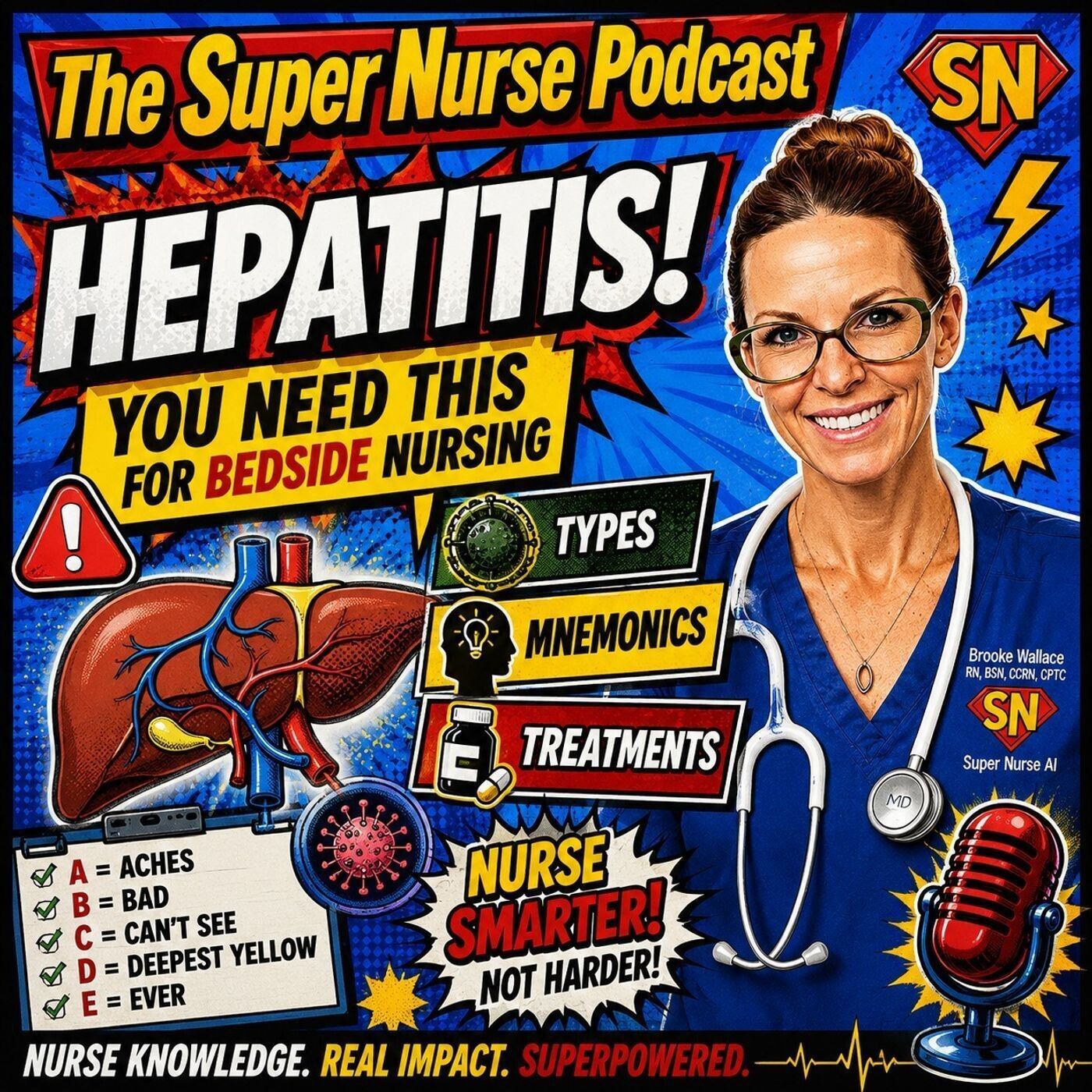
Visual Learner? 👉 Watch the video: https://youtu.be/Jph5GQic4e4 In this episode of the Super Nurse podcast, we break down Hepatitis A, B, C, D, and E in a way that helps nursing students and new nurses connect textbook knowledge to real bedside assessment. You’ll learn how hepatitis affects the liver, why ALT and AST rise, and how classic signs like jaundice, dark tea-colored urine, pale clay-colored stool, pruritus, bleeding risk, and asterixis reveal what is happening inside the body. This episode also covers transmission routes, nursing interventions, diet orders, patient education, and the Hepatitis B window period. By the end, you’ll have a clearer way to recognize hepatitis symptoms, understand the pathophysiology, and anticipate safe nursing care. This episode focuses on the nursing essentials of viral hepatitis, including Hepatitis A, B, C, D, and E. The conversation begins with a realistic bedside scenario: a patient with yellow skin, dark urine, and pale clay-colored stool. These visual cues point toward liver dysfunction and bilirubin backup, making them important signs for nurses to recognize early. Hepatitis means inflammation of the liver, but the episode explains what is happening at the cellular level. Hepatitis viruses target hepatocytes, the liver cells responsible for metabolism, detoxification, bile production, and many other essential functions. Once infected, these cells become virus-producing factories. Much of the liver damage comes from the immune system attacking infected hepatocytes, causing inflammation, cellular injury, and the release of liver enzymes into the bloodstream. A major lab focus is ALT versus AST. In acute viral hepatitis, ALT is often higher than AST because ALT is found more specifically in liver cells. When hepatocytes are damaged, ALT spills into the blood. AST can also rise, but AST is less liver-specific and may be more associated with alcohol-related liver injury when it is significantly higher than ALT. The episode simplifies Hepatitis A through E using memorable nursing mnemonics. Hepatitis A and E are transmitted through the fecal-oral route, making the phrase “vowels equal bowels” an easy way to remember them. Hepatitis A is usually acute and has a vaccine. Hepatitis E is also usually acute but can be especially dangerous during pregnancy because of the risk of severe liver failure. Hepatitis B, C, and D are discussed as blood and body fluid viruses. Hepatitis B can spread through childbirth, sex, IV drug use, blood exposure, and needlestick injuries. It can be acute or chronic, and there is a vaccine. Hepatitis C is strongly associated with blood exposure and has a high risk of becoming chronic. Unlike Hepatitis A and B, there is no vaccine for Hepatitis C. Hepatitis D is unique because it cannot survive without Hepatitis B, so vaccination against Hepatitis B also helps protect against Hepatitis D. The episode also explains why hepatitis causes classic bedside signs. When the liver is inflamed and swollen, bile flow can become blocked. Bilirubin backs up into the bloodstream, leading to jaundice, dark tea-colored urine, and pale or clay-colored stool. These symptoms are not random; they are visible clues that the liver’s normal processing and drainage systems are impaired. Nursing interventions are a major focus. Patients with hepatitis may experience intense pruritus because bile salts build up under the skin. The episode emphasizes using cold compresses, not heat, because heat causes vasodilation and can worsen itching. Nurses should also keep the room cool, moisturize the skin, prevent scratching injuries, and support patient comfort. Bleeding risk is another major concern. The liver produces clotting factors, so liver inflammation or failure can lead to elevated PT, aPTT, and INR. Nurses must monitor for bruising, bleeding gums, bleeding from IV sites, blood in stool or urine, and other signs of internal or external bleeding. Bleeding precautions may include using a soft toothbrush, avoiding unnecessary needle sticks, and protecting the patient from injury. Dietary teaching is also reviewed. Patients with hepatitis may have nausea and poor appetite, so small frequent meals are often better tolerated. A low-fat diet may be ordered because bile is needed to digest fat. When bile flow is impaired, fatty foods can worsen nausea and digestive discomfort. A low-protein diet may be used when there is concern for ammonia buildup and hepatic encephalopathy. Warning signs include confusion, personality changes, sleep-wake reversal, combativeness, and asterixis, also known as flapping tremor. The episode closes with important patient education. Patients should avoid alcohol and be cautious with hepatotoxic medications such as acetaminophen unless specifically directed by a provider. Nurses should also teach strict hand hygiene for Hepatitis A and E, and blood and body fluid precautions for Hepatitis B and C. The final advanced concept is the Hepatitis B window period, where some common labs may appear negative even though the patient is still infected. The key marker discussed is IgM anti-HBc. Timestamps 00:00 – Intro: Recognizing Liver Dysfunction at the Bedside Jaundice, dark tea-colored urine, and pale clay-colored stool are introduced as major visual clues of liver dysfunction. 01:15 – What Hepatitis Means Hepatitis is defined as inflammation of the liver, and the episode explains why pathophysiology matters for nurses. 02:05 – The “Hostile Takeover” of Hepatocytes The hepatitis virus infects hepatocytes and uses them to replicate, while the immune system attacks infected liver cells. 03:25 – Why ALT and AST Rise Damaged hepatocytes spill liver enzymes into the bloodstream, causing abnormal liver function tests. 04:25 – ALT vs. AST Made Simple ALT is usually higher than AST in acute viral hepatitis, while AST being higher may point toward alcohol-related liver injury. 05:35 – Hepatitis A and E: “Vowels Equal Bowels” Hepatitis A and E are transmitted through the fecal-oral route and are associated with contaminated food, water, stool exposure, and poor hand hygiene. 06:45 – Hepatitis A: Food, Water, Hand Hygiene, and Vaccine Hepatitis A is usually acute and preventable with vaccination. 07:35 – Hepatitis E and Pregnancy Risk Hepatitis E is usually acute but can be especially dangerous during pregnancy because of the risk of severe liver failure. 08:35 – Hepatitis B, C, and D: Blood and Body Fluids The episode reviews blood and body fluid transmission, including sex, childbirth, IV drug use, blood exposure, and needlestick injuries. 09:35 – Hepatitis B: Chronic Risk and Vaccine Hepatitis B can be acute or chronic, and vaccination provides protection. 10:35 – Hepatitis C: Chronic Infection and No Vaccine Hepatitis C has a high risk of becoming chronic and may lead to cirrhosis or liver cancer over time. 11:35 – Hepatitis D: “B and D Are Best Buds” Hepatitis D cannot survive without Hepatitis B, so Hepatitis B vaccination also protects against Hepatitis D. 12:35 – Medical Management and Anticipated Orders Hepatitis A and E are usually managed with supportive care, while chronic Hepatitis B and C may require antiviral medications. 13:35 – Bilirubin Backup: Skin, Stool, and Urine Changes Blocked bile flow causes bilirubin to back up, leading to jaundice, dark urine, and pale stool. 14:55 – Pruritus: Why Hepatitis Patients Itch Bile salts can build up under the skin and cause severe itching. 15:45 – Cold Compresses, Not Heat Cold compresses help reduce itching, while heat can worsen pruritus through vasodilation. 16:35 – Bleeding Risk and Clotting Labs The liver produces clotting factors, so nurses must monitor PT, aPTT, INR, bruising, and bleeding. 17:30 – Diet Orders: Low Fat and Small Frequent Meals Low-fat meals may reduce digestive distress when bile flow is impaired. 18:10 – Low Protein Diet and Ammonia Buildup Protein breakdown can increase ammonia, which may worsen hepatic encephalopathy when the liver cannot clear toxins. 18:50 – Hepatic Encephalopathy and Asterixis Confusion, personality changes, sleep-wake reversal, combativeness, and flapping tremor are major warning signs. 19:25 – Patient Education: Alcohol, Acetaminophen, Hygiene, and Safety The episode reviews avoiding hepatotoxic substances and teaching transmission precautions. 19:55 – Hepatitis B Window Period The Hepatitis B window period can make some labs appear negative while infection is still present. IgM anti-HBc is the key clue. 20:20 – Final Takeaway Nurses are encouraged to connect labs, symptoms, and bedside cues instead of memorizing isolated facts. Want to reach out? Send an email to [email protected] or visit SuperNurse.ai The content presented in The Super Nurse Podcast is for educational purposes only and should not be considered medical advice. The host and creators are not responsible for any clinical decisions made based on this content. Always adhere to your institution’s policies and consult appropriate healthcare professionals when making patient care decisions. The content presented in The Super Nurse Podcast is for educational purposes only and should not be considered medical advice. The host and creators are not responsible for any clinical decisions made based on this content. Always adhere to your institution’s policies and consult appropriate healthcare professionals when making patient care decisions.
Embed this episode
What this episode covers
Visual Learner? 👉 Watch the video: https://youtu.be/Jph5GQic4e4 In this episode of the Super Nurse podcast, we break down Hepatitis A, B, C, D, and E in a way that helps nursing students and new nurses connect textbook knowledge to real bedside assessm...
NOW PLAYING
Hepatitis A, B, C, D & E Made Easy: Signs Every New Nurse Should Recognize
No transcript for this episode yet
Similar Episodes
No similar episodes found.
Similar Podcasts
No similar podcasts found.