
EPISODE · Mar 18, 2026 · 1H 42M
Higher Education, Civil Discourse and Democracy
from MSU Today with Russ White · host Russ White
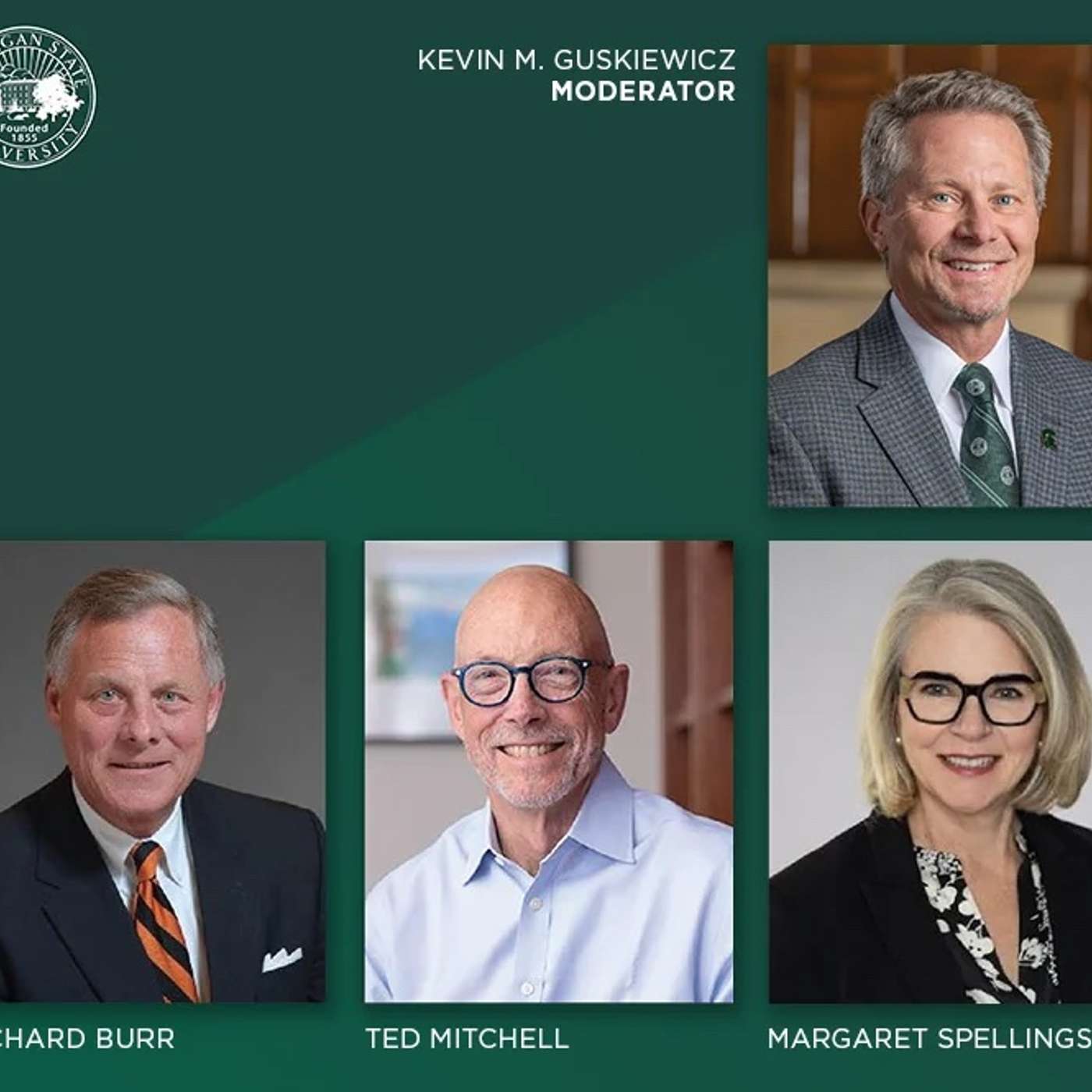
Special Presidential Speaker Series – Michigan State UniversityMichigan State University launched its Presidential Speaker Series with a wide‑ranging and candid conversation on the role of higher education in sustaining democracy and civil discourse. Held at the Wharton Center and moderated by MSU President Kevin M. Guskiewicz, the event brought together bipartisan leaders from government and higher education to examine how universities can help prepare students to navigate disagreement, practice democratic engagement, and contribute meaningfully to the public good.The evening opened with framing from Ann Austin, University Distinguished Professor in the College of Education, who emphasized the importance of universities as spaces where diverse perspectives meet—and where disagreement, when approached constructively, becomes a powerful tool for learning. President Guskiewicz underscored that today’s college campuses are often the first places where students encounter people with markedly different backgrounds, beliefs, and lived experiences, making higher education a microcosm of American democracy itself.The panel featured three nationally recognized leaders: Richard Burr, former U.S. senator and principal policy advisor at DLA Piper; Ted Mitchell, president of the American Council on Education and former U.S. under secretary of education; and Margaret Spellings, president and CEO of the Bipartisan Policy Center and former U.S. secretary of education. Former Michigan governors Jim Blanchard and John Engler also joined the program, highlighting bipartisan efforts to strengthen trust in democratic institutions.Across the conversation, panelists explored growing public skepticism toward higher education, driven by concerns about affordability, job outcomes, transparency, and perceived political bias. While acknowledging these challenges, speakers emphasized that most students report feeling free to express their views—and that universities remain among the few institutions designed specifically to foster open inquiry and debate.A recurring theme was balance: between higher education’s public mission and individual return on investment; between academic autonomy and accountability; and between preparing students for employment and preparing them for citizenship. Panelists stressed that employability and civic education are not competing goals, but mutually reinforcing ones—arguing that student success, transparency in admissions and financial aid, and relevance of research to community needs are essential to restoring public trust.The discussion also addressed emerging pressures, including rapid technological change, artificial intelligence, national security concerns tied to research and data, and the influence of social media on public discourse. Speakers called on universities to communicate their value more clearly, form stronger public‑ and private‑sector partnerships, and recommit to their role as places where difficult conversations can happen with rigor, respect, and honesty.Audience questions steered the conversation toward practical action: how to design classrooms and campus experiences that encourage belonging and respectful dissent; how faculty can be supported in navigating charged discussions; and how leaders can remain grounded in core educational values amid political and social pressures.As the inaugural event in the series concluded, President Guskiewicz reflected on the enduring responsibility of universities to educate not only skilled graduates, but engaged citizens. The evening affirmed the purpose of the Presidential Speaker Series: to model civil discourse, elevate thoughtful disagreement, and strengthen the democratic mission at the heart of higher education.Transcript:Speaker 1 (00:00:00):Good evening. Hello, and thank you so much for joining us tonight. I'm Ann Austin, and I'm a university distinguished professor in the College of Education. I'm very pleased to be here this evening to introduce the Special Presidential Speaker Series and its participants to you. Before we get started, I want to mention a few housekeeping items. First, and in particular to the topic that we're examining this evening, we ask that you please be respectful to those who are joining in the conversation. We also ask that you avoid flash photography or personal recording devices as they may be distracting to those who are on the stage. And we all very much appreciate your cooperation with those requests. Tonight, we're going to be discussing a topic that's quite important to me, and I think to all of us, it's important to me because I've held leadership roles in higher education, as well as being a researcher who studies major issues in higher education.(00:01:05):And in fact, with my colleague, Brendan Cantwell, who I think is here this evening also, we've been hosting a series of public webinars discussing the future of public research universities. And tonight's topic on higher education and civil discourse is really quite central to that future of our universities. Before we delve into the discussion, I first want to acknowledge some of the people joining us in the audience tonight, starting with Michigan State University, Board of Trustees members, Renee Knake Jefferson, and Rebecca Bahar-Cook.(00:01:50):We appreciate having our trustees with us. And welcome also to the state legislators joining us, as well as the presidents of several Michigan universities and colleges and leaders of the Michigan Association of State Universities and Research Universities for Michigan. Thank you so much for joining us. So let's get started with this very interesting evening. Writing in the Lansing State Journal in 2024, MSU President Kevin Guskiewicz said that upholding ideals like civility, respect, and dignity is essential to the meaningful exercise of pluralistic democracy. And he wrote, "The universities like Michigan State are purpose built to promote understanding across our differences." The following month here at the Wharton Center during his presidential investiture, the president announced his intent to sponsor a presidential speaker series. He said such discussions could help our students learn to better navigate a world that's filled with diverse beliefs and viewpoints, bringing thinkers and doers to this campus in an atmosphere of civil discourse.(00:03:17):We know that college might be the first place that many students live and work together alongside people with very different backgrounds and lived experiences. President Guskowitz pointed out that this mix of people and perspectives makes campuses like ours a microcosm of the society into which our Spartans will graduate. This annual presidential speaker series was conceived as a university and a community event, offering attendees and especially our students, examples and role model...
Embed this episode
Ready to play
Higher Education, Civil Discourse and Democracy
No transcript for this episode yet
Similar Episodes
No similar episodes found.
Similar Podcasts
No similar podcasts found.