
EPISODE · Mar 11, 2026 · 6 MIN
How AI Generated Scripts Become Examples of the "Uncanny Valley"
from Walter Rhein Podcast · host Walter Rhein
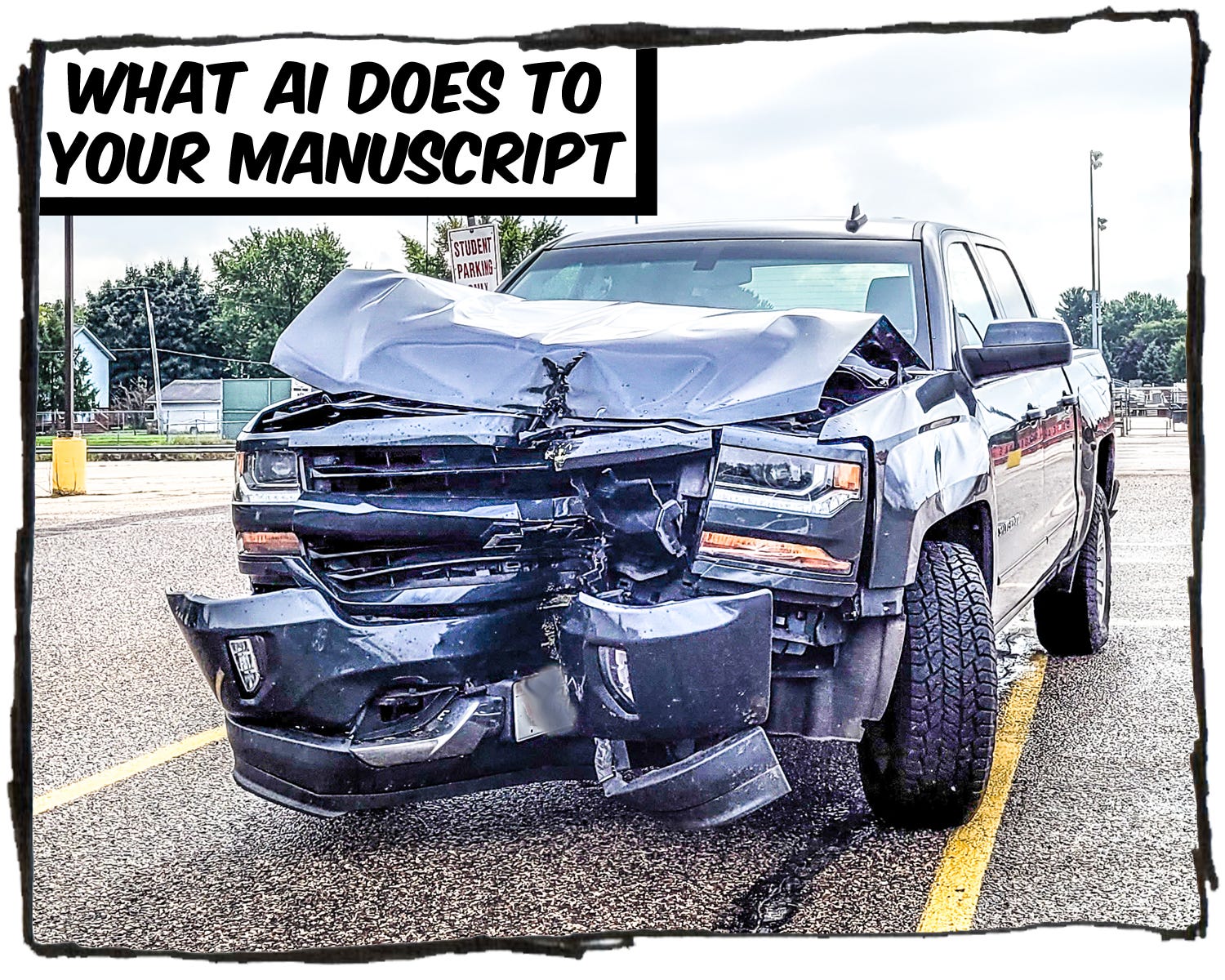
I get the temptation, I really do. Writing a book or a screenplay entails a lot of work. The first step is freewriting the initial word dump that you can then polish off into something brilliant.Today, writers might think, “Well, if the craft is in the editing, why shouldn’t I use an AI tool to generate a manuscript? Then I can work off the manuscript and nobody will be the wiser.”Except, that’s the kind of shortcut that spoils the cake.A great story is more than a sequence of component parts. The element that elevates a story into a work of literature is the ethereal narrative thread. This is a part that has to be felt rather than seen, and as of yet it cannot be detected by a machine.When it comes to creation, life adds another ingredient. The difference is as profound as the contrast between a pile of Amino acids and a living cell. They might have the same essential parts, but one is profoundly different. Removing life from the process of inspiration is like trying to make bread without yeast.Using a voice recorderModern writers have the advantage of wonderful tools that allow us to capture more of our inspiration, but we must resist the temptation to abuse these tools. Asking AI to generate a manuscript is like asking a hammer to design a house.I do most of my brainstorming in the form of voice notes. Then, I use an AI tool to generate a transcript from these recordings. The tool organizes my words into paragraphs and sentences. However, I do not require the tool to create anything.I grew up in the era before home computers. I’ve turned in assignments that were produced on typewriters. Just being able to cut and paste blocks of text was a massive improvement. You can use whatever tool you want as long as you retain ownership of every element of inspiration.Lately, I’ve watched some films that feel like the original screenplay was AI and then the writers polished them off. This feels like disguising the terminator by covering its machine parts with living tissue.The literary version of the “uncanny valley”The discomfort you experience when you encounter something that doesn’t feel completely human is called the uncanny valley. Lately, I’ve been starting to get that feeling when I encounter a misuse of AI tools.It’s called “the uncanny valley” because generally our positive response to something increases the more human it looks. However, there’s a dip (or valley) that turns our response to revulsion at a certain similarity level.I find that I’ve started to get that same feeling of revulsion when I read a text that was made with AI. As a writer, the comments section of my work is spammed with AI text all the time. Mostly it comes in the form of threats and insults, and those are easy to ignore.But sometimes a sixth sense tells me that an article I’m reading is AI, or actors are reading AI dialogue, or that the voices themselves might be AI. In all these cases, I get a creepy feeling that compels me to walk away. Sometimes I don’t just leave the article, I leave the whole platform.That’s a car wreck.Imitating the work of a renowned authorFranchises that are formulaic are also a tempting place to misuse AI. For example, we all know what to expect from a James Bond film. Each entry requires three exotic locales, a chase, a gadgets scene, a martini (shaken not stirred), two love interests… you get the idea. At this point, there are so many options that it would be easy to generate hundreds of scripts at the press of a button.Familiarity can create a veneer that would approximate authenticity if it didn’t repel the audience.We’ve all seen film adaptations of famous texts that bear little resemblance to the original work. The name of a famous writer and a lesser known title are enough of a marketing advantage to greenlight a project. Peter Jackson’s The Hobbit took a 300 page book and extended it into 3 feature length films. Fortunately, that series came out before the AI era.These days, somebody could prompt a computer to write a screenplay in the style of J.R.R. Tolkien. I’m sure the result would feature hobbits, elves, dwarves, magic, and all the other elements that are common to his work. A viewing audience might look at it and be reminded of Tolkien, but they’d be repulsed by the uncanny valley.There are no shortcuts to inspirationThe problem is that an AI tool can’t perceive the narrative thread that binds your work into something revelatory. AI can only perceive the ingredients.AI will give you a bowl of eggs, flour, baking powder, sugar, and milk.A human being will give you a cake.You can’t even trust AI to provide you with the skeleton of an outline. This is another case of something inauthentic that has an unsettling resemblance to a human being. An AI outline lacks the soul. Even if you tried to go through and add the soul in later, you’re still operating on a foreign structure.The craft of writing has no shortcuts because it’s based on feel rather than a scientific process. Your audience is looking for the kind of intuitive leaps that cannot be replicated by a machine.The human mind can jump through space. Machines need a flight plan.The audience won’t settle for a facsimileFilmmakers deliberately create a product that is so dynamic that the viewing public cannot look away. They know that they’re competing with electronic handheld devices that are designed to captivate our attention. Films have to be so compelling that they can overcome the distraction of a second screen.But maybe the real reason the audience loses interest is because they’re not seeing anything authentic.There are moments in life when you lock eyes with something that is so utterly captivating that you get lost in the mysteries of existence. In those precious instances, you experience a sense of euphoric wonder from which you cannot turn away. The only thing that frees you is when the moment comes to its natural end.Those are the feelings that all artists should aspire to recreate. AI can never achieve that because it requires an ingredient that doesn’t exist. Truly captivating creative expression always represents a whole greater than the sum of its parts.You all make this newsletter happen! Thanks for your sponsorship! I have payment tiers starting at as little as twenty dollars a year.Upgrade at 30% offUpgrade at 40% offUpgrade at 50% offUpgrade at 60% offI’m so happy you’re here, and I’m looking forward to sharing more thoughts with you tomorrow.My CoSchedule referral linkHere’s my referral link to my preferred headline analyzer tool. If you sign up through this, it’s another way to support this newsletter (thank you).I'd Rather Be Writing is a reader-supported publication. To receive new posts and support my work, consider becoming a free or paid subscriber. Get full access to I'd Rather Be Writing at walterrhein.substack.com/subscribe
Embed this episode
NOW PLAYING
How AI Generated Scripts Become Examples of the "Uncanny Valley"
No transcript for this episode yet
Similar Episodes
No similar episodes found.
Similar Podcasts
No similar podcasts found.