
EPISODE · Oct 18, 2025 · 10 MIN
How Corrupt Police In Rural Towns Allow Children to Have Access to Alcohol
from Walter Rhein Podcast · host Walter Rhein
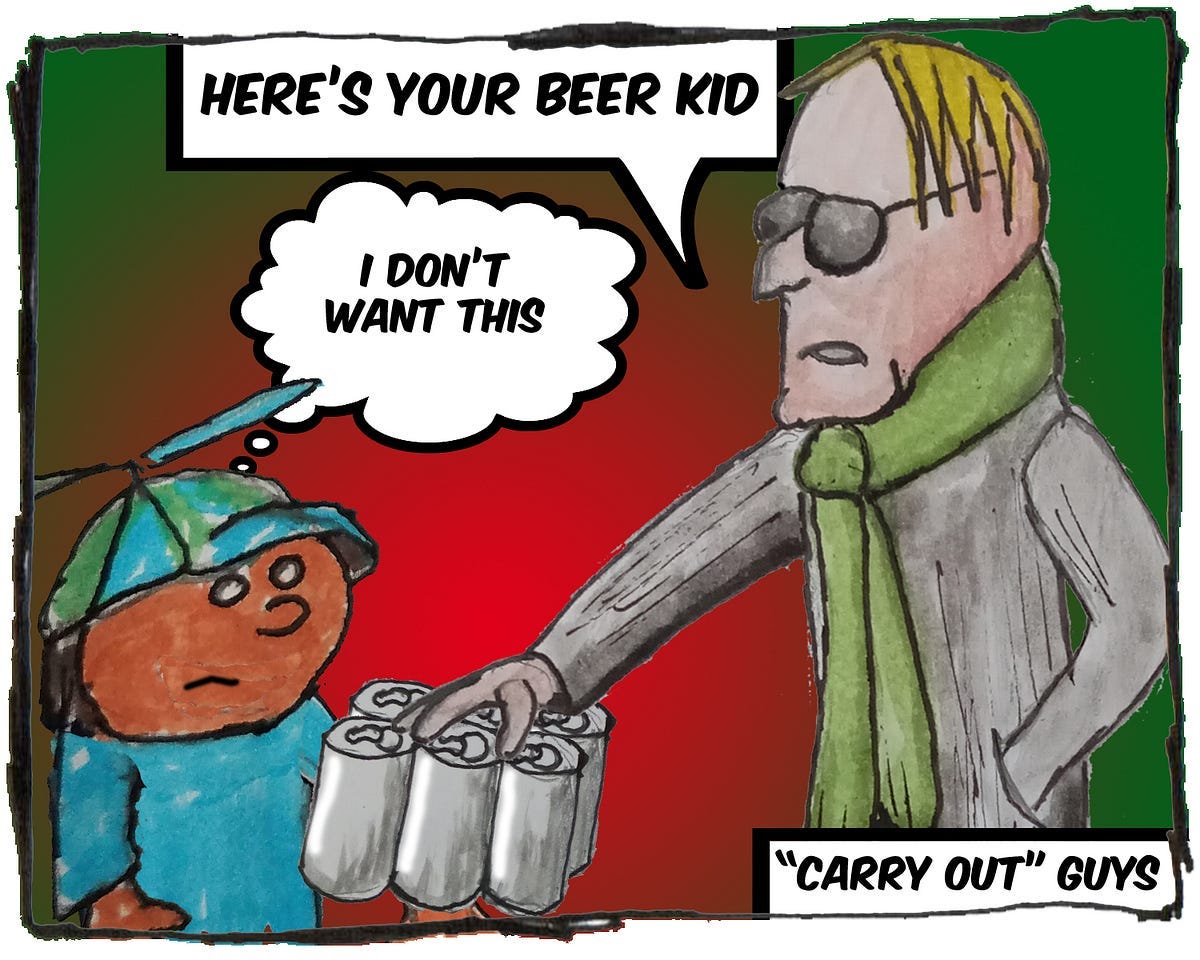
Alcohol played a large role in the rural, conservative town of my youth. We were so small we didn’t even have a traffic light, but we had five bars on Main Street alone. There was even a strip club just outside of town, and starting in about 10th grade the school administrators had already picked out which of the girls were destined to work there.I didn’t like to drink, and that contributed to why I didn’t fit in. I had my beer or two here and there because it’s something you try, but I’ve always preferred to sharpen rather than dull my mind. A kid who can do math might as well wear a “kick me” sign on his back.I hung out with the crowed that was designated as the “losers.” We had long hair and we didn’t participate in sports. The community determined we didn’t have a future even though we got good grades. Our girlfriends were the ones they were saving a place for at the strip club. They often had to fend off the unwanted advances of married men.“Well, if she’ll go out with him, she’d absolutely go for me. Think about it! I’m a business owner!”Every now and then, the school would force all the students to assemble in the gymnasium. We’d be subjected to a stern lecture about the dangers of alcohol. Whatever teacher gave the speech would be really serious about it even though you could often smell the brandy on his breath.Perhaps he channeled all his own self-loathing into his beratement of us. It was effective. After listening, I was almost provoked enough to start drinking just to spite him even though I didn’t want to.They told us about this awful thing, made it enticing by lecturing us on its evils, then ensured it was always readily available. What was the objective? You tell me.Our high school had a drinking cultureDespite the fact that every authority figure in the community thought of himself as a sword-wielding warrior in the struggle against intoxication, pretty much everybody was drunk all the time.At least it seemed that way.Early on, some of the members of my social group selected alcoholism as their preferred career path. They’d brag loudly of their exploits because, despite all the threatening language from teachers and staff, everyone felt that drinking was encouraged.There’s the spoken truth about a place and the unspoken truth. The unspoken truth isn’t considered appropriate for polite conversation because putting it into words forces people to confront their faults.I’m revealing the unspoken truth now.Bragging about getting servedOn a Monday morning in 10th grade, one friend of mine was delighted to tell me how he’d gotten served at a bar over the weekend. He wasn’t even old enough to drive.“I ordered a beer, and he served me without even questioning it,” he said. “Then I ordered a whiskey on the rocks and the bartender gently shook his head.”“You didn’t get it?”“Nah, but I did get another beer.”“So he was pretty much telling you that he knew you were under age and that you shouldn’t push it?”“Yeah, it was all good, he was establishing boundaries. He was a cool dude.”Cool dude? Boundaries?My 10th grade friend with his 9th grade girlfriend sitting in a bar getting served alcohol by some thirty year old lawless loser that everyone in town considered a pillar of the community.That was a typical weekend.Meanwhile, the kids who walked around with Calculus textbooks under their arms instead of six packs were the “losers.”Scheming, scheming, always schemingSome of the people I used to hang out with back then could talk to you for days about their various ploys for getting alcohol. I should go back to my hometown and interview them. They’re still there. The question is whether or not they’d remember.I don’t have that many stories because alcohol wasn’t the focal point of my existence. I didn’t scheme ways to obtain it. Besides, it was always present like an unwelcome work acquaintance or the uncle that makes you uncomfortable at family gatherings.“Do you know anybody who will carry out?”“No.”“Wait, I do, let’s see if Dixon is at home.”Every small town has a guy like DixonWe got stuck driving to Dixon’s house. He lived in the worst part of a town that was little more than a skid mark of bad areas. His yard consisted of torn up dirt and leafless trees. The house was white with stains of yellow. The paint on the window frames was cracked and peeling away. There was a mean dog on a chain. Rusted cars from the era of John Dillinger decorated the yard.Come to think of it, they might actually have been Dillinger’s cars. I heard he used to come up to my corner of Wisconsin. Maybe he appreciated the lawlessness. Maybe it was a place he could go to relax and feel accepted.Dixon saw us pull up and came sauntering out of the house. He wore brown jeans that might have once been blue. Both his shoes and his teeth were white with yellow stains. His greasy hair was brown with yellow streaks. He had something that couldn’t be called a beard which had apparently crawled onto his face to die.A deal is struck without wordsDixon didn’t need to ask why we were there. There was only one reason a car filled with “clean-cut” kids would turn up at his door. Only to Dixon were we considered clean-cut. He pushed into the back and sat there stinking of cigarettes.His only significance was that he’d turned 21 and every high school kid knew that he’d buy you a six pack for $10.The liquor stores aren’t particular. Looking out the window to see what’s done with the six pack is not their responsibility. Dixon went in, came out, and handed the six pack to my friend right on the sidewalk.I found myself looking at Dixon and wondering about him. What kind of life was this? Now that the chore was done, everybody just wanted him to go away. He didn’t ask for a ride back home and we didn’t offer.Dixon glanced at me, and I realized that I was giving him the kind of look that usually invokes a “Got a problem?” My face softened, but Dixon didn’t object. He couldn’t keep eye contact for very long. He pocketed his ten and turned to walk home.“Want a beer?” somebody asked.“No, I don’t want any of Dixon’s beer,” I muttered.Kids like Dixon are everywhere. Every resident of the town knows who he is. Why don’t they ever get arrested? It feels very much as if conservative power structures are just fine with the status quo. The purpose of these men is to provide alcohol to the star athletes because rural areas are still furious that the drinking age was raised from 18.The slippery slopeYears later, I was working a summer job at home after I’d turned 21. My co-workers were mostly high school kids. We were sitting around chatting when the topic of conversation turned to my age.One kid looked at me, his eyes lighting up in barely contained excitement, “You mean you can carry out for us?”I felt sick. The moment seemed dirty and sad. My thoughts accelerated and I considered all the things I had and all the things I might lose. There are people in the world and the only thing they can offer to impress anyone is that they are old enough to purchase alcohol. But what happens if you give a drink to a kid and he drives his car into a tree? What if he kills himself and his pretty young girlfriend?Even though I was 21, I hadn’t yet purchased any alcohol. It wasn’t the focal point of my life. My 21st birthday came and went. There was no party. I had a Physics test to study for with all of the other “losers” who had left my rural, conservative community to go and get a “worthless” degree.We’re held down by the weight of unspoken expectationsI got so tongue tied, I couldn’t even answer the kid. Luckily, one of my other co-workers stood up for me.“No, we’re not going to ask that of Walter because Walter is our friend.”Walter is our friend.I was grateful for that. At the same time, here was this other kid, probably only about 19. He already possessed a greater understanding of the unspoken reality of my hometown culture than I did. To what extent was I living an illusion? How could others be so comfortable with a reality that was a complete mystery to me?These rules that nobody talks about are still largely in operation in every rural area in the country. The more they outwardly protest something, the more it’s secretly encouraged.Children have their first sip of wine at communion.Censorship doesn’t erase failureThe “cool” priest tells you not to drink then he offers you wine with a conspiratorial wink. He’s good friends with the “cool” teacher and the “cool” cop who refuses to arrest the guy who buys beer for high school kids.The only “bad” apples are the ones who are unwilling to play by the established rules.“Quit rocking the boat kid!”“Do you think you’re better than us?”“Tradition isn’t good enough for you?”I’ve had enough of unspoken rules. I’ve had enough of seeing awful people revered while good people are disparaged.You don’t get a functional sense of history by reading a textbook with all the significant passages blotted out. The code of silence in small towns works the same way.Exploring the things that people refuse to talk about will help you find the offramp to escape the miserable, downward spiral. You’ll discover that the unspoken truths reveal all the ways your community has failed.You all make this newsletter happen! Thanks for your sponsorship! I have payment tiers starting at as little as twenty dollars a year.Upgrade at 30% offUpgrade at 40% offUpgrade at 50% offUpgrade at 60% offI’m so happy you’re here, and I’m looking forward to sharing more thoughts with you tomorrow.My CoSchedule referral linkHere’s my referral link to my preferred headline analyzer tool. If you sign up through this, it’s another way to support this newsletter (thank you).I'd Rather Be Writing is a reader-supported publication. To receive new posts and support my work, consider becoming a free or paid subscriber. Get full access to I'd Rather Be Writing at walterrhein.substack.com/subscribe
NOW PLAYING
How Corrupt Police In Rural Towns Allow Children to Have Access to Alcohol
No transcript for this episode yet
Similar Episodes
Mar 26, 2026 ·1m
Jan 2, 2026 ·47m
Dec 21, 2025 ·46m