💥💥How Do We Enhance Our Presence 💥💥
from The Middle Way Hosted by Christian Champ
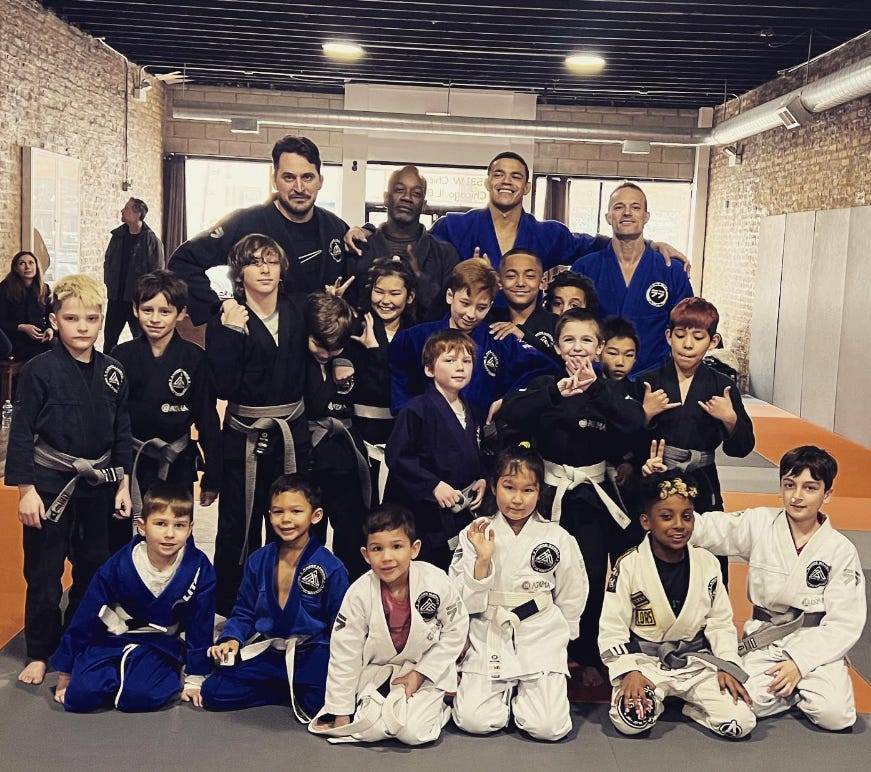
🔥Welcome to Volume #00102!🔥 I’m Christian Champ. This is ☯️The Middle Way Newsletter ☯️. It is a place where I write, explore, share, and invite you along for the journey. If you enjoy the newsletter, please share it with your friends. 💥💥💥How Do We Enhance Our Presence 💥💥💥 My voice fell flat. No one listened. The students bounced around with a Friday energy, making it difficult for them to concentrate. We stood at the front of the class, working on getting folks to focus on practicing Jiu-Jitsu. When Andre Maneco, the head of the academy, is running the class, the kids respond to him. The kids stand up straighter. The kids stand with fear, reverence, and respect. When Marc, another parent, and I teach the class, we lose the fear and the respect. Two parents trying to instruct twenty kids, including our own children, doesn't always go as planned. We need more presence to command the room. We don't have Andre's presence. We aren't black belts. We don't demand his respect. Our own children tend to goof around more when we run the class. They feel special and entitled, pressing things. The kids don't care that we are in our mid-40s with years of life experiences. The kids don't care that we have successful careers and can control a meeting room. The kids only care if we make our presence felt in a commanding yet inviting way. The kids only care if we help get them to care. We need to convey control over the class by making it fun, engaging, and staying on point. We need to lock in and lock them in to keep things flowing. Presence is how we show up. Presence is our words and actions. Presence is how we carry ourselves. Presence is how we connect with everyone in the room. How do we bring our presence no matter what room we are in? #1 Prepare When we show up prepared and ready for what the room throws our way, . When we prepare, we create space to think and observe when the action starts. We've all seen the CEO who shows up for the all-hands call with a crisp, clear story. The other side is the CEO, who wings it and throws the ball around, leaving everyone confused. We want to be like the first CEO in situations that matter. Whether leading a kid's BJJ class, talking to our team, or trying to create space in a meeting to show up, we need to be ready when we see the opening to deliver. #2 Being Present A board member asking us a question or a six-year-old looking around the room means we must be present. We need to follow what is happening in the room. We notice the body language and see who we pull in and who we lose. We need to adjust on the fly, which starts with being present. No phones, no distractions, only our full attention on the matter at hand #3 Listen The key to presence starts with listening to what is happening around us. It is noticing if we need to be silent or speak up. It is hearing what everyone else is saying with words or with actions. When people speak, we listen to see if we need to respond to their needs and the room's needs. #4 Develop Our Voice The most important part is developing our voice. Our voice comes from reps and focuses on being concise and clear. We use our inflections and our pauses. We say enough but not too much. We hit the high-level comments and let the silence speak for us. We constantly work on becoming clearer and helping everyone follow along. When we speak, it matters because our words always matter. That is where we want to get to. We aim for impact in the minimal amount of words spoken. Presence is a lifetime journey that we always need to be working on. 🧠Things to Think About🧠 David Epstein’s 2x2 Matrix on Happiness David shares a video from Hillel Einhorn, who notes that a great way to think about happiness is by listing all the things we don’t want and don’t have. When we frame it this way versus what we want and don’t have, it is much easier to see how good we have it. It reminds me of a conversation with one of my best friends from high school. I entered year three as a financial analyst, and he rolled off a two-year post-college analyst program at Morgan Stanley. We both noted the fact that we didn’t see anyone whose life we wanted. We worked with great people but had zero desire for their lives to be our future paths. Our don’t want, don’t have box seemed large and helped steer where we took our next steps in our lives and our careers. The Certainty Trap as exemplified at Standford Law School by Ilana Redstone The certainty trap is that when we hold something to be true no matter what. We can’t be dissuaded no matter the effort. It’s boxing in discourse and limits space. Illana writes about why generating questions is the way to avoid the certainty trap. So how can we avoid the Certainty Trap and engage without compromising core beliefs or countenancing views that we believe cause harm? There are two basic ways. One is to be aware that the tendency to condemn the character of someone who disagrees with us comes from a certainty that is fundamentally inconsistent with the world we live in — even if that means examining our certainty around what constitutes harm itself. The other is to recognize that no idea, value or principle is exempt from questioning, examination or criticism — by oneself or others. This second piece means clearly articulating our principles. After all, it’s difficult to question what hasn’t been named. But, again, it doesn’t require letting those principles go. Ultimately, we don’t have to abandon our principles or our values — we just have to be willing to hold them up to the light and examine them. One way to think about avoiding the Certainty Trap is that it’s less about answering questions than it is about generating them. 🎧Things to Listen, See, and Watch 🎧 Kevin Kelly on Econ Talk Chatting about AI and Life Advice Kevin was the inspiration for last week’s newsletter offering bits of advice. Kevin Kelly: I in part travel a lot to embrace some discomfort. I think some discomfort is part of what good travel is about. You're actually putting yourself out, you're leaving things behind, and you're having some discomfort. And, that discomfort is good because it's forcing you to look differently, to think differently, to reevaluate what it is that you think is important. So, one of my pieces of advice that I, again, repeat to myself, or I condensed so that I could repeat to myself was, when I can't find something in my house that I know that I have, and I finally find it, I say to myself, 'Don't put it back where I found it. Put it back where I first looked for it.' And, I always tell myself that, 'Oh right, no, no, don't put it back--put it back where I looked for it.' And, that's much, much better. And, I can find it again very fast. Because I think about it and that's where it is. So, it's a little story I tell myself and it works. Kevin Kelly: Right. So, you need to go at least three times, but you would say, 'Is there more?' And, then they're talking and then you say, 'Is there more?' And, then you go, and by that point you're really getting the heart of the matter. You've got to go all the way and let them go through the obvious stuff and the cliché stuff. And, then at the third, 'Is there more,' then you'll hear the real story. Kevin Kelly: Well, you're absolutely right. The potency of a story is beyond belief. And, our lives are just stories. And, civilization is kind of a story. Russ Roberts: One of your lines is, 'Don't measure your life with someone else's ruler. Don't measure life with someone else's ruler.' And I thought, that's really good advice. And, there's a separate piece of advice you left out, which is, 'Figure out what ruler you want to use. Create your own standards.' Kevin: So, I think I was temperamentally inclined that way, but I resigned myself to a life of poverty and not having very much money, but having a lot of time. And, I don't know where I got that idea that that was a better bargain, was to have control over my time rather than having money. But, it wa… This is a public episode. If you would like to discuss this with other subscribers or get access to bonus episodes, visit themiddleway.substack.com
Embed this episode
No transcript yet.