How history literally lives on through Choi Chang-deok's mastery of dance episode artwork

EPISODE · Jun 1, 2026 · 7 MIN

How history literally lives on through Choi Chang-deok's mastery of dance

from Korea JoongAng Daily - Daily News from Korea · host PARK SANG-MOON

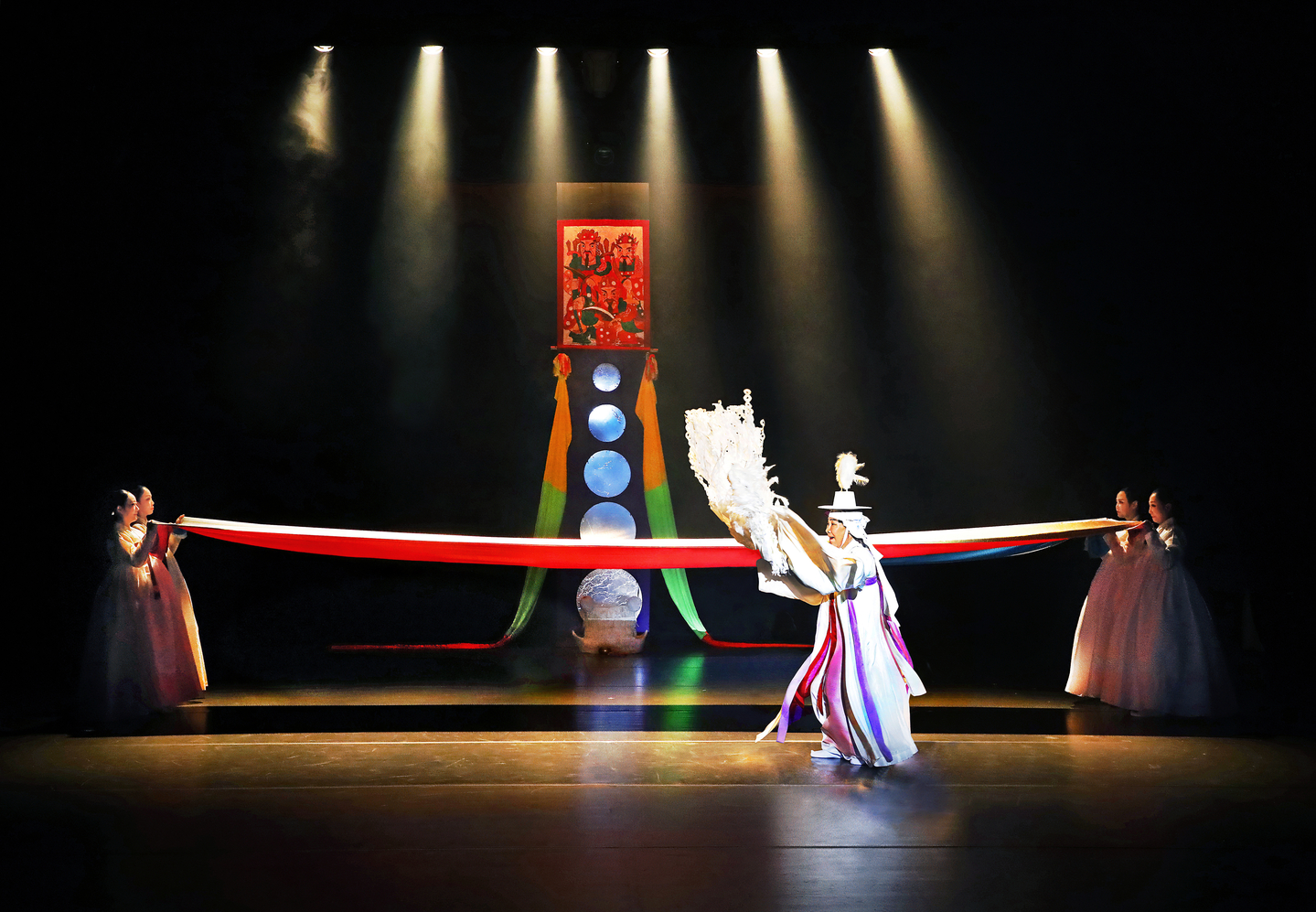
This article is by Park Sang-moon and read by an artificial voice. [ZOOM KOREA] The arc formed by the long sleeves of a jangsam, a monk's robe used in traditional Korean dances, cuts through the air in almost a devotional gesture. At the same time, the dancer clutches a white silk handkerchief and moves it as if it's an extension of their own body. In traditional Korean dances, this tossing and gathering of the cloth often symbolizes holding something and letting it go, a cycle through which the inescapable sorrow in life constantly transforms. Under Choi Chang-deok's control, that grief never becomes overwhelming. Instead, through restrained breathing and movement, the veteran dancer brings the audience toward a calm that exists after sadness — and, at times, toward moments of ecstasy and climax. Choi, also known as Dancho, is a traditional Korean dancer who is officially certified to carry on the traditions of seungmu, a monk's dance, and salpuri, a purification dance, both of which are designated by the government as National Intangible Cultural Heritages. Even among the dancers keeping the country's traditional arts alive, Choi stands apart for the way in which he has inherited the artistic spirit of his teacher, the master dancer Lee Mae-bang (1927-2015), while developing a distinctive style of his own by connecting that legacy with the "Cheonbugyeong," an ancient Korean philosophical text. His journey, like most others, began with his family and led him to some of the greatest masters of Korean dance and music, all of whom would teach him how to enter a philosophical realm in which the order of the universe is expressed through movement. Born in Hongseong, South Chungcheong, as the youngest of seven children, Choi possessed a natural talent for dancing and singing. During his elementary school field days, he would sling a janggu, an hourglass-shaped traditional drum, over his shoulder and freely show off his skills, quickly becoming the center of attention. But his specific affinity for traditional Korean music was rooted in his family background. His aunt was well known in the region for gayageum byeongchang — a performance style that combines singing with playing the gayageum, the plucked zither — meaning that such instruments were always present in the house. The first decisive turning point in Choi's life as a dancer came when he began studying under the late Han Young-suk (1920-1989), one of the most prominent figures of 20th-century traditional Korean dance. As a middle and high schooler, Choi spent almost every weekend traveling to take lessons from Han. He also learned how to perform Gyeonggi folk songs under An Bi-chwi (1926-1997) and pansori, or traditional Korean opera, under Park Cho-wol (1917-1983), both master singers of their era. At 19, Choi met the renowned Lee Mae-bang through Han's introduction. Lee, one of the most emblematic figures in traditional Korean dance, is often described as having been "a dancer sent from heaven" and an artist who reached a state of spiritual discipline through dance. Choi's rise to becoming one of the country's leading dancers today is undoubtedly rooted in his relationship with both Han and Lee. However, despite Choi's passion for dance, his parents wanted him to pursue an academic path at university, and he complied with their wishes, entering Dankook University to study French language and literature. Still, he refused to abandon dance and won numerous awards at competitions across the country during his university years. After graduating, Choi worked for a year as a French teacher at Seosan Girls' High School in South Chungcheong. Even there, he often found himself teaching his students how to dance during school events. His longing for the arts and his turmoil over whether he was truly meant to be a French teacher instead of a dance teacher weighed heavily on him. Eventually, Choi knelt before his parents, pleading for their understanding, and declared that he ...

This article is by Park Sang-moon and read by an artificial voice. [ZOOM KOREA] The arc formed by the long sleeves of a jangsam, a monk's robe used in traditional Korean dances, cuts through the air in almost a devotional gesture. At the same time, the dancer clutches a white silk handkerchief and moves it as if it's an extension of their own body. In traditional Korean dances, this tossing and gathering of the cloth often symbolizes holding something and letting it go, a cycle through which the inescapable sorrow in life constantly transforms. Under Choi Chang-deok's control, that grief never becomes overwhelming. Instead, through restrained breathing and movement, the veteran dancer brings the audience toward a calm that exists after sadness — and, at times, toward moments of ecstasy and climax. Choi, also known as Dancho, is a traditional Korean dancer who is officially certified to carry on the traditions of seungmu, a monk's dance, and salpuri, a purification dance, both of which are designated by the government as National Intangible Cultural Heritages. Even among the dancers keeping the country's traditional arts alive, Choi stands apart for the way in which he has inherited the artistic spirit of his teacher, the master dancer Lee Mae-bang (1927-2015), while developing a distinctive style of his own by connecting that legacy with the "Cheonbugyeong," an ancient Korean philosophical text. His journey, like most others, began with his family and led him to some of the greatest masters of Korean dance and music, all of whom would teach him how to enter a philosophical realm in which the order of the universe is expressed through movement. Born in Hongseong, South Chungcheong, as the youngest of seven children, Choi possessed a natural talent for dancing and singing. During his elementary school field days, he would sling a janggu, an hourglass-shaped traditional drum, over his shoulder and freely show off his skills, quickly becoming the center of attention. But his specific affinity for traditional Korean music was rooted in his family background. His aunt was well known in the region for gayageum byeongchang — a performance style that combines singing with playing the gayageum, the plucked zither — meaning that such instruments were always present in the house. The first decisive turning point in Choi's life as a dancer came when he began studying under the late Han Young-suk (1920-1989), one of the most prominent figures of 20th-century traditional Korean dance. As a middle and high schooler, Choi spent almost every weekend traveling to take lessons from Han. He also learned how to perform Gyeonggi folk songs under An Bi-chwi (1926-1997) and pansori, or traditional Korean opera, under Park Cho-wol (1917-1983), both master singers of their era. At 19, Choi met the renowned Lee Mae-bang through Han's introduction. Lee, one of the most emblematic figures in traditional Korean dance, is often described as having been "a dancer sent from heaven" and an artist who reached a state of spiritual discipline through dance. Choi's rise to becoming one of the country's leading dancers today is undoubtedly rooted in his relationship with both Han and Lee. However, despite Choi's passion for dance, his parents wanted him to pursue an academic path at university, and he complied with their wishes, entering Dankook University to study French language and literature. Still, he refused to abandon dance and won numerous awards at competitions across the country during his university years. After graduating, Choi worked for a year as a French teacher at Seosan Girls' High School in South Chungcheong. Even there, he often found himself teaching his students how to dance during school events. His longing for the arts and his turmoil over whether he was truly meant to be a French teacher instead of a dance teacher weighed heavily on him. Eventually, Choi knelt before his parents, pleading for their understanding, and declared that he ...

NOW PLAYING

How history literally lives on through Choi Chang-deok's mastery of dance

0:00 7:51

No transcript for this episode yet

We transcribe on demand. Request one and we'll notify you when it's ready — usually under 10 minutes.

Breaking News Show | eTurboNews Juergen Thomas Steinmetz News is relevant to the global travel and tourism industry, human rights and global issues.Breaking news when it happens and only from the source. French Your Way Jessica: Native French teacher founder of French Your Way Boost your French listening skills and test your comprehension with this one of a kind series of podcasts. Get the chance to listen to a real conversation between native speakers talking at normal speed AND customise your learning experience through carefully designed sets of questions (2 levels of difficulty) available for download at www.frenchvoicespodcast.com. All interviews also come with the transcript. French teacher Jessica interviews native speakers of French from around the world who share a bit of their life and passion. Where else would you meet in one same place a French yoga teacher based in Melbourne, a soap manufacturer from Provence, or a couple cycling around the world? HOMELAND HOMELAND The Church is a body not a building. It's the bride of Jesus Christ! Jesus is coming back for a mature bride. That means it's time for the church of Jesus Christ to move from milk to meat. This is the hour of maturity!HOMELAND is an announcement that the church is being set free. Only the church has the ability to transform the world. The kingdom's of this world will become the kingdoms of our Lord and Savior!All of creation has been waiting for this moment! Sons and daughters of God are rising up and taking their seat! PodQuesting Dwight J Randolph- WolfShield Media PodQuesting: -By WolfShield Media and Dwight J RandolphJoin us on an exciting journey to master the world of fiction podcasting! At PodQuesting, we document our quest to improve and innovate, sharing valuable insights, strategies, and behind-the-scenes tips along the way. Whether you're an experienced podcaster or just starting your first show, our podcast is your go-to resource for everything podcasting.Discover practical advice, creative techniques, and lessons from our own experiences as we explore the ever-evolving podcasting landscape. Ready to level up your skills and embark on this adventure with us? Tune in and join the quest!Have questions or feedback? Reach out to us at [email protected] and visit our website:WolfShield.Media

Frequently Asked Questions

How long is this episode of Korea JoongAng Daily - Daily News from Korea?

This episode is 7 minutes long.

When was this Korea JoongAng Daily - Daily News from Korea episode published?

This episode was published on June 1, 2026.

What is this episode about?

This article is by Park Sang-moon and read by an artificial voice. [ZOOM KOREA] The arc formed by the long sleeves of a jangsam, a monk's robe used in traditional Korean dances, cuts through the air in almost a devotional gesture. At the same time,...

Can I download this Korea JoongAng Daily - Daily News from Korea episode?

Yes, you can download this episode by clicking the download button on the episode player, or subscribe to the podcast in your preferred podcast app for automatic downloads.
URL copied to clipboard!