
EPISODE · Jul 14, 2026 · 22 MIN
How Nurses Recognize Heart Failure When The Monitor Doesn't
from Healthy Skin Life · host Brooke Wallace
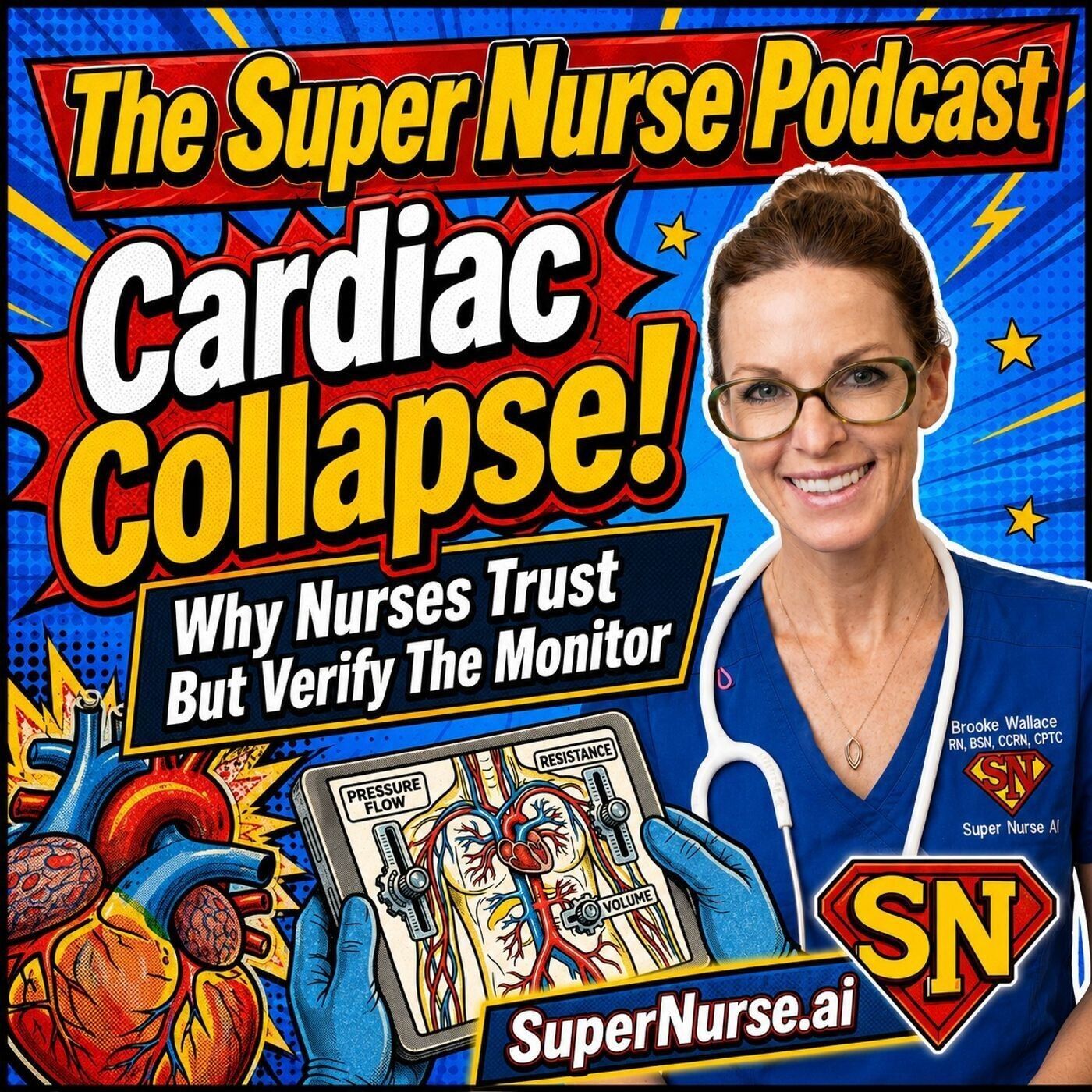
In this episode, we explore how nurses recognize cardiovascular deterioration by looking beyond heart-monitor rhythms and isolated vital signs. The discussion begins with the heart’s basic anatomy, including the coronary arteries, SA node, AV node, valves, and the relationship between electrical activity and mechanical contraction. 👉 Watch the video on Super Nurse Comics 👉Learn more about organ donation and organ transplant We examine how chronic hypertension damages the heart, brain, kidneys, and vascular system over time. The episode also considers how kidney function and social determinants of health—including access to food, safe housing, walkable environments, and chronic stress—can influence cardiovascular risk. Next, we compare aortic stenosis and mitral stenosis. Aortic stenosis creates resistance as the left ventricle ejects blood through a narrowed valve, producing a harsh systolic murmur and potentially leading to left ventricular hypertrophy, reduced cardiac output, dyspnea, angina, and syncope. Mitral stenosis interferes with ventricular filling during diastole, producing a low-pitched rumbling murmur and causing pressure to build in the left atrium and pulmonary circulation. The episode then explains the difference between a heart attack and cardiac arrest. A myocardial infarction is usually a blood-flow problem caused by an obstructed coronary artery, while cardiac arrest occurs when the heart stops producing effective circulation. We also discuss ventricular fibrillation, why defibrillation is used for certain shockable rhythms, and why asystole is not treated with a shock. Heart failure is divided into two major mechanical patterns: HFrEF: The ventricle is weakened and cannot eject blood effectively. HFpEF: The ventricle is stiff and cannot relax or fill properly. Treatment options discussed include coronary intervention, stents, heart-failure medications, diuretics, mechanical circulatory support, and LVADs. Because many LVADs provide continuous flow, a patient may not have a typical palpable pulse, making device-specific assessment and perfusion checks essential. The final section follows patients with advanced heart disease through transplant evaluation. Heart-transplant candidacy considers medical urgency, compatibility, pulmonary pressures, organ function, cancer screening, psychosocial readiness, medication adherence, substance use, and available support. The episode concludes with pulseless electrical activity, or PEA—the clearest example of why a normal-looking rhythm does not guarantee that the heart is pumping. A monitor may show organized electrical activity while the patient has no pulse and no effective circulation. Key Nursing Takeaways Assess the patient before relying on the monitor. Connect heart sounds with valve timing and blood-flow mechanics. Distinguish a heart attack from cardiac arrest. Confirm whether an electrical rhythm is producing a pulse. Monitor perfusion, mental status, breathing, skin signs, urine output, and blood pressure. Recognize that an LVAD patient may have continuous flow and no palpable pulse. Escalate signs of poor perfusion or sudden deterioration immediately. Timestamps 00:00 When heart data can be misleading 01:17 The heart’s plumbing and electrical systems 03:30 Coronary arteries, the SA node, and the AV node 05:15 Hypertension, kidney function, and cardiovascular risk 07:35 Social determinants of heart health 08:50 Aortic stenosis and systolic murmurs 10:25 Mitral stenosis and diastolic murmurs 11:45 Heart attack vs cardiac arrest 13:25 Ventricular fibrillation and defibrillation 15:00 HFrEF vs HFpEF 16:30 Stents and heart-failure medications 18:05 LVADs and continuous-flow circulation 19:30 Heart-transplant evaluation 21:25 Pulseless electrical activity 22:10 Treat the patient, not the monitor Want to reach out? Send an email to [email protected] or visit SuperNurse.ai The content presented in The Super Nurse Podcast is for educational purposes only and should not be considered medical advice. The host and creators are not responsible for any clinical decisions made based on this content. Always adhere to your institution’s policies and consult appropriate healthcare professionals when making patient care decisions. The content presented in The Super Nurse Podcast is for educational purposes only and should not be considered medical advice. The host and creators are not responsible for any clinical decisions made based on this content. Always adhere to your institution’s policies and consult appropriate healthcare professionals when making patient care decisions.
Embed this episode
What this episode covers
In this episode, we explore how nurses recognize cardiovascular deterioration by looking beyond heart-monitor rhythms and isolated vital signs. The discussion begins with the heart’s basic anatomy, including the coronary arteries, SA node, AV node, val...
NOW PLAYING
How Nurses Recognize Heart Failure When The Monitor Doesn't
No transcript for this episode yet
Similar Episodes
Jan 27, 2024 ·12m
Jan 19, 2024 ·9m
Jan 18, 2024 ·5m
Jan 14, 2024 ·6m
Jan 5, 2024 ·7m
Similar Podcasts
No similar podcasts found.