
EPISODE · Sep 2, 2026 · 11 MIN
How Satellites Catch Snow in the Act of Melting and Refreezing
from Waterlines: How Water Shapes Our World · host jaywen
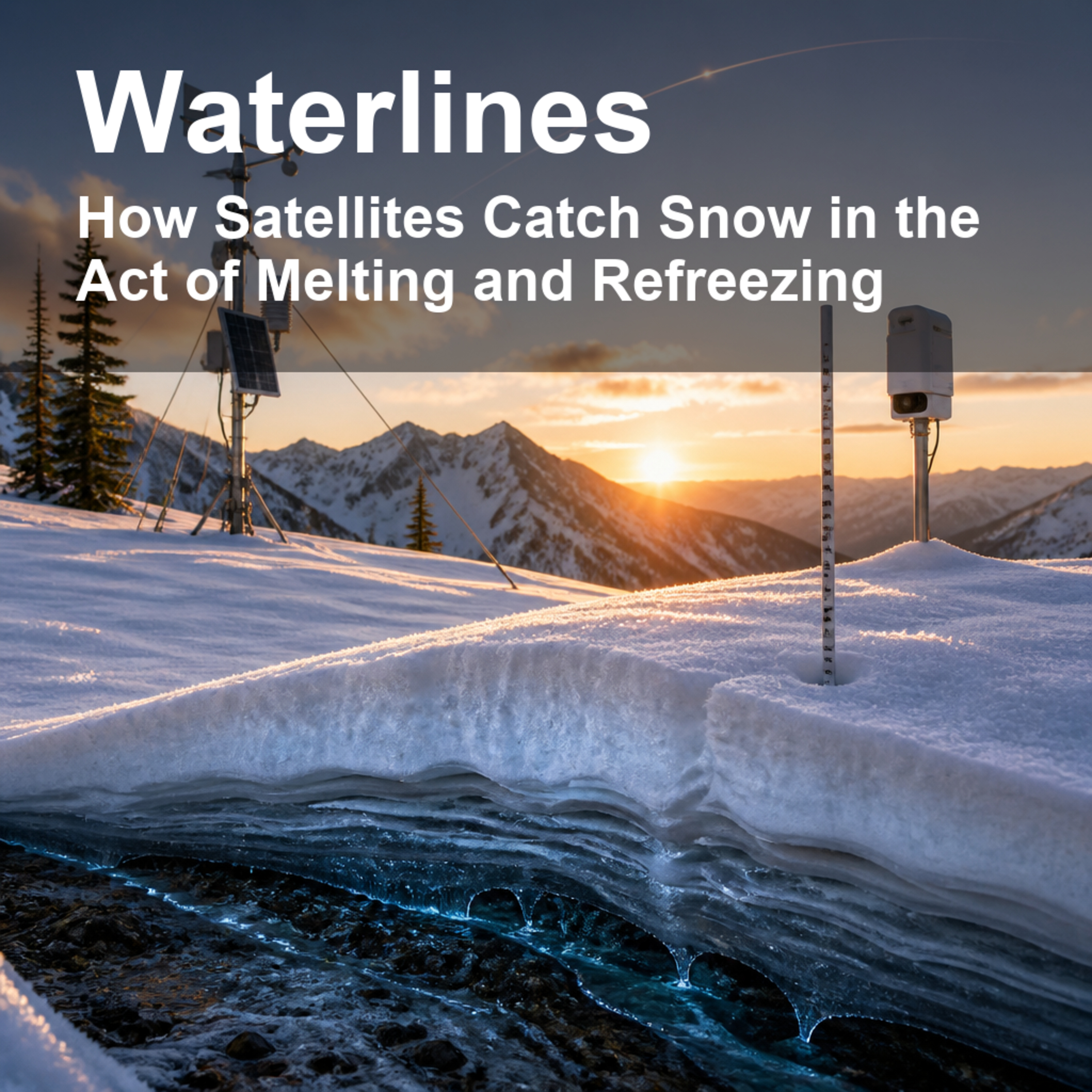
Takeaway: A snowpack can look still, but its microwave glow changes when it flips between frozen storage and liquid water.Spring runoff, flood risk, irrigation water, forest timing, and even winter wildlife can all hinge on a quiet moment: when snow first starts turning to liquid water, then freezing again overnight. This episode follows a study that improves how satellites spot those freeze-thaw pulses from space. Instead of treating every day-night change in microwave signal as melt, the researchers ask a practical question: how much of that signal is just the snow and land getting warmer, and how much is actually water changing phase?We unpack how passive microwave satellites “see” snow, why wet snow suddenly looks brighter in microwave measurements, and why air temperature can help separate ordinary warming from real melt and refreeze. The conversation travels from a flat farm-country satellite pixel in the Northern Great Plains to Colorado’s Senator Beck Basin, where snow surface temperature and energy-balance instruments help test whether the satellite detections make physical sense. Along the way, we talk about why this matters for spring streamflow forecasts, snowpack models, climate records, and the everyday water supply that begins as mountain snow.Citation: Tuttle, S. E., & Jacobs, J. M. (2019). Enhanced identification of snow melt and refreeze events from passive microwave brightness temperature using air temperature. Water Resources Research, 55, 3248–3265. https://doi.org/10.1029/2018WR023995Disclosure: This Waterlines episode uses AI-generated voices for the hosts.
Embed this episode
NOW PLAYING
How Satellites Catch Snow in the Act of Melting and Refreezing
No transcript for this episode yet
Similar Episodes
No similar episodes found.
Similar Podcasts
No similar podcasts found.