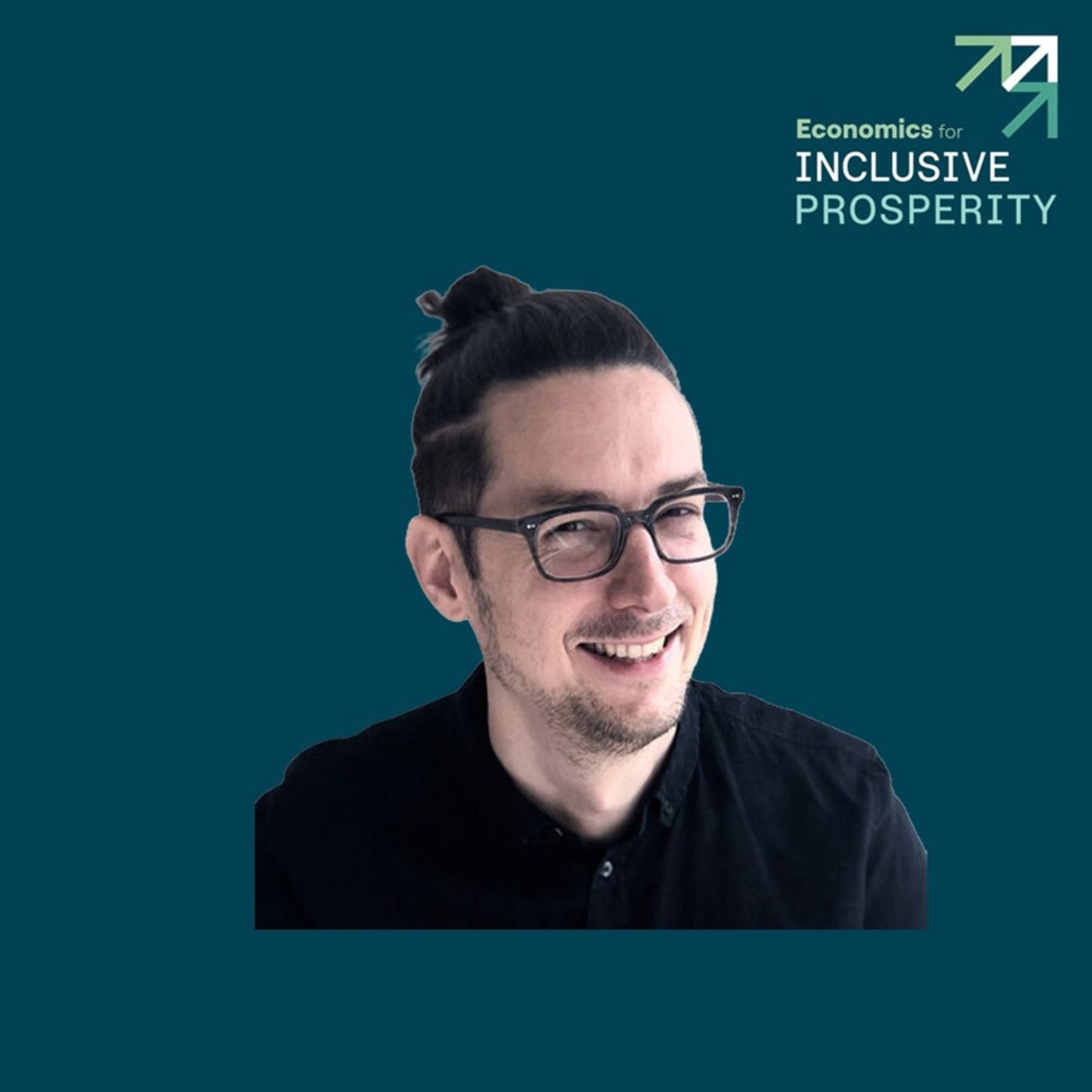
How to make power over AI's future more democratic episode artwork

EPISODE · Feb 25, 2026 · 43 MIN

How to make power over AI's future more democratic

from Economics for Inclusive Prosperity · host Ralph Ranalli, Maximilian Kasy

University of Oxford economist Max Kasy is pushing back hard on the popular notion that artificial intelligence is an unstoppable technological tidal wave and we're all on the beach waiting powerlessly for it to crash over us. That view of AI is wrong — or at least, conveniently incomplete, says Kasy, who runs the Machine Learning and Economics Group at Oxford and who’s just written a new book called The Means of Prediction: How AI Really Works (and Who Benefits). The title is a play on words referencing what Karl Marx and Friedrich Engels called the means of production—the industrial assets that gave their capitalist owners the power to define social classes according to their interests. Pull aside the curtain on AI development, Kasy says, and you see something similar: AI is just a tool—yes, a powerful one—but nonetheless one being shaped, as we speak, by specific choices made by specific people with specific interests. And understanding that, he says, is the first step toward doing something about it. He joins me today to talk about ways to give users and the public a say in AI’s development and deployment, why strategies like protecting individual data privacy are unlikely to help, and what things like transparency requirements, basic income, and job guarantees have to do with making AI work for everyone rather than just a handful of tech giants. Maximilian Kasy is a professor of economics at the University of Oxford and coordinator of the Machine Learning and Economics Group in the Oxford Department of Economics. He is the author of the book The Means of Prediction: How AI Really Works (and Who Benefits). His research interests include machine learning theory, the social impact of algorithmic decision making, the political economy of AI, economic inequality, basic income and job guarantee programs, adaptive experimental design, and Statistical decision theory. He holds a Ph.D. in economics and an M.A. in statistics from the University of California at Berkeley and magister degrees in mathematics and economics from the University of Vienna. In addition to his teaching at Oxford, he has also been an assistant professor at Harvard and UCLA and a visiting professor at MIT. Among numerous other professional affiliations, he is a research fellow at the Centre for Economic Policy Research. Economics for Inclusive Prosperity (EfIP) is a network of academic economists from Harvard, Princeton, Columbia, and other leading universities who are committed to an inclusive economy and society. EfIP members are working to transform their field around a new vision of prosperity—a vision that includes traditional economic metrics, but also expanded measures of wellbeing including access to health, to democratic participation, and to a livable planet. They’re also highlighting the important changes in economics that are already underway. Host Ralph Ranalli is a podcaster, entrepreneur, and former journalist, who has also hosted “HKS PolicyCast,” the award-winning flagship podcast of the Harvard Kennedy School. He holds a BA in political science from UCLA and a master’s in journalism from Columbia University. The Economics for Inclusive Prosperity Podcast is recorded at the Malcolm Wiener Center for Social Policy at the Kennedy School of Government at Harvard University. The show is co-produced by Ralph Ranalli and Tony Ditta.

NOW PLAYING

How to make power over AI's future more democratic

0:00 43:15

No transcript for this episode yet

We transcribe on demand. Request one and we'll notify you when it's ready — usually under 10 minutes.

French Your Way Jessica: Native French teacher founder of French Your Way Boost your French listening skills and test your comprehension with this one of a kind series of podcasts. Get the chance to listen to a real conversation between native speakers talking at normal speed AND customise your learning experience through carefully designed sets of questions (2 levels of difficulty) available for download at www.frenchvoicespodcast.com. All interviews also come with the transcript. French teacher Jessica interviews native speakers of French from around the world who share a bit of their life and passion. Where else would you meet in one same place a French yoga teacher based in Melbourne, a soap manufacturer from Provence, or a couple cycling around the world? That Hoarder: Overcome Compulsive Hoarding That Hoarder Hoarding disorder is stigmatised and people who hoard feel vast amounts of shame. This podcast began life as an audio diary, an anonymous outlet for somebody with this weird condition. That Hoarder speaks about her experiences living with compulsive hoarding, she interviews therapists, academics, researchers, children of hoarders, professional organisers and influencers, and she shares insight and tips for others with the problem. Listened to by people who hoard as well as those who love them and those who work with them, Overcome Compulsive Hoarding with That Hoarder aims to shatter the stigma, share the truth and speak openly and honestly to improve lives. The Small Business Startup School – Business Notes | Financial Literacy | Retail Psychology – For Professionals & Entrepreneurs The Small Business Startup School Inc. Starting or buying a small business? While personal circumstances may vary, business patterns remain timeless. On The Small Business Startup School, we explore strategies, insights, and practical solutions to help entrepreneurs confidently navigate their journey.Hosted by Ola Williams—a retail entrepreneur, fintech founder, and financial coach with over two decades of experience—this podcast marries financial awareness and retail psychology with optimism to deliver actionable takeaways.Join us to learn, grow, and connect as we uncover the keys to business success.Let’s continue to learn together and be encouraged to keep on connecting! HOMELAND HOMELAND The Church is a body not a building. It's the bride of Jesus Christ! Jesus is coming back for a mature bride. That means it's time for the church of Jesus Christ to move from milk to meat. This is the hour of maturity!HOMELAND is an announcement that the church is being set free. Only the church has the ability to transform the world. The kingdom's of this world will become the kingdoms of our Lord and Savior!All of creation has been waiting for this moment! Sons and daughters of God are rising up and taking their seat!

Frequently Asked Questions

How long is this episode of Economics for Inclusive Prosperity?

This episode is 43 minutes long.

When was this Economics for Inclusive Prosperity episode published?

This episode was published on February 25, 2026.

What is this episode about?

University of Oxford economist Max Kasy is pushing back hard on the popular notion that artificial intelligence is an unstoppable technological tidal wave and we're all on the beach waiting powerlessly for it to crash over us. That view of AI is...

Can I download this Economics for Inclusive Prosperity episode?

Yes, you can download this episode by clicking the download button on the episode player, or subscribe to the podcast in your preferred podcast app for automatic downloads.
URL copied to clipboard!