
EPISODE · Sep 15, 2025 · 9 MIN
How To Recognize If You’re Confronting Deliberate Malice or Honest Ignorance
from Walter Rhein Podcast · host Walter Rhein
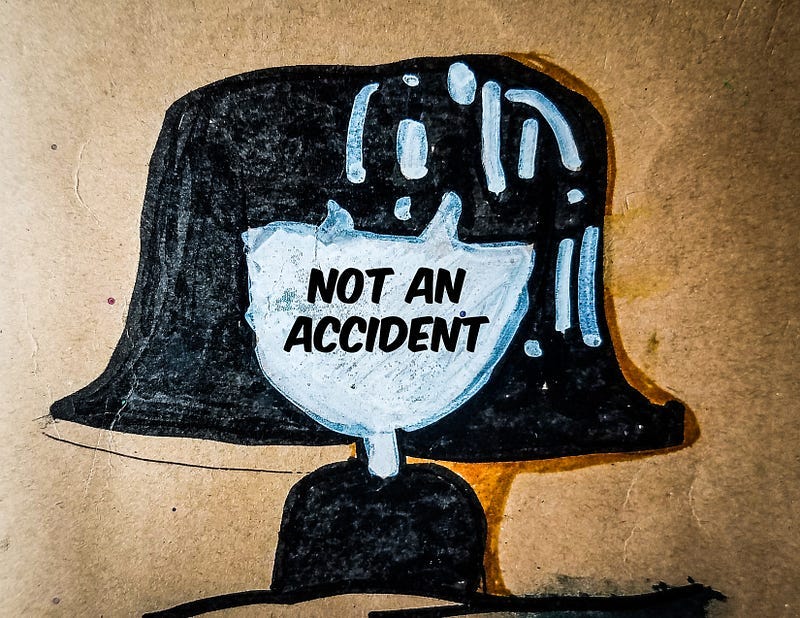
Your tips are greatly appreciated! Upgrade at 30% offThe more research I do into systems of injustice, the more I find myself reassessing my most fundamental assumptions. For example, somewhere along the line, I was told it’s “inappropriate” to assume a transgression against you is an act of deliberate malice when it could instead be an example of honest ignorance.This belief is handed down and often repeated as an example of a good moral code without any examination of the negative consequences. However, in my experience, I’ve found that oversimplifications of any aspect of human nature tend to create an opportunity for exploitation.For the sake of argument, we should examine the logical consequences of assuming malice versus assuming ignorance.* Assuming ignorance on the part of the offender places a greater emphasis on the feelings of the offender (you can’t be mad because it was an honest mistake)* Assuming malice on the part of the offender places a greater emphasis on the feelings of the aggrieved (you harmed me and your feelings about intent are less important than the pain you caused)Lately, I find myself disinclined to assume honest ignorance when an action could just as easily be seen as an act of deliberate malice. Over the last few years, I’ve been further inclined to cut people from my life who cause me harm regardless of whether it was intentional or not.Today, I teach my children that, when they are harmed, they have a right to assume the transgression against them was deliberate. I see no value in supporting any mechanism that is often leveraged to reduce accountability for abusive and malicious people. I think our society could be improved if we placed a greater focus on accountability.Our society is constantly surprised by the effectiveness of awful peopleI disagree with the political policies of the radical right, but I think it’s a mistake to dismiss the people who champion those policies as having some form of cognitive impairment. I don’t think that’s the case. I think they’re deliberately malicious and they know exactly what they’re doing.For example, one of the main positions of the radical right is to stoke fears about the potential encroachments of a powerful government. Republicans claim they want a “small government.” This can be seen in their insistence that the government shouldn’t be allowed to encroach on bodily autonomy by mandating vaccines.But then, Conservatives repealed Roe v. Wade which is one of the most devastating attacks on bodily autonomy in our nation’s history. In one fell swoop, Conservatives served up a massive legal precedent the government can use to impose any number of restrictions on personal liberties, and Republicans cheered.It’s not ignorance that prevents Conservatives from seeing the link between Roe and a legal defense of bodily autonomy, it’s deliberate malice. They’re pretending to be ignorant because they know they can leverage the socially conditioned “benefit of the doubt” to achieve their objectives of social oppression.American society is built on making apologies for oppressorsThere are people in our society who will look you in the eye and criticize you for declaring that every single person forced into slavery throughout human history was subjected to terrible abuse. The idea that there were benevolent slave owners or “happy” slaves is a logical impossibility based simply upon the horrors of the institution of slavery. Yet, there are many prominent individuals who steadfastly maintain the indefensible belief that some slaves were “treated well” (they could only be treated well if they were free).In the United States, we have to deal with the absurd deification of our Founding Fathers, most of whom were slave owners. Because our culture is conditioned to adhere to this unquestionable narrative about the Founding Fathers, we suffer a secondary effect of disregarding instances of obvious human suffering.At some point, we should pause and ask ourselves what the trickle-down ramifications of this belief set might be? What is the cost of going through the mental gymnastics and cognitive dissonance required to make you insist abusive men who owned slaves and raped children were beyond reproach?We need to stop and consider that maybe defending the deplorable actions of the Founding Fathers, might sabotage our own ability to build healthy relationships based on decency and respect. If you insist on maintaining a justification that historical slave owners were decent individuals, is it really so hard to believe that it might have a detrimental effect on your own psyche?People who owned slaves were awful human beings. It’s not complicated. It wasn’t “a product of their time,” it wasn’t “an honest mistake,” they were deliberately evil.The murky question of intentThere are many strands in the quilt of American philosophical belief that, intentionally or no, serve to give an excessive amount of power to oppressive and abusive individuals. The idea that you’re “not allowed” to assume a person hurt you deliberately is one of these strands.In this article about gaslighting, a researcher speculates about the possibility of unintentional acts of abuse. My question is, why are we talking about intent at all? Abuse is abuse. Let’s put our focus on healing the victim rather than soothing the feelings of the transgressor.Abusers use the question of intent as camouflage. Once a person conditions himself to act a certain way, he can invoke a form of deniability by claiming harm was not his intent.“I always throw a baseball at doors in the house. It’s not my fault that you happened to open the door right as I was throwing the ball, and you got hit in the face.”That example isn’t honest ignorance, it’s deliberate malice. Abusive people create situations where others get hurt and then try to justify themselves by claiming it was an honest mistake.When your subconscious mind forces changeAnother thing that experience has taught me is that we’re not in complete control of our actions. When my mother was married to my dad, she used to grind her teeth at night when she was asleep. This went away after she got divorced. There’s some evidence that Asthma along with other health issues can be a consequence of abuse.If you’re in an abusive situation, your involuntary response can rise up to take action that is beyond your conscious control. Sometimes this manifests in the form of behavior that could be labeled as “ignorant” or “reckless.” This behavior isn’t always malicious, but an argument could be made that it is deliberate.For example, a person who feels powerless to get out of a relationship might subconsciously put a plan in motion that will make those wishes known without having to say them directly. Maybe they give out their number so that their partner hears an odd voicemail or sees a concerning text message. If the first sign is disregarded, it might lead to more and more reckless behavior until a confrontation becomes inevitable.There are plenty of articles about the “dumb” ways people were caught cheating. Why are we so inclined to believe these people were dumb? Maybe getting caught was the exact outcome they were hoping for?That means it was deliberate.Try assuming malice and see how it changes your lifeI’m at a point in my life where I don’t feel inclined to tolerate aggressions against myself, my wife, or my kids. I don’t care if those transgressions were deliberate or an accident. That is completely irrelevant to me. My focus is on creating a better world. We don’t make progress towards a better world by constantly making excuses for acts of abuse.When people get out of bad relationships, they say, “Why didn’t I pay attention to all the red flags?”Part of the reason people disregard red flags is because our society trains us to believe they have an obligation to interpret transgressions against them as acts of honest ignorance rather than deliberate malice. This belief system is interwoven with our interpretation of history, it contributes to maintaining institutions of racism, and it even contributes to wealth inequality.Let’s enter a new era where we put our focus on the plight of the aggrieved. What we have now is a system that insists inflicting anguish on others is acceptable as long as it is an accident. Why is there such resistance to adopting a philosophy that would put the focus on reducing the number of transgressions innocent people have to endure?You’re allowed to believe people have hurt you deliberately.They have. It’s time to put them on the defensive for a change.You all make this newsletter happen! Thanks for your sponsorship! I have payment tiers starting at as little as twenty dollars a year.Upgrade at 30% offUpgrade at 40% offUpgrade at 50% offUpgrade at 60% offI'm so happy you're here, and I'm looking forward to sharing more thoughts with you tomorrow.My CoSchedule referral linkHere’s my referral link to my preferred headline analyzer tool. If you sign up through this, it’s another way to support this newsletter (thank you).I'd Rather Be Writing is a reader-supported publication. To receive new posts and support my work, consider becoming a free or paid subscriber. Get full access to I'd Rather Be Writing at walterrhein.substack.com/subscribe
Embed this episode
NOW PLAYING
How To Recognize If You’re Confronting Deliberate Malice or Honest Ignorance
No transcript for this episode yet
Similar Episodes
No similar episodes found.
Similar Podcasts
No similar podcasts found.