
EPISODE · Aug 15, 2021 · 12 MIN
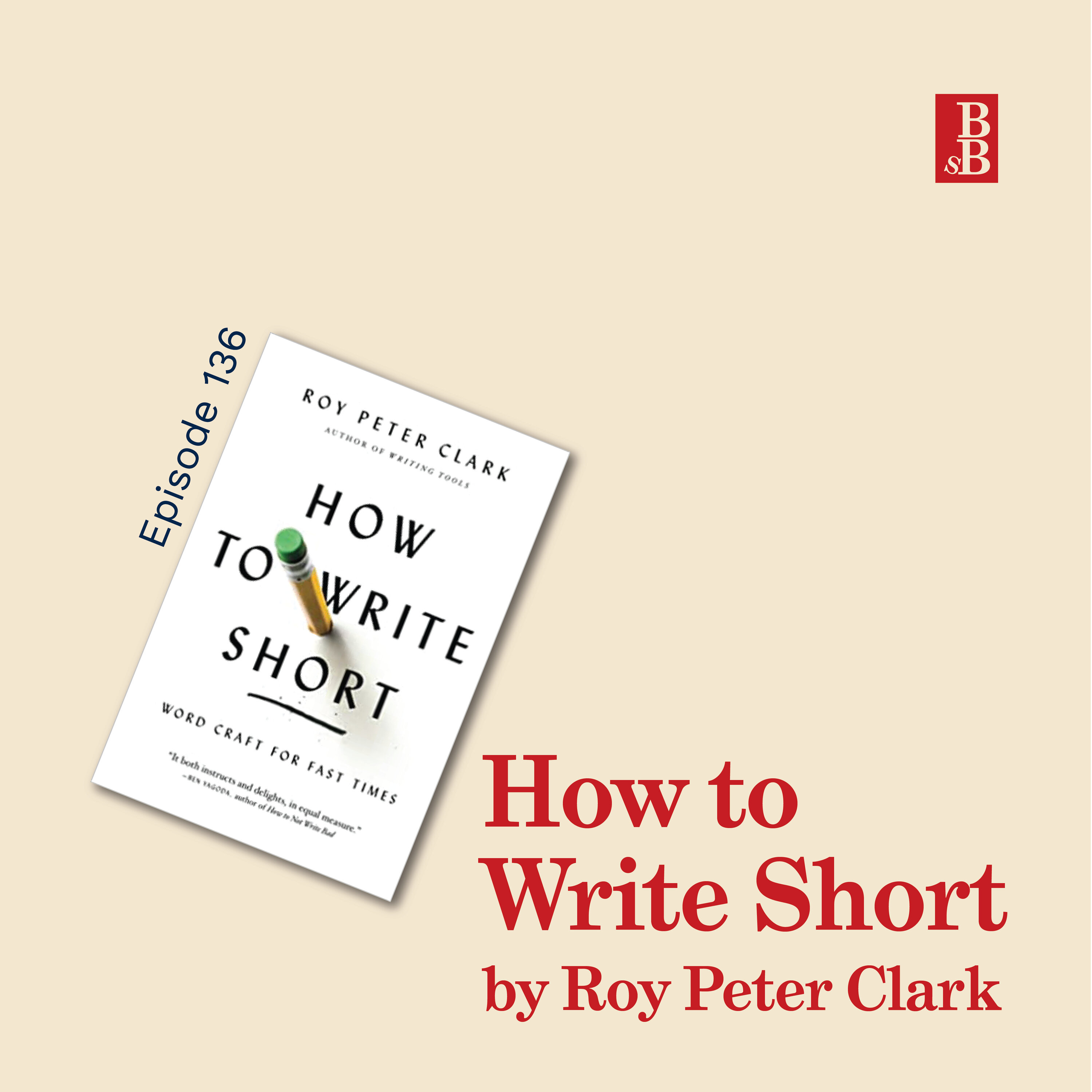
How to Write Short by Roy Peter Clark: top writing lessons from orators and advertisers
from Steph's Business Bookshelf Podcast · host Steph Clarke
About the author By some accounts, Roy Peter Clark is America’s writing coach, devoted to creating a nation of writers. A PhD in medieval literature, he is widely considered the most influential writing teacher in the rough-and-tumble world of newspaper journalism. With a deep background in traditional media, Clark has illuminated the discussion of writing on the internet. He has gained fame by teaching writing to children and has nurtured Pulitzer Prize-winning authors. He is a teacher who writes and a writer who teaches. For more than three decades, Clark has taught writing at the Poynter Institute, a school for journalists in St. Petersburg, Florida, considered among the most prominent such teaching institutions in the world. Clark has authored or edited nineteen books about writing, reading, language, and journalism. Humorist Dave Barry has said of him: “Roy Peter Clark knows more about writing than anybody I know who is not currently dead.” He plays keyboard in a rock band. He lives with his family in St. Petersburg, Florida, where he has become famously fond of pelicans. Source: https://roypeterclark.com/#about About the book With writers of the digital age in mind, this book looks back on the enduring power of short writing from the beginning of written texts. Looking at both the craft and purposes of short writing — the how and the why — I offer hundreds of examples of the best short writing, from sonnets, proverbs, aphorisms, marginalia, and song lyrics to blog posts, text messages, and tweets. Source: https://roypeterclark.com/books2/#row2 Big idea #1 — Write short If you want to write long, begin with writing short. There’s a whole section at the start of the book about how writing short is not necessarily a means to an end in itself. It can actually be a means to other types of writing. It includes a quote from The Notebook author, Umberto Eco that says “it’s everyday writing that inspires the most committed works, not the other way round”. So even if you have ambitions to write a tome, or really long particular type of text, that doesn’t mean that the lessons from this particular type of short writing are irrelevant to you. In fact, a lot of the time it’s that type of writing that will lead to longer, more committed work. In the book, Roy talks a lot about keeping a daybook dedicated to short writing and collecting examples of great short writing. Finding clever writing on the back of your shampoo or cereal. He encourages us to practice writing interesting sentences, to play with haiku, play with Tweets, and find little phrases that punctuate a short sentence. The book is full of these types of practical activities and prompts that you can pick and choose from next time you’re writing an article, social media post, email, or a speech. The lessons in this book that are applicable to all sorts of writing, and not just writing that is going to stay as writing, but writing that is going to become speech or another type of communication. Most of these activities are things that you wouldn’t necessarily think of doing by yourself, but are the things that are going to stretch your brain to think a little bit cleverly, and more laterally about your writing and the message you’re trying to get across. Big idea #2 — Subtract, subtract, subtract. Roy talks about applying a rule of 75%, or trying to deliver your work in three quarters of the expected length. He asks you to think about how you feel when someone speaks for just 10 minutes, rather than 20 minutes. You are probably incredibly grateful, particularly if you’re sat in an uncomfortable conference room in an uncomfortable chair. So he invites you to give that gift to your audience too. You can surprise, and delight, with brevity. The book itself is a beautiful example of writing short. The chapters are short and it feels like the words in there are all so intentional. By surprising and delighting with brevity, you can make every word feel like it’s meant to be there. There’s no flabbiness to it. Roy talks about the difference between two types of writers; The putter-inners; put everything in and revise and take things out. They’ll start with 500 words and they’re edited back to 300. The taker-outers; take it all out as they’re writing and then add back when they think that things need a little bit extra. They might write 200 words, but take it up to 300 words. There should be an editing process, and in the editing process shouldn’t happen simultaneous to the writing process. Subtraction is not a case of relentless slash and burn, but we do need to consider what doesn’t serve the purpose of the statement, and what needs more space to stand out a little bit more. Professor William Strunk, Jr. is evangelical about ‘omitting needless words’. But we need to be conscious of ‘at what cost’. There comes a point where we take so much out, that we’ve lost a little bit of meaning or impact. Or as E B White said, ‘will leave you with nothing more to say, but time to fill’. There is a fine balance, and there’s no exact rule, but what it should do is encourage you to pause, stop, and think about where does that line of ‘too much / not enough’ sits with your copy that you are writing. Big idea #3 — Think like a poet and an advertiser Poetry comes up regularly in the book, and offers a structure for playing with short writing. The patterns of three, the rhyming couplets and specific forms like the limerick or the haiku force an efficient use of words. Similar to poetry, advertisers have mastered the art of the punchiness. Advertisers have been forced into this by minimal space, which comes at a premium and needing to appeal to the simpler parts of our brains, they reduce things into the three word slogan or the tagline. I’m lovin’ it The real thing Breakfast of champions You can use this by thinking about your own structure, looking at where you can add a compelling, short, first sentence and then follow it up with a similarly short and second sentence as an invitation to keep on reading. This is another element of the book that I really enjoyed, looking at all these different types of writing. Roy shares examples from the greater orators in history, the ones who have written speeches which have gone down in history the ones where key statements, made up of carefully chosen words, are repeated for generations. Martin Luther King, Abraham Lincoln, Winston Churchill. But then at the other end of the spectrum, you’ve got junky types of advertising slogans. Both memorable, and both using the same concepts, patterns and lessons. Support my book habit: https://www.buymeacoffee.com/stephsbookshelfSee omnystudio.com/listener for privacy information.
Embed this episode
NOW PLAYING
How to Write Short by Roy Peter Clark: top writing lessons from orators and advertisers
No transcript for this episode yet
Similar Episodes
No similar episodes found.
Similar Podcasts
No similar podcasts found.