
EPISODE · Aug 27, 2025 · 16 MIN
I Know Why Rural Populations Are Vulnerable To The Lies Of Tyrants
from Walter Rhein Podcast · host Walter Rhein
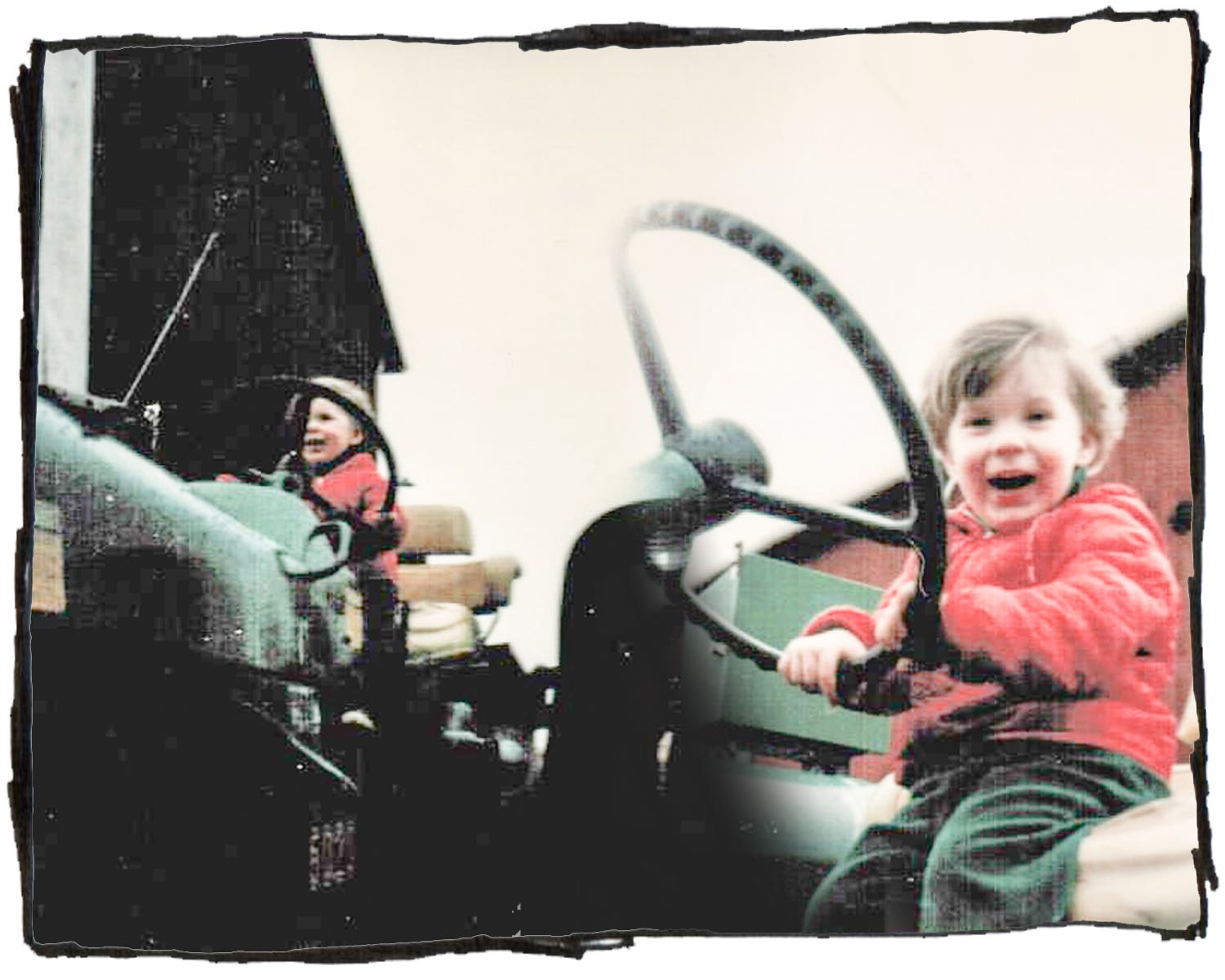
Help me spread the truths Republicans want to burn.I grew up in an unincorporated town in Northern Wisconsin. My school district served many small communities within a large geographic area. Every morning we took a 45 minute bus ride to a metropolis of 2,000 people. It was the nearest town with facilities that came the closest to meeting the state’s basic educational standards.I grew up surrounded by wilderness and dairy farms. Our nearest neighbor was several miles away.I’m often confused when people talk about “rural life” because the social dialogue never matches up with my lived experience. What I’ve come to realize is that almost all discussions of the “rural mindset” are either fabricated or they’re made up of commonly believed but baseless assumptions.The simple fact is that I know what American rural life is like and most people don’t. I was raised in the reddest of the red. There’s a chasm of difference between an unincorporated town and a town of 10,000 or 50,000 people. “Stadium” country music singers don’t know what country life is like. Almost everything in their songs is wrong. Media personalities have no clue. Politicians don’t know because none of them have ever been there.But I know, and I also know we aren’t going to make progress as a society until we make an honest effort to correct the wrongs that nobody wants to see.I made it out, but it was a close thingFew people make it out of the type of place where I grew up. Of my graduating class of 100 people, I can think of two others that have managed to integrate with the modern world. Many of the members of my graduating class who are still alive remain in my home town. Far too many of them are dead.At the end of our senior year, our guidance counselor gathered up all the high-performing students and told us that college was a waste of our time and money. He said we were most likely going to fail out. At the time, his words irritated me. Later, I realized he was right.I did drop out of college at first because rural life had not prepared me for what was to come. I’d devoured books, I studied hard, I took all the advanced placement classes, and still I wasn’t ready. The problem wasn’t mental, the problem was cultural. It took me a long time to bridge the gap between a rural and an urban mindset.These experiences give me a unique perspective. I was born rural. I was raised rural. This isn’t an intellectual exercise for me, rural is in my flesh and blood. I know all the flaws and secrets of rural society, and I also know why people in rural areas seem so dead set on being the anchor that halts the progress of the whole human race.Child laborChildren who grow up on a farm are expected to perform hard labor. Some of the jobs are dangerous and subjecting children to that kind of work would be considered abuse in any other context.Rural areas often have the mindset that it’s normal to “lose a few kids.” That’s why large families are common. To recognize that children don’t have to be chewed up in farm accidents would be to admit that there’s something fundamentally wrong with their way of life.I’ve driven tractors. I’ve operated excavators. I’ve had my share of days spent staring into the void of violent, rickety machinery. I remember mechanisms that sent a chopping slab of metal crashing down like a cleaver. They always seemed to lurch at you.One of my friends once described me as a “guy who was always dressed in rags.” That was a friend I met in college. It was worse in my days on the farm. I used to go around in oversized sweatshirts. I feared getting my sleeve caught in machinery.It has happened to me.When you realize you’re caught, you only have a moment to pull away or your body is going to get pulled in. Your eyes get wide and time slows down. That moment of terror lasts for an eternity. I know how hard you have to fight when failing to tear a sweatshirt means you’re going to get maimed. It takes a surprising amount of strength, more than you’d normally have. I’m only able to sit here and type this with two good hands thanks to the power of adrenaline.A true “fight or flight” moment gets into your brain. I’ve discovered that most people don’t have even one. I’ve had several.Devastating farm accidentsThere were quite a few kids in my class who got into brutal, farm-related accidents. I remember two kids in particular who had devastating broken legs. Injuries from power take-offs (PTOs) are common among farmers. They happen because people get in a hurry and start jumping over the spinning shaft rather than taking the long way round. We didn’t lose any kids to PTO accidents. The only deaths in my class were from suicide.On many farms, there’s a complete indifference to human life. But kids don’t see this as abuse. Kids are hardwired to survive and that means we’re naturally inclined to shower our abusers with love.What else can we do? You can’t overpower a full-grown man when you’re 7. Also, a child lacks the context to understand what’s really going on.Surviving the only way you canKids survive by submitting to their reality. You feel a sense of overpowering love for the patriarchs even though they insist nothing you ever do is good enough, and you grind yourself to dust in the futile effort to please them.You hold on to the hope that, if you work hard enough, one day you’ll earn their praise rather than their endless scorn.The thing that keeps you going is the knowledge that at least you squeezed every little drop of strength from your tiny little underperforming disappointment of a body. This strength you place like an offering upon the alter of a distant, vengeful, all-powerful god.“It wasn’t enough, but at least you can’t say I didn’t give everything I had. At least I did that.”Rural kids grow up listening to stories about “how much harder” their parents and grandparents worked. It’s not until after you’ve moved away that you come to realize all those stories were lies. We rarely mention it, but there are those among farmers who are useless and lazy just like everywhere else.Worse, the laziest ones are often those that ride you the hardest for all your imaginary shortcomings.The only truth of rural life is that no matter how hard you work, it will never, ever, ever be considered good enough.Constant accusations of “laziness”The rest of society doesn’t use the word “lazy” in the same way that it’s used in rural areas. The words “lazy” and “weak” are probably the two biggest insults when it comes to life on a farm, but the biggest problem is that, as a general rule, farmers are exceptionally stubborn once they’ve made up their minds about something.I suppose this is also why children prefer to run into a hail of bullets rather than risk being labeled a “coward.”My dad once told me a story about a job he did with my grandpa. The work entailed driving a tractor over an irrigation hose. Grandpa had placed two boards on either side of the hose to keep the tractor’s wheels from crushing it. The problem was that every time the tractor went over, the tires kicked the boards out of position. This required my dad to stop the tractor, jump down, and reset the boards.Eventually, recognizing the futility of this, he said, “Why can’t I run the hose through a pipe instead?”Grandpa replied, “Oh, you’re just too lazy to get down and replace the boards each time!”Getting called “lazy” cuts you to the quick. So, my dad continued with the existing system for a bit, but he eventually got frustrated and made the change from boards to a pipe without permission. Naturally, it worked much better. Upon seeing it, grandpa said, “I’m sure glad I came up with that pipe idea.”Defiance vs. DeferenceThere are many levels to this story which might not be immediately apparent. First of all, my overriding memory of childhood is of doing something I’d been repeatedly told not to do. Eventually my patience was exhausted by being forced to work in a way that was completely backwards.There was an element of defying authority combined with a general mistrust for authority incorporated into daily life. But all this happened under a system of patriarchal reverence for authority.You were destined to get caught when you did something you were told not to do, but you always “escaped” punishment because the authority figure took credit for the advancement.Often, not being punished when you “deserved it” was passed off as a kind of gift.There was always resistance whenever you proposed a novel solution to a problem. This was made worse by the fact that, once you got the solution implemented, everybody else took credit.This mechanism simultaneously delayed progress and prevented accountability.To this day, that mechanism is hardwired into me. Often if I don’t know what choice to make in life, I just consult my instincts and do the opposite.Farmers particularly don’t like being made to feel stupidOnce a farmer decides that you’re lazy, he can’t change that opinion without feeling stupid himself. If he jumps to the conclusion that you’re “lazy” because you want to try an innovative solution to be more efficient at work, he’s going to put himself through mental gymnastics so he doesn’t have to feel the discomfort of admitting he was wrong.“We don’t like innovation because we’re farmers, we’ve been doing it this way for 100 years!”Yes, this attitude can be overcome. Farmers can be made to listen to new innovations in farming, but I’ve also seen farmers refuse to ask for help just because they had a fundamental distrust for the “elites” who seem to have the answer. Many would rather live in poverty than endure the momentary discomfort of bruised pride.“Anything that makes me feel stupid is something I don’t need!”This attitude permeates every level of rural culture.At school in a rural area, if a teacher presents a difficult lesson, the children of farmers respond with the behavior that has been modeled for them. If learning algebra makes the students feel stupid, they become mistrustful of algebra. They go on to denounce anything that is built with algebra as a foundation.“When are we ever going to use this?”Feeling stupid is the key to personal growthUltimately, the reason I was able to make it out of a small town is because I learned to embrace feeling stupid. I’ve felt stupid a lot in my life.A lot.The reason I failed when I initially went to college was because I’d been trained to scurry away whenever I felt stupid. I got through high school as a top performing student because the lessons were so basic that they rarely made me feel stupid. But that changed when I had more competent teachers presenting complex material. My dormant rural attitude reared its ugly head and I ran away.“This is stupid, I don’t need this!”The only way forward was to step back and force myself to accept the limitations of my fundamental belief system. My instinctive reaction was to indulge in mockery for anything that I found intimidating. I had to change that and realize I was being manipulated by my own insecurities.All the armor I’d built up after years of being called “lazy” or “disappointing” also had to be discarded. My entire learned mechanism that I’d invented as a matter of survival worked against me. It all had to go. I had to learn to accept when I was wrong. I had to learn the value in things I didn’t understand. I had to abandon the rural mythology that the only people who work hard are farmers.Intellectual work is also real work. Even today I have people act as if my labor doesn’t matter because I didn’t almost lose my hand in a hay baler this morning.How to manipulate people from rural areasAll you have to do to manipulate people from rural areas is tell them they work harder than everyone else, and that everything they don’t understand is a lie meant to cheat them.To put it simply, stroke their ego.“Those entitled elites try to waste your time with subjects like algebra. When you don’t understand all that nonsense with ‘x’ and ‘y’ they call you stupid. They’re the ones who are stupid! When are you ever going to use algebra when you’re working on a farm? Those elites are book smart, but they’ve got no common sense. You’re the ones who feed America. Let the elites eat a big bowl of ‘x’ and ‘y’ if they think they’re so great!”“Hooray!” go the people in rural areas.Then when some “elite” idea does manage to trickle down, the manipulators take credit. “The elites tried to prevent you from having this, but we made sure you got it. We always put the interest of the hardest working people in America first.”“Hooray!”Here’s my question, if they work so darn hard, why can’t they put in the time and effort to learn algebra?Everybody thinks it’s a badge of honor to say, “I hate math.” You’re playing right into the hands of wannabe tyrants.I’m sure there’s been progress, but progress is too slowI’m not writing this as a middle school student who is currently enrolled in a rural school district. I’m writing this as a person who endured a rural school district decades ago.Maybe it’s better today. I hope it is.All I can say is that there was basically a rebellion when teachers tried to present algebra to farmers in the time and place where I grew up. Even if some changes have been implemented, the fundamental, exploitable structure still remains.The problem that we have in the United States is that the general population doesn’t recognize the danger of ego stroking. When you go on social media and see dozens of memes that say “If you ate today, thank a farmer” you should ask yourself why it is that some contributions are held in higher esteem than others?Everybody’s labor mattersWhy do you think it is that there are constant attacks on the profession of education, and constant appeals to do more for the American farmer? It’s because ignorant people are easy to control, and people remain ignorant if you create a massive social mechanism dedicated to ego stroking and education erosion.It’s pretty powerful when this mechanism is deployed at kids who grew up being told everyday that no matter how much they worked, and no matter what they achieved, it would never be good enough.Kids like that become so broken that they start to work without any hope of reward.So, when a patriarchal, authoritarian, wannabe dictator stands in front of a rural crowd and says, “You’re smart, you’re good, you work hard, I care about you, everything you do is right and the elites are the cause of all your problems,” they believe him.He’s speaking directly to all that remains of the inner child who was too weak to resist a lifetime of abuse. The wannabe tyrant tells them exactly what they want to hear.The way to combat this is to tell kids they are good enough, that they are working hard enough, and that they’re not “stupid” if they don’t understand.On some level our society knows this already.It’s just remarkable how often even good people will slip into the role of supporting a mechanism of abuse which can be easily exploited by authoritarians.You all make this newsletter happen! Thanks for your sponsorship! I have payment tiers starting at as little as twenty dollars a year.Upgrade at 30% offUpgrade at 40% offUpgrade at 50% offUpgrade at 60% offI'm so happy you're here, and I'm looking forward to sharing more thoughts with you tomorrow.My CoSchedule referral linkHere’s my referral link to my preferred headline analyzer tool. If you sign up through this, it’s another way to support this newsletter (thank you).I'd Rather Be Writing is a reader-supported publication. To receive new posts and support my work, consider becoming a free or paid subscriber. Get full access to I'd Rather Be Writing at walterrhein.substack.com/subscribe
NOW PLAYING
I Know Why Rural Populations Are Vulnerable To The Lies Of Tyrants
No transcript for this episode yet
Similar Episodes
Mar 26, 2026 ·1m
Jan 2, 2026 ·47m
Dec 21, 2025 ·46m