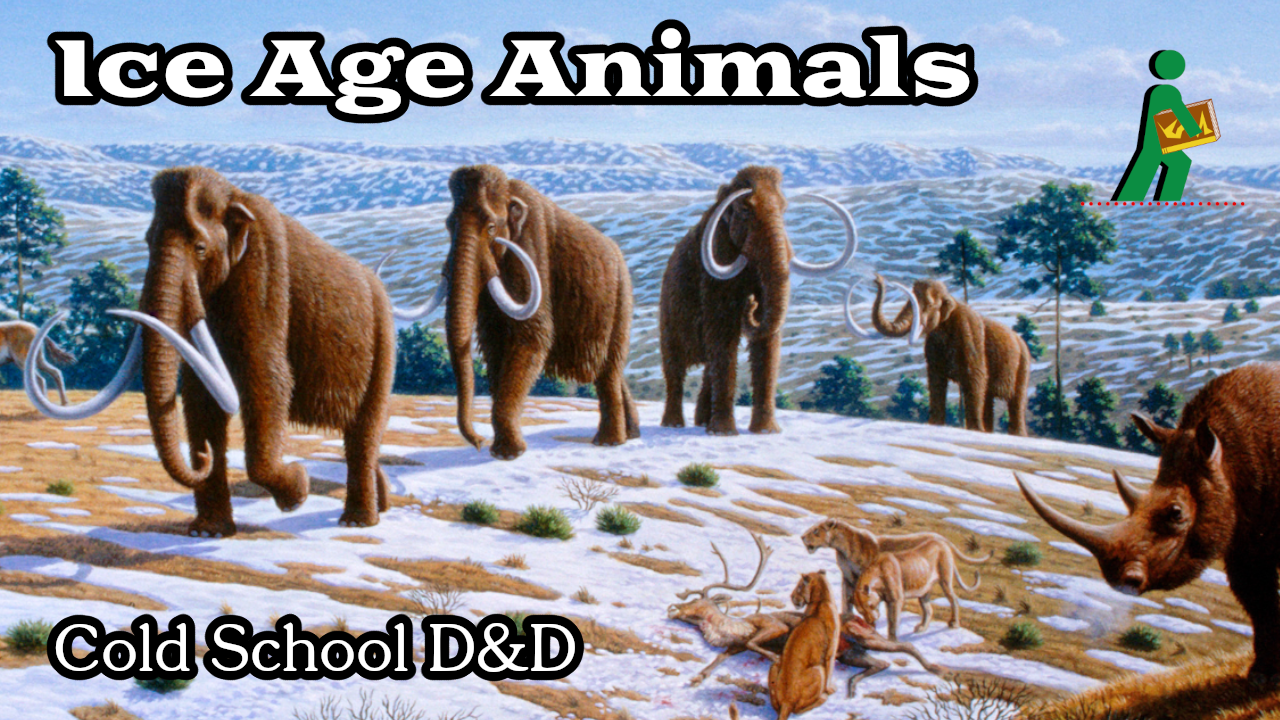
Ice Age Animals | Cold School D&D | Wandering DMs S06 E03 episode artwork

EPISODE · Jan 22, 2024 · 56 MIN

Ice Age Animals | Cold School D&D | Wandering DMs S06 E03

from Wandering DMs · host Wandering DMs

Paul & Dan dig into the buried fossils of original D&D -- like the hidden encounter table for Ice Age adventures in the original boxed set. Where else can you get to use Cave Bears, Woolly Mammoths, and Saber-Toothed Tigers in your fantasy RPG? Pour a cup of hot cocoa and bundle up for this one. In the Late Pleistocene, both marine and continental faunas were essentially modern but with many more large land mammals such as Mammoths, Mastodons, Diprotodons, Smilodons, tigers, lions, Aurochs, short-faced bears, giant sloths, species within Gigantopithecus and others. Isolated landmasses such as Australia, Madagascar, New Zealand and islands in the Pacific saw the evolution of large birds and even reptiles such as the Elephant bird, moa, Haast's eagle, Quinkana, Megalania and Meiolania. The severe climatic changes during the Ice Age had major impacts on the fauna and flora. With each advance of the ice, large areas of the continents became depopulated, and plants and animals retreating southwards in front of the advancing glacier faced tremendous stress. The most severe stress resulted from drastic climatic changes, reduced living space, and curtailed food supply. A major extinction event of large mammals (megafauna), which included mammoths, mastodons, saber-toothed cats, glyptodons, the woolly rhinoceros, various giraffids, such as the Sivatherium; ground sloths, Irish elk, cave lions, cave bears, Gomphotheres, American lions, dire wolves, and short-faced bears, began late in the Pleistocene and continued into the Holocene. Neanderthals also became extinct during this period. At the end of the last ice age, cold-blooded animals, smaller mammals like wood mice, migratory birds, and swifter animals like whitetail deer had replaced the megafauna and migrated north. Late Pleistocene bighorn sheep were more slender and had longer legs than their descendants today. Scientists believe that the change in predator fauna after the late Pleistocene extinctions resulted in a change of body shape as the species adapted for increased power rather than speed. This description uses material from the Wikipedia article "Pleistocene", which is released under the Creative Commons Attribution-Share-Alike License 3.0. Cover image by Mauricio Antón from an article by Caitlin Sedwick (1 April 2008): "What Killed the Woolly Mammoth?". PLoS Biology 6 (4): e99. DOI:10.1371/journal.pbio.0060099 2008 Public Library of Science. This is an open-access article distributed under the terms of the Creative Commons Attribution License, which permits unrestricted use, distribution, and reproduction in any medium, provided the original author and source are credited.

Paul & Dan dig into the buried fossils of original D&D -- like the hidden encounter table for Ice Age adventures in the original boxed set. Where else can you get to use Cave Bears, Woolly Mammoths, and Saber-Toothed Tigers in your fantasy RPG? Pour a cup of hot cocoa and bundle up for this one. In the Late Pleistocene, both marine and continental faunas were essentially modern but with many more large land mammals such as Mammoths, Mastodons, Diprotodons, Smilodons, tigers, lions, Aurochs, short-faced bears, giant sloths, species within Gigantopithecus and others. Isolated landmasses such as Australia, Madagascar, New Zealand and islands in the Pacific saw the evolution of large birds and even reptiles such as the Elephant bird, moa, Haast's eagle, Quinkana, Megalania and Meiolania. The severe climatic changes during the Ice Age had major impacts on the fauna and flora. With each advance of the ice, large areas of the continents became depopulated, and plants and animals retreating southwards in front of the advancing glacier faced tremendous stress. The most severe stress resulted from drastic climatic changes, reduced living space, and curtailed food supply. A major extinction event of large mammals (megafauna), which included mammoths, mastodons, saber-toothed cats, glyptodons, the woolly rhinoceros, various giraffids, such as the Sivatherium; ground sloths, Irish elk, cave lions, cave bears, Gomphotheres, American lions, dire wolves, and short-faced bears, began late in the Pleistocene and continued into the Holocene. Neanderthals also became extinct during this period. At the end of the last ice age, cold-blooded animals, smaller mammals like wood mice, migratory birds, and swifter animals like whitetail deer had replaced the megafauna and migrated north. Late Pleistocene bighorn sheep were more slender and had longer legs than their descendants today. Scientists believe that the change in predator fauna after the late Pleistocene extinctions resulted in a change of body shape as the species adapted for increased power rather than speed. This description uses material from the Wikipedia article "Pleistocene", which is released under the Creative Commons Attribution-Share-Alike License 3.0. Cover image by Mauricio Antón from an article by Caitlin Sedwick (1 April 2008): "What Killed the Woolly Mammoth?". PLoS Biology 6 (4): e99. DOI:10.1371/journal.pbio.0060099 2008 Public Library of Science. This is an open-access article distributed under the terms of the Creative Commons Attribution License, which permits unrestricted use, distribution, and reproduction in any medium, provided the original author and source are credited.

NOW PLAYING

Ice Age Animals | Cold School D&D | Wandering DMs S06 E03

0:00 56:15

No transcript for this episode yet

We transcribe on demand. Request one and we'll notify you when it's ready — usually under 10 minutes.

Shamisen Lofi Style 🕔👘 5 AM in Kyoto Asian Serenity [LoFi] 🏮 When ancient shamisen strings dance with modern beats, 5 AM in Kyoto captures that magical moment where sleeping temples meet the first rays of dawn, creating the perfect soundtrack for your soul's peaceful wandering 🎋 Novel to aid sleep shenank novels:"Boy" The Wandering Dog'Tilda Jane's OrphansThe Adventures of a Bear, and a Great Bear TooThe Adventures of a Cat, and a Fine Cat Too!The Adventures of a Dog, and a Good Dog TooThe Adventures of Bob WhiteThe Adventures of Bobby CoonThe Adventures of Buster BearThe Adventures of Danny Meadow Mouse (Dramatic Reading)The Adventures of Danny Meadow Mouse (Version 2)The Adventures of Danny Meadow Mouse (Version 3)The Adventures of Grandfather FrogThe Adventures of Jerry Muskrat (Dramatic Reading)The Adventures of Jerry Muskrat (Version 2)The Adventures of Jimmy SkunkThe Adventures of Johnny ChuckThe Adventures of Lightfoot the DeerThe Adventures of Lightfoot the Deer (Version 2)The Adventures of Maya the BeeThe Adventures of Mr. Mocker (Dramatic Reading)The Adventures of Old Man CoyoteThe Adventures of Old Mr. ToadThe Adventures of Old Mr. Toad (ve Shamisen Lofi Style 🕔👘 5 AM in Kyoto Asian Serenity 🏮 When ancient shamisen strings dance with modern beats, 5 AM in Kyoto captures that magical moment where sleeping temples meet the first rays of dawn, creating the perfect soundtrack for your soul's peaceful wandering 🎋 Barry Lewis Stonkin Foodcast Barry Lewis Stonkin Foodcast Welcome to the Barry Lewis Podcast area! Catch up on the latest episodes of the Stonkin Foodcast with Barry and co-host Alec Plowman as they discuss fun food topics & news, the latest happenings behind the scenes and wandering off into random conversation. Expect mild banter and some audience participation, so get involved!

Frequently Asked Questions

How long is this episode of Wandering DMs?

This episode is 56 minutes long.

When was this Wandering DMs episode published?

This episode was published on January 22, 2024.

What is this episode about?

Paul & Dan dig into the buried fossils of original D&D -- like the hidden encounter table for Ice Age adventures in the original boxed set. Where else can you get to use Cave Bears, Woolly Mammoths, and Saber-Toothed Tigers in your fantasy RPG? Pour...

Can I download this Wandering DMs episode?

Yes, you can download this episode by clicking the download button on the episode player, or subscribe to the podcast in your preferred podcast app for automatic downloads.
URL copied to clipboard!