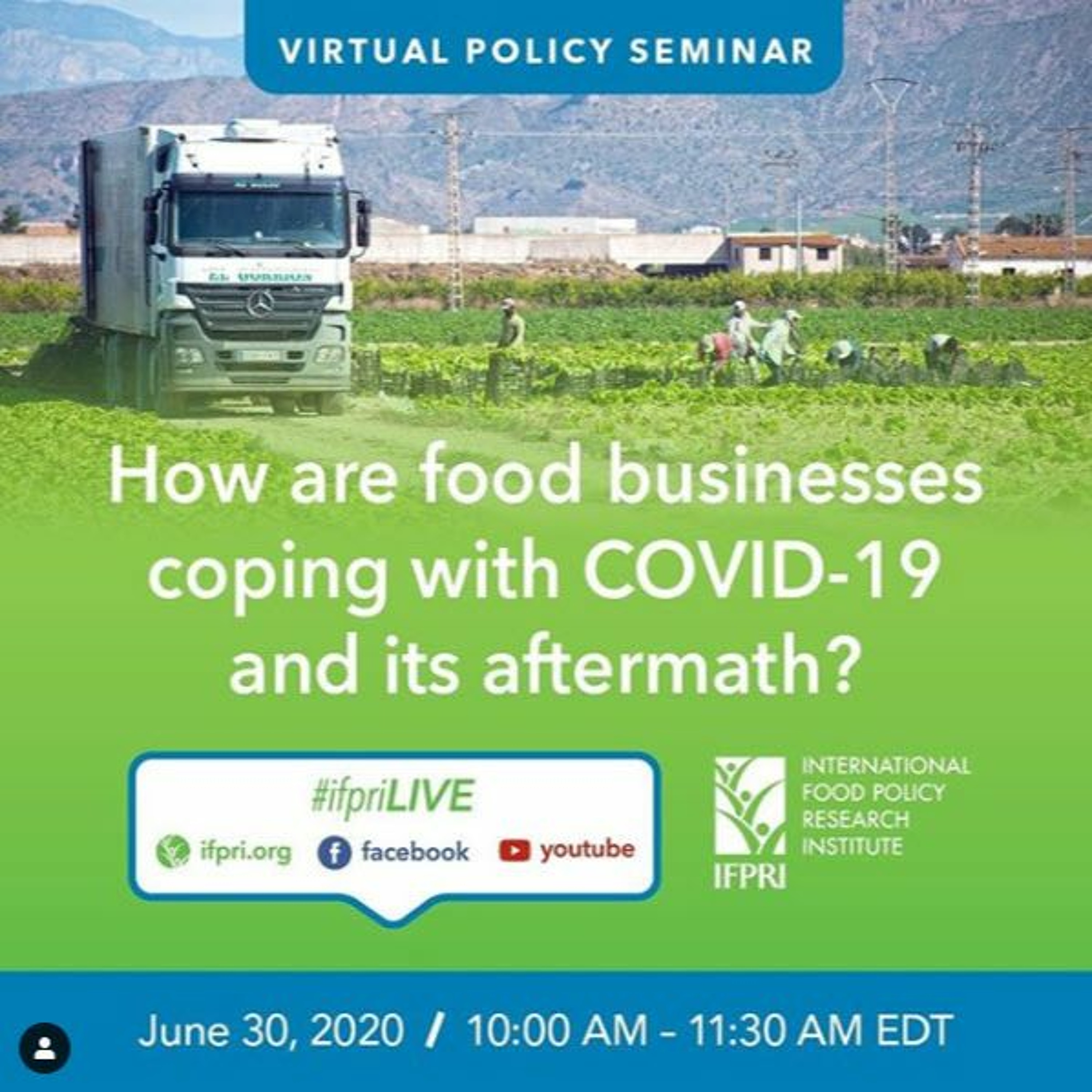
IFPRI PolSem: How are food businesses coping with COVID-19 and its aftermath? 6/30/2020 episode artwork

EPISODE · Jun 30, 2020 · 1H 33M

IFPRI PolSem: How are food businesses coping with COVID-19 and its aftermath? 6/30/2020

from IFPRI Podcast · host International Food Policy Research Institute

IFPRI Policy Seminar - Virtual Event - How are food businesses coping with COVID-19 and its aftermath? Concern is growing that the global outbreak of COVID-19, already a health crisis, could turn into a food crisis. In poor countries, the need for food assistance could increase dramatically, and in some rich nations too, the pandemic has put many at risk of hunger. Food supply chains have largely continued to function, but private operators have faced some serious disruptions—including closure of bars, restaurants, hotels, and schools as well as shifts in consumer demand. Some sub-sectors, especially fruits and vegetables and meat packing and processing, have suffered supply chain disruptions because of COVID-19 infections, logistics problems, and/or unavailability of seasonal workers. Such disruptions have caused both significant food loss and waste and reduced availability of the affected foods to consumers. Without food, there can be no health. With this stark warning, this seminar will look at: How should governments balance the need to protect lives from COVID-19 and the need to protect livelihoods? What food sector innovations and changes (automatization, e-commerce) are being introduced to ensure food supply chains can function without disruption as we fight COVID-19? How can “green lanes” be created for seasonal and migrant labor to work safely in food production? How are private food businesses adjusting to shifts in food demand and food safety requirements, on the one hand, and risks of supply chain disruptions, on the other? Speakers: Steven Bartholomeusz, Policy Director, Food Industry Asia (FIA) Robbert de Vreede, Executive Vice-President, Global Foods, Unilever Nnaemeka Ikegwuonu, CEO, Coldhubs Nigeria Thomas Reardon, Professor, Agricultural, Food, and Resource Economics, Michigan State University Johan Swinnen, Director General, IFPRI Closing Remarks: Rob Vos, Director, Markets, Trade and Institutions Division, IFPRI Moderator: Rajul Pandya-Lorch, Director, Communications and Public Affairs & Chief of Staff, Director General's Office, IFPRI Related website: IFPRI Resources and Analyses of COVID-19 Impact: www.ifpri.org/covid-19 More on the seminar: https://www.ifpri.org/event/virtual-event-how-are-food-businesses-coping-covid-19-and-its-aftermath Subscribe IFPRI Insights newsletter and event annoucements at www.ifpri.org/content/newsletter-subscription

IFPRI Policy Seminar - Virtual Event - How are food businesses coping with COVID-19 and its aftermath? Concern is growing that the global outbreak of COVID-19, already a health crisis, could turn into a food crisis. In poor countries, the need for food assistance could increase dramatically, and in some rich nations too, the pandemic has put many at risk of hunger. Food supply chains have largely continued to function, but private operators have faced some serious disruptions—including closure of bars, restaurants, hotels, and schools as well as shifts in consumer demand. Some sub-sectors, especially fruits and vegetables and meat packing and processing, have suffered supply chain disruptions because of COVID-19 infections, logistics problems, and/or unavailability of seasonal workers. Such disruptions have caused both significant food loss and waste and reduced availability of the affected foods to consumers. Without food, there can be no health. With this stark warning, this seminar will look at: How should governments balance the need to protect lives from COVID-19 and the need to protect livelihoods? What food sector innovations and changes (automatization, e-commerce) are being introduced to ensure food supply chains can function without disruption as we fight COVID-19? How can “green lanes” be created for seasonal and migrant labor to work safely in food production? How are private food businesses adjusting to shifts in food demand and food safety requirements, on the one hand, and risks of supply chain disruptions, on the other? Speakers: Steven Bartholomeusz, Policy Director, Food Industry Asia (FIA) Robbert de Vreede, Executive Vice-President, Global Foods, Unilever Nnaemeka Ikegwuonu, CEO, Coldhubs Nigeria Thomas Reardon, Professor, Agricultural, Food, and Resource Economics, Michigan State University Johan Swinnen, Director General, IFPRI Closing Remarks: Rob Vos, Director, Markets, Trade and Institutions Division, IFPRI Moderator: Rajul Pandya-Lorch, Director, Communications and Public Affairs & Chief of Staff, Director General's Office, IFPRI Related website: IFPRI Resources and Analyses of COVID-19 Impact: www.ifpri.org/covid-19 More on the seminar: https://www.ifpri.org/event/virtual-event-how-are-food-businesses-coping-covid-19-and-its-aftermath Subscribe IFPRI Insights newsletter and event annoucements at www.ifpri.org/content/newsletter-subscription

NOW PLAYING

IFPRI PolSem: How are food businesses coping with COVID-19 and its aftermath? 6/30/2020

0:00 1:33:22

No transcript for this episode yet

We transcribe on demand. Request one and we'll notify you when it's ready — usually under 10 minutes.

That Hoarder: Overcome Compulsive Hoarding That Hoarder Hoarding disorder is stigmatised and people who hoard feel vast amounts of shame. This podcast began life as an audio diary, an anonymous outlet for somebody with this weird condition. That Hoarder speaks about her experiences living with compulsive hoarding, she interviews therapists, academics, researchers, children of hoarders, professional organisers and influencers, and she shares insight and tips for others with the problem. Listened to by people who hoard as well as those who love them and those who work with them, Overcome Compulsive Hoarding with That Hoarder aims to shatter the stigma, share the truth and speak openly and honestly to improve lives. The Small Business Startup School – Business Notes | Financial Literacy | Retail Psychology – For Professionals & Entrepreneurs The Small Business Startup School Inc. Starting or buying a small business? While personal circumstances may vary, business patterns remain timeless. On The Small Business Startup School, we explore strategies, insights, and practical solutions to help entrepreneurs confidently navigate their journey.Hosted by Ola Williams—a retail entrepreneur, fintech founder, and financial coach with over two decades of experience—this podcast marries financial awareness and retail psychology with optimism to deliver actionable takeaways.Join us to learn, grow, and connect as we uncover the keys to business success.Let’s continue to learn together and be encouraged to keep on connecting! DIOSA. Carolina Sanper This podcast is a sacred space created by Carolina Sanper where you connect with your inner wisdom and embody your magnetic feminine power.It is the realization that the mystical realm is where you plant the seeds of your desired reality.It is a portal to your true essence: awareness, presence, and receiving with ease. Welcome home, DIOSA. 🖤 XXX Tech by SOVRYN Dr. Brian Sovryn The crossroads between technology, sensuality, and metaphysics - and the longest running anarchist podcast in the world! Brought to you by Dr. Brian Sovryn.

Frequently Asked Questions

How long is this episode of IFPRI Podcast?

This episode is 1 hour and 33 minutes long.

When was this IFPRI Podcast episode published?

This episode was published on June 30, 2020.

What is this episode about?

IFPRI Policy Seminar - Virtual Event - How are food businesses coping with COVID-19 and its aftermath? Concern is growing that the global outbreak of COVID-19, already a health crisis, could turn into a food crisis. In poor countries, the need for...

Can I download this IFPRI Podcast episode?

Yes, you can download this episode by clicking the download button on the episode player, or subscribe to the podcast in your preferred podcast app for automatic downloads.
URL copied to clipboard!