
EPISODE · Aug 27, 2026 · 21 MIN
Is technology expense management the MSP practice you haven’t considered?
from ChannelBuzz.ca
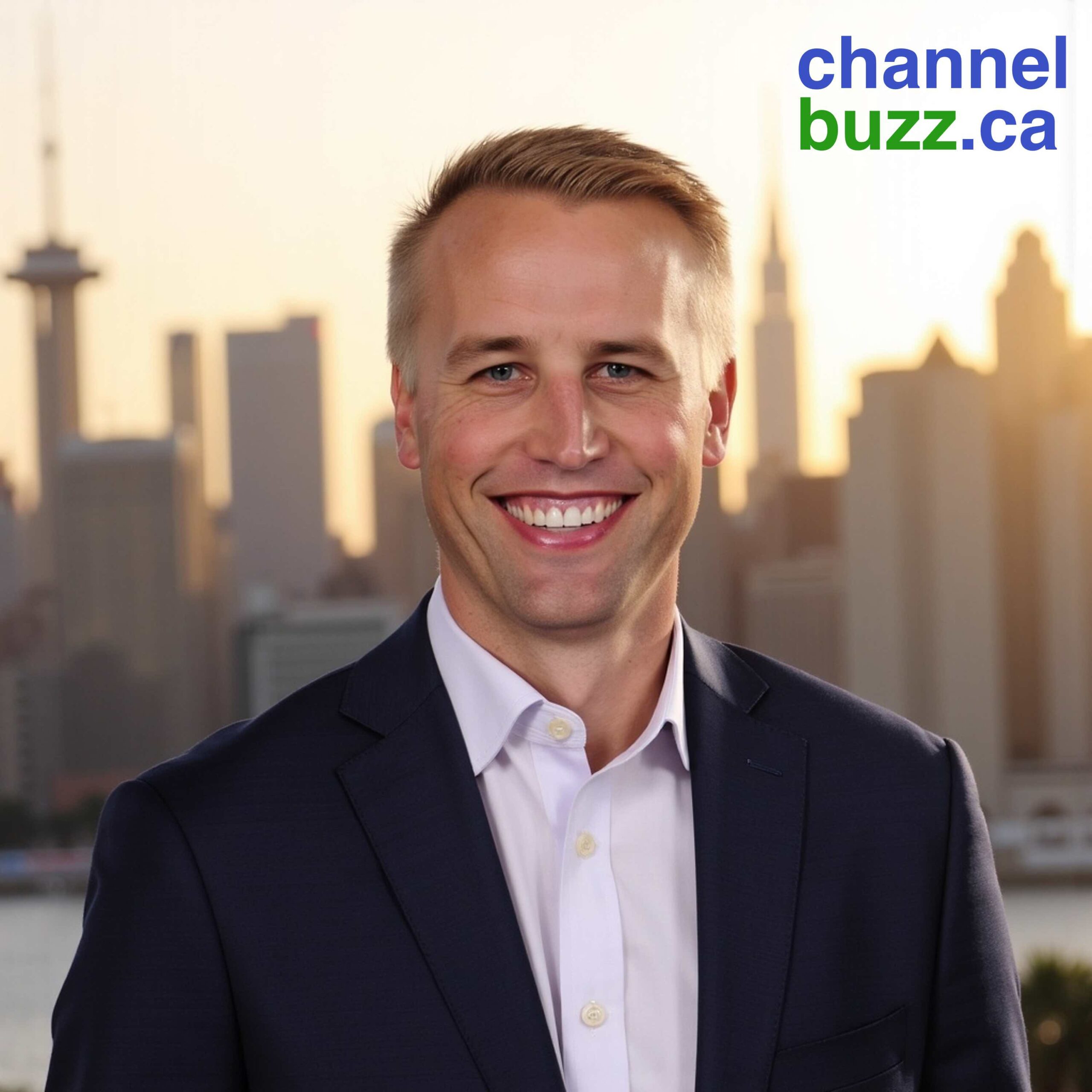
Jason Wieser, senior vice president of mid-market and channel sales at Calero If technology expense management isn’t on your radar as a practice area, Jason Wieser thinks that’s about to change. Wieser, senior vice president of mid-market and channel sales at Calero and a 2026 CRN Channel Chief, joins In The Channel to talk about why MSPs and VARs are leaving real recurring revenue on the table by not offering technology spend management services to their customers. The conversation covers a lot of practical ground. Wieser explains why SaaS visibility has become the entry point for most partner conversations – delivering value in hours rather than the months that traditional telecom expense management historically required. He walks through how successful partners use TEM as a pipeline creation tool, turning full visibility into a customer’s contract and renewal landscape into a 3-4 year forward roadmap. And he offers a simple three-question framework – visibility, control, or optimization – that partners can use to qualify where a customer actually needs help. Wieser also touches on the recently launched Calero ConnectIQ, an orchestration layer designed to automate the flow of intelligence across technology expense data, and on the shadow SaaS problem – Gartner estimates the average enterprise runs 145 applications, and Calero’s data suggests the real number is significantly higher. For partners curious about what getting started actually looks like, Calero’s partner program has no joining fees or revenue commitments at entry level. Read Full Transcript Robert Dutt: Hello and welcome to In The Channel from ChannelBuzz.ca, bringing news and information to the Canadian IT channel community for the last sixteen years. I’m Robert Dutt, editor of ChannelBuzz.ca and your host for the show. When we talk about practice areas for MSPs and VARs, we usually start with the big ones: cybersecurity, cloud migration, and managed infrastructure. One area that rarely makes the list, but probably should, is technology expense management, or TEM. It is an area that has historically been seen as a back-office auditing function. But in an era of massive SaaS sprawl and complex mobility footprints, it is becoming an advisory service for the new C-suite. My guest today is Jason Wieser, senior vice president of mid-market and channel sales at Calero. Jason was named a 2026 CRN Channel Chief, and he has spent the last few years building a partner program around the idea that TEM is actually a pipeline-creation engine for the channel. Let’s get right into it – my chat with Jason Wieser. Robert Dutt: Jason, thanks for taking the time. I appreciate it. Jason Wieser: Thank you for having me. I really appreciate it. Robert Dutt: You’ve been in tech sales for about twenty years. I’m curious: how did you land in technology expense management, and what made you want to stay and build a channel around it? Jason Wieser: I’ll be honest: when the TEM opportunity was first presented to me, I ran for the hills. I wasn’t willing to entertain the conversation. I’m sure my reasons were similar to those of many people when they think about TEM – that it is a legacy product set and not really on the cutting edge of technology. But from my perspective, as I heard the pitch, particularly around the SaaS expense management component, that was what got me excited. I felt there was a tremendous amount of opportunity. It was a wildly untapped market, and coming out of the COVID environment, I thought there was a good opportunity for channel partners to capitalize on the SaaS sprawl that we all experienced. That is what brought me into the TEM side of the business. When we were building out the channel, there weren’t many players in the TEM space with a channel focus. During the discussions we had as we were courting each other, one thing that came up was that Calero had no desire to be an agent. That was a big differentiator for me, and it was pivotal to my willingness to jump in and build out a channel, because none of the other TEM players could say that. It was a significant differentiator when you think about the value delivered back to the channel. When you combine those two things – the SaaS opportunity and Calero’s channel-first approach – it became a great opportunity. I’m really happy with the success we’ve had over the last four years building the channel at Calero. Robert Dutt: Most of my listeners are IT resellers and MSPs who probably haven’t thought much about TEM as a line of business they would offer. But you describe it as an untapped opportunity – words that always make my ears perk up. Can you make the case for that partner? Why should this be on their radar right now? Jason Wieser: I think the difference is in where TEM was and where it has gone. Historically, TEM stood for telecom expense management. Now, we think of it as technology expense management. I see this as a pipeline-creation tool for MSPs and resellers. Partners that lean in and work with a TEM provider that supports the channel can build a three-year pipeline roadmap. A reseller might ask, “How is that the case?” The way we go to market is that when we work with partners – whether they are resellers, referral partners, or MSPs – we make them part of the solution. They get full access to the Calero platform with their respective customer. That creates a building block. They can identify which contracts are coming up and position themselves as a trusted advisor to their customer. For example, if the customer’s Zoom licenses are coming up for renewal, the partner can see the usage rate. Or perhaps the customer’s Microsoft enterprise agreement is coming up for renewal. The partner can look at how the organization is using its E5 licenses and determine whether it really needs E5, or whether some users should be moved to E3 or F3 licenses. The partner gets to change the trajectory of the conversation and add a new source of value to the organization. At the end of the day, I see that as the biggest opportunity for a partner organization. From there, the partner can build on that process. They can look at circuits that are coming up for renewal, mobility, and other technology expenses. All of that helps them build out a pipeline over the next three, four, or five years. Robert Dutt: Is this something that a smaller reseller or MSP can realistically build, or does it require a certain level of scale to be a real opportunity? Jason Wieser: The good news is that we built this for MSPs and resellers. Historically, with technology expense management – or telecom expense management – you needed to have a large customer base. You might need a customer with a million dollars in annual telecom spend, otherwise it did not make sense. Now that we’ve moved into SaaS, particularly with a mid-market focus, you can go much further down-market. Our smallest customer has 250 employees. That gives a partner the opportunity to change the conversation and use this in a much smaller-capacity environment. On the telecom side, it used to take four, five, or six months to build out the infrastructure and gather all the data. On the SaaS side, it takes four, five, or six hours to bring information in. That is a significant differentiator. Partners can scale the opportunity, realize savings much more quickly, and begin addressing the control and optimization issues associated with technology spending. Robert Dutt: Legacy TEM is rooted in telecom, but given the speed at which you can prove value with SaaS, what is typically the entry point into the conversation with a customer? Does the conversation still begin with telecom bills that have gotten out of control? Do partners lead with SaaS sprawl? Is it mobile device management? What typically opens the door? Jason Wieser: From an MSP standpoint, what we are seeing work right now is starting with SaaS. It is the gateway because you have the opportunity to show immediate results. On the telecom and mobility sides, it is a longer process. You need letters of authorization, or LOAs. You need access to the data, and you need to bring all of that information into the system. That process can take four, five, or six months if the LOAs are not completed in a timely manner. With SaaS, you can get access to an endpoint and conduct a proof of value immediately with the partner. You can start showcasing the data sets, and the decision practically writes itself for the customer. For an MSP, I would focus on SaaS because of that speed. The ability to white-label the platform and make it look like your own – with your logo in the upper-left corner and “powered by Calero” underneath – helps cement you as a true partner to the business. Robert Dutt: The thesis seems to be about the merger of telecom, mobility, and SaaS into one management problem. But for many businesses, those are still three different budget lines, with three different people responsible for them. What makes managing them together increasingly important, and who on the customer side is feeling the pain most or leading the charge? Jason Wieser: That’s the million-dollar question, because they are very different business units. We view our platform as providing a single pane of glass to accommodate all of those expense categories. But the person making SaaS decisions is usually not the same person making mobility decisions, and neither is necessarily the person responsible for telecom. The way we frame it is to start on the SaaS side. We leverage the resources and data sets that we are able to uncover with the partner, and then we ask to go wider into the organization. SaaS provides the gateway. Once we have shown results – whether that is savings, improved security, better control, or the ability to bring in data that the customer did not previously have – we can ask who owns mobility and who owns telecom. We may also uncover an optimization opportunity while reviewing an enterprise agreement, or while a customer is considering a move from Zoom to RingCentral. The partner has proof points showing business value, and that makes the conversation much easier. The customer is more willing to provide an introduction to the people responsible for those other areas. If you approach this holistically, it is generally more of a CFO- or CTO-level discussion because it is tied to a broader business-transformation objective. But that usually has to come from the top down. If you are trying to create an all-encompassing program from the bottom up, we do not see that very frequently. It is much more common to get a foot in the door and then expand from there. Robert Dutt: What does the economics look like for a partner that builds this practice well? Are we talking about meaningful recurring revenue, or is this more of a retention and stickiness play? Jason Wieser: I would say it is both. When you look at the dollar size of the opportunity, there is definitely a compensation component that can be worthwhile, depending on the time of year and the programs available. From an MSP perspective, there is also a traditional markup that the partner can earn. Our plans and packages are designed to support those upsides for MSPs. From a stickiness standpoint, that is also a key element. We are only four years old in the channel, so we do not yet have the channel data to say precisely how sticky it is. But if you look at our customer base overall, it is a very sticky product. Our average customer has been with Calero for seven and a half years. That creates an opportunity for growth within the partner community. The partner can continue demonstrating value and having those conversations over time. Robert Dutt: You talk about partners moving from transactional selling to advisory relationships, particularly around practice-building. That is the right direction, but it is a real cultural shift for a lot of partner organizations. Where do you see partners getting stuck, and what separates the ones that make the transition from the ones that do not? Jason Wieser: We see partners getting stuck when they are not completely certain how to have the conversation. I would describe that primarily as an enablement issue, combined with a willingness to lean in. Telecom was never a particularly exciting topic. Most partners have not leaned into it over the last fifteen years unless they specifically built a telecom expense management practice. There are very few of those partners. Having the understanding required to conduct those baseline conversations takes some work at the outset. The partners we have seen succeed are the ones that have leaned in. They understand how to have those initial discussions and then tie them back to what matters to the business. There are three things we look at that drive success: Are you looking for visibility? Are you looking for control? Are you looking for optimization? It could be all three. The partners that can tie the proof point back to one or more of those outcomes, and have those conversations on the fly, are the ones that move beyond dipping their toes in the water and begin to see meaningful growth within their practice. I do not want to make it sound as if they need to build a large team. One of our largest partners is a billion-dollar organization, but it has ten practices run by one person. One person has leaned into the conversation, and that person is brought in when the opportunities arise. Robert Dutt: You launched Calero ConnectIQ just a couple of weeks ago. Can you give me the quick version of what that changes for partners and their customers? The bigger question is this: as more of the heavy lifting gets automated, does that make the practice easier to build, or does it simply raise customer expectations? Jason Wieser: The ConnectIQ launch is important because it allows us to streamline our connections to the external world. It gives us API hooks in a much quicker manner and allows us to access data in a more streamlined way. From the perspective of a partner recognizing and delivering value to its customers, that is a significant benefit. As for the AI component and what those dynamics will look like, that is still to be determined. We are only two to four weeks into the launch. We have use cases that we have developed to date, but the real-world application is still being fleshed out. We will continue working with the partner community to drive those successes across the global channel. Robert Dutt: I’m guessing that having those hooks, or making it easier to establish those hooks, is especially important as SaaS comes to the forefront. Telecom is a relatively small community in terms of the number of providers, while SaaS is not. Jason Wieser: The number of SaaS applications in enterprise organizations is absolutely staggering. Gartner has cited an average of 145 applications in an enterprise. We find the actual number to be significantly higher because of shadow SaaS. I’ll use myself as an example. I have applications that the business does not provide – applications that I pay for myself – and those applications are still accessing data. I probably should not say that on this podcast because now I am going to be audited by the business. Robert Dutt: I think you mean, hypothetically, that you could possibly have applications that are not approved by corporate. Jason Wieser: Absolutely. Good clarification. It just goes to show that you cannot control what you do not have visibility into. The number of applications touching the network is growing and continues to grow because there are so many specialized applications. A new person comes into an organization and prefers ChatGPT over Claude, or vice versa. They are going to use the tools they are familiar with. ConnectIQ is there to assist with that and provide the ability to get that data in a much more streamlined manner. Robert Dutt: I want to bring this home for my audience specifically – the Canadian IT reseller and MSP. Can you tell me a bit about where Calero is in Canada? Are you active with Canadian partners? Is there anything specific about the Canadian market, including the structure of the telecom industry or the profile of the businesses that need this, that makes this a particular moment of opportunity here? Jason Wieser: One thing we have done well as a company, particularly with our customer base, is operate as a global organization. That also presents unique challenges. If I think about Canada specifically, there are businesses for which data cannot leave Canadian borders. Our ability to put that infrastructure in place and ensure that data remains on the Canadian side of the fence is important. We also need to ensure that our partners have the ability to facilitate that for customers. This remains a focal point for us, and it is something we need to continue investing in as we build our Canadian partnerships and drive growth. Robert Dutt: Last one for me. Canadian solution providers are listening to this and thinking, “This could be an opportunity. This might be something I need to look at more seriously.” What are the best first steps? What should they do next as they think about how this fits into their business and potentially build a practice? Jason Wieser: We would love to have a baseline conversation. We are happy to learn more about their business and then reference similar businesses and partners where we have seen success. We can highlight what those partners have done and how the model has worked for them. We also have an enablement track that we run with partners to help them become comfortable with the opportunity. If a partner wants to lean in, we are more than happy to provide the resources to help build the practice. That way, the partner can begin generating sales from the technology expense management side while also building a strong pipeline over the next two, three, or four years. Robert Dutt: Brilliant. That’s something they can certainly act on. It is an interesting opportunity – one that I had not thought of in quite this way, as the conversation has shifted from a telecom-centric discussion to a broader technology expense management discussion. I appreciate you bringing some of this to light. Thank you very much. Jason Wieser: Thank you for your time. Robert Dutt: There you have it, Jason Wieser from Calero. I’d like to thank Jason for his time today. I think the big takeaway for me was the idea that SaaS is the front door. We often think of expense management as a months-long slog through old telecom invoices. But Jason’s point is that a partner can deliver visibility into a customer’s SaaS sprawl in a matter of hours and then use that insight to build a three- to five-year roadmap. That is a real shift in how to think about the opportunity. If you are looking for a way to move from transactional selling to the trusted-advisor status that we are always talking about, this seems like a practical path to get there. I’d also like to thank you for tuning in. If you are enjoying the show, please make sure to follow or subscribe to the podcast on Apple Podcasts, Spotify, YouTube, or wherever you usually get your podcasts. Ratings and reviews are always encouraged. Until next time, I’m Robert Dutt for ChannelBuzz.ca, and I’ll see you in the channel.
Embed this episode
NOW PLAYING
Is technology expense management the MSP practice you haven’t considered?
No transcript for this episode yet
Similar Episodes
No similar episodes found.