
EPISODE · Mar 2, 2023 · 14 MIN
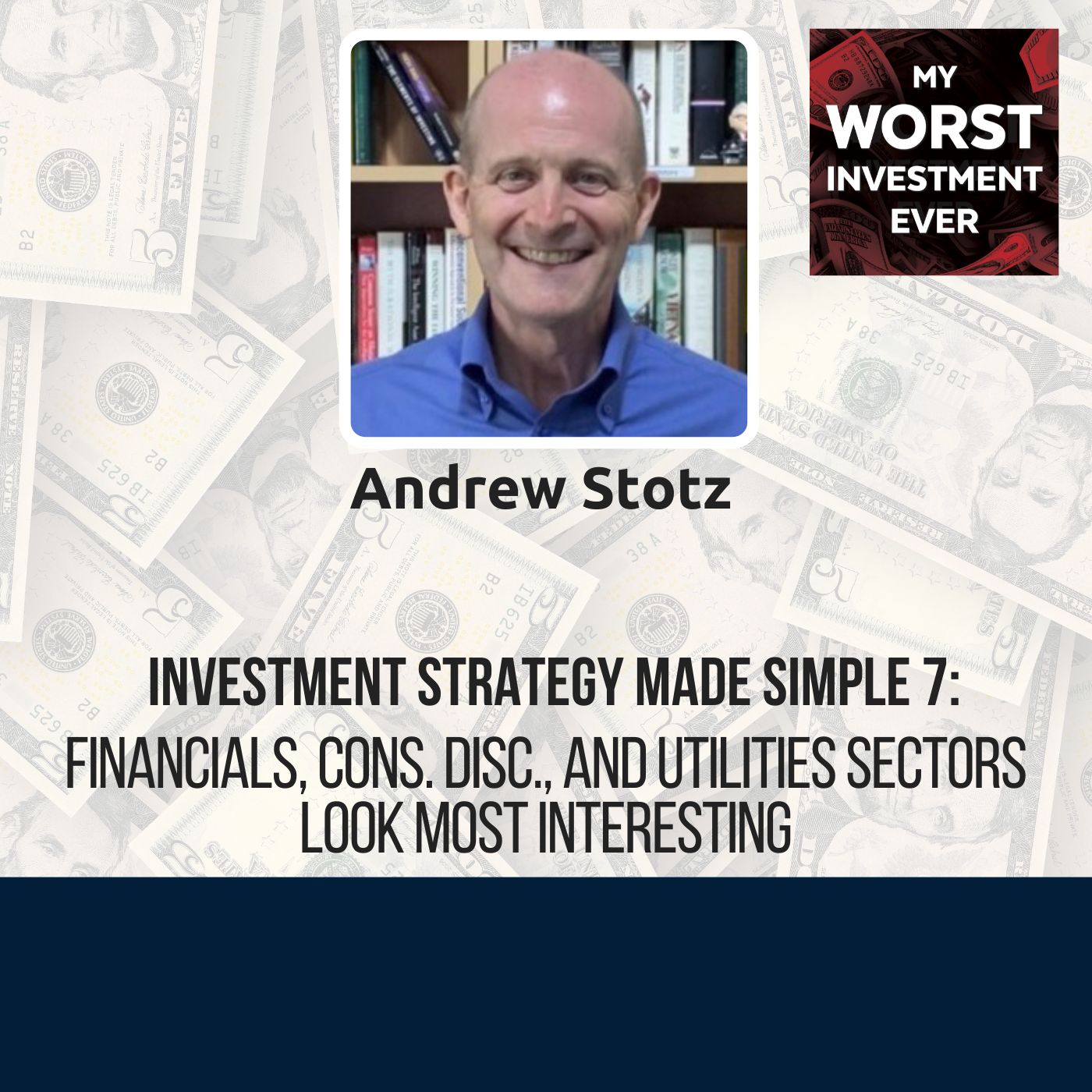
ISMS 7: Financials, Cons. Disc., and Utilities Sectors Look Most Interesting
from My Worst Investment Ever Podcast
In this presentation, I will introduce you to our MSCI Sectors and their attractivenessClick here to get the PDF with all charts and graphsWhat do you think: Which of the global sectors is most attractive?We use GICS sector classificationGICS The Global Industry Classification Standard (GICS®) is an industry classification system developed by Standard & Poor’s Financial Services LLC (S&P) and MSCI in 1999GICS works well for the global financial communityMSCI separates stocks into 11 different sectorsEnergy, Materials, Industrials, Consumer Discretionary, Consumer Staples, Health Care, Financials, Information Technology, Communication Services, Utilities, and Real EstateThen 25 Industry groupsSome sectors such as Industrials have three Industry groups as follows:Capital GoodsCommercial & Professional ServicesTransportationThere are 74 industriesWithin Transportation Industry Group there are five main Industries1) Air Freight & Logistics, 2) Passenger Airlines, 3) Marine Transportation, 4) Ground Transportation, and 5) Transportation InfrastructureThere are 163 Sub-IndustriesFinally, within the Industrials Sector, the Transportation Industry group, the Transportation Infrastructure Industry, are 3 Sub-Industries1) Airport Services, 2) Highways & Railtracks, and 3) Marine Ports & ServicesGICS sectors include 1,508 Developed Market companies, total market cap is about US$53trnThe largest sector is Info. Tech. at US$11trn market cap and consists of 183 companiesThe smallest is Real Estate with a market cap of US$1.5trn and 96 companiesWhat is your investment framework?Our investment strategies for ETFs and stocks come from our FVMR frameworkWe backtest and optimize the strategy for the factors that have worked best in each marketWe do all our research in-houseWe don’t rely on other people’s researchWe might of course get ideas from others, but we then test those ideas in our FVMR frameworkThe benefit of an investment framework is that it forces discipline when emotions run highEmotions from wild market events can cause you to make rash and costly decisionsTo avoid this, stick to a frameworkOur framework relies on data & structure, not just a feeling or opinionManagementIs responsible for producing earningsInvestorsSet the price the company trades atThere are 4 Elements to our FVMR frameworkFundamentals: Strong profitability shows a company is managed well.We prefer high or rising profitability.Valuation: Shows how the market perceives the stock.We prefer good fundamentals at relatively cheap valuations.Momentum: We try to avoid “value traps” by looking for positive price and earnings momentum.At times, low momentum signals an out-of-favor opportunity.Risk: We prefer low business and price risk.Not every stock is going to fly; some just provide stable returns and strong dividends.FundamentalsInfo. Tech has a 23% ROE; Health Care, Cons. Staples, and Energy are each earning 20% ROE15% average is higher than the long-term average of 12%Info. Tech. has a strong 16% net marginThe current market average net margin of 10% is still much higher than the long-term average of about 6%5 sectors have 7-8% net marginWhat you have learnedEven after difficult times, Info. Tech. still has a high 23% ROE and a strong 16% net marginHealth Care, Cons. Staples, and Energy are each earning strong 20% ROEAverage ROE is 15%, higher than 12% LT averageThe current average net margin of 10% is much higher than the LT average of about 6%Info. Tech and Health Care are most profitableValuation24x PE for Info Tech. is highest; Financials at 11x and Energy at 8x are the cheapestFinancials look interesting at this levelGenerally, you buy cyclical energy and materials sectors when PE is high which is when earnings are at the bottom of the cycleInfo. Tech. is crazy expensive at 5.4x PB, Cons. Staples and Health Care are also expensiveFinancials look attractiveEven after adjusting for cash, Info. Tech companies are fixed asset lightExpensive Info. Tech., Health Care, and Cons. Staples; cheap Comm. Services and FinancialsFive sectors are yielding more than 3%, signaling they are potentially cheapFinancials look interestingFinancials are most attractive, Info. Tech. and Real Estate leastWhat you have learned24x PE for Info Tech. is highest; Financials at 11x and Energy at 8x are the cheapestFinancials look interesting at this levelBuy cyclical energy and materials when PE is highInfo. Tech. is crazy expensive at 5.4x PB, Cons. Staples and Health Care are also expensiveFive sectors are yielding more than 3%, signaling some are potentially cheapMomentum2023 revenue growth expectations are a low 2%, highest is Cons. Disc., lowest is Energy2023 consensus earnings growth flat, up at Financials, Cons. Disc., and UtilitiesBest 6-mth price momentum at defensive sectors: Health Care, Cons. Staples, and UtilitiesReal Estate has been hit hard from Fed rate hikesInfo. Tech., Energy, and Materials are best 3-year performers, Real Estate worstWhat you have learnedLow 2023 revenue growth expected highest growth at Cons. Disc., is Energy2023 consensus earnings growth flat, up at Financials, Cons. Disc., and UtilitiesBest 6-mth price momentum at defensive sectors: Health Care, Cons. Staples, and UtilitiesInfo. Tech., Energy, and Materials are best 3-year performers, Real Estate worstFinancials, Cons. Disc., and Utilities look interestingFinancials - Cheap and good momentumCons. Disc. - Strong earnings momentumUtilities - Weak fundamentals, but cheap and good earnings and price momoInfo. Tech, Health Care, and Cons. Stapes strong, but expensiveInfo. Tech. - Strong fundamentals but expensiveHealth Care - Strong fundamentals and price momo, but expensiveCons. Staples - Strong fundamentals and price momo, but expensiveEnergy and Materials appear cheap…butFor cyclicals we usually buy when expensiveKey points and the bottom lineFinancials, Cons. Disc., and Utilities look interestingInfo. Tech, Health Care, and Cons. Stapes strong, but expensiveEnergy and Materials appear cheap we usually buy them when expensiveClick here to get the PDF with all charts and graphs Andrew’s booksHow to Start Building Your Wealth Investing in the Stock MarketMy Worst Investment Ever9 Valuation Mistakes and How to Avoid ThemTransform Your Business with Dr.Deming’s 14 PointsAndrew’s online programsValuation Master ClassThe Become a Better Investor CommunityHow to Start Building Your Wealth Investing in the Stock MarketFinance Made Ridiculously SimpleFVMR Investing: Quantamental Investing Across the WorldBecome a Great Presenter and Increase Your...
Embed this episode
What this episode covers
In this presentation, I will introduce you to our MSCI Sectors and their attractiveness. What do you think: Which of the global sectors is most attractive?
Ready to play
ISMS 7: Financials, Cons. Disc., and Utilities Sectors Look Most Interesting
No transcript for this episode yet
Similar Episodes
No similar episodes found.