Welcome back to Fresh Matters, where we discuss matters of freshness. I'm the grossier here with Kat from Metro. Kat, your produce is impeccable. We have high standards. We... Meat is custom cut on site to my very delight. Yep, it's important that we... And the baked goods? More like baked grates. Fresh in store every day. So at Metro you would say fresh. Matters? It does! Find fresh meals and deals at Metro!
Welcome back to Fresh Matters, where we discuss matters of freshness. I'm the grossier here with Kat from Metro. Kat, your produce is impeccable. We have high standards. We... Meat is custom cut on site, am I very delight? Yep, it's important that we... And the baked goods? More like baked grates. Fresh in store every day. So at Metro you would say fresh. Matters? It does! Find fresh meals and deals at Metro!
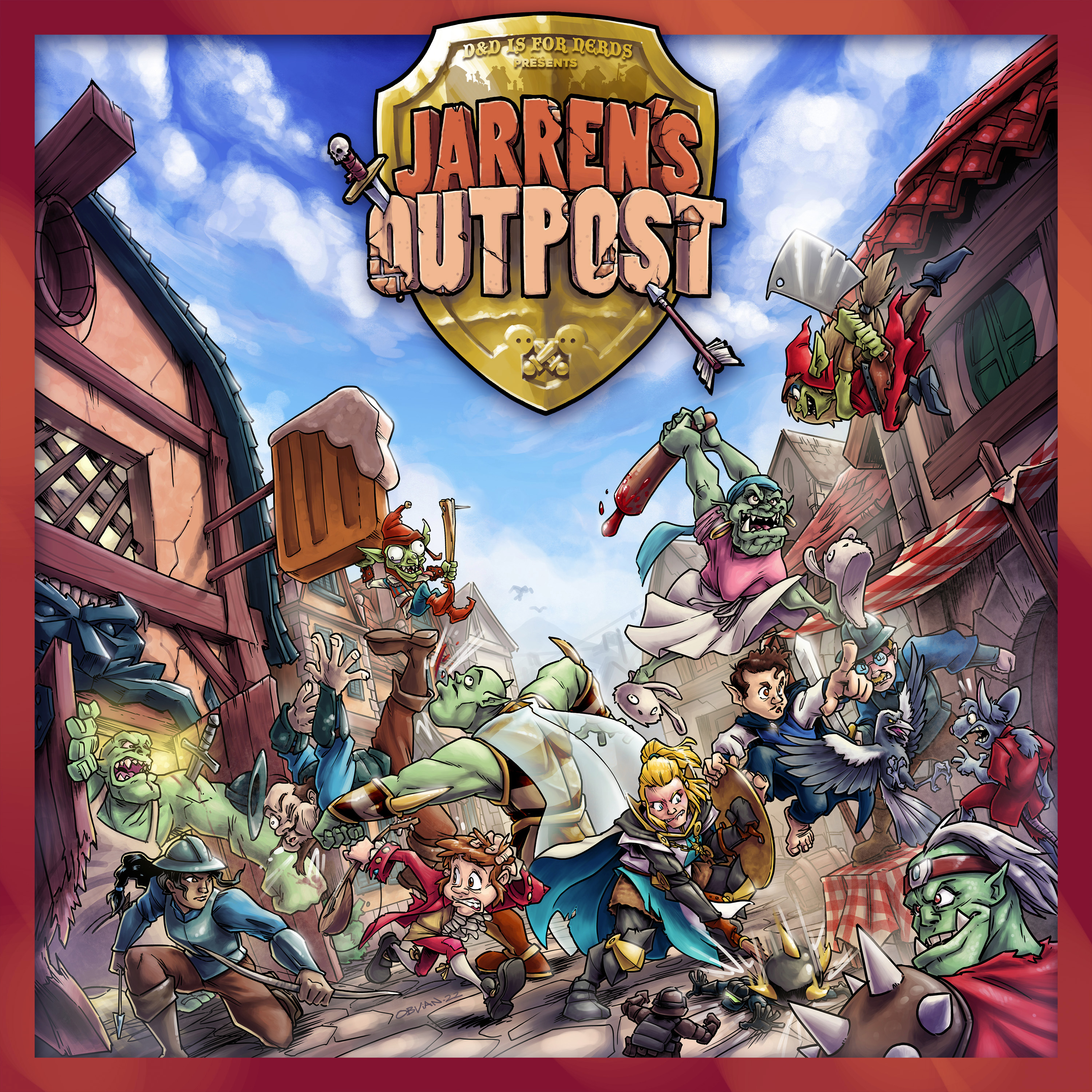
Hey, everybody. I'm Jackson Bailey. I'm Joel Zennett. And this is the first episode of the Giant's Outpost development blog, which is going to be like a little accompaniment to the current remaster, the Giant's Outpost remaster you're hearing. You're going to get an episode of this every week alongside an episode of that. Very exciting. And in this show, we're just going to talk about the board game that we're developing, because that is why we're releasing the Giant's Outpost remaster to promote the board game that we've been making for the last six years. There is a reason why we do it. We didn't just do it for no reason. There is a reason why we're like... Honestly, though, that wouldn't surprise. That would be very us, I have to admit. But there is a reason, and that is that we've been making this board game, the Giant's Outpost board game, for 10 million years.
Extremely close. So, yeah, so we've decided, hey, wouldn't it be a fun, wouldn't it be a gas if we did a sort of development blog to tell you about the board game, about the history of it, about what went into it, and stuff like that. It's a bit of a retrospective. Yeah, exactly. Most people, when they're making these things, they'll, like, do it as they go along, those kind of things, and they kind of iron out those problems as they happen. Yeah, and they write it down. They keep possibly development blogs, and you can look back and be like, what mistakes did I make? Why did we make this change? Oh, that's right. We didn't do that. No! Instead, what we did is just nothing. I mean, on the Jared Dalpo's website, there are a couple of dev blogs that you wrote, but those are also retrospective. Yeah, retrospective. And there's also a few of them that are in draft that I'm just like,
But then, you know, I babied pretty hard. Yeah, I think you were like, oh, we should do this. I was like, that's a good idea. And I wrote one and then never sent it to you or anything. So, yeah, this is kind of retrospective, but it's still very valuable. And this first episode, we're just going to talk about what the hell is it, basically. Because, I mean, you know, again, like you hear Jaren Dalpa's board game. What does that mean? You know what I mean? You did it like a tabletop RPG. It is Dungeons & Dragons. It is basically a board game. You could just...
kind of just follow the notes or whatever. Do you have notes that I can use that we could just kind of... Yeah, kind of just run it by myself. I'm like, well, I guess you could do it. We could have done that. Instead, we made a full-on board game. I guess the first thing, I suppose, is like, why was this the decision we decided to make? Because I honestly can't remember. My memory is that you came and you were like, wouldn't it be good to make a board game? We were like, yeah. A friend of ours who is a board game developer, Alex Winter, reached out to us way back when.
I was like, hey, I have this idea. He did a podcast a few times. It was about board games. I think it was a TV or a movie. Oh, yeah, of course. I remember that show. If you make a board game out of a movie, what would that sort of board game be? Very cool. And so he's made a few board games in the past. And so he was like, hey, I've got this idea sort of sitting here, sort of doing not much. Do you guys want to have a look at it? And maybe we can reskin it, rebrand it or whatever, and maybe look at it as our sister show, Plumbing the Death Star. Yeah, okay. And kind of do a board game like that. Oh, that's right. Yes, I do it far out, man. What a blast from the podcast. I remember this now. We got like not a... Like a printed play. Yeah.
get a print and play version we were like oh maybe but i don't know but then there'd be a lot of re-skinning to do yeah it was not quite like cards against humanity it was more about like it was a similar vein but a little bit more involved um very much like a party game yeah a party game that it just didn't really feel like i think it's gonna be a very frustrating thing to say in retrospect but like re-skinning that to fit what you know we do at plumbing the death star yeah you know it seems like a monumental challenge yeah yeah so it's that it is so funny like there's so many podcasts these days that they do that they make like a little party game out of the podcast i've seen so many recently for some reason and we were like no not that instead we will make like an in-depth crunchy, interesting, weird board game that is going to take, like, six to seven years of our lives, you know? I think part of it is because, like, what we play with board games is sort of, like, Rue and Scythe and stuff like that. And those kind of, like, you know, Everdale, those kind of, like, involved interesting sort of, like, strategic games. Yeah, for sure. And so we were like, okay, you know, we kind of wanted to do something like that. I think what kind of happened to us a little bit is that, you know, most people, if you're podcasting, they're like, I'll make a board game or a party game. You're like, oh, that's, like, a fun piece of merch. But we were like, oh, I want to make a board game. Yeah. Which is, like, kind of just, like, a different experience. It's not, like, making a fun bit of merch that, like, is, you know
We didn't really realize that then, to be honest. No. And I remember that first initial meeting with Alex where he was like, what do you want to do? What do you want? So yeah, so we got the print and play version of this sort of party game that wasn't really quite off. No, it didn't quite gel. And even trying to reskin it in terms of what we do with plumbing was like...
Let me make this work. But we really had a good time with Darren's Outpost, the campaign. And it was like, well, it was like a lot of different multifaceted sort of factions. And you could do this, you could do that. So doing something like that sounds interesting. And we could kind of like board gamify that. Because by and large, it is just a game. Yeah, absolutely. And so we're going and having a chat with Alex. And Alex was the first person to be like, OK, cool. So he was the one. He never really played a lot of D&D. But he was like, OK, I forget who he was basing this after. But it was about the pre-programming movement that is still in this game. It's kind of one of the core elements of the game.
It's very hard to explain a board game through audio or even video for those of you watching it on YouTube. I don't want to sit here and be like, right, so you get 10 pieces. These are your NPC cards. You won't get it. But a crucial part of the game is that on the four turns that make up a round, see, it's already scary. On the four turns that make up a round, you pre-program them before you play them. So you say, I'm going to go forward and then on the next turn left and then the next turn right and then the next turn, you're doing a loop in this example. And then everybody else does that as well and you just see what's become of the game. I think that's one of the very...
unique parts of this game. I don't think, I've not played many other games that do something that's sort of similar to that. Yeah, he was, I forget who was based on which sort of game designer was making this, but yes, it was about like, you pre-program your moveset, and for us, we were like, alright, we'll break it down to like, seven days a week kind of thing, and each day is broken down, it's like, you know, four segments. And so you program before the day starts, you program your day, you're planning, you're planning your beautiful day. We'll move forward to go to the shop, and then go left to visit Knock Knock, or whatever, you know. And I'll steal some of this, and I'll pick that up. And then I can drop this off at Little O's apartment. Oh, what's that? I completed a quest. And so it was like, the pre-program was kind of like, yeah, inbuilt.
from the start. And I was like, all right, cool. So that was kind of like the core gameplay mechanic was that, all right, cool. You need to plan your perfect day and then see what happens. Someone else is planning their perfect day. Someone else is planning their perfect day. And let's try. See how those perfect days interact. And so there was a bunch of playtesting with, you know, I guess, like placeholder images, placeholder locations and all these type of things. And so Alex put together the first iteration, which there is like some photos of that on the Jaren's Outpost website of like the very, very, very, very first iteration. Such a different game. And then after that, we hired, so Nathan Davis,
is our regular artist for a lot of what we do at the Indies for Nerds and San Francisco's Radio. He's done the majority of the cover art. Like so many of the character designs and the stuff that like you, you know, when you think of Greg Piss, you are thinking of Nathan's sort of interpretation of that. He did the sort of, he's done like a lot of the art for that. He's done the front cover as well for the thing. And so we hired him to do more, say, some of the items and the, like the layouts, the design layouts as well. It's at a time because, yeah.
He went and got a very fancy job. Probably can't mention where he is working now. Who knows, dude? Best not, I guess. Anyway, he went, oh, today's not a bigger bit of things. So I didn't want to inundate him with doing all the characters. It's a lot of art. It's a lot of art for something, especially for the game we made. And so Ralph Athanasia, or Ralph America, if you listen to, I guess, a few of our other shows on the network, he did all the character designs.
And so I was like, we needed a bunch of different NPCs and we needed a bunch of different playable characters. And a lot of the stuff we also didn't end up using, or like, once it was done, like, actually, can you kind of redo this version, this version, this version? I definitely feel like the way we sort of designed this board game, and in later episodes, we'll go into more detail about, like, the sort of more specific, you know, parts of designing a board game, but I just know that we did it ass backwards. I just know that if somebody who's been doing this for their career, you know, their whole lives, found out how we made this board game, they would be like, why did you start there? Dude, I don't know. Because we didn't know what we were doing. Not 100%. Yeah. Yeah, I think, like, since, you know, making this, like, going on and watching a bunch of different, like,
like how to make a board game, how to play test a board game, how to do this kind of stuff, and be like, that would have been clever. Yeah, but also in some weird way, I feel like we were sort of unfettered by the ideas of what a board game should be. You know what I mean? I think in some way that it was oddly beneficial when it was beneficial. And then I think, yeah, as we actually started to figure out what we were doing, then that was useful. Yeah, so that was the first iteration. And then, yeah, we got a, after getting the art done, and then there's a Spanish, I think Spanish artist. No, no, he did all the location art as well.
And so, like, with that, you know, the idea of, like, you know, sharing the load in terms of, like, the different art that we needed was kind of like why we got, like, three different artists. And we're so lucky as well that those three different artists, I think, have made something very cohesive. I think that it's really risky in a situation like that that you're going to be like, well, these look like they come from different board games. But they don't. And, you know, everybody that's played it sort of has had the same sentiment. They're like, oh, it just, it feels, because it is, like, a cohesive whole.
Yeah, but then I think this thing happened with making this board game where the initial design, we were like, we love the skeleton of this, but some stuff about it we maybe want to change and we want to sort of adapt. And then that began this very slow process of transforming that initial prototype, that very basic prototype, into the current immeasurably playable game that we have today. Yeah, because it went from that very, very first prototype with a placeholder imagery and everything like that to then getting a very first prototype. printed yes yeah yeah and that uh you know we had like i think it was rectangular locations instead of the current square where they're at yeah uh and they had all these like certain rules and like there's certain things that have definitely been like cut oh absolutely i remember playing it like we played it once uh because i remember alex kind of came over like here it is look play it as much as you want you know kind of work out what works what doesn't um and like you need to do a really great job of those initial rules that you kind of then what we end up like you're hanging out of yeah what has become this game and it was like after playing a few times it was like okay yeah we have notes absolutely definitely some like
Yeah, the skeleton, which is the movement set of like planning your movement has remained all the way through. Absolutely. It's remained extremely consistent. That one core. built on that and we've we've sort of changed the way the game initially played so an extremely basic like i suppose rundown of how the game works and what the aim is is that you pre-program your movement with the intention of completing as many quests as possible and defeating as many npcs as possible sort of um so that by the end of the game by the end of the seven days you will have the most prestige points um but the sort of part of the kicker of that is that everybody's going for the same quests so i think there's like a weird element of poker to it as well where you will have more than one quest that you need to you know that is available to everybody every day and so you're like well i'm pre-programming my movements but is zamit going for the same quest i am do i need to be wary of him that kind of thing but the initial version had which I can see why Alex did this, but it had like you selected the quests and then you selected the NPCs and the items. Because I should say most of the quests involve collecting an item and taking to a location or collecting multiple items or visiting multiple NPCs. But yeah, the initial version was like you pick the numbered NPCs that are going to be in this. You basically set up a scenario for yourself.
There was this, because I guess what you're playing on is the Jaron's Outpost City, which is made up of 25 location tiles. And on those location tiles, you have an NPC and an item. And the very first iteration was you just had those 25 items and those 25 NPCs and those 25 locations. And that was the playing field. But we'd also got art that was a bit more than just those 25 items, those 25 NPCs. And so when you had a bunch of missions that were all handed out, then it was like, okay, cool. So you had to then find whatever the missions that were there, you grab those.
correlating like NPCs and items from the deck and you put them into the game and then once everyone's done that you then add as many items and make up 25 and as many and it's just so many extra steps a lot of setup a lot of setup Which is not, I mean, a lot of board games do have that level of setup. But I think we were just like, I don't know if I want to be doing that level of setup. Because it wasn't just like setting up of like, all right, move these cards over here, making sure that the table's set up like this, grabbing, you know, this over here. It was like going through a deck and like removing... Being like, oh, I'm looking for, you know, because you would have the little quest card and the quest would have, so every NPC and every item had a number on it. And the quest would have the numbers that you needed. So what that left you doing is like, you're like, what do I need? Oh, 227. And you'd be like, okay, 227. Flicking through it. Oh, there's 227. And it just kind of, you know, and that's like a thing. It's kind of cool that we...
immediately like clocked out of something we didn't want in the game because i think so much of developing it is figuring out what's fun and what's not fun and figuring out what is streamlined and quick and and simple and what is complex and maybe kind of unwieldy and and sort of like kind of weighs down the game and so i think that was the sort of beginning of like a no you know what this is not quite what we want. But don't get me wrong, that, I mean, like, when was that? That would have been, like, what, 20... Let's say, let's call it 29. No, 2018. No, earlier than that, it would have been, like, 2017, maybe? Something like that, yeah. That was 2017, and then, you know, it took us until now before we're like, oh, we figured out the game. Yeah, no, it's been six years. It's been more than six years. And I think part of the reason that it has taken so long, and we might do a whole episode on this later on, I don't know, who knows, but part of the reason is that it's just, it's never been our main focus, because...
unfortunately just couldn't be yeah so that meant that piecemeal we had to find the time amidst all the other podcasts that we're recording and you know find the space to be like we should we got to sit down and figure out this freaking game in between like you know doing uk tours in between you know putting out podcasts um There is many different ones. And then COVID happened, which was like weirdly harder and easier in a weird way. We were able to use Tabletop Steam to be able to like, all right, cool. Let's import everything in and let's go. Plus we had a lot of time. Like, what else am I doing? All right, let's figure it out. But like the problem with Tabletop Steam was like, well, if you wanted to make changes and you can't really kind of make them on the fly or like you really want that tech. Oh, absolutely. Like even with the, you know, the game is complete now and we still, obviously we're still playtesting stuff and, you know, figuring stuff out.
But even with the complete game and tabletop sim perfectly working, still somehow I want to feel the cards. I don't know. I don't know what it is. It's a funny thing. It's great that that exists and you can do it with all these different kind of board games. But it's just, I don't know. I like board games. You kind of want that.
We need to pick up a piece and pick up the card and have a look at it. Rather than, what's the zoom button again? Oh, yeah. Somehow I've set my base grounders under the table. I do that so often. I don't know why. Yeah, so it has been a slow development process. And I think part of that as well is that what happens is, you know, like I remember there's a period, was it like last year? No, the year before maybe, where we were like, let's dedicate a month. Let's dedicate a month to it, which was really valuable because we got a lot done. But we had to do a lot of work.
to be like, all right, we need to have all these plumbings, all this D&D, all this basis, all this thumb cramps, blah, blah, blah, and all this done by this month so that we can go, basically, this is our full-time job for a bit. And there is also something I would say about, like, leaving it alone and having to think. Because, like, that's very useful to be like, yeah, this is a problem over here, or was that fun, or how can that be a bit better, a bit streamlined, a bit interesting, or whatever. And so, like, you know, being able to walk away and, like, you know, again, it's like have that shower. Yeah, oh, totally. Oh, that would be interesting. Wouldn't that be something we could do? And so those have been quite useful. Yes, I agree. It's a real, like, double-edged.
Sword? I want to say coin. All coins are double-edged up. They're double-sided. What is a side but an edge? Anyway. But in that, you have that, yeah, there's that great, you get that distance from it. So then also when you come back and you start playing and you're like, oh, this isn't fun. Like I was too close to it, I couldn't realize. But also you come back and you're like, what was the problem that we were trying to fix last time? And then you play a game and you're like, oh, that's right. But you need to have that like...
that kind of period of getting into the game and figuring out what the hell you were focusing on last time, what still needs to be fixed, and stuff like that. So, in a way, it's a miracle we got here. But it's also spectacular that we did, and I could not be more proud. It was like the final product. It's really cool looking at this game and playing it and being like, wow, it's fun to do, fun to play. And we did this, and it plays kind of like how we really wanted to. Yeah, absolutely. Which is that, all right, cool, like another thing that we did, which was maybe stupid, which was that when we had the player characters, we wanted each one to feel a little bit different. Yes, yes, yes. Because we're like, you know, we were playing a lot of Root at the time. And Root, for those who don't know, is an asymmetrical.
board game, which means that every player, every sort of player or character that you can pick plays completely differently to every other one. And we were kind of rude obsessed. And so when we started properly getting into it, we were like, could we make it so that every player feels different, like has kind of a different vibe? And if you're adapting the campaign that we did, it was like, you know, Perry Winkle is very different to Greg Pierce. He's very different to Leo. Yeah. It's like, well, you know, they probably should feel. And so that was the kind of basis of like, you know, like this character, you kind of break it down. What are they? Who are they? And kind of like, what, how can you gamify that?
in a board game and go from there. It's a very cool process, I think, of being like, right, okay, Greg Pierce. Greg Pierce, famously a slippery big cock deal. Okay, what have we got to work with? Well, we've got his movement, we've got his health, we've got his stats, and we've got his special ability. With these as our sort of like the framework, how do we make him feel different to every other?
sort of character which is a cool process and it's cool to be restricted like that but it also means infinitely more work to make every character feel different to balance them all out you're like okay is that powerful or is that this was fun to play I'm always coming last is that fun to play I am leaps and bounds ahead of everyone I've lapped everyone so it's that kind of like balance and there's like for the longest time and we can get into it in probably like we go into character development I guess a little more in depth but like for so long we just kept having this thing on our like slack or whatever which was the heading of like what do you do with a problem like knock knock yeah absolutely because we just she was just a thorn in our side for so long so long The character of the original, like, you know, before we wanted to maybe look at expansion character, which was the last character we wanted to make. We had to nail on. God. And we wanted her to be a little bit more powerful. So we wanted her to be kind of beefy and, like, strong. And so she ended up being this tank. Yeah. And she ended up just decimating the board. Yeah. Every single time she would win. But because, you know, and again, this comes down to that, like, limited time to play because it's not, it can never be, or at the time, it can never be our focus or whatever. You would be like, you play a game and Knock Knock would win and you'd be like, okay, well, that makes it feel like she's overpowered.
but we can't play enough games to know if that was just an outlier because the game does have quite a bit of RNG in terms of NPC placement, item placement, location placement, quest placement. Which obviously works, I think, to the benefit of the game because it means that every game feels completely different. But it also means that if you're doing a game with Knock Knock, you're like, was she just lucky? I don't know. Was she just lucky? Because we made the skill quite low, but then these points that person got, they just got a lucky roll. Yeah, exactly. They probably wouldn't have got that many points. I definitely remember one game we did where Dusha was helping us playtest and he, as Knock Knock, was like, I'm just going to stay in this corner and fight people. And we were like, okay, all right. And I think he didn't win, but he came second.
No, no, no, he lost. He lost? He lost quite a lot. Well, then that's extremely, yeah, well, that's the kind of thing where you're like, well, does that mean Knock Knock's okay? Or is Dusho a bad player? Was he unlucky? Was it because he decided to focus all of his attention in this corner? Yeah, and then that's another thing as well. When you're playtesting with a group of friends, and usually it's like, you know, me, you, and Adam was basically like, we were the core. We developed it, really. Constantly playtesting it to the three of us. We got very good at three-player games. Yeah. And then you do like, you know, four-players and five-player games occasionally. And sometimes you see the two of us. Yeah. And so it was like...
Between the three of us, there is a different way of playing a game and a different level of how we approach it. Oh, absolutely. And that also kind of plays into it. Because it's like, are we developing a game for people who are like, my brain, who's like, I like strategy, I like doing this, I want to plan ahead. If I can do six things in one turn, I'm a happy boy. Oh, absolutely. So it's kind of like, all right, so Magic the Gathering. So on this turn, I'm going to tap one, my plane, which will let me play this card, which then gives me two chips. Absolutely. And then...
Which you do do. It's fun to do. I move here, and because I have the coffee in my backpack, I get another move. But then I've landed on Kevin's table, so that's another move. And you're like, well, why play? Whereas I'm almost the exact opposite. I think somebody pointed this out when we used to do board on a Friday, the Twitch stream where we'd play board games, where they were like, when Jackson starts playing a board game, you can see his brain switch off. Which is true. I don't have board game brain, but I genuinely believe that it's crucial to have a player like me developing the board game. I think in a weird way, that's really valuable because...
I get bored easily, confused easily, and I'll want to do something stupid because I think it's funny. And those are the things that gives me joy in a board game. So I want the game to have that too. Because there are a million players like me. And I love board games, but I don't have board game brains. So the game's got to be for someone like me as well. And then Adam's somewhere kind of in the middle, I think, of the two of us. Yeah. So I like it because, again, what I like about this game is that there is almost that emergent storytelling that can happen if you know the story of Jaren the Outpost, you know the characters, but also if you don't. Yeah, yeah, absolutely. There are games, and this is something that I think is rare in other board games.
But there are, I mean, you know, some ball games do have it. Some ball games do have it, like some others do have it. Anyway, did I have a coffee before doing this? I don't know. Did I just kick in? I had spaghetti before doing this. No, so is that there are games we reminisce about. There are games that had like enough narrative to them just through the sort of emergent RNG gameplay. They were like, remember that time? Or like, you know, remember when Adam did this and pulled this move out of there? And even when we playtested it with people, we playtested it at Fortress in Melbourne a while back last year. And games that happened there, we were like, that's what an awesome story. Just the way people, you know, were screwing each other over and trying to get ahead and stuff.
I think that's awesome. I think that's such a cool thing we've managed to do. We played... Ticket to Ride? Yeah, Ticket to Ride Legacy version. And again, it's like a legacy game. It was a really fun experience. Yeah, I had a great time. Like you came dead last. We figured it out that if you hadn't played... I didn't really bad. If you didn't play at all, the random fifth person who just didn't turn up to any game, so they just clicked the base average, would have beat you. But there were those moments where you're like, I'm going to, for this year, instead of doing it, I'm going to go and hunt for treasure. Yeah, because the way Ticket to Ride Legacy works is that every game, the one who gets to pick a new part of America to expand into and build your trains into, one of them was the Sierra Madre. And I was like, bro, I'm getting that treasure. I'm ignoring whatever shit we unlocked this year.
And I'm getting that treasure. And every time it came to my tune, they were like, well, we know what you're going to do. Did I get the treasure? No, but I had a whale of time. You got it.
What? And how sweet it was. But it felt good. The victory points didn't matter. It was a moral victory. And it was great. It felt amazing. So you have players who play like that, where they're not really disrupting the game. Because you also do get players who will disrupt games. Yeah, of course. And I think I can take a right example of that. If you want to ruin your friend's day, make sure you get this thing, this thing, this line, this line, this line. Because that just kind of upsets everybody. You don't need these ones to win. No, but it'll wreck everyone else's life. So there are definitely people out there who like that as a disrupting kind of thing. But there are also people out there who are like, I am a bit of a chaos merchant. Maybe I will inadvertently screw you.
over partly because I'm having a fun time. Yeah, exactly. And you are definitely that to a team. But also, there's quite a few games. I think you have such a great board game brain that you win 99% of the games. But I've come second plenty. You know what I mean? And I think that's amazing as well, that I can come into this game with my wretched board game brain and still be competitive. That's pretty amazing. There is this RNG. And also because every character is different, you just find the one that you like playing as. And you develop different strategies or whatever. That's the kind of thing I really like about it. Every character can do
everything. So I guess to pare it really down, the way you get those victory points is by competing quests and defeating notable NPCs that are worth prestige. And those are the two core ways to gain that. And all those quests, you can pick up and basically you deliver something, or you're either delivering an item, you're delivering a person, or you are going to a certain location. Or sometimes you are defeating people. And every single character can do...
It all. It's just, there are certain characters that are better at doing the moving on the board. There are certain characters who are built towards defeating people. There are certain characters who are better suited at just like, you know, being able to churn through items and NPCs. Well, absolutely. And I think part of that is, so for example, and again, it's hard to explain a board game through just audio, but so defeating the surgeon, people will remember the surgeon from the campaign. That's an NPC in the game that's worth prestige because they're notable and they've got the highest sort of damage output and health, I think, in the game, or at least equal to someone else. But anyway, so if you're saying parry or knock knock, you've got a good base damage. So you can go in there and you've got a good health. You could go in there and just wail on them.
Whatever, you're probably going to, you know, if you're lucky, you might be able to take him out just like that. We've balanced it so that you probably need to pick up some weapons to do it. But if you're Leo, Leo's very good at picking up items. And some items you can discard to do damage. So you can...
You can be competitive no matter what. You know, Leo could theoretically pick up a bunch of daggers, and you've done this before, roll in using your very sneaky movement, throw all of your daggers at the surgeon to do enough damage to defeat him, and then fuck off out of there so that you've done the same thing. So, yeah, every quest is very doable, and we've tried to make it doable for every NPC, but people are weighted. Sorry, every player character, but, you know, they are weighted. Yeah, and I like what you can do there is that you can really tailor it to what you want to do. Because the quests there, they are.
Hey, it's Kat Nat from Kat Nat Unfiltered. You know what matters most to us when cooking for our family's freshness. That's why we always choose Metro. Their produce is hand-picked, their bread is baked in store, and their butcher's custom-cut meat to our exact needs. Freshness is the thing that can make a simple meal simply amazing or turn an ordinary bite into an extraordinary night. At Metro, fresh matters because fresh changes everything. Find fresh meals and deals at your local Metro.
Hey, it's Kat Nat from Kat Nat Unfiltered. You know what matters most to us when cooking for our family's freshness. That's why we always choose Metro. Their produce is hand-picked, their bread is baked in store, and their butchers custom-cut meat to our exact needs. Freshness is the thing that can make a simple meal simply amazing or turn an ordinary bite into an extraordinary night. At Metro, fresh matters because fresh changes everything. Find fresh meals and deals at your local Metro.
Visible for everybody. The way that it works is that it's the amount of players that are on at the table plus one. So for a three-player game, four quests. Four quests are always there. And the moment that quest is done...
Another one takes its place. And we've got a lot of quests. So the ability to play this game again and again to get different quests is going to be very different. So it's always very fun, I find it, is depending on what character I'm playing, because each one's very different, to be like, okay, what are the quests? How can I do them? And is that worth doing? Or should I just go barbarian mode and maybe just pick up some really good items and just kind of go ham on whoever's on the board with some prestige? And it's like, okay, cool. Well, I can possibly get this one, that quest done, but I have to work for it. I've got to go all in. And so you end up spending like...
Some of your turns are like, I've got to grab this, I've got to grab this. I'm going to need this item that's over there. That location, well, if I pass, it's like a skill check then, then that's great because that means I can do X, Y, Z, and then I'm all in, and I get that victory point because if I get that, that means he doesn't get that, which means I get it, stopping them, and I move up. Yes, absolutely. And then the next time, you do that, or you try and do that, and it's either like you succeed, and you're like, yeah, okay, now I'm down to like three health. Yeah, yeah, exactly. I'm halfway across the board. All the other quests are on the other side. I've got to make it over there. Or you get almost the exact opposite of that, and this is always good where the new quest comes out, and it's something like, drop Papa Little-O off at the Little-
that took somebody else you know multiple like hey buddy like look you're right here absolutely why don't you have a seat and then also you know part of the game and we will go into this more in a future episode part of the game is we wanted that sort of backstabby screw each other over vibe that the giant outpost campaign has and that was a really difficult thing to balance and again we will talk about Sort of finding the fine line between fun and annoying. Is this fun or are you being a dick? Are you making this fun for us? Yeah, exactly. When I said that there was a story that came out of doing it at Fortress, that story involved an item which is called the Rock of Warps, which will make somebody fail a role. And one player had figured out a strategy to just basically continue. They were just lucky enough, the RNG worked in their favor, they could just continually pick it up and fuck over their friend. And their friend, you know, and again, it's that fine line, but I think it was incredible. Just to watch it be like, I'm not going to win because he was losing, but I can make sure your last turn sucks. Yeah, it's like, I'm not going to win, but...
You're not going to win by a lot. Yeah, exactly. On this location, which means you can go through the item deck and grab an item. And so, yeah, every time you'll be like, all right, rock of warps, roll for it. Yeah, I got it. All right, buddy, what are you doing? What are you doing? Do you roll to try and complete that quest? Yeah, I guess. Oh, rock of warps. Oh, OK, on your next turn, you can do it. What are you doing your turn? I'm going to search the item deck for the rock of warps. Oh, you passed my skill check. I get it again. It was so funny to watch. Yeah. But again, that's that fine line. And some people, you know, they don't love necessarily that kind of, you know, again, it's a fine line.
But yeah, but in terms of victory points, in terms of, you know, part of it is screwing each other over and snaking that quest out from underneath somebody and leaving them high and dry and they've got to now sort of think on their feet. There's a lot of improvising and a lot of, you know, kind of dealing with the blows that you're dealt and trying to come up with new strategies, which again, feels very much like, I think, the campaign that it's all based off. Yeah, it worked out. I do like that ability because like when we first, the quest initially, it was you either like just had them, right? So it was kind of like after you kind of got everyone to like, you know, all the numbers in a row, like who's in what and put them all out. The quests were dealt out.
But they were like a private thing and they were only for one person. And so it was kind of a thing of like, I have this quest, you have this quest, Adam has that quest, and then let's just see what happens. And there wasn't that much interaction. No. And it was a lot of fun.
But it felt very much like we are playing a single-player game and my two friends are all here. Just happen to be here, yeah. So then we're like, okay, how do we do this? Well, okay, what if it was, say, you share your quest with the person to your right? Yeah, that's right. And so I was like, okay, cool. So then it was like, well, me and Adam share a quest. Me and Jackson share a quest. And they share a quest with Adam, yeah. But, you know, it's just like, okay, that's kind of nice. Let's try that out. And that sort of worked for, like, a three-player game. But then we were like, okay, try it with a four-player game. It's like, okay, well, I'm never interacting with one player. Yes, yeah, the person opposite me, I'm just not. You don't worry about it. Yeah, you're like, hmm, that's right. And so we're like
Everyone can share the quest. Let's make his madcap to be like, okay, everyone needs to scramble to get it. And then that kind of really gets like... Oh, that clicked. And there's so many moments like that. So many, screw it. What if this is how we did it? And it was like, oh my god. This is how we should have been doing it the whole time. Because that's like, you know, I said earlier on, there's like an element of like, not poker really, but of reading the other players and knowing what they're...
the kinds of people they are and the skills they have and being like, well, this is like a quest where you have to defeat like a high-powered enemy. And I know that, you know, Zam is playing knock-knock, so he's probably going to go for it. So maybe I avoid it or maybe I try and screw Zam it over so we can't get to it in time. But all of this was such a learning curve to figure out that that's what the board game was. Which is such a funny thing, but that really is how it works. Because I could go in there and quickly snake the quest so I could like the final killing blow or the defeating blow and then I get the points and they did all the work. Yeah, I came in at the last time. Or like just quickly like, you know, pick them up and throw them somewhere else because you're like, well, if I can't take it, you can't either. So hey, that's the best move is for Noah to win.
more satisfying than playing as Greg Pierce, whose special ability is the ability to get a lot of interacts, which we'll explain at some point, which means it's very easy for them to pick up NPCs. Nothing better than somebody's been wailing on a high-powered NPC the whole time. You roll in. pick up the NPC, instantly discard them, send them back to the NPC deck, and you're out of there. And that person just looks at you like, you've wrecked my life. Why would you do this? And there's this nice moment where you're so powerful, you've kidded yourself up, and you're like, yeah! It's like, I can't really lose. The only way that I could possibly mess this up is if I roll a one. What's the odds of that? What's one in six? What are the odds of that? And cock of the walk, you start rolling around, you're trying to clean up, and of course you're like, roll one, roll one, roll one. And as you're rolling one and you're failing, you're taking damage, and it means you're dropping all your beautiful items. Yeah, all your items that you're like, well, that's good, I was so powerful, and now I'm a weak little boy. Oh, no. Oh, that's good.
And there's like, you know, like Leo or Greg Pierce, who's got like, you know, zipping by the ball, picking things down. And you're like, well, I feel so weak. I'm so powerful. Absolutely. It's great. And, you know, yeah, in those moments, you can somehow still snake the victory if you're clever and use the board and use the items, you know, in interesting ways or whatever. But yeah, it has truly been a real experience to figure out. And it has kept coming back, I think, to that idea of like, what's fun, though? Yeah. What's enjoyable to do in this game? Like, obviously, you figure out. And I think this kind of worked. Figure out the game.
And that takes long enough because you've got to be like, does this work? Is this a fun idea? You spend like, you know, three to four development sessions with one particular rule or mechanic in mind. And then by the fifth, you're like, actually, that's not fun. And you've got to get rid of it and go back and start at the beginning again or whatever. But once the game is down, and I think the game was down like two years ago, really. By and large. Yeah, by and large, we were like, oh, this is the game. Then you're like, okay, now how do you make it fun? You know what I mean? Okay, this is the game. It's done. This is how it works.
How do you make it so that every game is fun and every game is enjoyable? I remember a big fear for me sometimes was the, okay, cool. Every game is stratagems and it's not. This idea of every game is so complicated and convoluted and requires so much explanation that you almost get lost in that source. Oh yeah, absolutely. After the second paragraph where they're explaining what you do with your wheat, and you're just like, I don't know what the hell you're saying. Six wheat tokens. You can trade for either wood or for grain. But during the winter cycle, when this is flipped over, you're like, all right, shut up. My favorite one is the,
is the scythe. Oh, yeah. Which is just like that. On your turn, you can do the top row action. Or the bottom row action. You can do either or both or none. You're like, what? You're like, I don't. I don't know what you mean. What do you mean? I can do either. Fine. I can do both. Okay. Or none. Does that just mean I skip a turn? Why would I do that? Why would I do that? I don't understand. Yeah. Which I think is very beautiful. Oh, yeah. And I think, you know, there was a period of time where this was stratagems. Because I think probably also in development, there has to come that kind of like wave of rules before you strip it back. Yeah. What's worthwhile and what's not. But I know what you mean. I had the same fear as well. Because when you'd sit people down during that period of time, you'd get those looks of like, oh, I think I get it. Can I do this? And you'd be like, no, sorry. And they'd be like, oh, I feel like I
You'd be like, oh, okay. But then we hit the point now where people play and they're like, oh, yeah, cool, I get it. Yeah, I'm across. Yeah, it's really cool when you look at, say, Scythe, where you're like, what's his game? You're like, well, it's alternate reality. Yeah, exactly. I was very afraid to be like, we're making this too complicated. We're making this extremely, like, this thing, which is like, we're first time. Yeah, yeah, absolutely. And so it was just like, okay, cool. And having those, I guess, playtesting with people who are external to us and people who are very external, as in, like, we've never met them before in our lives.
and playtesting this. And I think what really helped was leaning into those, yeah, actually you can. Yeah, absolutely. I 100% agree. For example, it used to be, so every character gets seven movements, so you get your basic four, and then everyone has three units. Yes. And so the basic four was forward, left, right, reverse. And so everyone on turn one wants to move forward.
And then they want to do a thing. Yeah, yeah, yeah. So for the longest time, it was like, no. Sorry, doing a thing is a turn. Yeah, doing a thing is like an action. Yeah. Because again, you're leaning into, you know, D&D. Yeah, of course, yeah. In a lot of respect there. Because it's like, well, yeah, D&D has these, like, you know, action economies. Turns of what you have to do. And like, you know, can you do this? Can you do that? Can you do this? And so it's like, well, yeah. So it's like, you know, in D&D, like, I want to attack twice and use my bonus action to second. Yeah, yeah. And so a lot of that kind of stuff was like, you know, kind of coming from that. So it's like, well, in your turn, you can, you know, either do this, this or this. But like, it's all,
you would have so many people like the very first move was always move forward and then they wanted to do a thing and it was often pick up an item or interact with the location. And so it was always so much of like, sorry, no. Which is boring. Yeah, yeah, yeah. But it's funny, it took us a bit to be like, yeah, actually, that sucks. Yeah, actually, like, yeah, why not? Move forward, interact. Perfect. Yeah, you know what? We'll do that. And then we're like, all of those basic movements, you move forward, you move left, you right, and reverse. We're like, let's give them something. Yeah, so it's like, move forward, you interact. Because that's the one that everyone was doing. Yeah. And so I was like, because the interact, you can do a lot of it. And then I was like, okay, well, then like the left, right, reverse, whatever. Yeah. We're like, okay, because you want them to still be able to do something, but you also were like, well, you don't want to give them too much power. Too much, you're
So they're cards that are very uniquely theirs to do those kind of things. You kind of don't want to take away from them. So part of it is how can you make it fun, but also still make it unique and don't take away from over here so you're making those characters weaker. And there still is some element of restriction makes the game interesting in a weird way, where if you can do everything, you're not excited when you get to do something unique. On that as well, it was this kind of thing where it was like when you picked up a bunch of weapons or items that helped you pass your attack check because you're rolling this excited die.
if you know it's like well if i got enough and my skill check is whatever it's like well how do i i can't i cannot possibly fail if every sword i have gives me a plus one to my attack at a certain point there's no lose condition here so it's like sweet i don't even i don't have to roll because it's like you know who cares i i cannot miss yeah and so that made us go like yeah that's boring yeah that's being able to like walk through the town like i hit i killed yeah who cares we're like no let's make like a one to fail yeah absolutely yeah like it's just that that is kind of like very in dnd itself and also it just helps with that rng yeah it helps with that like you don't want a slot machine that pays out every time you pull. You want that kind of risk. It's funny that there's this real feeling of, what are they called? Something paths. And it's like you can build a walkway for people, but there are desire paths. Desire paths, yeah. Which means you can build a walkway for people, but people, as a kind of collective animal, will pick a path they want to go, even if it's not the specific path that you've laid out. So a classic example of this is you think of writing. And so it's like a path going.
down and across and you know it's the bordering a park and like someone wants to go across and so they just kind of do this everyone will do a diagonal yeah just to cut across and so then they're like okay city council then put a say a bench in the way and so people will then go around the bench and they'll put like say a park you know like a hedge and then you'll see people cloning over there and you're making a move and so it's like you can either work with it or you can try to keep fighting it and I think we were like let's work Yeah, absolutely. If this is what people want to do, if this is what people, you know, what would make the game fun for them, let's allow it. And this came quite late in the sort of development. We were, like, thinking about, like, with the NPCs, there's, like, hostile NPCs and friendly NPCs. And so there's, like, some variation of, like, what's the difference here, etc. And towards the end, it was, like, again, because we were getting into cutting rules, because, like, is this fun? It was this idea of, like, no, stop it, whatever. Let's just, like, cut this rule. So, like, you know, in this kind of weird instance, like, don't worry about it. I think it was, like, um...
Initially, picking up an NPC for a friendly, they'll trust you, they'll follow you, it's fine. For a hostile NPC, you had to roll a skill check to pick them up. And that was like, yeah, is that fun? Was that kind of like, we're chucking down an extra kind of thing we were rolling. It kind of slows down the gameplay a little bit. So we're like, actually, you know what? Let's nix it. And so I was like, oh, is there going to be any difference? No, no, no, no, whatever. You just pick someone up, it's fine. And then you could see when people were playing it and they didn't know, like, okay, cool, I want to pick up an NPC, I want to pick them up because, yeah. So what happens? They're like...
Oh, nothing. And they're like, oh, okay, cool. Which is funny where you're like, oh, you want consequences for this. Okay. Which makes sense because, you know, in the visual language of the game, the big orcs, which are like hulking orcs, they look dangerous. Yeah. So in the visual language of the game, you think, I'm putting that guy in my backpack. He should hit me. He seems aggressive. Yeah, yeah, yeah. That's fine. Yeah, yeah, yeah. There has been a lot of that desire power thing. But then also there is the flip side of that, which is like the...
you don't want to give people too much of what they want. You know what I mean? So again, it's all a very delicate balance. And like in the process of making this, we've gone through so many different rules, so many different, somebody will suggest something and we'll like put it in the game and then, you know, after a bit, we're like, actually that was a bad idea, take it out. Walls is a great example. My favorite example is Walls. We were playtesting this and because it was all about like, you know, pre-programmed movement and someone was like, why don't you put in some walls? We can kind of have corridors. And me and you, Jackson, we loved that idea so much. Oh my God, Walls, that's genius. We were like, this is great. You've added such a fun idea to the game.
It was this kind of thing because we've been playing it for so long. We wanted a bit of hard mode. I wanted a bit of hard mode. And so this idea of like, sick, we can make these things so you can't just leap over a wall. You make these corridors. So if we're chasing someone, we're moving these things. And it feels like you're building, because the idea with the walls is that you placed it at the beginning of the game. So you built these streets. And it was like, oh, I need to get to the, I don't know, the guardhouse or whatever. But it's down this alleyway. So I'll get down there. But then I'm trapped and I have to turn around. What fun.
Hey, it's Kat Nat from Kat Nat Unfiltered. You know what matters most to us when cooking for our families? Freshness. That's why we always choose Metro. Their produce is hand-picked, their bread is baked in store, and their butchers custom-cut meat to our exact needs. Freshness is the thing that can make a simple meal simply amazing or turn an ordinary bite into an extraordinary night. At Metro, fresh matters because fresh changes everything. Find fresh meals and deals at your local Metro.
Welcome back to Fresh Matters, where we discuss matters of freshness. I'm the grossier here with Cat from Metro. Cat, your produce is impeccable. We have high standards. Meat is custom cut on site, am I very delight? Yep, it's important that we... And the baked goods? More like baked grates. Fresh in store every day. So at Metro you would say fresh. Matters? It does! Find fresh meals and deals at Metro!
And so then we played that for so long and we built a whole character like Periwinkle because we designed him all around walls and we're having a lot of fun with this because it was like, yeah, at the very start of the game, you know, everyone places down like two walls. Periwinkle because he's all wall-based guy. He's the wall guy. He hits three walls and so you end up making these cool little corridors. And then we started, I think we went back to playing with Alex again and Alex was like, why would I do this? Why would I segment up a whole section? What is the advantage for me to get here? And you're like, yeah, yeah, but it's fun. It's kind of fun to make it. And then he was like, well, maybe you can go through or maybe you will. Maybe you can go through your own wall. Yeah, he was kind of like, well, what do you think about in terms of the narrative of it all?
Hey, you know, you built this wall, but maybe you know where you built it, you know a secret passage, so you can go through it. We even had items that helped you get over the walls, like the grappling hook used to be, use it to get over a wall. Like, we were all, we love the wall. And then having the ability to kind of go through the wall made it not as fun and boring. Well, you were like, well, why do I even care then, I guess? If I could go through my own wall, and then we were like, maybe you can get a thing, let's go, eh. And then we were like, I guess, actually, don't worry about walls. I guess the walls are fun, but only for walls. And the funny thing about that is I think one of the reasons we were reluctant to get rid of it was that we had based so much of the game on it. So it was like, well, if you get rid of walls, it's not just like, well, don't worry about walls. It's like, well, then we need to redesign parry. And we need to figure out what the grappling hook does if it doesn't let you get over a wall. And so that makes you very reluctant to do it. You have to kind of accept. You know what?
Walls don't work. Walls don't work. Because even though for us, we've been playing that game for so long, and we're really into it, and we were so close to it, and adding this element, which seemed to us made this cool idea of pathing, made the programmatic movement kind of work a bit, and we were like, that makes so much sense. And it just took one person to be like, but why? Why would I ever make this game harder? What is the advantage of putting... Yeah, sure, it's all RNG, and sure, you take it in turns, sure. But why would you ever do that? You're going to end up screwing yourself over. Why would you make, like, box something off? And you're like, I don't know, it's funny. But that's one of those times we had to come on the side of, this is frustrating, not...
You know, like I was saying before, some things, you know, what's that fine line between frustrating and fun? And that was like, because I remember even saying like, oh, I like it when I'm trapped down a corridor. And the movement was nowhere near as complex at this point as well. And so turning around to get out of that corridor would take you a whole day. Yeah. And like, I love it. I was like, I was like, I'm so frustrated. I hate this. I hate that I'm on this side of the wall and I can see the thing I need to get on the other side. And I'm like, yeah, but now you got to turn around. He's like, that's not fun. Like, oh, I guess it isn't. You know, you're right. You're right. Yeah. It's been a very funny process in that way of like figuring out what works, figuring out what doesn't, making something.
eminently playable for somebody who knows who we are because it's like another consideration you know do you make a board game that is fun for dnds for nerds fans do you make a board game that is fun for general board game heads do you and obviously we tried to synthesize sort of some combination but yeah that's like a whole other consideration you're gonna think i think for me it was like okay let's try and make this a fun game for people who just like board games yeah like you know and then from there for me it was like for people who are fans of like dnds for nerds or just like you know or some other podcasts that we do yeah it was like i want to have that through the quests, the narrative, the rulebook, how we can try and kind of weave that in through some of the flavour tips. Yeah, sure, sure. Because Isaac was really trying to kind of inject our humour and the kind of vibe of that.
campaign into this board game so it's like this idea of like if you know us and you've been listening to us and like following us for you know over 10 years like I get that and like if you have no idea you're like it's funny that's a funny name you know oh my god it's Greg Pierce I'm playing it's Greg Pierce yeah and so there is this kind of like yeah everything was just like you know really threading that needle oh yeah all right is this too referential is this too silly trying to write down all the rules and it's like, is this too stupid? Yes, yeah, yeah. You want to explain the rules, but you also want to kind of make them an enjoyable read. For sure, yeah, yeah, totally. And it is funny that like, you know, that like, so one of the items that you can get, is it, or has this been changed maybe and I'm misremembering, is it the rusty dagger does no damage?
I think the rusty dagger, it's like all daggers. You discard it, it'll do some damage. And if you have it in your items, it'll help you. It'll add to your Enzo. It still helps you with your accuracy. You discard it, it does zero damage. And I think that's fine. Yeah, exactly. I love that it's still like you can discard it for zero damage. That's an option. And so, you know, I think even though some of that sort of stupid stuff we have, you know, not had to remove, but we've maybe removed to make for a, like a better game. Stuff like walls where we're like, it's fun to suffer. You know, it's not. You know, because you can imagine somebody coming here being like, why would I, why even write it down if you can't use it? You're like, oh, it's funny. It's funny to do, you know.
But then on the flip side, there's stuff that we have gotten rid of that's kind of the same thing. I don't think this is in the game anymore, but you used to be able to... There was a period of time where we were like, what if you could throw every item for one damage? Every item could be dispatched. Because it's funny to imagine somebody throwing, say, a box of chocolates, which is one of the items, at an NPC to do damage. Well, it's just throwing an NPC. Yeah, exactly. Throwing an NPC. You want to throw irky timbers that fucking pop a little load and hurt them? You can do that. But then we were like, oh, you know what? That's so much text. That's so much... For what? You know what I mean? So it has been that really funny experience of... And that's, I think, just development of anything and going into it. Like, again, I'm like, oh, I really want to start launching into, like, from there, like, a bunch of the playable characters and how the NPCs have changed over time. But honestly, we can...
Save that for another episode. Because again, we have been, this has kind of consumed us for almost a decade. Oh, pretty much, yeah. So there's a lot to talk about. There's a lot I want to talk about as well.
And I really could just keep going on. Oh, absolutely. We could do every episode now in just one big 14, 15 hour, you know, whatever marathon. But we should stop ourselves. Yes, yeah, we should. We should be clever. So if you haven't by now, please head on over to the Kickstarter and follow us along. We are aiming for, I think, 1,000 followers. And we're working with somebody, like a group of team, who is like, they've done a bunch of other Kickstarters before. Because once again, we're like, hey, how we do this? We don't know. What happening? Help. And it's like, okay. And so they're very much like, yeah, we've done many before games before. Sure, we'll help you out. And they're like, okay, cool. If you get to 1,000 followers.
From there it's like, sweet. will launch in a month. So it's like, hey, we're very close to that. So if you can head on over to the Kickstarter, the links will be in the show notes. Just give us a cheeky follow. And hopefully then from that, we'll then be able to be like, hey, hopefully next week, when we sit down and record, we'll be like, hey, do another one. It's going to be, here is the date. Yeah, exactly. Oh, that'd be so crazy. It's actually really exciting. So please follow us along on the Kickstarter. And if you want, yeah, head over to the Jaron's Outpost website where you can check out some blogs. This will, hey, give me the kick-up that I need to go to those drafts. Publish. Because again, it's...
this kind of thing, to be like, I don't know, we've done this thing, I am proud of it, but I don't know, Australia has this weird thing of tall poppy syndrome, and I guess that's like everywhere has tall poppy syndrome, where you're like, I did this thing, I'm proud of it. I don't know. That's embarrassing. It's pretty embarrassing. Like, hey, here it is. It's pretty cool. Do you want to play it? It's pretty cool. We worked really hard on it. It's very pretty. It's real cool. We've got a prototype, and it sounds nice to feel it. It feels how heavy it is, how weighty it is. It's really cool. But if that's stupid, and we're stupid, that's okay. I'm sorry for even bringing it up. I've embarrassed myself. Absolutely. 100%. So yeah, please, head to the Jaren's Outpost website.
You can also check out some of the artwork, the characters. There is a tabletop sim link. It's actually an old version, so hopefully by the time this comes out, that'll have been updated with the new version. Get a hands-on feel for it. It's a lot of fun. We really like it. We're proud of this. There's so many times of this development where I stay off into the middle distance and I'm like, what if we just re-skinned werewolves?
Damn, that would have been clever. But we wouldn't have gotten the final product that we have. And I really hope that those who play it enjoy it. But have those little emergent stories. Yeah, me too. Absolutely. Yeah, this was so cool. It was like me and my mate were going head in head. We're trying to fight the surgeon. We're taking blow after blow. He missed. He's like, ah, shit. And then I was about to get the next turn. But no one was paying attention to Gary. And Gary just comes in with a goddamn dagger, throws it, and he's dead. And he gets three victory points. Dave was going to win because he was about to drop off Laura Fillmore to the restaurant.
Realized that I happened in my last turn to be on the shore foot home for wayward children, which meant that with a skill check, I could steal Laura Fillmore off her. And then I was writing it, you know, like those are the kinds of stories that you get out of it every time you play. And we still enjoy it every time we play it too. And we've been playing it for nearly 10 years. That's gotta be a good sign. Yeah. Well, on that note, I've been Jackson Bailey. I've been Joel Zammett. We'll see you again next week. Bye.
Welcome back to Fresh Matters, where we discuss matters of freshness. I'm the grossier here with Kat from Metro. Kat, your produce is impeccable. We have high standards. Meat is custom cut on site to my very delight. Yep, it's important that we... And the baked goods? More like baked grates. Fresh in store every day. So at Metro you would say fresh. Matters? It does! Find fresh meals and deals at Metro!
Welcome back to Fresh Matters, where we discuss matters of freshness. I'm the grossier here with Kat from Metro. Kat, your produce is impeccable. We have high standards. Meat is custom cut on site, am I very delight? Yep, it's important that we... And the baked goods? More like baked grates. Fresh in store every day. So at Metro you would say fresh. Matters? It does! Find fresh meals and deals at Metro!
Hey Ontario, come on down to BetMGM Casino and check out our newest exclusive, The Price is Right Fortune Pick. Don't miss out. Play exciting casino games based on the iconic game show. Only at BetMGM. Access to The Price is Right Fortune Pick is only available at BetMGM Casino. BetMGM and GameSense remind you to play responsibly. 19 plus to wager. Ontario only. Please play responsibly. If you have questions or concerns about your gambling or someone close to you, please contact Connex Ontario at 1-866-531-2600 to speak to an advisor free of charge. BetMGM operates pursuant to an operating agreement with iGaming Ontario.