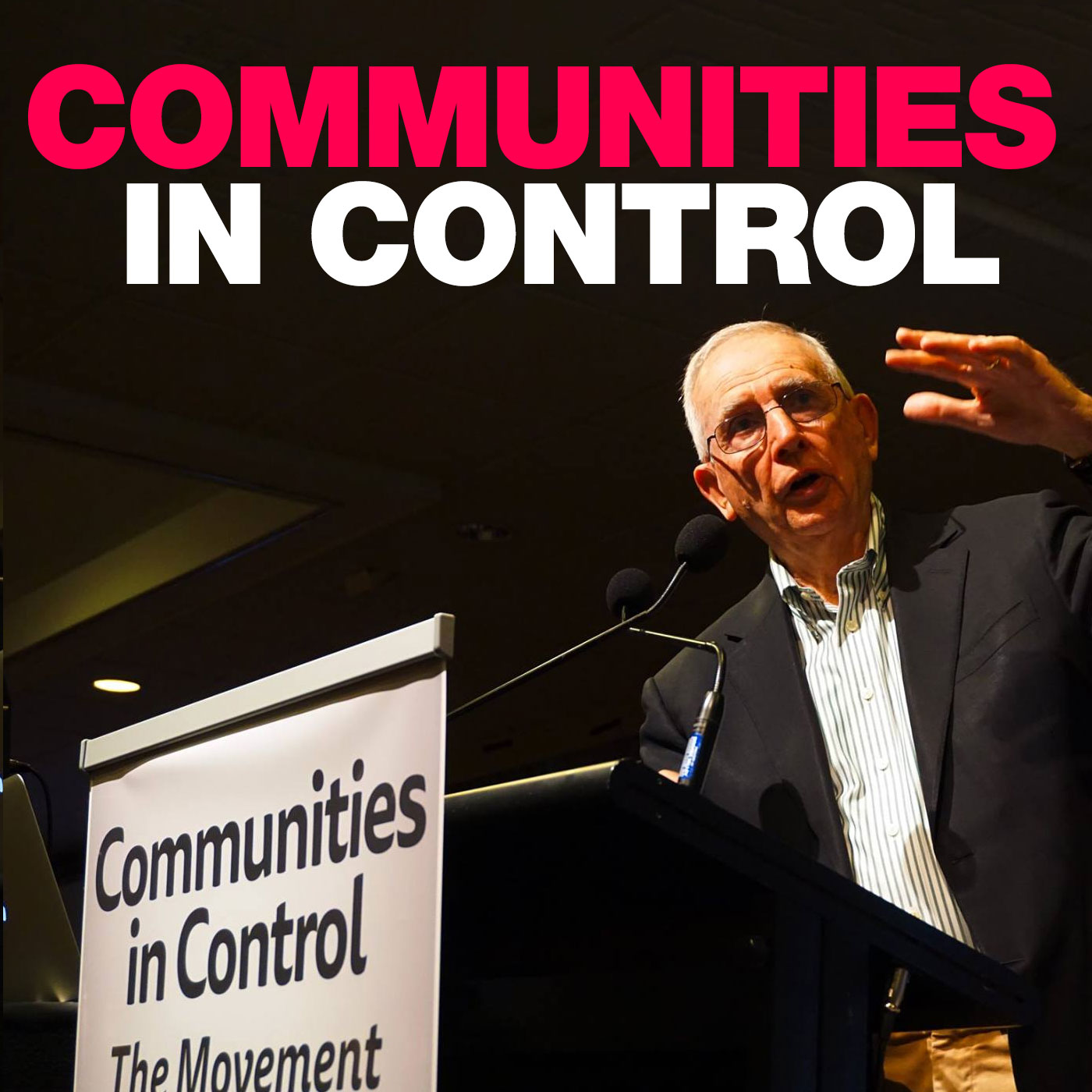
Here's another inspiring speech recorded at Communities in Control, Australia's biggest and best annual community sector gathering. Thank you. When I was invited to be part of this conference, I said that, you know, I normally do 20-minute keynotes on LGBTIQ disability rights. I'm very earnest and, you know, talking about the need for social change. And then I said, no, no, no, I want you to do your performance poetry. And I said, well...
it's a bit raunchy and a bit dirty. It's about queer disability sexuality. It's my fun kind of humorous side to my life where I guess parts of it are still calling for the need for social change. But a lot of it is just having fun and talking about people with disabilities can be awesome lovers as well. So I definitely feel a little bit pushed out of my comfort zone, especially when I was thinking about being here today. I was thinking, oh, yeah, I'm going to be in a kind of tiny room somewhere in the conference. Maybe there'll be 10 other queers that'll come to listen to me. I definitely wasn't expecting this beautiful, big, accessible stage.
and all of you here. I had planned to try and memorize this stuff, but as was said in the introduction, I am a new parent, so I'm pretty sleep deprived. Yeah, so hopefully you'll forgive me for reading today. I want to go down, filled with anticipation at seeing you spread before me, just begging me to take you, end right now, slide myself over you, learn your curves, down to those places where I lose myself in the moment and just let go. You, you make me forget myself and remember at the same time. When we do this together, we are always on display. For I am marked out as different. And tonight, we will give them a show. Oh, I want to ride you fast in this dusk light where everyone can see as they drive by in their cars home from work. I want to scream to squeal like a 16-year-old with the rush and the thrill of the first time I realised I could do this. And it felt so right.
You, you make me breathless and reckless, and I don't care that they are watching, their headlights catching my wheels as I roll over you like an expert. They say big is beautiful, and they are so right. You, my big, beautiful hill. But first, you've made me work for you. You've made me climb you. You've made me come, hear, and sweat. You've made my arm muscles sore till I am all ache for you in this sunset light.
Oh, I want to press my tires into your tarmac. Know the cracks in your concrete, which make my body vibrate just right. Know your bends and your curves. You make my hands so fucking dirty from touching my tires to your streets. I want to make people look and step aside hurriedly with a gasp as I go down you, you dirty big hill, like a pro right to your bottom. And everyone watching wishes they had this body and this equipment to enjoy you just like I do.
Thank you. So that's a bit of a love poem to the heels of Northcote. Northcote has some really good heels and some really great queers, so you should really go check them out. My next piece. Have you been selected for genetic deselection? Have you been used as an argument for euthanasia? Have you been told you shouldn't read? Have you been told if I were you, I'd kill myself? Have you been called a burden, subhuman, a defect, a sin?
unwanted, undesirable, unlovable. Another study released on those people. Another news story broadcast to help us understand them better. Another drug trial to give them hope. Another special school open to assist them properly. Another prenatal test suggested to make an informed choice. The freedom to decide when enough is enough.
When the aging body, the in-pain body, the leaking body, which can no longer contain itself, the shaking body, uncontrollable, the mind spilling out its secrets, has pushed us too far, and we will end it. When are lives deemed not worth living? Lives with pain, with dependence, when you can't take care of yourself? This queer bent body holds the secrets to the revolution. It knows about the power of reclamation.
were claimed from the hands of doctors who failed in their quest to make me normal, who could not make me straight. My body, it belongs to me now, and I am calling it home. This body knows how to live with change and uncertainty, and it is learning about self-care. I know love. I know how to give it and receive it, and that I deserve it. I am not just like you. I don't want to aspire to a normative life. I want an extraordinary life.
Queer, political, radical, proud. Love is revolution. This queer, crip body is a revolution. This life an act of resistance. Being fierce and outspoken instead of nice. Seeking justice and equality instead of help and charity. Refusing to be inspirational instead to be provocative and political. Speaking truth to power even when my voice shakes with its telling.
Practicing pride and resilience in the face of oppression and exclusion. These are revolutionary acts. The revolution starts here, now. You are worthy. You are valued. You are desirous. You are whole. You are loved. You are loved. You are loved. Thank you.
I wrote that piece in the middle of the plebiscite when many of us who are LGBTIQ were coming under some really intense and terrible scrutiny and discourse in the media. And my partner was 23 weeks pregnant with our child at the time. And as many of you will remember, there was a lot of discussion about LGBTIQ people's right to have children and their fitness as parents, etc. And so it was a really, really challenging time to be making a rainbow family when there was such horrible things being said about us in the media. And I remember, I mean, I'm pretty...
I'm pretty good at being fierce and resilient and containing my emotions in a lot of the time. But I remember one day I was wheeling down the back street in Fitzroy and I was thinking about a child and I was thinking about all the wonderful things that I wanted to teach her about the world and all the beautiful things that we could learn about together. And I was also thinking about how being a queer disabled parent, she was going to come up against some of this homophobia and ableism in her life, whether or not she ended up being LGBTIQ or heterosexual just by the very nature of who her parents are. And I just started weeping, wheeling along and just having a really big cry about the stuff that was being said at the time, but also about how was I going to teach this child resilience and what did resilience look like? And at that moment, I realised that for me, resilience isn't always a thing that we get, that we are able to get and hold on to and have in our lives forever. Sometimes resilience comes in waves, and sometimes that resilience is allowing yourself to feel really overwhelmed and to feel really...
like you just want to hang at home and watch Netflix with a cat and you don't want to go out there and give any brave big political messages and it was quite profound for me to have a big cry in a public space because as a visibly disabled person to be really emotional in public often gets read as I'm crying because you know I'm in a wheelchair and I wish I could walk or something like that it gets reinterpreted as being solely about the chair and not about any other external factors that might be happening in my life that make me feel really overwhelmed at the time. So I let myself have a big cry and a big long wheel down the street. And yeah, I really thought about how, you know, sometimes as marginalized people to practice our resilience, we have to really allow ourselves to have those times where we let go and we go, you know, I'm trying to create as much change as I can in the world, but sometimes change feels like it's just around the corner and sometimes it feels like it's a long way off and you're allowed to have those dips in your resilience. So my next piece is called Intersections.
I have a secret. I get turned on by intersections. It's not the flashing lights or those little green and red men, the swish of fast cars or that rhythmic beep, beep, beep commanding me to cross. No, it's right under your feet. You miss it, walk all over it, oblivious to its eroticism. It does nothing for bodies like yours but mine. Oh, it sends vibrations all over me, up and down my spine.
It's for the blind, they say. Well, that's the official line. Those little bunts telling innocently of an intersection or a curb. But us wheelchair-using clips, we know it's erotic underside. See? It's a federally funded public vibrator. A DIY sex toy just begging for use. It takes all my self-control not to casually move my chair back and forth beside you as we wait, like good upstanding citizens, for the lights to change.
or on the platform for a train. Oh, train stations, they were built just to tantalise and tempt us, with their entire raised rows of circles of sensuality, all highlighted in yellow, just begging to be taken under my wheels. Now, you're never going to see a cripple crossing the road in the same way again, are you? And feel compelled to offer unsolicited assistance, knowing now that your surprise powerful push from behind is really assisting us in. Thank you.
So the downside of doing that piece has been that no one will ever offer to push me now. And it's really difficult when I'm racing for a train and I have a friend or something with you, I'm just like, can you just give me a hand? And they're like, no, well, I'm leaving that one to you. Yeah, so, you know, eroticizing public spaces and public objects can sometimes have a bit of a downside. On to another serious one. This is called Identity in Motion. I am hypervisible. This wheelchair exoskeleton makes me so.
Sitting beside a garbage bin, tyres collecting grime, wheel rims touching its metal side, footplates jutting out, pushed up against a wall, I wait for a bus. In my private auditory space, iPod rap lyrics pound, I am all hormones, want, toughness, arm muscles and grunt. I am on the way to the pool to swim and swim, awash in thoughts of boobs and bodies. I am shining, even in the shade today, sunlight catching my metal, warming it with possibilities. This new city has opened my lungs to life. Breathing in traffic, rush, humming with expansion. But I am about to be positioned, solidified in a stranger's stereotypes. Contained in an equation. Wheelchair equals tragedy. She sees me and begins to talk. She is all lipstick and flowing hair. I remove an earphone. And she says, you can't walk? Obviously. Either that or this is just for show. She misses the joke. How long ago was the accident?
I wish I'd left my headphone in. The other people at the bus stop are watching me now. I wish I'd been quick-witted enough to say, look, I only discuss the intimate details of my body with people I'm fucking because then it's hot and relevant and, well, honey, you just ain't my type. But in the moment, all I can muster is, why? Why do you need to know? Because you need to talk about it. It's good for you, she says. I retort, no, no, I really don't, hey? She asks me if I live in a nursing home and is surprised when I tell her not every cripple is institutionalised.
I am boxed in by her. The positioning of my body near a garbage bin takes on new metaphors of junk attracts junk. I am trapped and her ideas about what a misery my life must be pull away my happiness. And she persists. If I would just tell her what happened, she could go on her way and have a nice day knowing that a horrible tragedy had not befallen her and feeling fortunate. I am angry now. She has decided upon our roles. She is the helpful stranger talking to the cripple who clearly doesn't know what's good for her. So she repeats, tell me, you have to tell me what happened.
And I wonder if she's missing a bit of her brain too, a different bit to mine. Mine affects my muscles, but hers, her capacity to relate. I wave my hands in front of her face saying, no, look, no, just go away. And finally she backs away and says, well, you have a beautiful day. And I want to shout. I want to rage that I am not that girl. I'm not sweet, not sad, not tortured or bitter. I am something altogether different. But my rage would be stereotype me from sad cripple to angry one. And the others at the bus stop are shooting me glances now.
They don't understand how many times I've been expected to reveal the workings of my body to people who will never touch me, over and over and over again to strangers. I am identity in motion, but you miss my movement, seeing only my chair, contained for you by this assumed tragedy. I am crystallized, held within its frame, all metal and cold hard edges of incomprehension. I am hyper-visible now, holding my anger between my teeth. I need to move. I just want to swim. To get on the bus and make it to the pool. To swim and swim and swim this interaction off me. Wash me clean. I carry who I know myself to be. Activist. Lover. Friend. Queer. Beautifully subversive. Transgressive. Non-normative in mind and body. I want to gain a silken water skin. To swim and swim and swim until I am washed clean and clear. Body moving free. Lopsided strokes and breath.
And breath. Earplugs muffle the sound of children. Glasses gone, goggles blur, liquid edges. I am genderless. Oh, and a tail is forming at the base of my spine, dragging my legs down, fusing my feet together. I am shimmering. Scales pierce through the skin at the tips of my toes, tingling slightly as they make their way up my legs. I am becoming something else. Myth.
Unbelonging, awkward on land, losing my voice to inhabit this underwater world. Time stretches fluid, memories break the surface of my mind. I am the little mermaid of my childhood. Seven years old, I sit on the floor of my family's lounge room, immobilized by the tale my mother has made me. Turquoise blue, it hides my legs. And I sing, if I could walk, if I could run, if I could lay all day in the sun, wondering free, wish I could be part of their world.
It will be years before I understand this to be a normative tale about disability. Today, I just want to swim and swim and swim to the end of the lane and beyond, out of the confines of the pool, carried downstream until I reach the sea. My people are there, at the precipice of your vision, where your knowledge of the normal becomes hazy and your feet, they begin to slip. This is where they wait for me. Those whose shapes will confuse strangers, who shimmer at the edges and move in unexpected ways, who slide and glide, who want to swim outside the expectations and stereotypes. They are calling me out to sea with one long, low trumpet sound. Just below your hearing, they call me to leave this world in my bubbled wake and swim and swim and swim. Thank you. Yeah, so those interactions do happen. That was a real story for my life, obviously.
And you'd be surprised at the amount of times people come up to someone with a visible impairment, to someone who's a wheelchair user. stop me in the street and say what's wrong with you without even a hello, without even a pretense of wanting to know anything about who I am or what my life might look like or what this thing might mean for me and the way I make my way through the world. And when I resist that interaction or that conversation or those ideas that that person might have about what a wheelchair might mean and what my life might look like, often, and I think it's because people have really absorbed some of these stereotypes from the media of disability equals tragedy or disability equals inspiration.
Conversely. And so when someone says, well, actually, I'm not those things. And I'm, you know, something different to that. My life looks different to the way you expect it to. People often don't know how to respond to that. They don't know how to have a different kind of conversation than the conversation they might have been expecting to have, which will be about the terrible accident they assume I have or my medical condition. And so they will often respond with shock that I've tried to start a different kind of conversation with them or anger. And I end up in this really difficult space where I feel like there's this massive chasm between
who I am and the kind of interaction I want to have and conversation I want to have with that person and where they're at in being able to even comprehend that I'm not, you know, this terrible tragic kind of figure. And I often wheel away from those interactions feeling like, I wish I could just nail it. Like, I wish I just had one or two sentences that broke through whatever is going on for them in that moment and let them kind of gently see that they've stereotyped someone and maybe we could talk about disability or talk about my life in a totally different way. But I haven't nailed it. And I think part of that is because when you're a minority and when someone's having such an intensely stereotypical reaction to you, they're so stuck in that, that how do you then pull them out of that?
So that's one of my ongoing questions in my life that I think I'll continue to grapple with my whole life, unless we have a revolution and the ideas about disability radically change and people start to think really differently about it. So I'm always heartened to be in spaces like this where we can have a bit of a different conversation to some of those ones that I get positioned into. So I'll do one last piece, and this is a funny humorous piece. And I really welcome you getting in touch with me after this event or coming up and seeing me at the end. I'll be hanging around for a little while and having a bit of a chat.
because I love to meet new people and hear if any of my words have resonated with you or given you a bit of a different perspective. So this is called Unrequited Love, from my wheelchair to a shopping trolley. There were sparks between us, literally. I ran into her as I rounded the corner too fast, and we collided. My medal, it grinded against her medal, and I don't know whether it was consensual. See, it all happened in a flash, like I was being driven by some unknown hands, propelled forward. She was empty, the kind of empty only shopping can fill.
Damn, she would look good carrying a load. She was shining under the fluoro lights, pushed up against the baked beans. And I wanted to say, you make canned goods look so damn good, babe. You, you make my wheels wobbly and my bearings loose. You make me want to pop a tire for you, let my air out ever so slowly. You, you immobilize me. I want to liberate you from this monotony, take you on a joyride, use you in ways you weren't intended. I want to have you go down a hill with me.
I want to stop servicing others and service each other. I want to slide a coin into your slot. I want to rub tires with you, grind rims with you, touch my small front wheels to yours. Oh, who am I kidding? I want to ram you so hard that we'll both carry the marks on our frames forever. But sometimes a supermarket is no place for such romantic gestures. And I am being driven by a queer with a drunken desire for chocolate milk.
So as I wheel away from you, I can only hope someone picks you up and fills you up and drives you in the way that you deserve to be driven. Thank you. We hope you've enjoyed this highlight from the Communities in Control library. If we did, we'd love you to rate or review this podcast in the iTunes store and for you to share it with your friends. For further information about Communities in Control, visit communitiesincontrol.com.au.