
EPISODE · Jul 26, 2026 · 3 MIN
Lamellibrachia
from Spoken Wikipedia Podcast · host SpaceMarine8
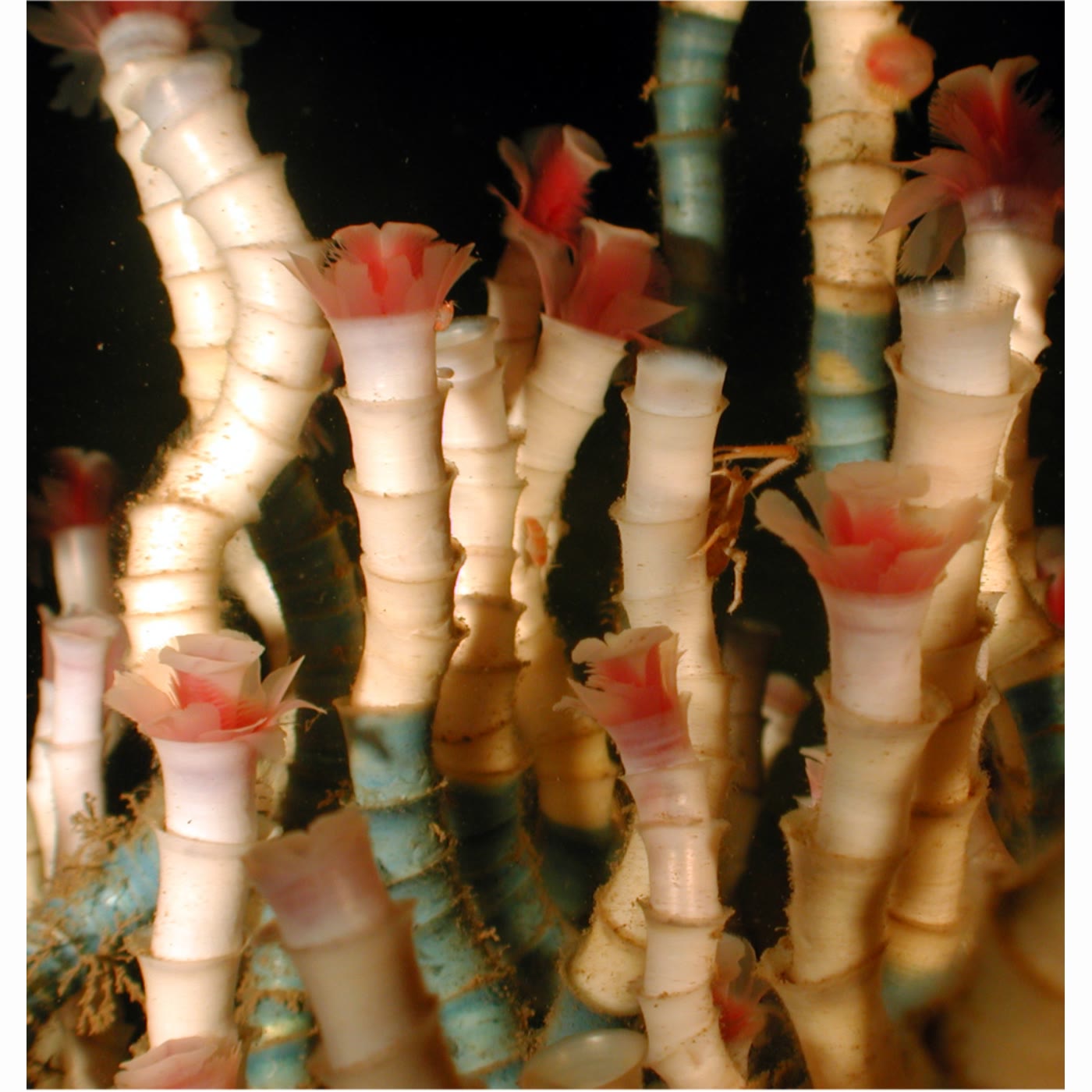
Lamellibrachia is a genus of tube worms related to the giant tube worm, Riftia pachyptila. They live at deep-sea cold seeps where hydrocarbons (oil and methane) leak out of the seafloor, and are entirely reliant on internal, sulfide-oxidizing bacterial symbionts for their nutrition. The symbionts, gammaproteobacteria, require sulfide and inorganic carbon (carbon dioxide). The tube worms extract dissolved oxygen and hydrogen sulfide from the sea water with the crown of plumes. Species living near seeps can also obtain sulfide through their "roots", posterior extensions of their body and tube. Several sorts of hemoglobin are present in the blood and coelomic fluid to bind to the different components and transport them to the symbionts. L. luymesi provides the bacteria with hydrogen sulfide and oxygen by taking them up from the environment and binding them to a specialized hemoglobin molecule. Unlike the tube worms that live at hydrothermal vents, L. luymesi uses a posterior extension of… Read by SpaceMarine8. Recorded May 27, 2024; the article may have changed since. The article as it stood when recorded: https://en.wikipedia.org/w/index.php?oldid=1188205877 Article today: https://en.wikipedia.org/wiki/Lamellibrachia Original recording: https://commons.wikimedia.org/wiki/File:Lamellibrachia.ogg License: CC0 (http://creativecommons.org/publicdomain/zero/1.0/deed.en). This episode is a format-shifted (MP3) copy redistributed under the same license. Chapter images come from the recorded article via Wikimedia Commons; each chapter links its file page for credits. This show is an independent community project, not affiliated with or endorsed by the Wikimedia Foundation.
Embed this episode
Ready to play
Lamellibrachia
No transcript for this episode yet
Similar Episodes
No similar episodes found.
Similar Podcasts
No similar podcasts found.