
EPISODE · Jun 27, 2024 · 26 MIN
Learning from embedded: less is more (osc24)
from Chaos Computer Club - archive feed · host Bo Maryniuk
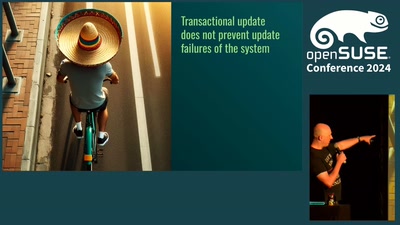
Ultimately, packaging is the right way to distribute and run software maintenance. But at the same time, there are very good reasons why in the Embedded world, images are often before package repositories. These reasons evolved over a very long time and did not change since. A number of typical problems, such as software bloat, configuration drift, broken updates etc are unacceptable in embedded systems as they may cause severe errors, ultimately "bricking" devices. Therefore there are specific practices to ensure those typical requirements for the embedded systems, those can be very beneficial also in other niches. If Edge Computing is on very constrained resources, there is actually a way to solve those "regular" problems, having maximum flexible and configurable solution, without _specifically_ developing a different, special distribution. This talk is intended to outline the following questions: - What are those earlier mentioned practices? - What is the benefit applying them and why does it matter? - Why Yocto Project is designed the way it is, and what part can be applied in SUSE world? - What is still missing in the process and what can be done so the result meets the requirements? **Spoiler**: _Keep it as simple as possible, but not simpler!_ :-) . Ultimately, packaging is the right way to distribute and run software maintenance. But at the same time, there are very good reasons why in the Embedded world, images are often before package repositories. These reasons evolved over a very long time and did not change since. A number of typical problems, such as software bloat, configuration drift, broken updates etc are unacceptable in embedded systems as they may cause severe errors, ultimately "bricking" devices. Therefore there are specific practices to ensure those typical requirements for the embedded systems, those can be very beneficial also in other niches. If Edge Computing is on very constrained resources, there is actually a way to solve those "regular" problems, having maximum flexible and configurable solution, without _specifically_ developing a different, special distribution. This talk is intended to outline the following questions: - What are those earlier mentioned practices? - What is the benefit applying them and why does it matter? - Why Yocto Project is designed the way it is, and what part can be applied in SUSE world? - What is still missing in the process and what can be done so the result meets the requirements? **Spoiler**: _Keep it as simple as possible, but not simpler!_ :-) . about this event: https://c3voc.de
What this episode covers
Ultimately, packaging is the right way to distribute and run software maintenance. But at the same time, there are very good reasons why in the Embedded world, images are often before package repositories. These reasons evolved over a very long time and did not change since. A number of typical problems, such as software bloat, configuration drift, broken updates etc are unacceptable in embedded systems as they may cause severe errors, ultimately "bricking" devices. Therefore there are specific practices to ensure those typical requirements for the embedded systems, those can be very beneficial also in other niches. If Edge Computing is on very constrained resources, there is actually a way to solve those "regular" problems, having maximum flexible and configurable solution, without _specifically_ developing a different, special distribution. This talk is intended to outline the following questions: - What are those earlier mentioned practices? - What is the benefit applying them and why does it matter? - Why Yocto Project is designed the way it is, and what part can be applied in SUSE world? - What is still missing in the process and what can be done so the result meets the requirements? **Spoiler**: _Keep it as simple as possible, but not simpler!_ :-) . Ultimately, packaging is the right way to distribute and run software maintenance. But at the same time, there are very good reasons why in the Embedded world, images are often before package repositories. These reasons evolved over a very long time and did not change since. A number of typical problems, such as software bloat, configuration drift, broken updates etc are unacceptable in embedded systems as they may cause severe errors, ultimately "bricking" devices. Therefore there are specific practices to ensure those typical requirements for the embedded systems, those can be very beneficial also in other niches. If Edge Computing is on very constrained resources, there is actually a way to solve those "regular" problems, having maximum flexible and configurable solution, without _specifically_ developing a different, special distribution. This talk is intended to outline the following questions: - What are those earlier mentioned practices? - What is the benefit applying them and why does it matter? - Why Yocto Project is designed the way it is, and what part can be applied in SUSE world? - What is still missing in the process and what can be done so the result meets the requirements? **Spoiler**: _Keep it as simple as possible, but not simpler!_ :-) . about this event: https://c3voc.de
NOW PLAYING
Learning from embedded: less is more (osc24)
No transcript for this episode yet
Similar Episodes
Jun 9, 2026 ·50m
Jun 1, 2026 ·31m
May 25, 2026 ·39m
May 17, 2026 ·37m
May 8, 2026 ·39m
Apr 28, 2026 ·25m