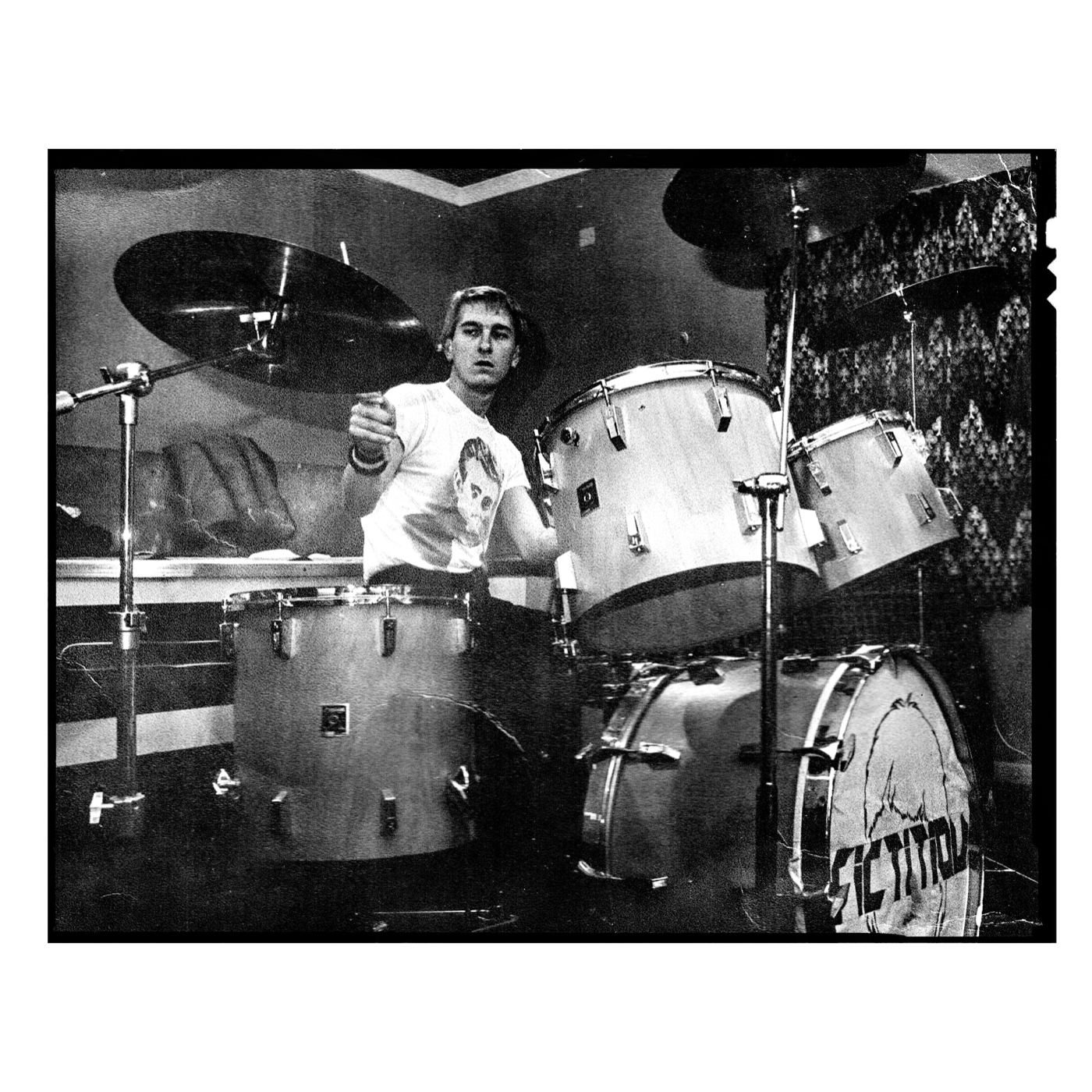
Okay, this is Lee Scribham on 1959. Well, really, Punk personally started for me, this might surprise a few people, back in April 1975. The reason for that is that, along with a good friend of mine, Geordie Walker, who we'll talk about a little bit later, but remember that name, Geordie Walker, which is quite pivotal, really. We went to see Dr. Feelgood at the Roundhouse. It's strange, really, because what people might find a bit strange, I hadn't heard Dr. Feelgood. I hadn't seen a picture of Dr. Feelgood. The only thing I think, I've just remembered the name now, it was called Thrills in the back of the NME. And for those of a certain age who remember it, it was like a gossip column.
You used to read it religiously. And this is a time when music papers ruled. You know, you had no internet, obviously. And I read, personally, every music paper. Going Sounds, NME, even Record Mirror. But NME was the one you went to on a Thursday morning. That was the beginning of your weekend, really. And getting back to this thrill section, what it was, it would be telling you, Mick Jaggers bought a new Rolls-Royce or Keith Moon went down to High Street dressed as a Nazi. And it was just gossip. And what was suddenly in there was this band called Dr. Feelgood.
saying Dr. Feelgood's sort of a writer's night at the Hope and Anchor. He's just saying, oh, who's that? I've never heard Dr. Feelgood before. So it's quite clever how the writers were sort of just trying to edge them in somewhere in the paper. There's obviously some young journalists who had seen them and there was this pub rock scene going on in 74 and Dr. Feelgood were leaders in that. And then the other thing I'd noticed in the paper was this advert for Dr. Feelgood at the Roundhouse. It stood out. It was their logo. If you know Dr. Feelgood, it's quite a distinctive logo. I think the band who was still playing as Dr. Feelgood would still use it. And I turned to my good friend, Julie Walker, who's a guitarist, and said, why don't we go? You know, we'd seen the Roundhouse on the train every time we went to London thinking, that looks good. We went and it was on a Sunday. I remember that. What was
When we arrived and we got outside the venue, one, it was heaving. We didn't expect that. I just thought I was just going to walk in. There was queues, and the people were different to what people were in Bletchley. There was already a look, a completely different look. There wasn't many hippies. There was always hippies at gigs, but they always went. But there wasn't that many, and it was mainly a lot of young people. Short of hair, to explain, probably like the Ziggy's Nardust sort of cut, the sort of cropped mullet, but not a long mullet. And they had cap-sleeved shirts on and straight trousers.
So there were me and Jolte standing there thinking we look fantastic in our great big 30-inch flares, three-button. I'm thinking, what's going on? So you had a sense that something was going on. And I said, go back. We hadn't seen a picture of them, hadn't heard them. And there was a support band on who were quiet at that time. Some people might remember them. It was a band called Fumble. No big lights showed around us. It was just like the Crawford Arms then, to be honest, the big Crawford Arms. And the lights went down, and everyone just rushed in the room, and you could just feel it. They'd obviously seen them, obviously. And people would take their jackets off and throw them, and you'd think, what's going on? And then as soon as they came on, one, it was like...
You're visually, what the hell is this? If you've never seen Wilco Johnson before in your life, it's quite a shock, you know, to see him and the way he held his guitar and obviously the sound. And the place went absolutely bonkers. I mean, audiences in them days used to sit on the floor to watch gigs and then politely clap. No, this was mayhem. Absolute mayhem, in a joyous way. And I think if you've seen that bit in the film of the Blues Brothers where they go to the church and, you know, John Belushi stands there and a big light comes down on him. I'm sure there was a light on me and Jordy just sort of going, oh, what is it, you know? So, you know, two and a half minute songs, three minute songs, really powerful. And it absolutely blew us away.
But we didn't say a word while the gig was going on. We were just transfixed in this vision and the sound of it. So, you know, I'd liked bands like Ed Zeppelin, Pink Floyd. I didn't really like Pink Floyd that much, but I appreciate it. Well, there were Genesis Stones, Who and Rod Stewart's and The Faces. But by 74, 75, they'd really gone up their own backsides, to be honest. And you couldn't really associate. The music they were putting out wasn't as good as what they put out, four or five or even six years ago, especially The Who and The Stones. And the point I probably, I think people understand what I'm saying, they were unreachable. You couldn't really identify them anymore. You appreciate them, but they didn't connect.
with you on an emotional way, as the way Dr. Feelgood just had. So Dr. Feelgood at that point, I just sort of like swept the table. I didn't really want to know about the Rolling Stones and the Who. I'd sort of given up on them, even though I love the Who still to this day and the Stones. But at that moment in time, I brushed them aside. And it was like a steady drip then until perhaps the punk that people know, as in from that 75 through to 76, back in the night, the Dr. Feelgood single come out. It nearly tried. You know, it was proper underground. It was only the NME flying the flag room, but they were bigger than what people were giving them credit for. Then their album malpractice, which...
I've led to believe that was, who's the drummer at Blondie? The drummer at Blondie got that and he took that back and was playing it to the Ramones and all that. So that's feel good. We're a pivotal band in the NME. Suddenly you started seeing this name, Sex Pistols. Probably first in this thrills column. If you ever get a chance to see it, people, try and find it. You might be able to find it and you'll get what I mean. And then there was this review. As I say, me and my friends, we read everything that was in them. And it's the famous review where Steve Jones says, we're not in the music, we're in the chaos. And the way the writer described this concert, thinking, my God, thank God I wasn't there. He just sounded like a riot.
And again, from there on in, you read the papers, but you were reading between the lines. You were seeing things about new bands' names popping up. Then another pivotal moment I felt in punk was Eddie and the Ockrods releasing Gloria. It's a live track, and it includes I Can't Get No Satisfaction. And if you ever hear it, it is fantastic. It had taken what Dr. Phil would do and probably taken a huge amount of speed, I think, and just livened it up. Very Ramones-y, if you get the drift. And suddenly they were like the hot ticket. That's now in 76. So it's gone from the summer of 75 through to, I think that came out in August.
The Damned came out as well, which I listened to, and that was really exciting. It didn't engage as much as it should have. It was a brilliant single. Brilliant single. I'm sure people shoot me down in flames if it is. I think it was the first British punk single. I'm not sure. But for me personally, this is my experience. I was still into Eddie and the Hot Rods, and I'd read so much about the Sex Pistols. By that time, there was interviews before Eddie even got signed, and you could see the look of them. You're thinking, wow, these look amazing. He was excited by the photography and the art and what was going on and what Malcolm McLaren was saying about all the old bands. You were laughing, and it was like, yeah, yeah, what I was saying about you felt unattached, and they'd become aloof. And they were saying it in a beautiful way.
ways, very descriptive ways, the ways that you completely engaged with. And I remember going to Bedford and getting really excited to get the Eddie and the Hot Rods album, and I think it's called Teenage Depression. And while I was there, I just went, oh, have you got, you haven't got the Sex Pistols new single by any chance, have you? And they went, yeah, yeah. And he's a black sleeve, if people know, they're like, I'm just black. Went back, came back from Bedford, got indoors. I thought, before I put the album on, I'll have a listen to this Sex Pistols. I just didn't know what to expect. You can't imagine what, you're just thinking, well, I haven't seen him. I wasn't lucky enough to be in the London Select to see this band. I was thinking, okay.
And then put it on. It's like, oh my God, okay. And then flipped it to the B side, which you always do. Oh my God, you know. And to be honest, I think I played about one track at the end of my album, just put it on one side and just kept playing it. Because it was, and as luck would have it, and I'm sure, I might be wrong, memory, I'm 65, and memory can play tricks on you. But I'm convinced that that night, they were on So It Goes. So all the single in the afternoon, and if you know about Punky, it was the famous Manchester and show Tony Wilson. It went national on certain air. I think the Midlands ITV carried it on its ungodly hour, I buzzed 11 at night. But there they were. So the two.
getting a single in the afternoon, hearing them for the first time, and then lo and behold, literally, eight hours, ten hours later, whatever, that evening, I've watched them for the first time, and I'd still say it's one of the most electrifying TV performances in rock and roll's history. You know, you can go back to the Stones on Ready to Go, and Top of the Pops is never really that, but that was like, that's it. You know, it was an absolute, again, an epiphany. Yeah, the same as the Dr. Feelgood one. And again, then it was just that drip wasn't there, you know, the clash were in the papers for ages, and they looked fantastic. There's no doubt about it. You want you to look like...
Mick Jones and Joe Strummer, because they had the punk look was really right bang on fashion and their artwork, Bernie Rose, their manager, was a genius. That album came out and that was the soundtrack to the summer, really, that album. I still love that album to today. It's so cohesive, the symmetry of the sound and everything they were singing about was everything you wanted to sing about. You know, you didn't want to sing about Dark Side of the Moons or however much I drink or whatever, you know, squeeze boxes, this was like from the street. I think punk means different things to different people. But for me, it just meant it wasn't the fashion.
It was the music in a way. It was the look and it was the fact, but more important than all that, I think what punk meant to me, there was no rules. At last, if you want to be in a band, you don't have to. You were sort of frightened by the greatness of the musicianship of people like, yes, Emerson, Lake and Palmer. I can never do that, so I might as well not do it. Whereas on this scale, when you've seen people like Dot's Feel Good and the Pistons, I think, yeah, I can do that, right, let's do it. And I love that, that it opened up people and just encouraged them to go off and do whatever. And not just music, I think the punk ethos of that.
stretched into the whole of the arts. You know, if you want to be a graphic designer, be a graphic designer. You ain't got to go to college, just do it. You know, and if you want to be a writer, do a fanzine. You know, I think people like Jamie Reid, famous artist for the Sex Pistols, Julie Burchill, obviously DJ John Peele, and Don Lex, the filmmaker. I think they were just as inspirational to the generation I was in at that time were in that kind of music as the band. Because outside the band, you could see people latching on and doing things they wanted to do.
as much as the bands were doing. You know, they were telling you, really, and they were leading by example, the Buzzcocks, and make your own records. That's when I loved it, before the big boys got in. And, you know, put on your own gigs, like we were probably talking about. You know, not wait for someone. Go and do it yourself. Hire a hall. Do it in a back of a pub. Do it back of a pub. Anywhere you want to do it, just go and do it. Which I think is regarded, I mean, it must be, Bletchley, Milton Keynes, first ever punk band. And they were called The Fix.
I can't remember. I've got a gig, actually. That's a bit embarrassing. But it probably came through a music shop ad or word of mouth. And they were called The Fix. And basically they were made up of the lovely family, Wes Bletchley, called the O'Halloran. So I'm still proud and pleased to be friends with, to this day. It's Glenn, Brent, and Larry. Joe is a saxophone player, but he wasn't in it because it was punk. This was a punk band. It was a great band. Yeah, I loved it. I loved playing with him. Brent O'Halloran was a great songwriter. And Glenn was the ultimate frontman. He still is. He's got that charisma when he...
walks in a room and he had it all and they looked fantastic and they're really funny guys just talking about doing gigs you know we couldn't there wasn't really anywhere to play in milton king's at that time in a traditional mode there wasn't a court for arms should we say or boxing hands and that you know there were cover bands playing everywhere but they weren't going to welcome bletchley's first ever punk band but luckily i was a regular as i like my owl at the old swan in woofdom and there was a barman there called a ball And I ran it past, I said, we can't get gigs. I said, we can play here if you want. I said, what? And they had this great pit in this one, and it's still there. The oldest one that we've done, if you want to go and do some tracing, some punk history in Milton Keynes, if you go in the pub, to the right, there's a pit where there used to be a little bar billiards table. We cleared that out. And what we did was a masterstroke. Beer was quite expensive then, probably as expensive as he's now going in the pub, but he got a Peel's promotion. So he had Peel's at half price. The gig was not advertised, nothing in the papers, obviously, nothing on the radio. It was all word of mouth.
and it was absolutely fantastic. You know, we thought maybe a few mates turned up, but it just seemed like the entire alternative society of Milton Keynes descended on the Swan, the barman was ecstatic. He must have made a fortune. And we played in this little pit, and there was people there, you know, Russell Tofield was there, and Jay, and people were still, you know, we've been on to become friends for a long, long time. And they were looking down at the band, they were throwing beer at us and everything, which was quite funny, because I think Russell Tofield threw a pint of beer over me, and I wasn't that pleased at the time, but then it fell on my drum kit, and every time I hit my drum kit, it exploded with the beer going up there, so it looked like a stage act. I was like, oh yeah, I like this, this is great, thanks Russell. It was a really good night.
It's a fantastic time in music. We're talking, sort of, 79 and then. And punk was really starting to expand. It had gone from the three-core powerhouses to The Clash and The Sex Pistols. And people were really starting to musically expand. And I think Brent wanted to do the same. And much to my, you know, to me, I didn't want to. I still wanted to be The Sex Pistols and The Clash. So we left. You know, we left on pretty good terms. I was at the ump that I didn't want to do what I wanted to do. And he probably had the ump that I didn't want to do what he wanted to do. But we still remained good friends. But then, basically, it was a lull, really. I didn't do too much. And then along came Fictitious.
I was just sitting in my house watching, I don't know, That's Life, I think, on a Sunday night, and there was a knock at the door, and there was Tiggles by the door holding a cassette with some people in the car, looking at it, it looked pretty dodgy. I think it must have been Simon Domain when he drove in there, his brother. And he said, oh yeah, Brent told me, you're a drummer, do you fancy drumming for us? And I went, well, yeah, I don't know, I don't know, what is it? And he just shoved the cassette in me and he said, have a listen to that if you fancy it, I'll call you tomorrow. And I went straight in, and didn't even want to watch That's Life, put the cassette on, and it was absolutely brilliant. I didn't know what again to expect.
Some of the songs you might remember, I Must Adjust, and I'm not sure if Whiteface Voice was on there, but it was enough to go, oh, yes, please, because it was a bit, it was aggressive, and it was, and the lyrics were really good. Yeah, three nights late, I was at Statenbury Youth Club, and... People say that, you know, chemistry is important in bands, and I think the chemistry in the fictitious line-up was spot on. There's some eccentrics in there, like Biffo, the keyboard player, and Trevor, the original bass player, who passed away, and then Jamie, and packed me on to it myself. It just really gelled. It really gelled, and it was really enjoyable. And then, you know, I got to experience things, again, I'd only ever dreamt about, i.e. going into a recording studio. I can remember going into the recording studio in Stony, where we all went. I thought I was in Abbey Road, you know. I was living the dream, you know, in there, did her songs.
Yeah, it was really good. So Tiggles was, again, like Brent and Adam, was a great songwriter. His lyrics were just fantastic. And I think Pat wrote most of the songs with him. And they had some great songs. I'll say White Face Boys, I'm in Fashion with the 1980s, Devotion. I was just like, yeah, this is it. And I was living the dream, really. And at that time, other bands started coming through as well. And one of the clever things, I think Tiggles mentioned it on his podcast, that more by default, I think, that he did, was that we rehearsed in youth clubs. Sound acoustics probably were horrendous compared to what you can rehearse in today.
But it was clever because people were running youth clubs like that when we were older and they wanted mentors for the youngsters who were coming in. And it worked. And it worked. And we played at Stantonbury. And then, I don't know why, we moved camp to Dermot Drive in Bletchley. But we had a back room there. And Mark Page, who went on to be a great musician and a great friend, you know, he used to come in as a little 14-year-old and he'd started putting a kit up for me and think, oh, he's my roadie, you know, I'm embarrassed to say. But it was that kind of thing. And we grew. And by the time we did, I think, a proper first gig at the Crawford, again, like the fix, we were astounded. The place was packed. Of course, it was packed with all the...
All the kids who'd been coming to see us rehearse, heard we'd be doing a gig and they'd come and see us. So that was a clever move. I think we'd have just rehearsed in a farm or something. I don't think we'd have had the following. And then again, as Tickle sort of mentioned, we sort of went into the, along with a lot of other bands and a lot of other artistic people at the Pear Tree Bridge Centre. And that was great. There was about four rooms, I think. We all fought for one room. I think there was one room that was the best, been the best. Dancing Counterparts, as Dancing Counterparts came out of the fix. Transistors, I think Brent went from the fix to the Transistors and then developed into the Dancing Counterparts.
And they were like royalty, they were so good. Everyone's like, oh, I'm dancing canapes. They're so good that you had to respect it. They were brilliant. They were still brilliant. And they seemed to always get the best room when we had sweeps to get whatever we could. But it's a great place. And I think Paul Simon, a photographer, used to come in. So again, what I was touching on about people doing other things around the music, not actually being in bands, but being artistic around it. You felt it in the Pear Tree Bridge Centre.
And then that great thing that the police did, I don't think people forget, really, it was the police, who were a bit punky at that time, you all knew they weren't really a punk fan, but they made some good songs and had that sort of punk attitude when they first started. Proven, I think, they came to play at the Bowl and they donated a lot of money to the youth club to produce an album, which I still think was a great thing that they did, because it really, you would know, and a lot of other people know, that really engaged us all. Suddenly we had something, we all wanted to make a record, none of us could afford to make a record. It was still very expensive, then recording. It was so expensive.
In the 70s, I don't know how Tiggles did it. I mean, he recorded all his earnings to pay for it. You know, he all chipped in a fiber, but he must have paid for it all. So for the police to do that was really good, really good. And that was a great time, you know, because then we went off to London as fictitious. Again, you say you're living a dream, and you are living a dream sometimes when you're in a band. And Tiggles had found this recording studio just off Carly Street. So we got on the train.
got down to Carnaby Street and it wasn't tried in studios which people might think it was I wish it would have been but great studio but I was in a drum booth and I was bigger than the toilet you could just about get a drum kit in it and we're all in booths and a testament to the band which I look back on now shows you how much we just lived it because we just rehearsed nearly four times a week that blind as in we couldn't see each other we could only hear each other on the headphones we did like three songs for the album and I listen back now thinking wow okay that's pretty good in one day as in not just the guitars and then Tiggles and I remember Tiggles giving us a lot of money I think it was like 10 quid or it might have even been more because he didn't want us in the studio when he was singing. So he gave us 10 quid. I mean, it was like Christmas. Yay, biff over 10 quid, you know. But he always went around the pub and like, yeah, and of course we'd have so many beers when we'd come back in. Yeah, that's brilliant, let's go. You know, so he got what he wanted. We had no interference. And that was great. Again, to have that experience of getting on a train, going to London, you know, by staying in Kylie Street, down a little booth in my brilliant studio was, you know, I'm in debt, it was fictitious for giving me that experience. And yeah, from there on in, the album came out, didn't it? And N.A. Pop, I think, stole the show, quite rightly.
Fictitious sort of faded out, as bands do. You know, you are chasing the dream, the ultimate dream of being a pop star. You know, never mind what Funk says, everybody wanted to be a pop star. I mean, if you look at The Clash, some of the things I said, and then you get to London calling, you go, oh, you did want to be the Beatles after all then. You know, it's quite funny, you know. So we did want that. And, you know, I think we'd done some gigs where you're on this ridiculous sort of belief that an A&R man is going to go to Peckham from EMI Records, you know, in Sony Square, Soho Square, he's going to travel all the way to Peckham to see an unknown band, you know. So he's like, oh, I didn't turn up, you know. And we knew that the ghost was up, I think. And I think Teggles wanted to go back and do some more studying. And I think we did one last gig at like...
I said, come on, it wasn't Bussard at all. I mean, it was a great gig. I'm glad it was a really good one. It was really busy and we played really well. In a way, I think we played probably the best we played because we all knew it. I think we all knew that this was going to be the last time we were going to be playing for a while. But we stayed good friends. I'm so glad. Some bands, I've read a lot about what we all think, can have horrendous arguments and throwing people out of a van on the M1 on the way home from a gig and all that. And we didn't do that. I was quite pleased about that. But that scene, to give people an idea, it was quite difficult in those periods I'm talking about. 77 in Bletchley, you couldn't really go down the road dressed as Johnny Rotten.
You didn't see anyone. I don't remember ever seeing anyone. You saw them in the papers and you knew it was going to London. But in their kind of areas, it may have been Northampton. Northampton was a bit more edgy than Luton. But Newtown, Bletchley Oldtown, I think it would have stood out if you had really gone for it. But what you got...
first indication that people are in the same kind of culture here as the trousers so if you saw people with straight sides okay and you sort of gave them a nod as you know when you've got a mini car and a mini comes past you put your headlights on so if you were walking down queensway and you got a guy in a donkey jacket okay and then and he obviously didn't have all long hair waving around and he had all he had on was again below that was just some drainpipe yeah you sort of go okay so you know and you'd love to end up sort of meeting them in record shops record shops and probably music stores shall we say absolutely vital because that's where you put your poster up to tell people about gigs and that's where you heard about new bands being formed or you know someone especially Milton Keynes because you've got to remember there was always an influx of people arriving you know I can remember Graham D just arriving on the scene like yesterday I don't know what was it Pottersbury answer to Billy Bragg you know but he was a punk then you can't imagine Graham D being a punk but he was because he had that attitude and he had a guitar and he started supporting gigs and as you had these influx of people and that was the only way you could find out what was really going on you know because they did some good stuff in the papers of the day and again they covered little stories but that record stores and that. I don't remember it ever being a fanzine until the spot arrived in the mid-80s, which I find that quite surprising there, actually. I might be wrong. There was Don't Dictate, wasn't there, in Newport Pagnoll. Sorry, I'll take that back. There was one, Don't Dictate. Yeah, that was the one I did. Sorry, apologies. So it was difficult to be, what people may look back and go, not many pictures of real punts in the early 70s. No, it wasn't, because it was socially difficult. One, you couldn't really get the clothes. So it was really homemade, and not always wanted to go. You couldn't really go out and homemade clothes in Fletcher. It was only really the pubs and that around the city you could go. And you were going in dangerous territory if you walked into any pub.
in Milton Keynes in 77 dressed like Johnny Rotten, you might not come out too well. So what people did, I think, similar, bizarrely, there we are in 2024, is that you socialised around people's houses. You went round, I can remember the record sleeves coming out to roll homemade cigarettes, shall we say, and that was the sort of, and people having just, not parties, but you just say, come round to so-and-so's tonight. I remember that fictitious, we just went round as a band to a lot of people's houses. And it's nice, you got to know a lot of people more than you would perhaps in a pub environment, so that was nice. It was definitely this big alternative culture, growing and growing in Milton Keynes, because Milton Keynes is very mainstream.
And the mainstream always wins. Up until recently, you'd always have a Chicago Rock Cafe or a traditional nightclub trance, all these kind of things. And that didn't appeal to us. It was, one, you had to dress like a state agent to get into them, and we were not going to dress like a state agent. So you created your own culture. Muzax was a good club that Bill Billings ran, a famous artist in Milton Keynes. And he was, like a lot of, you know, not hippies, but a lot of the hippies, I think, identified with the early punk scene. And they liked what people were doing. They knew it needed changing. And Bill was one of them. He'd go fix it. It's just a really good gig in New Bradwell at Muzax. Yeah, from there on in...
It fizzled out. Then I joined Eddie Stanton. And if you know Eddie Stanton, he's a brilliant solo songwriter, really. He needed a band member to put his songs over. And he wrote the famous song, Milton Keynes, We Love You Like F We Go. You know what the F stands for. And he got national publicity, I think, for proposing to...
slaughter a guinea pig in the city centre. It's just his manager, Chris France. I never got on to know him. But it never happened. But he did not get a lot of publicity out of it. It was very clever. And I joined Eddie. And again, he was punk. This is my point. He didn't dress like a punk. He loved punk music. And he had this punk attitude. I'm going to write these sorts. Very original material. And Eddie, don't, don't.
it hurt me when I say this, you know, to give an average punter the idea of a very Lloyd Cole on the commotion, way before Lloyd Cole. I think that was the problem, that Eddie was doing stuff that if he had done it three years later, had just come out, he would have definitely got there, because he did get a record deal. That strive that I always wanted to do, to get a record deal, came to position with Eddie. And that was quite funny, actually, because I was working for British Telecom at the time, and I really liked being a telephone engineer. But not because it was great being in the cellophane, it was just all the people I was working with were just a match to look right. It was just a great time, great friends. And I remember when I got the gig to be the drummer with Eddie and they were working out a tour.
And the manager just rang me up and said, yeah, well, when are you going to give your notes in? I went, well, what do you want? I'm not giving my notes in. He's going, no, no, yeah, this is it. This is rock and roll now. You've got to give your notes in. I'm thinking, I'm just all out. I'm thinking, no. I said, well, what are you all about? Why have I got to do that? Rehearsals are not till 7 o'clock at night. I'm like, where are you going? He's a real officer. I said, well, I can get there for like, you know, I'll finish work at half three. So I can get to Birmingham five, six if you want. You know, I just put them off. You know, I wasn't, I was quite clever, I think, in a way, not to go totally for training. If I'd have had a lesser job, I would have. Yeah, it's
No one's ever heard of you before. You're third on the bill, et cetera, et cetera. And it's extremely hard work. But again, we had a good six months to a year doing stuff. And it just wouldn't happen for it. You put some great singles out. They're out there on Spotify. If you ever listen, Towson, The Raj, Young and the Free.
We played with Bar House, if I'm saying it wrong, excuse me, at Lyceum. That was great. And that's a funny journey, because as Tiggles said, with Fictitious, my first gig, which I should have mentioned, with Fictitious, with Bar House at Newport Padnell Youth Centre. So, in the space of, like, three years, they've done extremely well, and I don't know about it, to come back and support them at a better venue, if you get Madrid. Both had a nice little journey there. Yeah, it was probably far more lucrative and famous than what mine was. And then a few years later, Harl, I'm going to mention Harl, people say they're a punk band, but it goes back to that attitude. Yeah, I think Harl, we're a punk band. The way we approached it, we had two drummers. You know, most people didn't dare have two drummers in those.
You've got to be careful what you say. He was inspired by Gary Glitter, obviously the band, not what the person stands for. Always wanted to have a band with two drummers in. Yeah, Mark Page, who I say, was a roadie and a great friend and had been drumming with NA Pop. And then my brother, who was only, I think, about 15 at the time. And then Dylan Jevons, who was in NA Pop 2000 with Kaze, is someone I really admired from afar. I've always wanted to work with him. And I worked with him and Pat Milne from Fictitious. And a really good live band. I don't think we had as good songs as what Fictitious says. We tried, but funny enough, I've got to write back to the beginning now, inspired by my friend, Jordy Walker, who, after...
that infamous night at Dr. Fieldburn, if you recall what I was saying earlier, I went with Geordie to watch Dr. Fieldburn, we both said, this is it, I'm going to be a rock and roll star now. And lo and behold, Geordie did become a rock and roll star because he joined Kenny Jo by luck. I don't think he might be telling me, sadly, he's no longer with us. He answered an ad in Melody Maker, which most people did.
went to an interview and met Jazz Coleman, the leader of getting drunk and Geordie. They basically just argued. He didn't play the note, he just went and met him. They fell about laughing because he liked the sensational Alex Harvey band, who were quite big at the time, and they thought that was hilarious. And he thought, oh, I've blown it. And he had packed his bags. He was just living in a little block of flats. And the block of flats only had a phone at the end of the hallway. And he'd never used his phone, never asked a phone. He literally packed his bag, got his guitar, and he was coming home, and the phone ran, and it was Jazz. And he said, yeah, you're in. And that was it. That's how he got the gig. He hadn't even played a note.
Jazz sort of knew, I think, because he'd argue back, because he already was strong beer. So, no, he wasn't having it, and they weren't liking Sal Clemson, and so he was giving it some. Jazz said to him, you're the only one who argued back, you know, and gave a bit of stick, so he thought you'd be the right guy. And then he plugged it in, and off they went, you know, that remarkable sound. And it was very, you know, it blew our heads off, you know, back here as me, personally. You know, I was in awe of him, and still am, you know, what he achieved. Yeah, so there it goes. Yeah, and heart.
We were still in awe of Geordie, Pat was as well. I think he dyed his hair the same and had his hair cut the same as Geordie. So he had a lot of answers for Geordie. I think we were very influenced by Killing Jack Prats too much. And then the last one, now I know people are going to have a go at me, I think, and have a shout. I think the last, probably it was the last band I put together, but I think it was the ultimate funk band was the first collective. Because it was an 18-piece covers band.
You know, how dare he be a covers band. Basically inspired by the Blues Brothers. Yeah, there it is in itself. An 18-piece band, not doing it for money, not doing it to become famous, don't want a record deal, just want to have a crack. It really did. And we only knew how to play punk. We'd only been brought up on it. I should have known better. I was a bit older than the Dylans and the Mark Pages and Pat Milnes and Adrian Street who was in it as well. But the punk was still in our blood. So we were taking, like, classic soul songs.
And they have Mark Jevons on bass effects. It's nice as well. We'd be taking these punk soul songs, but we were playing them in a punk style. Just like really aggressive, really fast. Our set was like Ramones. We didn't breathe. No breath between songs. We actually installed our own bar on stage so we could get a drink quickly. So there was no delay in keeping the stuff going. Brass section, eight-piece brass section. I remember George Webley, a famous local musician, entrepreneur, artist, fantastic guy. Absolutely screaming at me. What are you doing? Why don't you just have eight people in there? Why don't you just have eight people in there? Why don't you have eight people when you can have 18? So that's where my punk journey...
musically ended but as i said earlier the ethos of that 75 to 77 of you know what was the famous uh here's three chords go out and form a band the great fans in the ultimate statement but what that was saying was really to me not about the chords is if you want to do something go and do it just do it don't hang around thinking you're not qualified because you're obviously not but do it and that has stayed with me to this day yeah i'm still lucky enough to be fit and able to make some films and write books. You know, I have no right to do that. And some people have seen my films and my books would agree. But at least I've done it. You know, I wanted to do it. And that's what I try and pass on to people. I find people, especially with the social media side of things, are very scared and very frightened of getting criticism because it can be fierce. But just take it. I think any true artist, I don't call myself an artist. If you're going to do something, there's going to be good or bad either side of it. Just sort of learn to deal with it. And the more you do, and you always learn from anything you do. And I think that punk ethos is...
Still with us and survived through decades. I look at Stone Roses, Happy Mondays, to me they were punk bands, which is why I really liked them straight away. You could just tell they had an attitude and they had a different way of approaching things. Nirvana, yeah, punk band, yeah, they were signed up. They were American, they were massive, huge, but underneath it, they were Ramones. They were just brilliant, they were a brilliant sound. And Even Blur, really, Oasis.
Again, Oasis definitely had that punk attitude. But still, they wanted to be in control. You could go on, I suppose. Arctic, monkeys. And I think in the world we're living in now, I'm just knocking it a little bit. Social media, Spotify, YouTube, home recording. I don't think there's anything to prevent anyone from artistically expressing themselves. That's great. I wish we'd have had Spotify around. We might have a fictitious album now to listen to. Because once you put something on Spotify, it's there forever. People might knock some of these social media platforms, but I think it's how you use them. And I think they're a great tool for people. So really, my memories. And great memories.
memories, punk days in Bletchley and around Milton Keynes, so thanks.