
EPISODE · Sep 17, 2025 · 16 MIN
Lentils Across Millennia: How Ancient Crops Tied North Africa to the Canary Islands
from Evolutionary Insights by Anthropology.net · host Anthropology.net
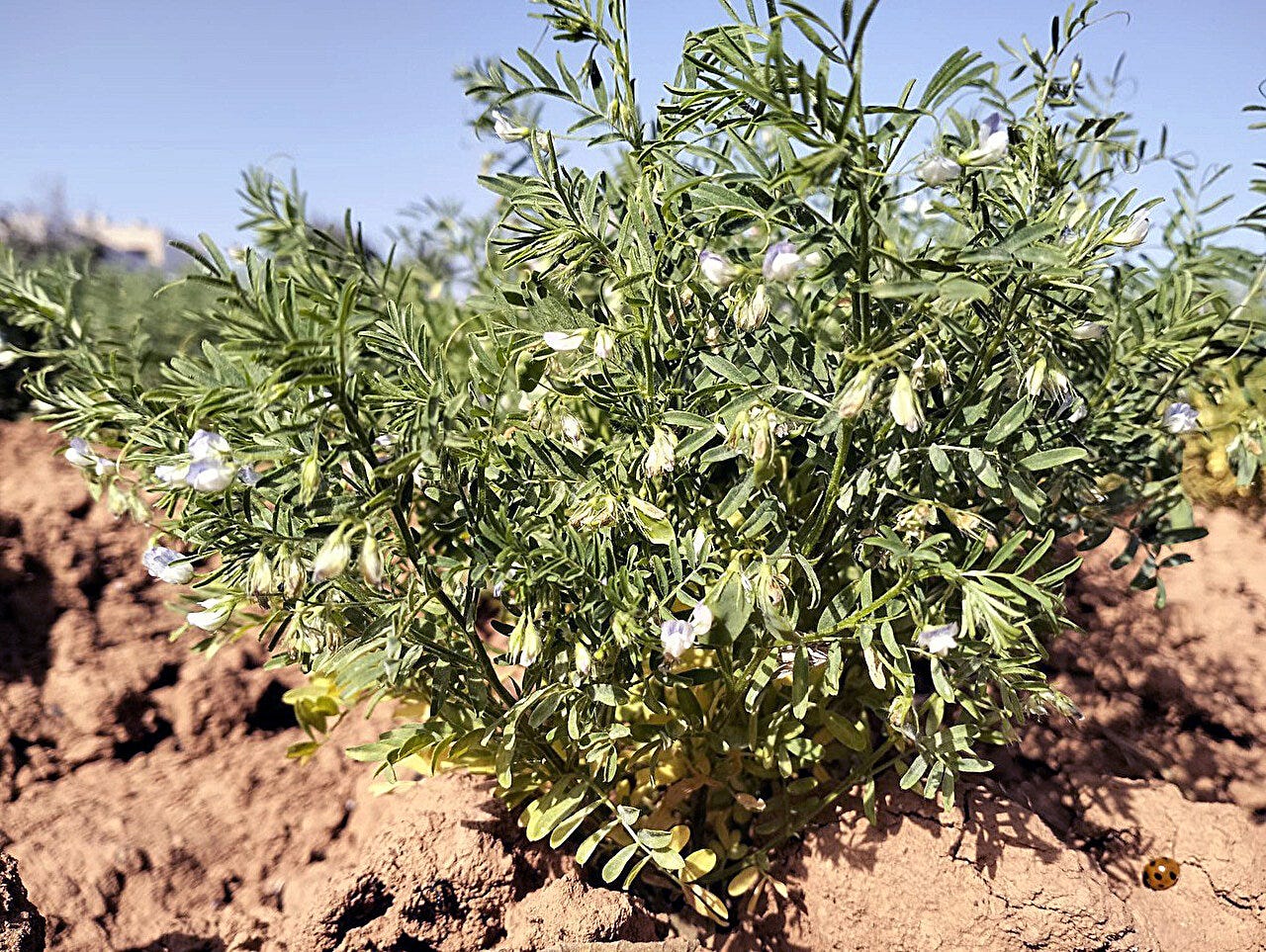
Seeds in the RockOn the island of Gran Canaria, farmers long ago carved grain silos into volcanic bedrock. In these hidden chambers, lentils sat undisturbed for centuries. Shielded from heat and moisture, their DNA persisted — a time capsule of a food tradition spanning two millennia.A new study published in the Journal of Archaeological Science (Hagenblad et al. 2025) uses ancient DNA from these lentils to explore how Indigenous islanders, North African migrants, and European settlers shaped one another’s food systems.“The same type of lentils has been cultivated for almost 2,000 years in the Canary Islands,” says Jenny Hagenblad, senior associate professor at Linköping University. “New settlers adopted the Indigenous people’s crops and continued to grow them.”A Crop Older Than ColonizationEuropean ships reached the Canaries in the 14th century, but the islands had been inhabited for over a thousand years by peoples of North African origin. Written sources from early European encounters describe local agriculture but rarely mention lentils. The new genetic evidence shows that lentils were part of the islands’ story long before Europeans arrived.The team compared DNA from lentils excavated from rock-cut silos with contemporary samples from Spain, Morocco, and the Canaries. The genetic match shows that many lentil varieties grown on the islands today descend directly from seeds brought by the first settlers from North Africa around the 3rd century CE.Women as Knowledge KeepersArchaeologists and ethnobotanists note that plant traditions are often preserved through household knowledge. The research team suggests that Indigenous women may have played a key role in transmitting lentil cultivation, especially as intermarriage occurred after colonization.“Indigenous women, who married immigrating men, likely played an important role in preserving the knowledge of which crops to grow,” the authors write.Even today, Canarian women retain a disproportionate share of agricultural knowledge — a living echo of how plants and people entwined over generations.Lentils as Climate ArchivesThe lentils’ endurance is more than a cultural curiosity. Varieties adapted to the Canaries’ dry climate may offer valuable genetic diversity for future agriculture. As global temperatures climb and rainfall patterns shift, seeds with deep local adaptation are increasingly prized by plant breeders.Jonathan Santana, researcher at the University of Las Palmas de Gran Canaria, emphasizes that diversity exists not only between the islands and mainland but also among the islands themselves.“We see in our study that different types of lentils are grown on different islands — even islands where it was previously thought that lentils were never cultivated,” Santana explains. “It’s important to preserve lentils from different islands, because genetic diversity can prove valuable for the future of agriculture.”The Curious Case of Lanzarote LentilsOne of the study’s surprises involves the “Lenteja tipo Lanzarote,” a common label in Spanish shops. Despite the name, these lentils are not produced on Lanzarote itself. Genetic analysis shows that lentils from Lanzarote have cross-bred with Spanish mainland varieties, contributing both name and genes to Spain’s lentil stock.Jacob Morales, associate professor at the University of Las Palmas de Gran Canaria, points to the broader significance:“With the climate change that is now taking place, Canarian lentils, adapted to growing in dry and warm conditions, may be of great interest for future plant breeding.”Archaeology Meets Food HeritageThis study adds to a growing field where ancient DNA from plants is used to reconstruct past diets, farming systems, and cultural exchanges. The Canary Islands case underscores that colonization did not erase Indigenous foodways entirely. Instead, crops and knowledge flowed across generations, surviving conquest, migration, and globalization.For archaeologists, this work highlights how even small, seemingly mundane finds — a charred seed, a lentil in a silo — can speak to centuries of continuity and change.Related Research* Fuller, D.Q. et al. (2014). “Convergent evolution and parallelism in plant domestication revealed by archaeobotany and genetics.” PNAS. https://doi.org/10.1073/pnas.1308937110* Ramos-Madrigal, J. et al. (2019). “Palaeogenomic insights into the origins of the domesticated horse.” Science Advances. https://doi.org/10.1126/sciadv.aav9138* Wales, N. et al. (2014). “Ancient DNA reveals the timing and persistence of barley cultivation on the island of Bornholm.” Holocene. https://doi.org/10.1177/0959683613519685* Morales, J., & Santana, J. (2020). “Pre-Hispanic agriculture and food in the Canary Islands.” Vegetation History and Archaeobotany. https://doi.org/10.1007/s00334-020-00778-0 This is a public episode. If you'd like to discuss this with other subscribers or get access to bonus episodes, visit www.anthropology.net/subscribe
Embed this episode
NOW PLAYING
Lentils Across Millennia: How Ancient Crops Tied North Africa to the Canary Islands
No transcript for this episode yet
Similar Episodes
No similar episodes found.
Similar Podcasts
No similar podcasts found.