
EPISODE · Oct 2, 2025 · 49 MIN
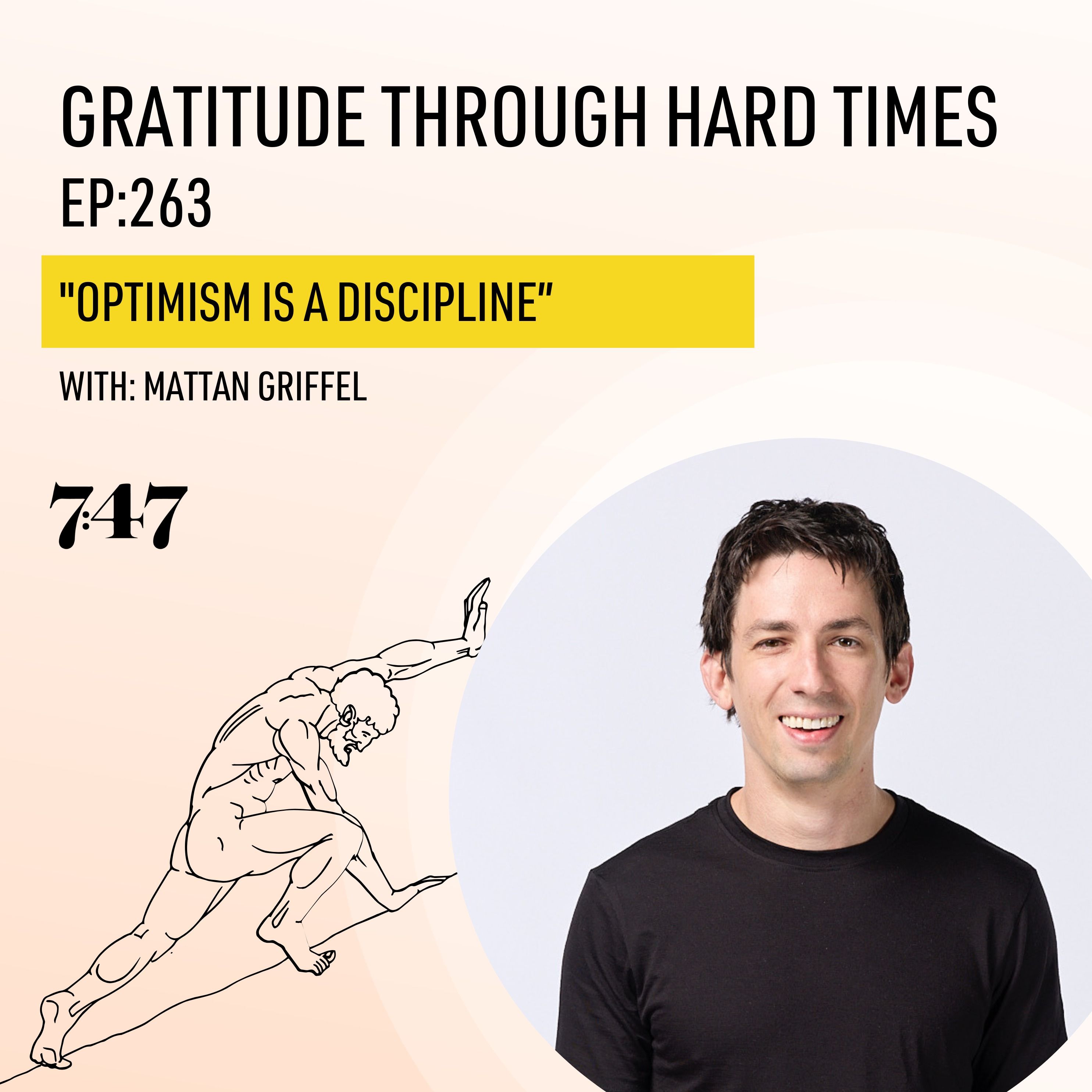
Mattan Griffel: Optimism Is a Discipline
from Gratitude Through Hard Times · host Chris Schembra
In a time when the headlines are bleak and social feeds are filled with outrage, what does it mean to be deliberately optimistic? In this episode of Gratitude Through Hard Times, host Chris Schembra sits down with returning guest Mattan Griffel, two-time Y Combinator–backed founder, award-winning Columbia Business School professor, and longtime startup coach, to rethink optimism from the inside out.This isn’t a conversation about pretending everything is fine. It’s a practical, science-backed exploration of how to keep moving forward when the world tries to convince you to freeze. Chris and Mattan unpack the psychology of negativity, including the brain’s nine-to-one negative memory bias, nostalgia’s hidden trap, and how media algorithms profit from fear, and then turn to the tools that can rewire us toward progress and resilience.Along the way, they revisit some of Mattan’s most powerful ideas: the courage of “naive optimism” that makes founders start companies against impossible odds; serendipity bombs, small outward actions that quietly build networks and opportunity; and the truth that being wrong most of the time is the price of doing something original.The conversation is both personal and practical. Chris shares stories of producing a two-man play in Beverly Hills under the threat of a record-breaking El Niño storm, and how standing in the room with committed collaborators fueled hope despite fear. Mattan reflects on early YouTube criticism that almost derailed him, and how understanding our negativity bias changed his response to rejection and failure.Listeners will also hear how positive emotions aren’t just nice-to-have; they’re powerful mental technology. Chris cites Barbara Fredrickson’s “broaden-and-build” research, showing how gratitude, curiosity, and empathy expand our thought–action repertoire, unlock creativity, and make new solutions visible. Together they argue that optimism isn’t fluffy, it’s a survival skill in an age of AI disruption, social media outrage cycles, and cultural pessimism.By the end of the episode, you’ll have practical habits to invite luck and possibility into your own life: connect generously, say yes early and often, ship ideas at 90% instead of chasing perfection, and create rooms where pessimism can’t dominate. Most importantly, you’ll be reminded that hope is not passive, it’s built one intentional step at a time.10 Quotes“Optimism isn’t blind faith that everything will be fine, it’s the conviction that progress is buildable.” — Mattan“Our brains take in nine bits of negative information for every one bit of positive. That’s biology, not failure.” — Chris“Nostalgia can be beautiful, but it’s often denial, an inability to process the present.” — Chris“Systems are self-healing if we let them. The line of human progress trends up and to the right, even if it wobbles.” — Mattan“Negativity sells. Each negative word in a headline can boost clicks by 2.3%, but positive words get ignored.” — Chris“You have to be wrong most of the time to create something new. Error tolerance is optimism in action.” — Mattan“The stupid way to be selfish is to seek happiness for yourself alone; the intelligent way is to work for the welfare of others.” — Dalai Lama (quoted by Chris)“Say yes early and often because most conversations won’t go anywhere, but the one that does can change your life.” — Mattan“Progress comes from movement, not perfection. Press go at 90%.” — Chris“Positive emotions broaden your thought–action repertoire, gratitude and curiosity literally rewire your brain for resilience.” — Chris (referencing Barbara Fredrickson)10 Big TakeawaysOptimism is a discipline, not a mood. It’s about choosing to believe in forward momentum despite uncertainty.Understand your brain’s negativity bias. We’re wired to remember threats — knowing this can help us reframe and resist doomscrolling.Question nostalgia. Looking back with rose-colored glasses can fuel pessimism about the present.Negativity is profitable — be aware of media incentives. Don’t let clickbait headlines distort your worldview.Design serendipity. Small, outward-focused actions (helping others, showing up, connecting dots) compound over time.Practice error tolerance. Innovation and growth require being wrong most of the time; progress lives in mistakes.Generosity drives returns. Investing in other people — time, knowledge, introductions — creates long-term opportunity and resilience.Say yes more (strategically). Especially early in your journey, embrace exploration; one connection can transform everything.Start before you’re ready. Perfectionism delays progress; ship at 90% and learn in motion.Positive emotions fuel creativity. Simple acts of gratitude, kindness, and curiosity expand your capacity to see solutions and possibilities.On Negativity Bias & Media OutrageAdam Mastroianni & Daniel Gilbert’s Nature paper — The illusion of moral declineSteven Pinker’s The Better Angels of Our Nature (book summary)Tobias Rose-Stockwell — The Outrage MachineUpworthy headline negativity study (Columbia Journalism Review)On Positive Emotion & OptimismBarbara Fredrickson’s “Broaden-and-Build Theory” explainerDalai Lama quote on “intelligent selfishness”Adam Grant’s Give and TakeOn Startup Mindset & SerendipityMattan Griffel’s Medium essay: “You Have to Be Wrong”Mattan Griffel on Designing Serendipity (Forbes)How to Build Serendipity in Your Career (Harvard Business Review)On Connection & GenerosityChris Schembra’s Rolling Stone column archiveIkigai framework explainerPwC research on ROI of well-being programs
NOW PLAYING
Mattan Griffel: Optimism Is a Discipline
No transcript for this episode yet
Similar Episodes
Mar 31, 2026 ·54m
Mar 27, 2026 ·14m
Mar 24, 2026 ·42m
Mar 20, 2026 ·42m
Mar 17, 2026 ·41m
Mar 13, 2026 ·44m