
EPISODE · Sep 12, 2026 · 51 MIN
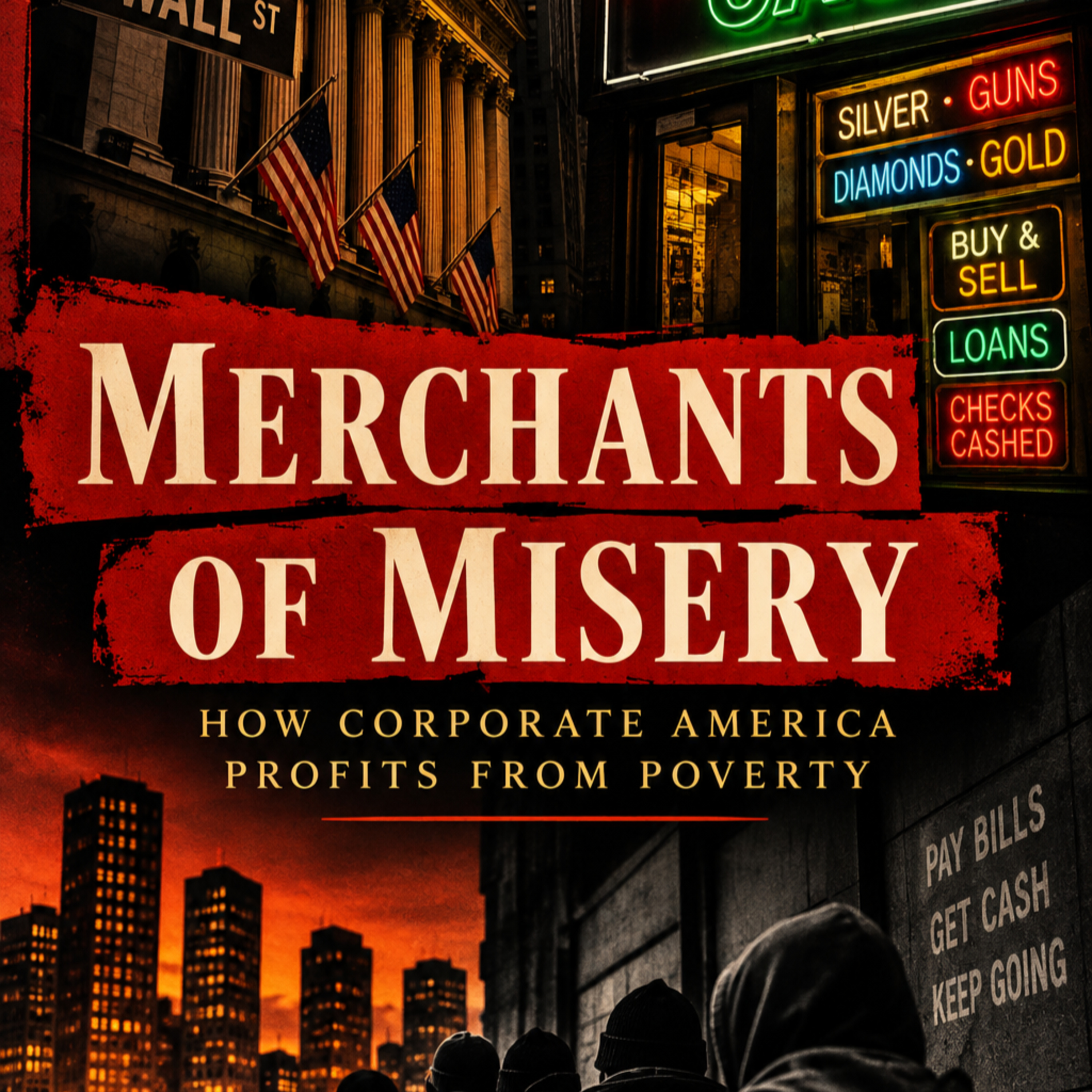
Merchants of Misery: How Corporate America Profits From Poverty — The Poverty Industry
from Crisis in Perception · host Crisis in Perception
What happens when financial exclusion becomes a profitable market?Welcome to Crisis in Perception, where we examine the systems shaping our world.Merchants of Misery: How Corporate America Profits From Poverty, edited by Michael Hudson, investigates the high-cost financial economy that developed around consumers frequently excluded from conventional banking and affordable credit during the period documented by the book.The investigation moves beyond individual examples of predatory lending to examine the system that makes those transactions possible. When banks withdraw from disadvantaged communities or reject borrowers with limited credit histories, finance companies, pawnshops, check cashers, high-cost mortgage lenders, rent-to-own businesses, auto lenders, and other alternatives can fill the resulting vacuum.These businesses may provide services that customers genuinely need. But the source documents how limited alternatives, information asymmetry, repeated refinancing, credit-insurance sales, high fees, and aggressive collection practices can transform financial vulnerability into a highly profitable business model.The deeper feedback loop is especially important: exclusion from mainstream finance can push borrowers toward more expensive credit; higher costs can increase debt and financial instability; worsening finances can then make affordable mainstream credit even harder to obtain.The episode also examines racial and geographic inequality. The book documents redlining, bank-branch withdrawal, lending disparities, appraisal and insurance practices, and other mechanisms that could leave minority communities disproportionately exposed to high-cost financial services.At the center of the investigation is a structural tension: lenders legitimately face different levels of risk, but when customers have few meaningful alternatives, how much of the higher price reflects risk—and how much reflects market power?📺 Watch on YouTube:https://youtu.be/mMeSjDJnlSY❤️ Support / Episode Post on Patreon:https://www.patreon.com/CrisisinPerception/posts/merchants-of-how-169354209?utm_medium=clipboard_copy&utm_source=copyLink&utm_campaign=postshare_creator&utm_content=join_linkIf these ideas resonate, consider reading the work yourself or borrowing it from your local library. Supporting authors and libraries helps keep critical inquiry accessible.If you value systems-level analysis like this, please follow, rate, and share the project.This content was created using AI-assisted tools for research synthesis, structuring, and narration support. All analysis, framing, and editorial decisions are guided by human judgment as part of the Crisis in Perception project.
Embed this episode
Ready to play
Merchants of Misery: How Corporate America Profits From Poverty — The Poverty Industry
No transcript for this episode yet
Similar Episodes
No similar episodes found.
Similar Podcasts
No similar podcasts found.