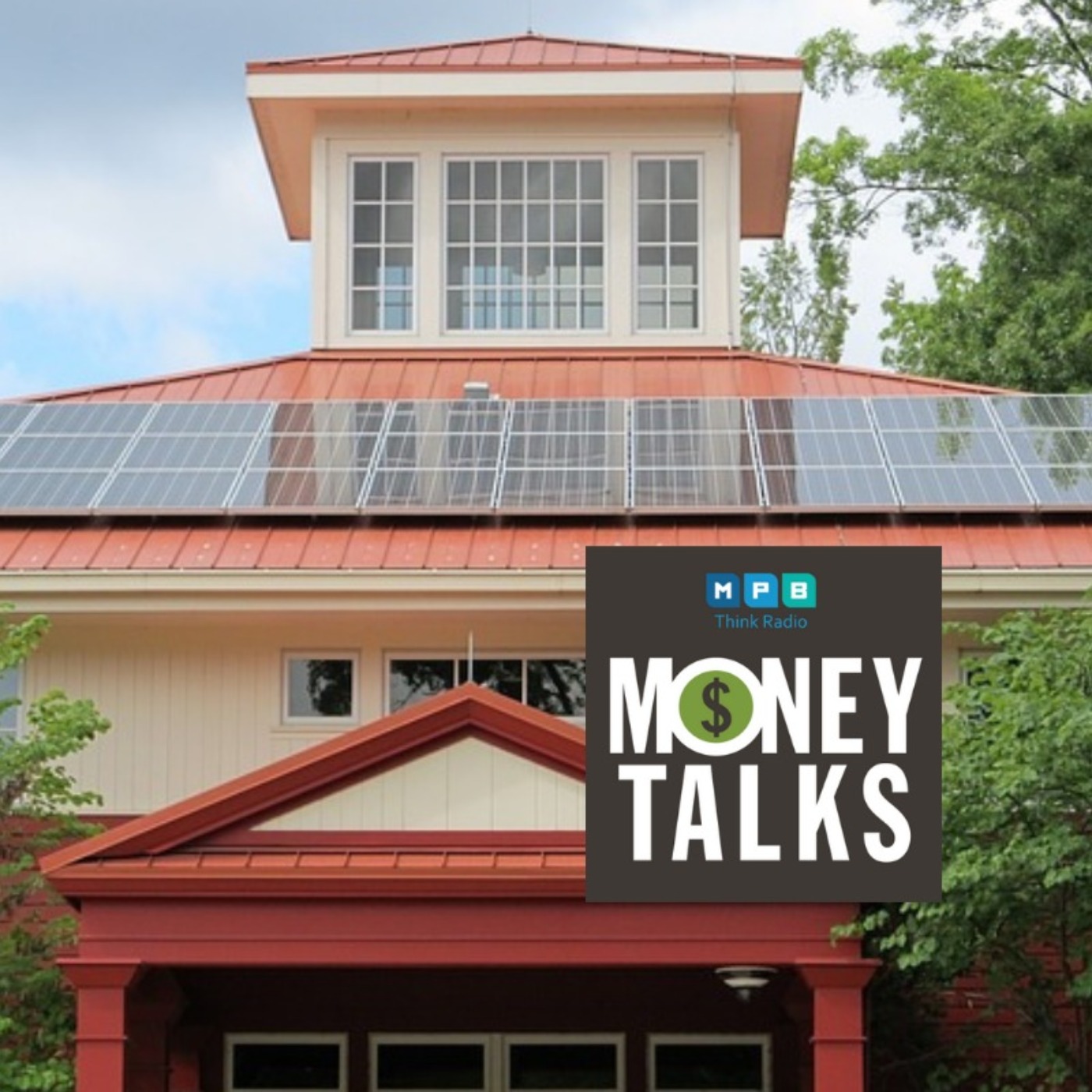
Money Talks: Solar Panels episode artwork

EPISODE · Oct 21, 2019 · 0 MIN

Money Talks: Solar Panels

from Money Talks · host MPB Think Radio

Friday, October 18, 2019Let The Sunshine In!For quite a while, I’ve been interested in solar. Fifteen years ago, when I began investigating, there was no one in Mississippi selling or installing solar systems. It seemed just a pipe dream.Lately, more and more companies are popping up to provide this service. So I decided it was time to get serious. The other thing that pushed me to pursue this option was the lucrative tax credit offered on a solar installation and the fact that this credit was disappearing at the end of the year.I had to convince my husband to go down this path. Wouldn’t the panels on the roof of our house detract from its appearance? Would future buyers really care about having solar panels? Did this really make financial sense?https://www.nerdwallet.com/blog/finance/save-money-putting-solar-panels-roof/We met with two different companies. The first was all sales. There was no schematic showing where the panels would be located. No spreadsheets showing usage and payback period. Just a promise that the sun would provide ALL our electricity, and we would only pay a small connection fee each month. Wow! That sounded great.Of course, if you install solar panels on your roof, you need to consider the age of the roof. Solar panels are designed to last about 25 years, which matches the age of a new roof. If you put on a new roof 10 years ago, this changes the calculation. Most installers prefer to put their panels on a new roof. So now you’re not just paying for solar panels, you’re paying for a new roof.Of course, we were told if you couple the two, you may be able to get the tax credit applied to BOTH the panels and the roof. That sounded appealing. What is the tax credit, and when does it expire? It’s 30% of the cost, and it IS a credit, not a deduction. That means a dollar for dollar savings on about a third of the project. To qualify for the year-ending tax credit, I would need to sign up quickly (or so I was told).A few qualifiers…You are only supposed to take the credit on roofing for the portion of the roof actually under the panels. And in order to get the full advantage of that credit, you need the income (and the tax associated with it) that is big enough to offset that 30% break. Many retired people don’t have enough tax to pay now to take full advantage. Again, a change in calculus.The second guy showed up with a laptop full of charts and graphs. He pointed out the direction the house was pointing, how the sun changes during the year, and the many shade trees surrounding our roof. He climbed on the roof with his many gadgets to verify his estimates. Full electricity? Not so much. He expects we could supply about half of our electricity with solar, and this would take many more panels than the first group suggested.And now we’re confused. I really wanted to go solar. It seems like a great idea. We would be using a renewable resource. If the power company keeps getting rate increases, won’t that eventually pay off?Turns out our payback period would be about 12 years, under a generous set of estimates. Also, we would have to load up our roof to get the most of the system. My husband is shaking his head now. Ultimately, the overall cost of panels and a new roof was now hitting the $40,000 to $50,000 range. Even with a generous tax credit, the dollars made my head spin.One caution—many solar companies sell customers on a system by offering financing that matches what you were paying on an electric bill. Sounds good, right? But the rate on those financings is in the 7-8% range—not cheap! Also, what happens if you sell the house before you pay off the loan? Maybe you move, but you still have to pay that monthly bill.We planned to pay the full bill up front to make this a purely economic decision. The problem we encountered is that our electricity is pretty cheap. The price per kilowatt in our area makes going solar unreasonable. I tried. I really tried, but in the end, it just didn’t make sense.So we’re not going to spend $40,000 to $50,000 on an environmentally friendly and sustainable source of energy. We’re not going to be the progressive family in the neighborhood doing our part on climate issues. I had to give up my pipe dream.Instead, I’m going to redo the kitchen.https://newper.blogspot.com/2019/10/let-sunshine-in.html Hosted on Acast. See acast.com/privacy for more information.

Friday, October 18, 2019Let The Sunshine In!For quite a while, I’ve been interested in solar. Fifteen years ago, when I began investigating, there was no one in Mississippi selling or installing solar systems. It seemed just a pipe dream.Lately, more and more companies are popping up to provide this service. So I decided it was time to get serious. The other thing that pushed me to pursue this option was the lucrative tax credit offered on a solar installation and the fact that this credit was disappearing at the end of the year.I had to convince my husband to go down this path. Wouldn’t the panels on the roof of our house detract from its appearance? Would future buyers really care about having solar panels? Did this really make financial sense?https://www.nerdwallet.com/blog/finance/save-money-putting-solar-panels-roof/We met with two different companies. The first was all sales. There was no schematic showing where the panels would be located. No spreadsheets showing usage and payback period. Just a promise that the sun would provide ALL our electricity, and we would only pay a small connection fee each month. Wow! That sounded great.Of course, if you install solar panels on your roof, you need to consider the age of the roof. Solar panels are designed to last about 25 years, which matches the age of a new roof. If you put on a new roof 10 years ago, this changes the calculation. Most installers prefer to put their panels on a new roof. So now you’re not just paying for solar panels, you’re paying for a new roof.Of course, we were told if you couple the two, you may be able to get the tax credit applied to BOTH the panels and the roof. That sounded appealing. What is the tax credit, and when does it expire? It’s 30% of the cost, and it IS a credit, not a deduction. That means a dollar for dollar savings on about a third of the project. To qualify for the year-ending tax credit, I would need to sign up quickly (or so I was told).A few qualifiers…You are only supposed to take the credit on roofing for the portion of the roof actually under the panels. And in order to get the full advantage of that credit, you need the income (and the tax associated with it) that is big enough to offset that 30% break. Many retired people don’t have enough tax to pay now to take full advantage. Again, a change in calculus.The second guy showed up with a laptop full of charts and graphs. He pointed out the direction the house was pointing, how the sun changes during the year, and the many shade trees surrounding our roof. He climbed on the roof with his many gadgets to verify his estimates. Full electricity? Not so much. He expects we could supply about half of our electricity with solar, and this would take many more panels than the first group suggested.And now we’re confused. I really wanted to go solar. It seems like a great idea. We would be using a renewable resource. If the power company keeps getting rate increases, won’t that eventually pay off?Turns out our payback period would be about 12 years, under a generous set of estimates. Also, we would have to load up our roof to get the most of the system. My husband is shaking his head now. Ultimately, the overall cost of panels and a new roof was now hitting the $40,000 to $50,000 range. Even with a generous tax credit, the dollars made my head spin.One caution—many solar companies sell customers on a system by offering financing that matches what you were paying on an electric bill. Sounds good, right? But the rate on those financings is in the 7-8% range—not cheap! Also, what happens if you sell the house before you pay off the loan? Maybe you move, but you still have to pay that monthly bill.We planned to pay the full bill up front to make this a purely economic decision. The problem we encountered is that our electricity is pretty cheap. The price per kilowatt in our area makes going solar unreasonable. I tried. I really tried, but in the end, it just didn’t make sense.So we’re not going to spend $40,000 to $50,000 on an environmentally friendly and sustainable source of energy. We’re not going to be the progressive family in the neighborhood doing our part on climate issues. I had to give up my pipe dream.Instead, I’m going to redo the kitchen.https://newper.blogspot.com/2019/10/let-sunshine-in.html Hosted on Acast. See acast.com/privacy for more information.

NOW PLAYING

Money Talks: Solar Panels

0:00 0:33

No transcript for this episode yet

We transcribe on demand. Request one and we'll notify you when it's ready — usually under 10 minutes.

いろはにマネーの「ながら学習」 IrohaniMoney この番組では、インターン生2人が、金融、経済、投資関連の気になる情報を分かりやすくお伝えしていきます。インターン生の会話を「ながら聴き」する感覚で一緒に勉強していきましょう!ご意見箱フォーム:https://forms.gle/TTGaVP2TJksNMKJo7ぜひお便りや感想をお待ちしています!公式X:https://x.com/irohanimoney番組のハッシュタグは「#いろはにながら」です。番組への感想をお待ちしています!いろはにマネー:https://www.bridge-salon.jp/money/姉妹サイト:https://kabu.bridge-salon.jp/姉妹サイト:https://bridge-salon.jp/(株)インベストメントブリッジ運営 Rich Dad's Guide to Investing II Robert T. Kiyosaki II Full Audiobook II Robert T. Kiyosaki Investing means different things to different people… and there is a huge difference between passive investing and becoming an active, engaged investor. Rich Dad’s Guide to Investing, one of the three core titles in the Rich Dad Series, covers the basic rules of investing, how to reduce your investment risk, how to convert your earned income into passive income… plus Rich Dad’s 10 Investor Controls.The Rich Dad philosophy makes a key distinction between managing your money and growing it… and understanding key principles of investing is the first step toward creating and growing wealth. This book delivers guidance, not guarantees, to help anyone begin the process of becoming an active investor on the road to financial freedom. Carnivores Don't Get Sunburn - Carnivore Diet Talks Carnivores Don't Get Sunburn - Carnivore Diet Talks Welcome to “Carnivores Don’t Get Sunburn,” where we have fun and explore the carnivore diet and its transformative power. Join us as we uncover real stories from individuals who have thrived on this diet, defying convention and embracing optimal health. Plus, stay tuned for our upcoming documentary featuring diverse carnivores overcoming health challenges. Learn more at www.carnivoredietdocumentary.com.Excitingly, we’re working on an upcoming documentary where we’ll feature carnivores from various walks of life, conquering diverse health challenges. Join us on this journey and learn more at www.carnivoredietdocumentary.com.Join us in uncovering the power of the carnivore diet. Prepare to be inspired, informed, and empowered to embrace optimal health and well-being.Welcome to “Carnivores Don’t Get Sunburn: Unveiling Real Stories of the Carnivore Diet.” Stay tuned for our upcoming documentary. Discover how this lifestyle can transform lives. Learn more at www.carnivoredietdocumentary.com Mobile Money by moomoo Mobile Money by moomoo Hear from seasoned traders, financial influencers, and industry insiders as they discuss money matters and market news and share their personal finance stories.Disclaimers: https://www.moomoo.com/us/support/topic4_523

Frequently Asked Questions

How long is this episode of Money Talks?

This episode is 0 minutes long.

When was this Money Talks episode published?

This episode was published on October 21, 2019.

What is this episode about?

Friday, October 18, 2019Let The Sunshine In!For quite a while, I’ve been interested in solar. Fifteen years ago, when I began investigating, there was no one in Mississippi selling or installing solar systems. It seemed just a pipe dream.Lately,...

Can I download this Money Talks episode?

Yes, you can download this episode by clicking the download button on the episode player, or subscribe to the podcast in your preferred podcast app for automatic downloads.
URL copied to clipboard!