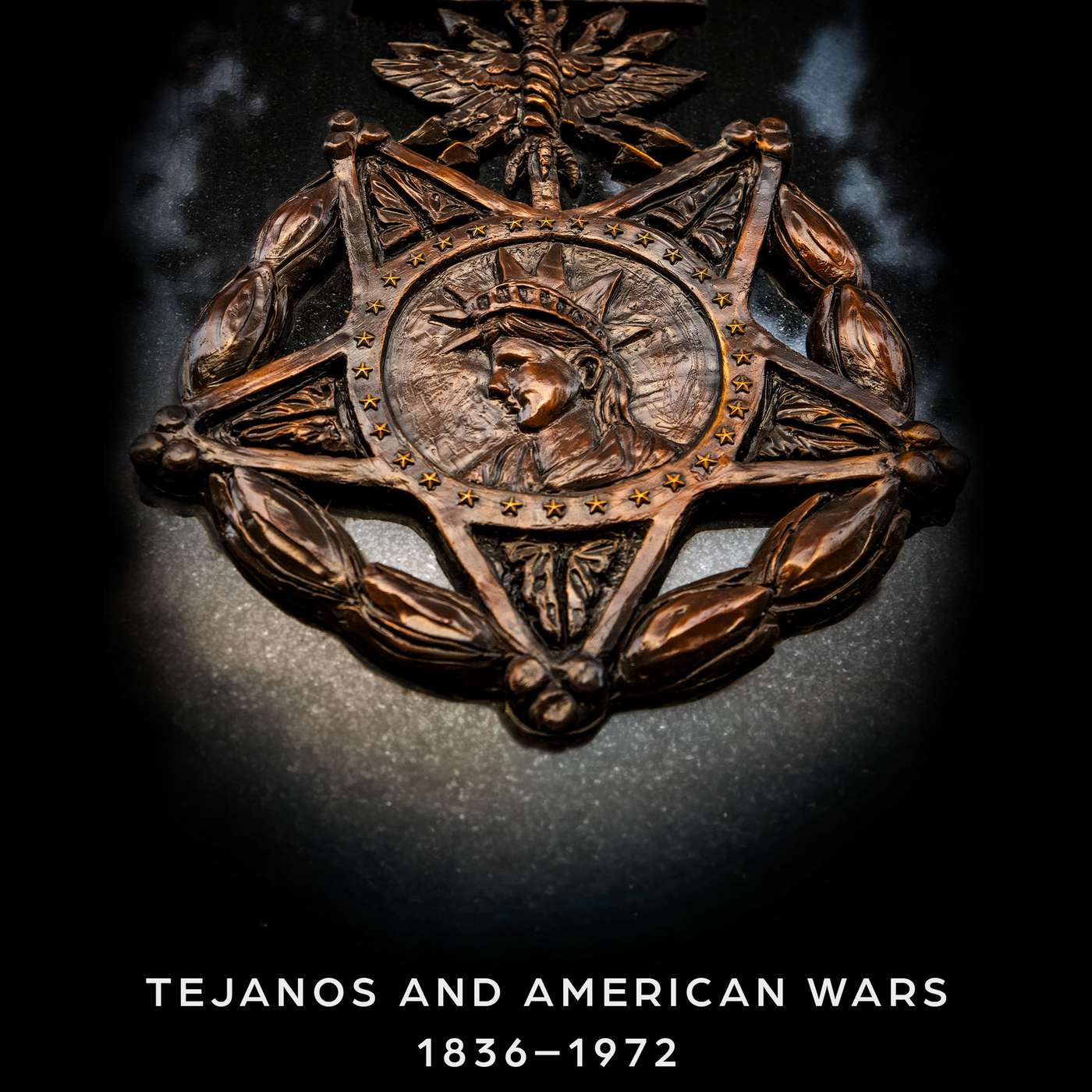
Monuments as Memory: Coda episode artwork

EPISODE · May 24, 2026 · 47 MIN

Monuments as Memory: Coda

from History & Memory: Tejanos & American Wars · host Alex Mendoza & Steve Sisson

The final episode & conclusion to the History & Memory: Tejanos in American Wars podcast. Thank you for listening. Conclusion: Tejanos, the Concept of Patriotism, and MemoryBackgroundCivil War background & UT Monuments of all sorts are interpretive tools (Lost Cause)1. In the simplest of terms, monuments serve primary purpose of remembrance/community cohesion2. They are public statements of shared values—both ideal and real3. Monuments demonstrate a form of cultural and political place for a community.I. The MemorialsA. 2004: Laredo and the Hispanic Congressional Medal of Honor1. On July 4, 2004, officials from Laredo, veterans, & other dignitaries unveiled a statueto honor the 41 Hispanic veterans who had received the Congressional Medal of Honor2. The Laredo Hispanic Veterans MemorialB. 2008: El Paso Company E Memorial Plaza was dedicated in South El Paso1. Beto O’Rourke (city Rep) urged the city to recognize the men in Company E, a unitmade up of all Mexican Americans from the areaC. 2013: Veterans War Memorial Plaza in McAllen1. Started in 1990 by Frank Plummer, a WW II veteran and retired real estate developer.2. Project finally completed on Veterans Day in 2013a) site has 160 granite panels with stories containing historical information on eachwar, citizenships & events of that time as well as a statue known as "The Warrior"D. Murals in SA1. Chicano heritageE. Tejano Monument in Austin1. No military dedicated statue/monument but a monument to Tejanos noted on capitolgroundsF. Raul Chavarria—Tejano military service remains a rich and varied topic1. omplexity of how Tejanos viewed their service is exemplified by how Korean Warveteran Raúl M. Chavarría thought nothing of flying two flags, for the United Statesand Mexico, outside his Laredo home when I visited for an oral history interviewG. My thesis is that Tejano military service of the past is a deeply complex and rich topic thatcan make you smile, make you sad, make you angry, or even make you wonder. In sum, it isthe perfect vehicle for exploring the idea of the human element of historyII. MemoryTejano military service was not a hegemonic experience forged through the prisms of assimilation andpatriotism. Rather, Mexican Texans altered their motivations in the various wars of the twentiethcentury, shifting based on a complex set of intrinsic and extrinsic values.But, on the Texas-Mexico border, the narrative of nationalism remains strong. In 2024, local politicalleaders pushed a bill to rename one of the local post offices for two war veterans, Lance Cpl. DavidLee Espinoza, Sgt. Roberto Arizola Jr., and Lance Cpl. Juan RodriguezA. The Memorials for the Tejano Veterans take an added measure in the 21 st century1. Alfredo “Freddy” Gonzalez—Edinburg bravery MoH posthumouslya) Congressional Medal of Honor in Vietnamb) Beyond statues: The USS Freddy Gonzalez (schools/parks/streets)2. Collective Memory: enough people sitting together discussing the memories of thesame event will find common grounda) The more people in the Discussion, the more collective the memory becomesb) The result is society with common ideas about the pastc) Most memories of the past endure through frameworks created by socialgroups always at hand3. How does collective memory and debates look like?Enola Gay: How to remember the atomic bombConfederate statues: how Americans remember a war fought over slaveryMuseums and Memorials as well as commemorative activities are culturalrepresentations of history4. Reasons for War Memorialsa) Recognition of Sacrificeb) Cultural Valuesc) Community IdentityEmphasis on Nationalism can likely be traced back to the problems of post WW II US [discrimination]*Beating of Private Ben Aguirre in 1947*Felix Longoria burial in 1948*Arrest of Macario Garcia [Medal of Honor] in 1945 after fighting restaurant ownerLoyalty cannot be questioned with public memory

Episode metadata supplied by the publisher feed · Published May 24, 2026

The final episode & conclusion to the History & Memory: Tejanos in American Wars podcast. Thank you for listening. Conclusion: Tejanos, the Concept of Patriotism, and MemoryBackgroundCivil War background & UT Monuments of all sorts are interpretive tools (Lost Cause)1. In the simplest of terms, monuments serve primary purpose of remembrance/community cohesion2. They are public statements of shared values—both ideal and real3. Monuments demonstrate a form of cultural and political place for a community.I. The MemorialsA. 2004: Laredo and the Hispanic Congressional Medal of Honor1. On July 4, 2004, officials from Laredo, veterans, & other dignitaries unveiled a statueto honor the 41 Hispanic veterans who had received the Congressional Medal of Honor2. The Laredo Hispanic Veterans MemorialB. 2008: El Paso Company E Memorial Plaza was dedicated in South El Paso1. Beto O’Rourke (city Rep) urged the city to recognize the men in Company E, a unitmade up of all Mexican Americans from the areaC. 2013: Veterans War Memorial Plaza in McAllen1. Started in 1990 by Frank Plummer, a WW II veteran and retired real estate developer.2. Project finally completed on Veterans Day in 2013a) site has 160 granite panels with stories containing historical information on eachwar, citizenships & events of that time as well as a statue known as "The Warrior"D. Murals in SA1. Chicano heritageE. Tejano Monument in Austin1. No military dedicated statue/monument but a monument to Tejanos noted on capitolgroundsF. Raul Chavarria—Tejano military service remains a rich and varied topic1. omplexity of how Tejanos viewed their service is exemplified by how Korean Warveteran Raúl M. Chavarría thought nothing of flying two flags, for the United Statesand Mexico, outside his Laredo home when I visited for an oral history interviewG. My thesis is that Tejano military service of the past is a deeply complex and rich topic thatcan make you smile, make you sad, make you angry, or even make you wonder. In sum, it isthe perfect vehicle for exploring the idea of the human element of historyII. MemoryTejano military service was not a hegemonic experience forged through the prisms of assimilation andpatriotism. Rather, Mexican Texans altered their motivations in the various wars of the twentiethcentury, shifting based on a complex set of intrinsic and extrinsic values.But, on the Texas-Mexico border, the narrative of nationalism remains strong. In 2024, local politicalleaders pushed a bill to rename one of the local post offices for two war veterans, Lance Cpl. DavidLee Espinoza, Sgt. Roberto Arizola Jr., and Lance Cpl. Juan RodriguezA. The Memorials for the Tejano Veterans take an added measure in the 21 st century1. Alfredo “Freddy” Gonzalez—Edinburg bravery MoH posthumouslya) Congressional Medal of Honor in Vietnamb) Beyond statues: The USS Freddy Gonzalez (schools/parks/streets)2. Collective Memory: enough people sitting together discussing the memories of thesame event will find common grounda) The more people in the Discussion, the more collective the memory becomesb) The result is society with common ideas about the pastc) Most memories of the past endure through frameworks created by socialgroups always at hand3. How does collective memory and debates look like?Enola Gay: How to remember the atomic bombConfederate statues: how Americans remember a war fought over slaveryMuseums and Memorials as well as commemorative activities are culturalrepresentations of history4. Reasons for War Memorialsa) Recognition of Sacrificeb) Cultural Valuesc) Community IdentityEmphasis on Nationalism can likely be traced back to the problems of post WW II US [discrimination]*Beating of Private Ben Aguirre in 1947*Felix Longoria burial in 1948*Arrest of Macario Garcia [Medal of Honor] in 1945 after fighting restaurant ownerLoyalty cannot be questioned with public memory

PodParley-generated summary based on available episode metadata and transcript content.

NOW PLAYING

Monuments as Memory: Coda

0:00 47:24

No transcript for this episode yet

We transcribe on demand. Request one and we'll notify you when it's ready — usually under 10 minutes.

Powering the Middle TJ Wilde The podcast that celebrates the backbone of America, our middle class and small businesses. We dive into the challenges that harm consumers. Threaten businesses and undermine our economy. How do we blend timeless values and traditions with modern technology to secure a brighter future? Come explore how middle class values and small businesses can keep driving the economy, creating jobs, and offering the American dream The 48 Laws of Power by Robert Greene (Full Audiobook) Robert Greene Amoral, cunning, ruthless, and instructive, this multi-million-copy New York Times bestseller is the definitive manual for anyone interested in gaining, observing, or defending against ultimate control – from the author of The Laws of Human Nature.In the book that People magazine proclaimed “beguiling” and “fascinating,” Robert Greene and Joost Elffers have distilled three thousand years of the history of power into 48 essential laws by drawing from the philosophies of Machiavelli, Sun Tzu, and Carl Von Clausewitz and also from the lives of figures ranging from Henry Kissinger to P.T. Barnum.Some laws teach the need for prudence (“Law 1: Never Outshine the Master”), others teach the value of confidence (“Law 28: Enter Action with Boldness”), and many recommend absolute self-preservation (“Law 15: Crush Your Enemy Totally”). Every law, though, has one thing in common: an interest in t The Laura Ingraham Show Laura Ingraham The most-watched woman in the history of cable news brings her no-holds-barred political and cultural commentary to podcasting with The Laura Ingraham Show. A bestselling author, breast cancer survivor, and mother of three internationally adopted children, Laura was the most listened-to woman in talk radio before launching her own podcast. A trailblazer across media platforms, she brings a unique perspective to this twice-weekly show, drawing on her experience as a white-collar criminal defense litigator and a Supreme Court law clerk.New episodes drop twice a week—delivering the clarity, courage, and common sense America needs. Vampires of the Paper Flower Consortium Elizabeth Guizzetti Come for the evening, stay for eternity! Paper Flower Consortium is a podcast from the largest vampire coven in Seattle. Their stories are told by Loretta Fabron Onfoy, coven historian and librarian, in the hope that the modern vampire's way of life is not lost during the next great language transformation. Some tales in this anthology are horrific, some are droll, some are filled with misadventure--just like any eternal existence. Episodes sponsored by the Paper Flower Consortium's Business Community. The history is followed by questions from curious initiates. Want to ask Lady Loretta a question about vampirism? Have a topic you want to see discussed? Email [email protected]

Frequently Asked Questions

How long is this episode of History & Memory: Tejanos & American Wars?

This episode is 47 minutes long.

When was this History & Memory: Tejanos & American Wars episode published?

This episode was published on May 24, 2026.

What is this episode about?

The final episode & conclusion to the History & Memory: Tejanos in American Wars podcast. Thank you for listening. Conclusion: Tejanos, the Concept of Patriotism, and MemoryBackgroundCivil War background & UT Monuments of all sorts are interpretive...

Can I download this History & Memory: Tejanos & American Wars episode?

Yes, you can download this episode by clicking the download button on the episode player, or subscribe to the podcast in your preferred podcast app for automatic downloads.
URL copied to clipboard!