
PODCAST · history
History & Memory: Tejanos & American Wars
by Alex Mendoza & Steve Sisson
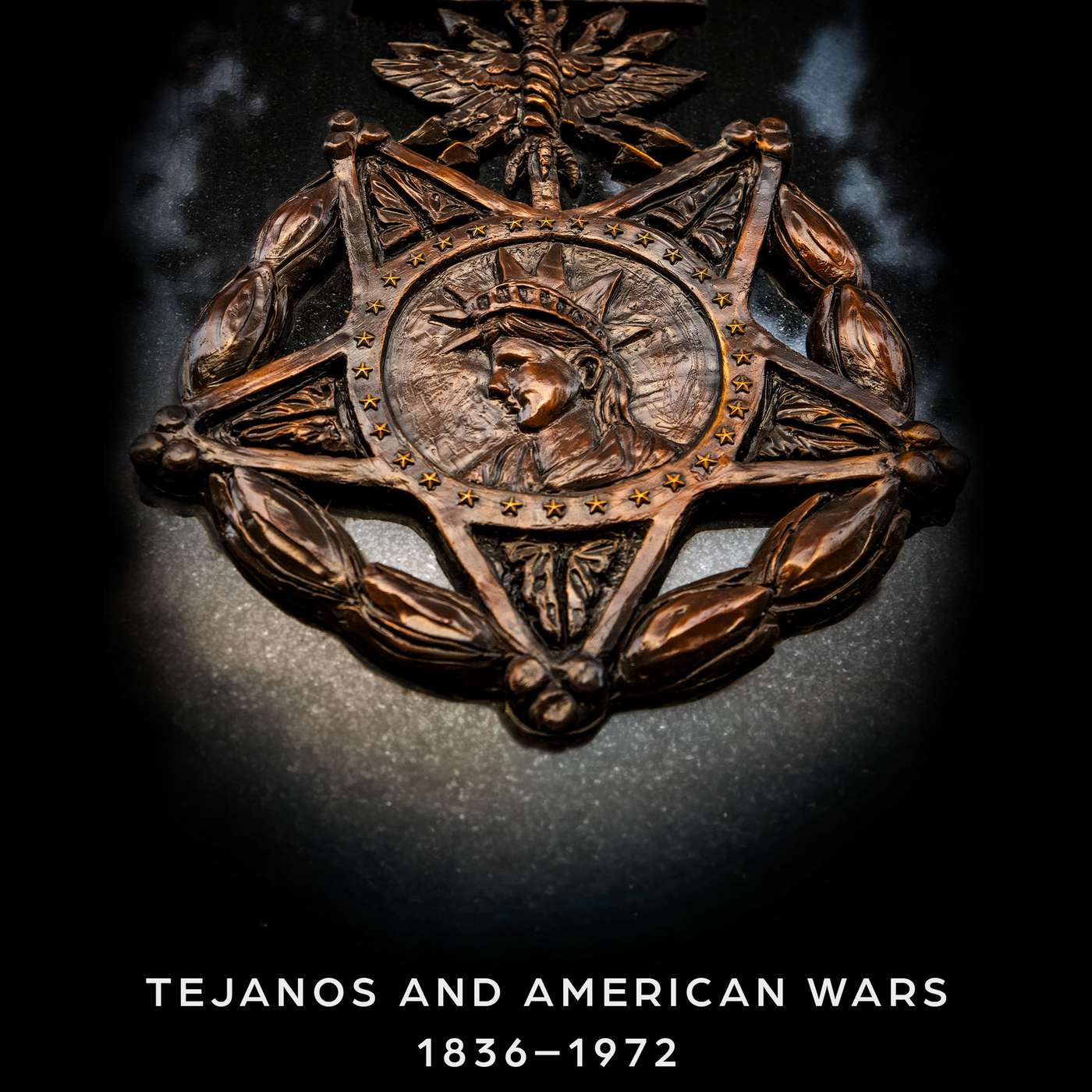
A podcast tracing the history of Tejanos in American military conflicts & how memory is tied to historical experience.
-
9
Monuments as Memory: Coda
The final episode & conclusion to the History & Memory: Tejanos in American Wars podcast. Thank you for listening. Conclusion: Tejanos, the Concept of Patriotism, and MemoryBackgroundCivil War background & UT Monuments of all sorts are interpretive tools (Lost Cause)1. In the simplest of terms, monuments serve primary purpose of remembrance/community cohesion2. They are public statements of shared values—both ideal and real3. Monuments demonstrate a form of cultural and political place for a community.I. The MemorialsA. 2004: Laredo and the Hispanic Congressional Medal of Honor1. On July 4, 2004, officials from Laredo, veterans, & other dignitaries unveiled a statueto honor the 41 Hispanic veterans who had received the Congressional Medal of Honor2. The Laredo Hispanic Veterans MemorialB. 2008: El Paso Company E Memorial Plaza was dedicated in South El Paso1. Beto O’Rourke (city Rep) urged the city to recognize the men in Company E, a unitmade up of all Mexican Americans from the areaC. 2013: Veterans War Memorial Plaza in McAllen1. Started in 1990 by Frank Plummer, a WW II veteran and retired real estate developer.2. Project finally completed on Veterans Day in 2013a) site has 160 granite panels with stories containing historical information on eachwar, citizenships & events of that time as well as a statue known as "The Warrior"D. Murals in SA1. Chicano heritageE. Tejano Monument in Austin1. No military dedicated statue/monument but a monument to Tejanos noted on capitolgroundsF. Raul Chavarria—Tejano military service remains a rich and varied topic1. omplexity of how Tejanos viewed their service is exemplified by how Korean Warveteran Raúl M. Chavarría thought nothing of flying two flags, for the United Statesand Mexico, outside his Laredo home when I visited for an oral history interviewG. My thesis is that Tejano military service of the past is a deeply complex and rich topic thatcan make you smile, make you sad, make you angry, or even make you wonder. In sum, it isthe perfect vehicle for exploring the idea of the human element of historyII. MemoryTejano military service was not a hegemonic experience forged through the prisms of assimilation andpatriotism. Rather, Mexican Texans altered their motivations in the various wars of the twentiethcentury, shifting based on a complex set of intrinsic and extrinsic values.But, on the Texas-Mexico border, the narrative of nationalism remains strong. In 2024, local politicalleaders pushed a bill to rename one of the local post offices for two war veterans, Lance Cpl. DavidLee Espinoza, Sgt. Roberto Arizola Jr., and Lance Cpl. Juan RodriguezA. The Memorials for the Tejano Veterans take an added measure in the 21 st century1. Alfredo “Freddy” Gonzalez—Edinburg bravery MoH posthumouslya) Congressional Medal of Honor in Vietnamb) Beyond statues: The USS Freddy Gonzalez (schools/parks/streets)2. Collective Memory: enough people sitting together discussing the memories of thesame event will find common grounda) The more people in the Discussion, the more collective the memory becomesb) The result is society with common ideas about the pastc) Most memories of the past endure through frameworks created by socialgroups always at hand3. How does collective memory and debates look like?Enola Gay: How to remember the atomic bombConfederate statues: how Americans remember a war fought over slaveryMuseums and Memorials as well as commemorative activities are culturalrepresentations of history4. Reasons for War Memorialsa) Recognition of Sacrificeb) Cultural Valuesc) Community IdentityEmphasis on Nationalism can likely be traced back to the problems of post WW II US [discrimination]*Beating of Private Ben Aguirre in 1947*Felix Longoria burial in 1948*Arrest of Macario Garcia [Medal of Honor] in 1945 after fighting restaurant ownerLoyalty cannot be questioned with public memory
-
8
"We Promised To Get Each Other Through": Civil Rights & the Vietnam War
In this penultimate episode of the History & Memory podcast, Dr Alex Mendoza explores the Civil Rights era & the Chicano Movement in particular in the lead up the Tejano veterans' experience in the Vietnam War. I. Intro: The Changing Landscape of Civil RightsA. LULAC’s and Am GI Forum’s Assimilation messaging not resonating by 1960s1. Discrimination still prevalent and voting still limited until 19642. By late 1960s Chicano Movement takes holda) Differentb) Non-Assimilationc) Younger Generations (similar to broader Civil Rights movements of late 60s)B. Military Service still way out of poverty as main influenceC. New Factors1. Hollywood—John Wayne and War Movies of the 1950s and 1960s resonated2. Family History (fathers/uncles/brothers had served and military families the norm)3. Military brainwashing worked: 1950s Conservatives and EisenhowerII. VietnamA. Origins1. Fear of Communism2. Foreign Policy and Abstract IdeasB. Service1. New Soldiers demonstrated a love for military previous generations had not known2. Basic Training had new dynamics as Tejanos and other Hispanic soldiers in the middleof the tense strife between white and black troops in age of Civil RightsC. CombatLoyalty to Fellow Soldiers took place instead of loyalty to countrya) Story of Eduardo Teniente and his friend Ignacio “Nacho” TorresFrustrationsa) Guerrilla Warfareb) An enemy they could not understandc) Wawro: $168,000 per every enemy combatant the US killedHeroisma) Roy Benavidez from El Campo—The Tejano GI Joeb) Alfredo “Freddy” Gonzalez—Edinburg bravery MoH posthumouslyDiscriminationa) Muted “Speedy” Gonz moniker but Tejanos more apt to fight back than beforeb) Class discrimination (the war was inherently against the poor—deferments)c) Chicano leaders were more inclined to criticize the war than beforeIII. MemoryA. The Antiwar dissent that defined the war was still absent with the Tejano community1. Tejanos were anti Communist/pro capitalist/pro-AmericaB. Tejanos are Memorializing the war via Murals and Community Projects1. See Dr. Ricardo Romo’s Projects (Romo first Tejano sub 4 min miler)http://latinopia.com/blogs/ricardo-romos-tejano-report-10-08-21-honoring-latino-military-heroes/
-
7
"Yo Quería Ser Americano": WWII to the Korean War
In this episode, Dr Alex Mendoza continues the discussion of Tejanos in American wars by tracing the post-WWII expereinces of Tejanos leading up to & including the Korean War. I. Intro: The Letdown of the Greatest Generation and the Good WarA. The Felix Longoria Affair (Three Rivers Funeral for WW II vet)B. The Beating of Private Ben Aguirre (West Texas)1. Teens beat Aguirre but well connected did minimal punishmentC. Catalysts1. American GI Forum—Dr. Hector P. Garcia and Corpus2. LULAC continued to gain strengthII. American IdealsA. Cold War accentuated the Stars and Stripes and Apple Pie1. Fear of the Soviets: distinguishing from Godless Communism2. Concerted efforts to emphasize the importance of the militarya) For Tejanos this resonated: skills, money, education (GI Bill), countryb) Military bases throughout Texas emphasized the presence of the militaryB. Immigration1. Military Service and Path to Citizenshipa) Raul Chavarria (Laredo)—Military service led to citizenship2. Protection against wave of deportations (AGAIN) under Eisenhowera) Operation Wetback (according to INS) deported 1.3 million in 1954 aloneC. Korea1. Cold War conflict—abstract ideas such as protecting the nation from Communists2. Motivesa) Love of countryb) Economic Opportunitiesc) Personal Honor: Horacio Vela (example) who thought about fleeing but chose tofight for the importance of respectd) Fear of Communism3. Elvis’s Armya) The draft was omnipresent in the 1950sb) ROTC units common in Texas High Schools Military thus not as feared as in prior generations Picnics, demonstrations, and presence of armed forces in anytown Texasmade it easier to join the militaryIII. MemoryA. Richard Cavazos Congressional Medal of Honor (from Kingsville)1. Served in Korea and Vietnam (awards for both)2. 1 st Four Star General in late 20 th century (Texas Tech grad)3. Fort Hood named in honor after names of Confederates removeda) Fort Cavazos did not last long (Trump)b) Name erasedB. Korea as a Forgotten War
-
6
"I Think Nobody Is More American Than I" - World War II
In this sixth episode of History & Memory, Tejanos in American Wars, we cover the volitale period between the two World Wars. In Dr Mendoza's book this is Chapter 5. Below is an outline of our discussion. The BlowbackA. The WW I LegacyLULAC not for all (middle class)Great Depression of 1930s in which the New Deal excludes TejanosB. DeportationsDeportations in the 1930s hindered the goal of assimilationDuring the interwar years, Mexican Americans in Texas had a stronger sense ofbelonging to the United States than ever beforeWorld War IIA. Pearl HarborThe Lockhart Incident (July 1941)American Loyalty (the “Good War”?)B. MilitaryMotives varied, patriotism clearly evidentI Think Nobody is More American Than I Am” Ramon Martin RivasThe father of UT Austin’s Maggie Rivas Rodriguez who spearheaded the Oral Latino Voices projectBasic TrainingThe federal govt. knew there were problems and began preparing forracism and discrimination prior to the 1941 bombingCommon Council for American Unity (1940) published a periodical CommonGround with purpose of creating unity & understanding amongst AmericansImmigration & Naturalization Service (1941)) prepared broadcasts bynaturalized Americans, I Am an American (famous names = Albert Einstein)Hollywood (1940) also got into the act with Knute Rockne, All AmericanRonald Reagan made a point of celebrating the American immigrant heritage with RockneAdvantages: Tejanos saw military life as a way to escape poverty (stories on how they finally had food, shelter, and electricity)Homefronta) Fully on board (examples—just like Main Street USA)Heroisma) Macario Garcia—Cong Medal of Honor (1 st immigrant) in Europeb) Company E—all Mexican unit from El Paso in Europe theaterStories of these men from the same neighborhood akin to Band of BrothersImpactA. Memory—Tejanos became more proactive to claim status as heroesMonuments in El Paso (2 for Company E)B. Civil Rights—LULAC & American GI ForumAmericanization main goal
-
5
"For Honor, For Patriotism... For Our Own Best Interests": World War I
In this, the fifth episode of the History & Memory podcast Dr Mendoza unpacks the signifcant challenges & changes that take place for Tejanos in the period up to & including World War I. Early 20th Century WoesA. Economy1. Land displacement—Commercial landownersa) Old system of accommodation breaks down during this time period2. Immigrationa) Population at 125,016 by 1910b) Diaz regime ended in 1910 & vacuum led to the MX Revolution (1920)1910-19171. La Matanza (the Killings)2. Texas Rangers/law enforcement/US Army all mobilized to the border as spilloverviolence (real or imagined) allowed them to react against Tejanos with impunity- Website to look at: https://refusingtoforget.org/WW IA. Choices to register for draft or flee to Mexico1. Though some fled across the border, majority stayedB. Military1. Motives varied, but patriotism began to creep in for some- Jose De la Luz Saenz (teacher)2. The goal of making a name for themselves Homefront supported thewar—neutrality no longer an option3. Heroisma) David Barkley Cantu (hid his ethnic background) but Cong Medal of Honorb) Marcelino Serna—immigration story (join or be deported)- Distinguished Service Cross/Purple Heart/French Croix de Guerre/WarMerit Cross (Italy)- But no Congressional Medal of Honor for reasons unknown (as late as2025 family and political leaders were agitating the Biden administrationto award him a medal but to no avail)ImpactA. Memory—Tejanos left out of the monument building craze across the country1. Look at the soldier statue outside Memorial stadium2. WW I led to students naming UT Austin’s football stadium as Memorial Stadiumbefore they tarnished it with adding Darrel K. Royal’s name to it LOLB. Civil Rights—LULAC1. Americanization main goal2. War service led to opportunities
-
4
"I Am An American First, Last & All The Time" - Reconstruction to the Spanish-American War
In this fourth episode of History & Memory, Dr Mendoza carries us from the Civil War through the challenging Reconstruction years leading up to the US's first war of empire, the Spanish-American War. You can follow along with the outline below:Reconstruction to Frontier EraA. Limited Role for Tejanos on the Frontier1. Security taken over by US Armya) Segregated units for African Americans but no such efforts to recruit Tejanosb) Benavides’s brother Rafael served as Texas Ranger in 1870s2. Militiasa) Fraternal organizations in late 1800s (no real effort to offer Nat. Guard yet)B. Loyalty1. Banditry and Revolutionary Activity on the Border2. Events in Mexico had outcasts from Diaz regime operating on the bordera) Catarino Garza and Francisco Sandovalb) Agitated against Diaz from Texasc) Mexico’s foreign minister suggested Tejanos were susceptible to influencea. Fed into trope of disloyal Tejanos who did not assimilateSpanish American WarA. All volunteers fed by war fervor of the Yellow Press1. War fervor to heal the nation after the Civil War2. Manifest Destiny on a broader scale (imperialism)B. Story of Suspected Disloyalty1. El Paso: Educator HML Lopez accused of harboring Spanish sympathies2. Laredo: City leader Amador Sanchez is questioned about loyalty b/c he did not jointhe war effort. He had to write the local paper to retort: “I am an American first,last, and all the time.”3. In West Texas and North Texas, city officials tracked the movement of Tejanos backto Mexico to note they were not supportive of the war4. In Eagle Pass, officials criticized donations to SpainC. Agustin De Zavala1. Joined the ranks of the Army not for patriotism but for political/economicadvancement2. Sister was Adina De Zavala (granddaughter of first Republic of Texas VP) whochampioned the preservation of the Alamo as a historical pieceMemoryA. George Washington Birthday Celebration in Laredo1. Entire city shuts down in patriotic fervor since 1898B. Spanish American a forgotten war besides
-
3
"Now, Is He A Mexican Or A Texan": Mexican-American & Civil Wars
In this third episode of History & Memory, Dr Mendoza discusses the years between Texas Independce & the Civil War, including the Mexican-American War. Below are is an outline of the discussion. Antebellum/Mexican WarA. Laredo1. Laredoans petitioned to remain part of Mexico after war broke out2. MB Lamar: “Mexico has lost Laredo forever”Notions of identity and loyaltyB. Republic of Rio Grande 1840s1. Goals2. National Loyalty still dubiousCivil WarA. Choices to join Confederates, support Federal government, or Stay Neutral1. Newspapers praised Tejanos who caught slaves in MexicoB. Story of Santos Benavides (Laredo) and Juan Cortina (Brownsville)1. Contemporaries born around the same timeFought on different sidesC. Adrian Vidal1. Fought on THREE sides: Union, Confederacy, joined Cortina’s rebels untilexecuted by French forcesMemoryA. Santos Benavides Middle School (Laredo)B. Civil War iconography in Laredo (Rebel flag on Masthead/Airport)
-
2
"Some Envied My Postition, As Held By A Mexican": Precolonial to Texas Revolution
In this second episode of History & Memory, your host covers a short prehistory of the Border region to try to help set the stage. Then Dr Mendoza covers the precolonial era through the Texas Revolution. Below is a Pre 1835 TejanosA. Why Texas1. Scattered Outposts—Life on the Frontier (Fronterizo identity/free border people)2. Compañias Volantes—Precursor to Texas RangersUniquenessDanny Castro artwork3. Identity/Loyalty to Nation when compared to Old 300 Anglos whocame to TexasB. Revolution1. Goals2. Problems with the NationRevolutionary Era TejanosA. Choices to join Revolution or Stay Neutral1. Juan Seguin - Revolution2. Juan Navarro - NeutralB. Eclipse of Tejanos in Power1. Lorenzo de Zavala - Vice President of Texas in 1836 (resigns and dies) No Tejano afterward to replace him2. Cordova Rebellion in East TexasMemoryA. Alamo as Shrine1. De Zavala’s grandaughter Adina becomes a defender of the Alamoin 1890s and 19002. Alamo has fired directors in the last few yearsB. Texas Revolution Ideas Suggests Texas is unique in the fabric of the USA
-
1
History & Memory: An Introduction
SummaryIn this episode, host Steve Sisson and historian Dr. Alex Mendoza explore the rich history of Mexican Texans, their dual identity, and the legacy of Confederate memory in Texas. They discuss personal stories, historical battles, and the ongoing reckoning with racial and cultural heritage.KeywordsMexican Texans, Texas history, Confederate legacy, border identity, racial tensions, Texas Rangers, cultural heritage, history of Texas, Tejano, Civil WarKey TopicsMexican Texans' role in U.S. conflicts from Texas Revolution to VietnamBorderland identity and dual loyalty of TejanosThe legacy of George Washington Littlefield and Confederate memory in TexasRacial tensions and civil rights movements at the University of TexasThe evolution of Texas' cultural and racial landscapeChapters00:00Introduction to the Podcast and the Book01:33The Motivation Behind the Book05:06Identity and Cultural Duality12:27Personal Histories and Athletic Rivalry16:11Racial Strife at the University of Texas17:28The Legacy of George Washington Littlefield28:54Memory vs. History in Public Commemoration36:29The Complexity of Tejano Identity41:30Reflections on Being Texan and American
We're indexing this podcast's transcripts for the first time — this can take a minute or two. We'll show results as soon as they're ready.
No matches for "" in this podcast's transcripts.
No topics indexed yet for this podcast.
Loading reviews...
ABOUT THIS SHOW
A podcast tracing the history of Tejanos in American military conflicts & how memory is tied to historical experience.
HOSTED BY
Alex Mendoza & Steve Sisson
CATEGORIES
Loading similar podcasts...
Frequently Asked Questions
How many episodes does History & Memory: Tejanos & American Wars have?
History & Memory: Tejanos & American Wars currently has 9 episodes available on PodParley. New episodes are automatically indexed when they're published to the podcast feed.
What is History & Memory: Tejanos & American Wars about?
A podcast tracing the history of Tejanos in American military conflicts & how memory is tied to historical experience.
How often does History & Memory: Tejanos & American Wars release new episodes?
History & Memory: Tejanos & American Wars has 9 episodes. Check the episode list to see recent publication dates and frequency.
Where can I listen to History & Memory: Tejanos & American Wars?
You can listen to History & Memory: Tejanos & American Wars on PodParley by clicking any episode. We provide an embedded audio player for direct listening, and you can also subscribe via your preferred podcast app using the RSS feed.
Who hosts History & Memory: Tejanos & American Wars?
History & Memory: Tejanos & American Wars is created and hosted by Alex Mendoza & Steve Sisson.
URL copied to clipboard!