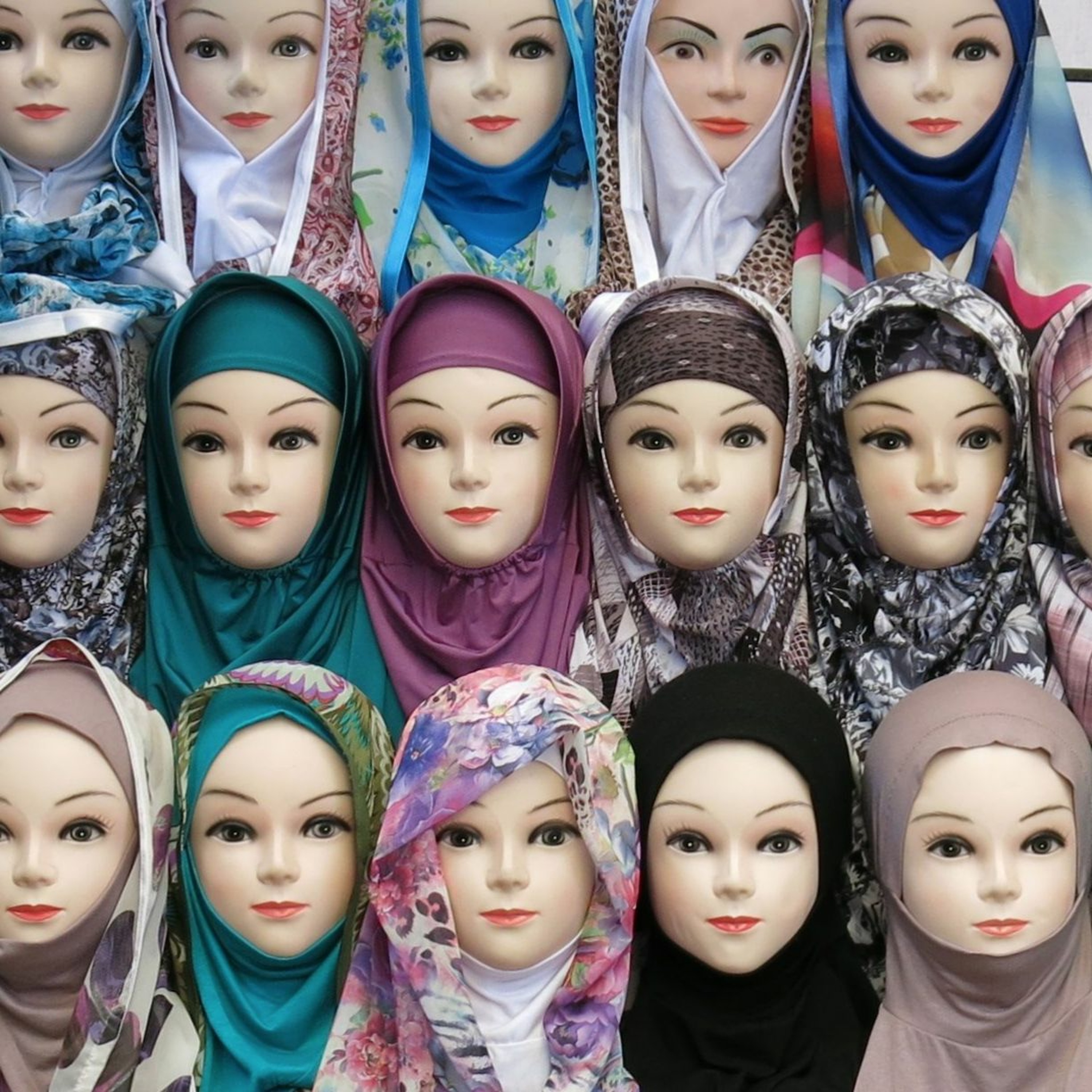
Moral Future: Halal Businesses in Central Asia - Aisalkyn Botoeva (7.30.20) episode artwork

EPISODE · Aug 5, 2020 · 53 MIN

Moral Future: Halal Businesses in Central Asia - Aisalkyn Botoeva (7.30.20)

from CREECA Lecture Series Podcast · host Center for Russia, East Europe, and Central Asia at the University of Wisconsin, Madison

“Moral Future: Halal Businesses in Central Asia” with Aisalkyn Botoeva of the George Washington University LECTURE DESCRIPTION: How do people in Central Asia understand the Islamic Economy and enact its principles in their day-to-day lives? In her 18-month research in Kazakhstan and Kyrgyzstan, she explored a wide range of sites within the burgeoning Islamic Business sector, from high-visibility financial firms to small and medium-sized businesses, and all the way down to bazaars and street stalls. In this talk, she focuses on one of the key arguments of her work – that the halal business is a space of ethical inquiry, exploration, experimentation, and debate for those who decide to adopt this form of business practice. When it comes to food, for example, there is a strong belief that the consumption of halal food can lead to physical and psychological cleansing and spiritual nourishment. Along with discussions of how people understand halal, she also presents contentious cases such as the one involving kymys [fermented mare’s milk], and whether it is halal (permissible)or haram (forbidden). Moreover, ideals of what constitutes halal have spilled over to various areas of business activities that go beyond entrepreneurs’ concern with the technical aspect of food production. Some of the key debates involve questions around bribes and corruption. Entrepreneurs voice their aspirations to earn their money through adal ish (here literally halal work, but in Kyrgyz generally means work based on good intentions) and ak söz (literally white words, but connotes words of wisdom and propriety). Exploring emic ethical vocabulary and repertoires among those involved in the halal business sheds light on broader processes through which halal economy is embedded in local cultures of doing business as well as being a pious Muslim. The talk aims to give a snapshot from an ethnographic study that aims to contribute to more “top-down” accounts of Islam and the economy in the region. SPEAKER BIO: Aisalkyn Botoeva currently serves as a Visiting Scholar at the Institute for European, Russian & Eurasian Studies (IERES) of the George Washington University. She is a sociologist with broader research interests in socio-economic development, economic decision-making, and resilience in the face of uncertainty. Her past and current research experience is in topics of industrial revival in resource-poor contexts of Central Asia, entrepreneurship in the post-Soviet region, as well as the varying strategies and economic repertoires of action that entrepreneurs employ in this context. In addition to research, she taught a wide range of courses from Social Research Methods, to Globalization & Social Conflict, Leadership & Global Development both in Kyrgyzstan and the U.S. Her individual research has been funded by the Aga-Khan Foundation, Open Society Foundations as well as Hazeltine Fellowship of the Business, Organizations and Entrepreneurship Program at Brown University. The results of her individual and collaborative projects have been published in Politics & Society, Theory & Society, Families, Relationships and Societies, Post-Soviet Affairs, and Central Asian Survey among other journals.

“Moral Future: Halal Businesses in Central Asia” with Aisalkyn Botoeva of the George Washington University LECTURE DESCRIPTION: How do people in Central Asia understand the Islamic Economy and enact its principles in their day-to-day lives? In her 18-month research in Kazakhstan and Kyrgyzstan, she explored a wide range of sites within the burgeoning Islamic Business sector, from high-visibility financial firms to small and medium-sized businesses, and all the way down to bazaars and street stalls. In this talk, she focuses on one of the key arguments of her work – that the halal business is a space of ethical inquiry, exploration, experimentation, and debate for those who decide to adopt this form of business practice. When it comes to food, for example, there is a strong belief that the consumption of halal food can lead to physical and psychological cleansing and spiritual nourishment. Along with discussions of how people understand halal, she also presents contentious cases such as the one involving kymys [fermented mare’s milk], and whether it is halal (permissible)or haram (forbidden). Moreover, ideals of what constitutes halal have spilled over to various areas of business activities that go beyond entrepreneurs’ concern with the technical aspect of food production. Some of the key debates involve questions around bribes and corruption. Entrepreneurs voice their aspirations to earn their money through adal ish (here literally halal work, but in Kyrgyz generally means work based on good intentions) and ak söz (literally white words, but connotes words of wisdom and propriety). Exploring emic ethical vocabulary and repertoires among those involved in the halal business sheds light on broader processes through which halal economy is embedded in local cultures of doing business as well as being a pious Muslim. The talk aims to give a snapshot from an ethnographic study that aims to contribute to more “top-down” accounts of Islam and the economy in the region. SPEAKER BIO: Aisalkyn Botoeva currently serves as a Visiting Scholar at the Institute for European, Russian & Eurasian Studies (IERES) of the George Washington University. She is a sociologist with broader research interests in socio-economic development, economic decision-making, and resilience in the face of uncertainty. Her past and current research experience is in topics of industrial revival in resource-poor contexts of Central Asia, entrepreneurship in the post-Soviet region, as well as the varying strategies and economic repertoires of action that entrepreneurs employ in this context. In addition to research, she taught a wide range of courses from Social Research Methods, to Globalization & Social Conflict, Leadership & Global Development both in Kyrgyzstan and the U.S. Her individual research has been funded by the Aga-Khan Foundation, Open Society Foundations as well as Hazeltine Fellowship of the Business, Organizations and Entrepreneurship Program at Brown University. The results of her individual and collaborative projects have been published in Politics & Society, Theory & Society, Families, Relationships and Societies, Post-Soviet Affairs, and Central Asian Survey among other journals.

NOW PLAYING

Moral Future: Halal Businesses in Central Asia - Aisalkyn Botoeva (7.30.20)

0:00 53:48

No transcript for this episode yet

We transcribe on demand. Request one and we'll notify you when it's ready — usually under 10 minutes.

French Your Way Jessica: Native French teacher founder of French Your Way Boost your French listening skills and test your comprehension with this one of a kind series of podcasts. Get the chance to listen to a real conversation between native speakers talking at normal speed AND customise your learning experience through carefully designed sets of questions (2 levels of difficulty) available for download at www.frenchvoicespodcast.com. All interviews also come with the transcript. French teacher Jessica interviews native speakers of French from around the world who share a bit of their life and passion. Where else would you meet in one same place a French yoga teacher based in Melbourne, a soap manufacturer from Provence, or a couple cycling around the world? That Hoarder: Overcome Compulsive Hoarding That Hoarder Hoarding disorder is stigmatised and people who hoard feel vast amounts of shame. This podcast began life as an audio diary, an anonymous outlet for somebody with this weird condition. That Hoarder speaks about her experiences living with compulsive hoarding, she interviews therapists, academics, researchers, children of hoarders, professional organisers and influencers, and she shares insight and tips for others with the problem. Listened to by people who hoard as well as those who love them and those who work with them, Overcome Compulsive Hoarding with That Hoarder aims to shatter the stigma, share the truth and speak openly and honestly to improve lives. The Small Business Startup School – Business Notes | Financial Literacy | Retail Psychology – For Professionals & Entrepreneurs The Small Business Startup School Inc. Starting or buying a small business? While personal circumstances may vary, business patterns remain timeless. On The Small Business Startup School, we explore strategies, insights, and practical solutions to help entrepreneurs confidently navigate their journey.Hosted by Ola Williams—a retail entrepreneur, fintech founder, and financial coach with over two decades of experience—this podcast marries financial awareness and retail psychology with optimism to deliver actionable takeaways.Join us to learn, grow, and connect as we uncover the keys to business success.Let’s continue to learn together and be encouraged to keep on connecting! DIOSA. Carolina Sanper This podcast is a sacred space created by Carolina Sanper where you connect with your inner wisdom and embody your magnetic feminine power.It is the realization that the mystical realm is where you plant the seeds of your desired reality.It is a portal to your true essence: awareness, presence, and receiving with ease. Welcome home, DIOSA. 🖤

Frequently Asked Questions

How long is this episode of CREECA Lecture Series Podcast?

This episode is 53 minutes long.

When was this CREECA Lecture Series Podcast episode published?

This episode was published on August 5, 2020.

What is this episode about?

“Moral Future: Halal Businesses in Central Asia” with Aisalkyn Botoeva of the George Washington University LECTURE DESCRIPTION: How do people in Central Asia understand the Islamic Economy and enact its principles in their day-to-day lives? In her...

Can I download this CREECA Lecture Series Podcast episode?

Yes, you can download this episode by clicking the download button on the episode player, or subscribe to the podcast in your preferred podcast app for automatic downloads.
URL copied to clipboard!