
EPISODE · May 6, 2026 · 6 MIN
New Yorker dives into Jeju tradition as village's foreign 'haenyeo'
from Korea JoongAng Daily - Daily News from Korea · host WOO JI-WON
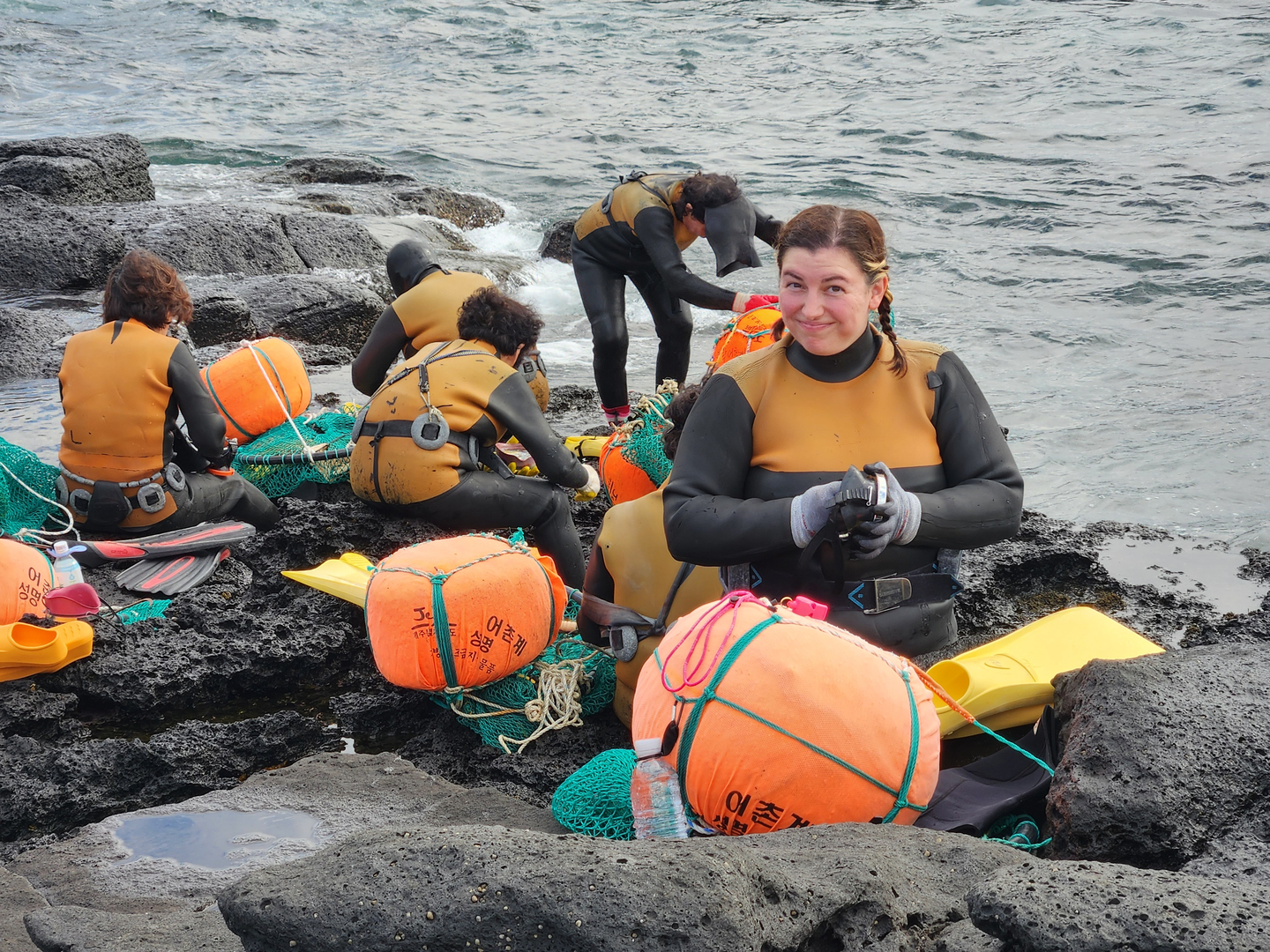
This article is by Woo Ji-won and read by an artificial voice. [INTERVIEW] A wave crashed against the shore strongly enough to make even seasoned haenyeo, Korea's traditional female free divers, hesitate — and that's when Kylie Genter realized just how dangerous her new job could be. "[A more experienced haenyeo] looked at me, and I could see that she was scared, and that made me scared because they are usually like, 'It's fine. Don't worry.' They're very tough," said Genter, a registered haenyeo of Jeju Island, during a video interview with the Korea JoongAng Daily. For centuries, haenyeo have plunged into the sea — up to 10 meters (32.8 feet) deep without an oxygen mask — to harvest seafood, such as abalone, conch and seaweed, for a living. In Yeongrak-ri, a village on the west coast of Jeju, the tradition lives on through 16 divers, comprising 10 veterans and six newly registered divers, including Genter. The culture of Jeju's haenyeo — a Unesco Intangible Cultural Heritage — faces severe challenges surrounding its preservation. The number of haenyeo is rapidly dwindling, falling to 2,371 as of 2025, nearly half the figure from a decade ago, and more than 60 percent of the remaining divers are in their 70s. At such a time, the arrival of 36-year-old Genter is welcome. "I think, at first, [the other haenyeo] didn't really know what to do with me. They were kind of like, 'Why is she here?'" A flash of blonde among older local divers drew attention not only within the group but also from residents. "[Passersby] see us walking, and they usually kind of say under their breath, 'There must be a haenyeo experiential activity,' and [...] are usually kind of surprised." But a wetsuit wasn't something that Genter herself expected to wear just a few years ago. "I didn't really know much about Korea to be honest," said Genter, who came to the country in 2012. "I had a hard time finding a job because of the economy in the [United] States. [...] I was feeling very stressed, and I called my mother and said, 'Oh, America hates me. I'm going to leave.'" After graduating with a degree in communication, she set out to find a teaching job and ended up in Korea. She taught English for four years in Jinju, South Gyeongsang, before relocating to Jeju, where she worked as a tour guide. Even then, she did not imagine herself becoming one. "I did not think, 'Oh, I could really become a haenyeo,' because I didn't think that could be possible for a foreigner." That seemed true for a while. When Genter heard that Yeongrak-ri was searching for younger divers to offset its rapidly aging work force — a challenge shared by many villages — she expressed her interest in joining the crew. The answer came quickly: No. "But one month later, [the fishing village cooperative] contacted me again and said, 'Let's do an interview.' And then from January of 2024, I started to dive." Thankfully, the community was supportive, and Genter earned her certification last month. Even so, her case is unusual. In many villages, outsiders struggle to be accepted as haenyeo, as some require candidates to have lived in the community for years. Many also prefer long-term residents to ensure that they will continue working as a diver. For Genter, a spouse visa through her Korean husband helped signal that commitment. Her life as a haenyeo now follows a set routine. A typical day begins around 9:30 a.m., with divers working in cycles — one week diving, then one week resting — though their schedules often depend on the weather. The diving season typically runs from October to May for her village, when conch is in harvest. "But as time goes by, we enter the water later because we want to get out at low tide to make it easier for us. [...] I try to be one hour early to dive because we have to get our suits ready." The group walks together about a kilometer (0.62 miles) to the sea, where they spend about three to four hours underwater on good days and less when conditions are rou...
Embed this episode
NOW PLAYING
New Yorker dives into Jeju tradition as village's foreign 'haenyeo'
No transcript for this episode yet
Similar Episodes
No similar episodes found.
Similar Podcasts
No similar podcasts found.