NM Short | Lil Internet’s VICE Interrupted episode artwork

EPISODE · Mar 1, 2024 · 20 MIN

NM Short | Lil Internet’s VICE Interrupted

from Channel · host New Models

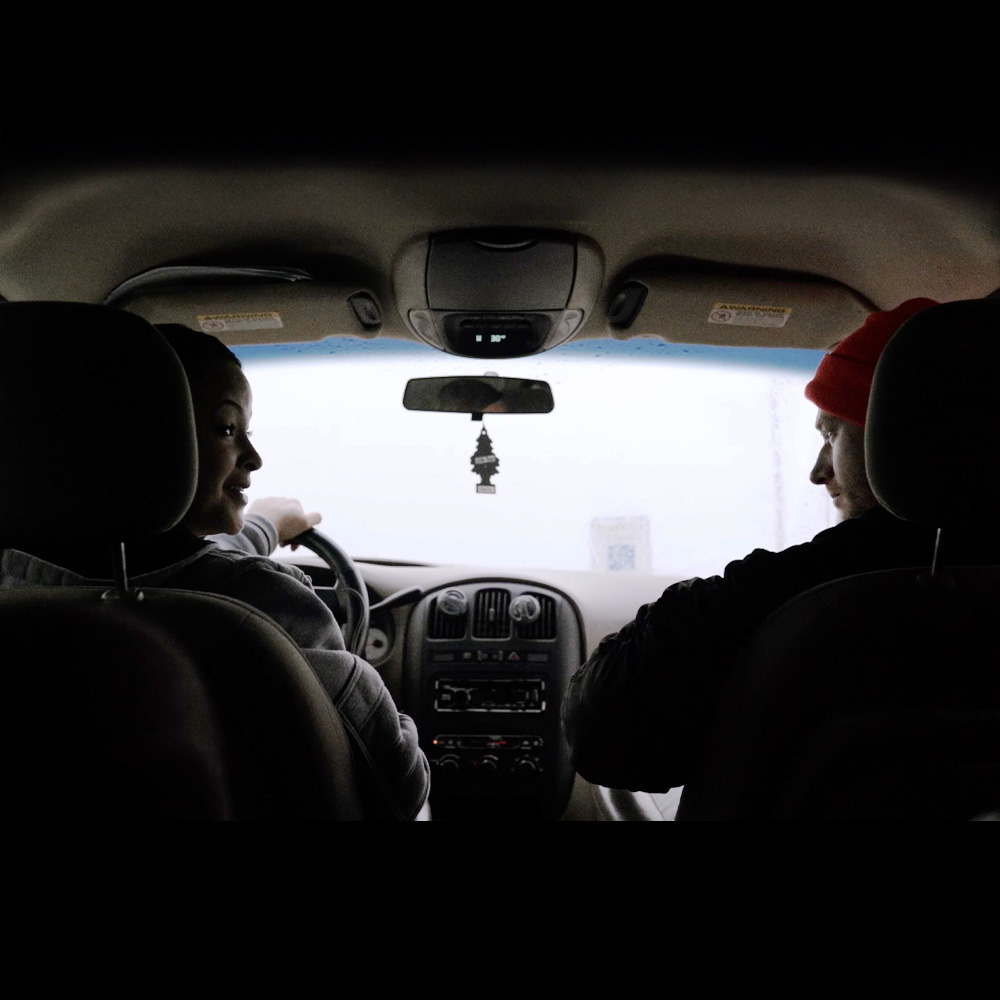
AUDIO: As Vice announced last week that it would be sunsetting its content production, ceasing publication to its site, LIL INTERNET takes us back to a special 2018 assignment for the brand.VIDEO: Vogue x VICE Lynchburg Documentary [2018, unfinished, dir. Lil Internet]POSTSCRIPT by Carly:Six years ago in February 2018, Julian found himself in Lynchburg, VA, an average American town about 3 hours southwest of Washington, D.C.. He was there on assignment shooting a short documentary for a special crossover project involving two giants in culture sector media.Back in Berlin, I had just left my job as editor of Texte zur Kunst and, after ten years working for print magazines (and some two decades chasing that dream), made the decision to start New Models, which would examine what was happening to legacy media and how we might collectively adapt to its dissolution.At the time, things felt profoundly schizophrenic. Most of my peers working in legacy media were living under a vague sense of doom. They could feel that their labor—work that often took the form of 60+ hour weeks for some $40K a year while paying off Ivy League student debt—was subservient to the distribution mechanics of Web 2.0. They were in their 30s and could see that career advancement would require a pivot although it was unclear into what exactly. Meanwhile Vice Media had just been valued at $5.7 billion and, across the river, Condé Nast was settling into its new 1.2 million square feet of office space in the tallest building in the Western Hemisphere, One World Trade Center. It didn’t make much economic sense to launch a platform-critical, subscriber-supported, media-theory experiment that year—and perhaps that still isn’t the shrewdest business idea—but it felt like certain death to bank on these old models being long-term viable.So last week, when Vice Media issued an all staff memo (in language that absolutely could have been written by GPT), explaining that it would be dialing down its operations, laying off the majority of its remaining staff, and ceasing to publish content to its site, it was, abstractly speaking, a relief. Our intuition had been correct: at Vice’s financial peak, its framework was already dead. At the same time, there was a feeling of, what now? Especially as it wasn’t only Vice. Recent months have seen the implosion of Artforum a year after being acquired by publishing conglomerate Penske Media Corp, as well as Condé Nast’s gutting of Pitchfork, folding it into GQ.When Millennials came of age in the ’00s and early-‘10s, older critics characterized them by their compulsion to publicly document their lives, equating their eagerness to post with their enthusiasm for trendy tattoos (whether antlers, anchors or fingerstaches)—warning that both would would leave them burdened with potentially embarrassing indelible marks.As those pundits now comfortably retreat to their residences upstate or in the pacific Palisades, bookshelves stacked with the decades of print issues and product collabs they helped to produce and which probably did shape culture in some measurable way, Millennials are arriving in middle age with little material evidence of their life’s work, so much of it having been corrupted as digital back-ends were migrated to new content management systems or abandoned flat out. This is a loss for the journalists but also for those whose stories they were commissioned to tell. As legacy media comes undone, what happens to its archives? And when the future tries to understand the cultural impact of legacy media’s demise, how will this time be reconstructed? Already, the remnants of media’s past decade exist scattered across shared Dropboxes, bricked laptops, meta-archiving sites, and personal hard drives, irretrievably distributed like the fuselage of an airplane that exploded mid-flight. And as the last bits of value are wrung from these media brands’ IP, will the name recognition of these former media giants fade, too? Our 17 year old Berlin babysitter had never heard of Vice and couldn’t care less about Vogue. By 2030 what will it mean to say you once made the cover of Artforum or directed a political documentary for Vice? Staring into a sea of blank faces, what will the millennial culture producer do? Perhaps the same as many whose world vanished with time, roll up their sleeve and tell the story of their tattoos.

Episode metadata supplied by the publisher feed · Published Mar 1, 2024

AUDIO: As Vice announced last week that it would be sunsetting its content production, ceasing publication to its site, LIL INTERNET takes us back to a special 2018 assignment for the brand.VIDEO: Vogue x VICE Lynchburg Documentary [2018, unfinished, dir. Lil Internet]POSTSCRIPT by Carly:Six years ago in February 2018, Julian found himself in Lynchburg, VA, an average American town about 3 hours southwest of Washington, D.C.. He was there on assignment shooting a short documentary for a special crossover project involving two giants in culture sector media.Back in Berlin, I had just left my job as editor of Texte zur Kunst and, after ten years working for print magazines (and some two decades chasing that dream), made the decision to start New Models, which would examine what was happening to legacy media and how we might collectively adapt to its dissolution.At the time, things felt profoundly schizophrenic. Most of my peers working in legacy media were living under a vague sense of doom. They could feel that their labor—work that often took the form of 60+ hour weeks for some $40K a year while paying off Ivy League student debt—was subservient to the distribution mechanics of Web 2.0. They were in their 30s and could see that career advancement would require a pivot although it was unclear into what exactly. Meanwhile Vice Media had just been valued at $5.7 billion and, across the river, Condé Nast was settling into its new 1.2 million square feet of office space in the tallest building in the Western Hemisphere, One World Trade Center. It didn’t make much economic sense to launch a platform-critical, subscriber-supported, media-theory experiment that year—and perhaps that still isn’t the shrewdest business idea—but it felt like certain death to bank on these old models being long-term viable.So last week, when Vice Media issued an all staff memo (in language that absolutely could have been written by GPT), explaining that it would be dialing down its operations, laying off the majority of its remaining staff, and ceasing to publish content to its site, it was, abstractly speaking, a relief. Our intuition had been correct: at Vice’s financial peak, its framework was already dead. At the same time, there was a feeling of, what now? Especially as it wasn’t only Vice. Recent months have seen the implosion of Artforum a year after being acquired by publishing conglomerate Penske Media Corp, as well as Condé Nast’s gutting of Pitchfork, folding it into GQ.When Millennials came of age in the ’00s and early-‘10s, older critics characterized them by their compulsion to publicly document their lives, equating their eagerness to post with their enthusiasm for trendy tattoos (whether antlers, anchors or fingerstaches)—warning that both would would leave them burdened with potentially embarrassing indelible marks.As those pundits now comfortably retreat to their residences upstate or in the pacific Palisades, bookshelves stacked with the decades of print issues and product collabs they helped to produce and which probably did shape culture in some measurable way, Millennials are arriving in middle age with little material evidence of their life’s work, so much of it having been corrupted as digital back-ends were migrated to new content management systems or abandoned flat out. This is a loss for the journalists but also for those whose stories they were commissioned to tell. As legacy media comes undone, what happens to its archives? And when the future tries to understand the cultural impact of legacy media’s demise, how will this time be reconstructed? Already, the remnants of media’s past decade exist scattered across shared Dropboxes, bricked laptops, meta-archiving sites, and personal hard drives, irretrievably distributed like the fuselage of an airplane that exploded mid-flight. And as the last bits of value are wrung from these media brands’ IP, will the name recognition of these former media giants fade, too? Our 17 year old Berlin babysitter had never heard of Vice and couldn’t care less about Vogue. By 2030 what will it mean to say you once made the cover of Artforum or directed a political documentary for Vice? Staring into a sea of blank faces, what will the millennial culture producer do? Perhaps the same as many whose world vanished with time, roll up their sleeve and tell the story of their tattoos.

PodParley-generated summary based on available episode metadata and transcript content.

NOW PLAYING

NM Short | Lil Internet’s VICE Interrupted

0:00 20:34

No transcript for this episode yet

We transcribe on demand. Request one and we'll notify you when it's ready — usually under 10 minutes.

The Truth and Legend Podcast Truth and Legend Productions The Truth and Legend Podcast is a companion to the YouTube channel. We discuss wildlife photography and cinematography, experiences in the field, and the success or defeats growing our YouTube channel. Gooday Gaming Guests FFF Gaming Emporium These are my Daily Messages in a Bottle sent over the internet Ocean for anyone to find. Listen to a Quick 20-minute Journey into my Life's Passions Work a Few Times a Day. I am 57. I Grew Up on All Gaming and Computing. I am a Seller of Gaming Parts on eBay and Etsy. In the past 8 years, I have learned about every system ever made. I am also an Enthusiast, Collector and Hobbyist of all Vintage Computing from the Very Beginning. In the last Few Years, I have been sharing my knowledge with others on YouTube, TikTok and Now this Pod Cast.See where all the Magic Happens:FFF Gaming Emporium | eBay Storeshttps://www.youtube.com/channel/UCDrdCmDQ52AsCWTWAhE7JEQ/<a target="_blank" rel="noopener noreferrer nofollow" href="https://www Lunaticoin - Telegram Channel Lunaticoin Lunaticoin - Telegram Channel - Powered by RSSHub Digital Marketing Legend Leaks Srinidhi Ranganathan "Digital Marketing Legend Leaks" is the most popular Artificial Intelligence (AI) powered Digital Marketing Podcast on Spreaker Podcast Platform hosted by "Digital Marketing Legend" Srinidhi Ranganathan, the Human AI who is the CEO of Bookspotz.YouTube Channel - https://www.youtube.com/channel/UCXP3bY7BbMt1pXK0tPp8G4QAlso, visit https://www.bookspotz.com/ to read mind-blowing articles on AI Digital Marketing, Mind-Cloning, Immortality

Frequently Asked Questions

How long is this episode of Channel?

This episode is 20 minutes long.

When was this Channel episode published?

This episode was published on March 1, 2024.

What is this episode about?

AUDIO: As Vice announced last week that it would be sunsetting its content production, ceasing publication to its site, LIL INTERNET takes us back to a special 2018 assignment for the brand.VIDEO: Vogue x VICE Lynchburg Documentary [2018,...

Can I download this Channel episode?

Yes, you can download this episode by clicking the download button on the episode player, or subscribe to the podcast in your preferred podcast app for automatic downloads.
URL copied to clipboard!