Nvidia to support gigawatt-scale computing infrastructure for SK, Naver episode artwork

EPISODE · Jun 8, 2026 · 5 MIN

Nvidia to support gigawatt-scale computing infrastructure for SK, Naver

from Korea JoongAng Daily - Daily News from Korea

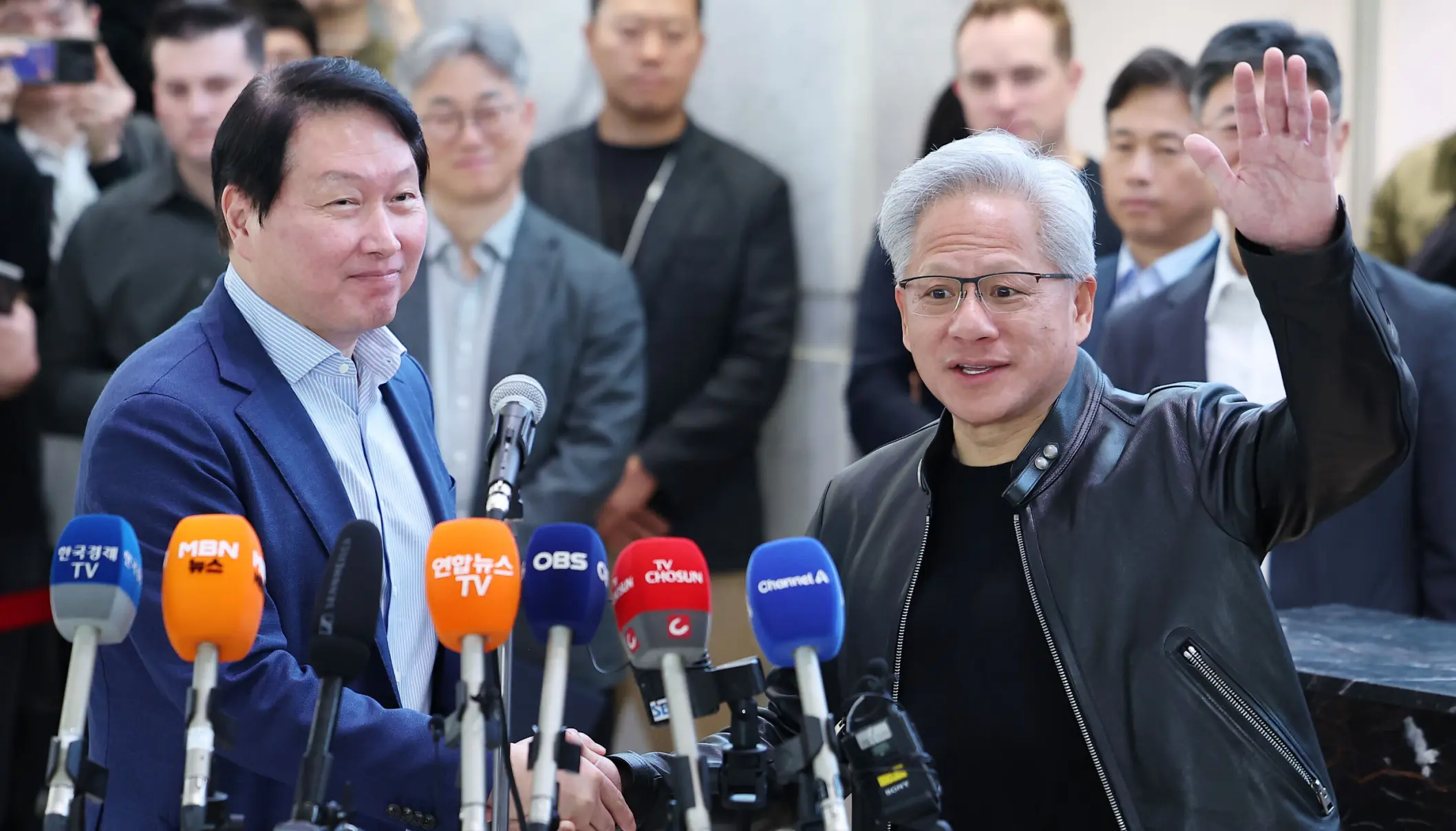
Nvidia partnered with Korean chipmaker SK hynix to develop next-generation memory chips that will power Nvidia's AI infrastructure. SK's telecommunication arm, SK Telecom, will begin operating its first AI factory in 2027 on Nvidia's platform. The two major deals were announced Monday following a morning meeting between Nvidia CEO Jensen Huang and SK Group Chairman Chey Tae-won. "SK is our largest memory partner," Huang told reporters after the meeting at SK's Seorin building in Jongno district, central Seoul. "We are expanding our partnership to include many new markets. [...] We announced a redesign, a reinvention of the world's personal computers we call RTX Spark, a partnership between us and Microsoft to reinvent the personal computer for the first time in 40 years, and that will have SK hynix inside. "The next wave called physical AI and robotics — we built a processor called Jetson Thor, and that will have SK hynix inside." The long-term partnership was struck to ensure a stable supply of advanced memory chips, which take years to design and bring to market, the companies said. The deal is part of Nvidia's broader strategy to lock in formal partnerships across its entire semiconductor supply chain — the foundries that manufacture its chips, the memory suppliers, and the software companies that help design them. Under the agreement, SK hynix and Nvidia will jointly develop memory for a wide range of Nvidia AI products, from data center supercomputers to consumer PCs and robotics systems — specifically the Vera Rubin AI supercomputer, Vera CPU, RTX Spark PC and Jetson Thor robotic computing platform. SK hynix will also use Nvidia's software tools to speed up its internal chip development processes — work that traditionally requires enormous computing resources and time. This includes using Nvidia's CUDA-X software toolkit, which lets applications run much faster on Nvidia's chips, and PhysicsNeMo, an Nvidia framework that uses AI to simulate physical processes in chip manufacturing, such as how light interacts with a chip's surface during production. The partnership will extend to electronic design automation — the software used to design chips — to form a three-way collaboration between chipmakers, Nvidia and the companies that make chip design software. The two companies are also working together on digital twin technology to enable real-time AI monitoring and smarter decision-making on the production floor. For SK Telecom, the focus is on building out AI factories: purpose-built facilities optimized for AI workloads, going beyond what conventional data centers can do. The first is expected to go online in Korea next year, built on Nvidia's DSX platform — a blueprint that covers everything from the chips inside to the software, power infrastructure, and operational systems. "AI factories are essential for Korea's universities, scientific labs, startups and industries," Huang said. "Just like electricity, water and the internet, Korea will be powered by AI in the future. It will be used in every country, every company and every industry — including, of course, the manufacturing of chips and telecommunications." SK Telecom will join Nvidia's Cloud Partner program, an ecosystem of companies that deliver AI computing services using Nvidia's infrastructure, with the goal of offering competitive pricing and energy efficiency. SK Group and Nvidia will also launch a joint research & development (R&D) effort on AI factory architecture, establishing a working body focused on improving how GPUs and memory chips are designed to work together from the ground up. "Through our close partnership with Nvidia, we have built full-stack AI infrastructure competitiveness spanning chips through data center operations," Chey said. "Beyond service delivery, we will jointly tackle challenges around GPUs, memory and energy — and emerge as a leading AI cloud provider driving AI ecosystem development across Asia." The U.S. chip giant also un...

Nvidia partnered with Korean chipmaker SK hynix to develop next-generation memory chips that will power Nvidia's AI infrastructure. SK's telecommunication arm, SK Telecom, will begin operating its first AI factory in 2027 on Nvidia's platform. The two major deals were announced Monday following a morning meeting between Nvidia CEO Jensen Huang and SK Group Chairman Chey Tae-won. "SK is our largest memory partner," Huang told reporters after the meeting at SK's Seorin building in Jongno district, central Seoul. "We are expanding our partnership to include many new markets. [...] We announced a redesign, a reinvention of the world's personal computers we call RTX Spark, a partnership between us and Microsoft to reinvent the personal computer for the first time in 40 years, and that will have SK hynix inside. "The next wave called physical AI and robotics — we built a processor called Jetson Thor, and that will have SK hynix inside." The long-term partnership was struck to ensure a stable supply of advanced memory chips, which take years to design and bring to market, the companies said. The deal is part of Nvidia's broader strategy to lock in formal partnerships across its entire semiconductor supply chain — the foundries that manufacture its chips, the memory suppliers, and the software companies that help design them. Under the agreement, SK hynix and Nvidia will jointly develop memory for a wide range of Nvidia AI products, from data center supercomputers to consumer PCs and robotics systems — specifically the Vera Rubin AI supercomputer, Vera CPU, RTX Spark PC and Jetson Thor robotic computing platform. SK hynix will also use Nvidia's software tools to speed up its internal chip development processes — work that traditionally requires enormous computing resources and time. This includes using Nvidia's CUDA-X software toolkit, which lets applications run much faster on Nvidia's chips, and PhysicsNeMo, an Nvidia framework that uses AI to simulate physical processes in chip manufacturing, such as how light interacts with a chip's surface during production. The partnership will extend to electronic design automation — the software used to design chips — to form a three-way collaboration between chipmakers, Nvidia and the companies that make chip design software. The two companies are also working together on digital twin technology to enable real-time AI monitoring and smarter decision-making on the production floor. For SK Telecom, the focus is on building out AI factories: purpose-built facilities optimized for AI workloads, going beyond what conventional data centers can do. The first is expected to go online in Korea next year, built on Nvidia's DSX platform — a blueprint that covers everything from the chips inside to the software, power infrastructure, and operational systems. "AI factories are essential for Korea's universities, scientific labs, startups and industries," Huang said. "Just like electricity, water and the internet, Korea will be powered by AI in the future. It will be used in every country, every company and every industry — including, of course, the manufacturing of chips and telecommunications." SK Telecom will join Nvidia's Cloud Partner program, an ecosystem of companies that deliver AI computing services using Nvidia's infrastructure, with the goal of offering competitive pricing and energy efficiency. SK Group and Nvidia will also launch a joint research & development (R&D) effort on AI factory architecture, establishing a working body focused on improving how GPUs and memory chips are designed to work together from the ground up. "Through our close partnership with Nvidia, we have built full-stack AI infrastructure competitiveness spanning chips through data center operations," Chey said. "Beyond service delivery, we will jointly tackle challenges around GPUs, memory and energy — and emerge as a leading AI cloud provider driving AI ecosystem development across Asia." The U.S. chip giant also un...

NOW PLAYING

Nvidia to support gigawatt-scale computing infrastructure for SK, Naver

0:00 5:30

No transcript for this episode yet

We transcribe on demand. Request one and we'll notify you when it's ready — usually under 10 minutes.

No similar episodes found.

No similar podcasts found.

Frequently Asked Questions

How long is this episode of Korea JoongAng Daily - Daily News from Korea?

This episode is 5 minutes long.

When was this Korea JoongAng Daily - Daily News from Korea episode published?

This episode was published on June 8, 2026.

What is this episode about?

Nvidia partnered with Korean chipmaker SK hynix to develop next-generation memory chips that will power Nvidia's AI infrastructure. SK's telecommunication arm, SK Telecom, will begin operating its first AI factory in 2027 on Nvidia's platform. The...

Can I download this Korea JoongAng Daily - Daily News from Korea episode?

Yes, you can download this episode by clicking the download button on the episode player, or subscribe to the podcast in your preferred podcast app for automatic downloads.
URL copied to clipboard!