Welcome to Plaids Safe America, I'm John Faver. Today I'm joined by my old friend and colleague, David Pluff, the former White House senior advisor to Barack Obama, as well as his 2008 campaign manager, and a senior advisor to Kamala Harris' 107-day campaign. Pluff's one of the smartest and most committed people I've ever met in democratic politics. So when I saw that he published a piece in the New York Times about the democratic parties and the early state calendar and how he thinks it will fundamentally reshape the 2028 primary, I had a million questions I wanted to ask him. I first got his thoughts on the final stretch of the 2026 midterms and what he thinks Democrats need to do to close the deal with voters and all the key states and the races, and then we dug into the 2028 primary, which believe it or not, we'll basically begin the day after the midterms are over.
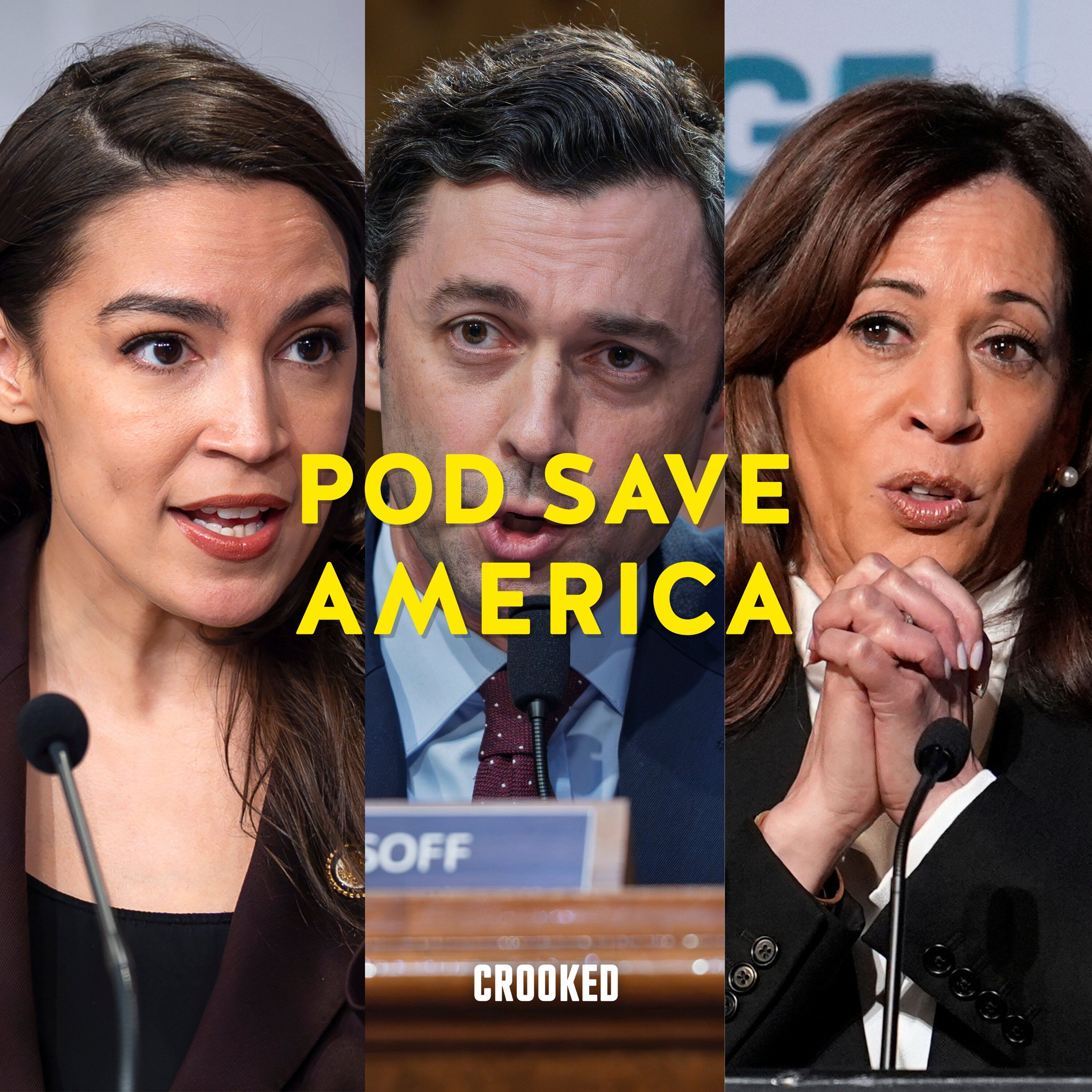
We talked about the calendar, strategy, and he had some interesting things to say about some of the potential candidates like AOC, John Ossoff and Kamala Harris. It was, as it always is with Pluff, a great conversation that I could have kept going four hours. We'll get to in a minute, but before we do, please consider becoming a paying subscriber to Friends of the Pod. Subscribers get access to ad-free episodes of this show, Pods Safe America and all of your favorite crooked pods, as well as special subscriber exclusive shows, like our extra episode of Pods Safe America, Pods Safe America Only Friends, where this week, Love It and Dan broke down, Darlene Graham's win in South Carolina and lots more. If you wanna check it out and get access to even more, newsletters, discounted crooked con tickets, all kinds of good stuff, head on over to crickit.com slash friends to subscribe.
All right, here's David Pluff. David Pluff, welcome back to Pods Safe America. Mr. Favreau, it's always good to be with you. You too.
I looked at last time you were on was January, and UNFIGHT for talks about the Democratic grand, which has now been completely rehabilitated. But I was gonna ask, like, now that the first ballots are set to go up next week, how much progress do you think the party has made over the last seven months and trying to fix some of the problems you and Dan talked about, you've written about, put it another way, like, how much of the Democrats relatively strong political position right now, would you say, is attributable to Donald Trump's incredibly weak political position and how much is the party's actually done some improvement? I think all of it almost is attributable to Donald Trump and the fact that they're in power. So listen, there is, to be an optimist for a minute, we've got some great candidates out there that I think are kind of defining for people in their own way what a Democrat can be in 2026.
So that's great, but the party writ large, obviously, you just look at the numbers. I mean, we have, you know, we've got a massive problem. And listen, I don't know yet, neither do you, but no one can know for sure what's going to happen this November. But, you know, it could be more like 2006, potentially, atmospherically. And so the question is, are we going to take full advantage of that? We would take more advantage of it
if our brand was stronger. But I think what we're going to see is candidates in certain places have begun to show us the way forward here about what a Democratic offering can be in 2026. So, and that's going to be the important thing to look at, is when we see, after the election, and look at the data, the Democrats who overperform kind of the mean, even though this should be a fairly good year for us, we're going to have people overperform that and to understand why it's going forward. So I know to a larger extent this depends on the race, but what do you think the front line, house and Senate candidates, and the most competitive races have to do in the next 60ish days, but they haven't done yet to close the deal with voters? Well, I think in most of these races, you're going to have five, six, seven percent of people who are still undecided.
So you've got to make the case to them. And I think what's interesting is, I think the case against the Republicans is largely set in stone. You've got to continue to remind people of this, and particularly for some of these incumbent house Republicans and incumbent Senate Republicans, make sure they own all the downside of Trump. You got to tie them to higher prices and healthcare and all the things people, obviously, are very upset about. But I think the candidates, I think, will do the best, are able to convince people that they are not just a flawed alternative, that there's actually something that they offer that might be interesting and new and exciting to people.
Then you've got to focus on turnout and make sure that we're getting strong enough turnout. And I think in the red states, particularly in center races, but this is true in some of the outer red house races. We all see the polls, maybe they're all bullshit, but let's say they're accurate. And we've got people in states like Iowa, in Texas, in Alaska, who are winning, but they're still at like 46, 47, 48. And I always remind people, when we see a poll that has a Democratic 47 and Republican 42, yeah, it's better than the alternative, but that's 89% of the vote.
What's happening to the other 11% and so for these candidates, they have to focus on that. And the good ones know this, which is let's say in that scenario, most of that 11% is going to go to the Republican in some of these tough places. So you've got to figure out where's the 3% of that, 11% that's out there that I can bring home. So that really is the focus, I think, of all of these candidates is, and I think it's going to require in some of the toughest districts and toughest center states, it can't just be anti-Republican vote. That is why we're in the position where we're in, it's a great position, but in this is where like a James Tallarico, maybe we'll see this with an Osborne in Nebraska, a Turk, these candidates who are exceptional candidates, have the ability to get that extra one or two percent because of who they are, not just as they're a Democrat.
Yeah, this kind of leads to my next question, which is, I saw this week, Troy Jackson released his first ads, they were like positive biospots, Abdul Elsai had mixed it up with Jesse Waters on Fox. I saw some people say, you know, these candidates shouldn't do all that much to make the race about them, everything should be about trying to tie their opponents to Donald Trump. Obviously everyone has to do a little bit of both, but what is your sense of the right balance there? Well, I think sort of atmospherically, most of these Republican candidates are already paying the price for being in Donald Trump's party and for a lot of them doing his bidding. So of course over the next few weeks, you're going to want to continue to remind people of that.
And you know, the most interesting way to do that, I think is to bring forward voters and voices who can speak to that, particularly people who said, listen, I voted for this person in the past or I voted for Donald Trump, I can't do it anymore, I switched. But I think to get, again, I'm very focused on states where, and in the Senate in particular, you know, this is hostile political territory for us. So I do think you've got to give people comfort, that you're an alternative that they can trust. So it's a blend. But I think it's always important in campaigns, John, and you know this very well, like you've got to step back and say, what's the thing that voters already know?
And so then how do we reinforce that? But where's the opening where we can introduce new arguments? Some of those may be new ways to refresh the argument against Republicans, but I think Democrats have to, and so when I see Jackson and Abdul Al-Sayed and Turic and Rob Sand and all these people, you know, going into hostile places to interviews, that's what you have to do. I really, really believe that's the case because we're at a point now where anybody who's truly undecided about who to vote for, whether to vote, it's kind of already baked in that they're very unhappy with Donald Trump and the Republicans. So I'm not suggesting you don't continue to remind them that, but that's just a fact.
So again, I think when we look post-election, the people who overperformed the average Democrat are going to be people who built a relationship with their voters based on who they are, what they're offering. And by the way, particularly where they're different from not just Republicans, but the Democratic Party and the status quo. Those are the candidates I think they're going to do the best this November. Well, I've been thinking about this because it's tough for these congressional candidates, at least to really run on much of a positive agenda when Donald Trump is going to be president for another two years because you don't want to get in the situation where you overpromise something that you just know that you're not going to be able to deliver. But like, and obviously the party hasn't, and maybe that'll change, but I don't think so, but there's been no sort of contract with America.
Or even, I feel like in 06, there was like an anti-corruption agenda. What do you think about that? Is it just race by race and people talking about individual things that they can do either in the next two years or beyond that? Or how does that work? I think it's very individualized.
So I think a national, listen, I think national Democrats should go on a cruise somewhere where there's no self-service and no-go-go interviews and let the candidates take the stage. And by the way, listen, if you look historically, I mean, the contract for America, actually, as you know, we've been through this. When you win, you get to say why you want, and when you lose, obviously everything sticks to you. But the contract with America was not why they won. I mean, the exit polls back in 94 suggested that it was not a core reason that people voted.
In the six for six, I think that's what it was called in 06. Like, that's not why Democrats won. So I just think at the end of the day, we should give, particularly when you've got a brand problem as acute as we do, let's just give the individual candidates or like small businesses, let them do what they think is best. Some of them may have very specific policy agenda, some of them may focus on corruption, some of them may be more about their biography and kind of their values. So let them do their thing because the overhang of the party, like so right now, like to have Chuck Schumer and Democrats out on the steps saying, here's what we're gonna do when we gain power.
That would be political malpractice of historical proportions. So I think we should just, that's my view anyway. I think, and it particularly when we do have, not universally, but there are some really strong candidates for the Senate and for the house running, who I think are again, showing us what a new version of Democratic offering can be. That's quite exciting. And I think their biggest challenge right now is the Democratic Party brand.
So let's not do anything to make that more complicated for them. What are some of the biggest unforced errors that Democrats can make in the next 60 days that worry you? Well, I think it is, you know, if I don't think there's gonna be a national agenda, but a national agenda, I think having a lot of discussion about the hearings that we're gonna have when we take over would be problematical. And this can sound like I'm kidding, I'm not. Like I just think national Democrats should go in hiding and let these individual candidates prosecute their case.
And by the way, that's important because we know Donald Trump's not gonna go into hiding. So he's gonna continue to be out there. He's gonna cause, by the way, this ad campaign, he's talking about running with all of his money, that's gonna be pro-Trump ads. Amazing. Phenomenally stupid.
I think although John, you should always step back and say, is there something they see that maybe we don't see? And the only thing I can think about is it may help them to turn out a little bit. But all those candidates now are gonna have to answer to Donald Trump running ads on all the things that are upsetting voters in their states and districts. So that's the other thing I think about it. Like let him kind of dominate nationally.
Let's make sure we're quiet nationally. And let's let some of these great candidates have the best environment we can imagine in these closing weeks. And as you know, people start voting in about five to six weeks. So this isn't a two month question. Well, on the downside, like the discourse and the coverage, I think has been dominated for the last couple weeks months about this, and this is partly because of the primaries and partly because Republicans.
This like DSA left versus center left, establishment, narrative. Like how much do you think that, or how much do you worry that might affect the outcome of the midterms? Or is this just an insider thing that most voters are never going to really pay attention to? My view, and it's based a little bit on research I've seen, but also instinct, is it's very much the latter. Like the people that will decide the Iowa governor's race and the Iowa Senate race in Clinton, Iowa, or into core Iowa, you think they're talking about this democratic divide for in Toledo, Ohio?
Absolutely not. And so in those states, you've got Amy Acton, you've got Sherrod Brown, you've got Turic, you've got Sand just use those examples who are defining what the democratic offering is in this election. They're not focused on what happened in those states, even though Michigan's closer to them, like what happened in the Michigan primary, what's happening in New York City, they're just not focused on that. Now, I think our presidential race, not in the general election, but in the primary, yeah, that's gonna be a really big piece of it, is what are people looking for? And I happen to believe it'll probably be more about the person, their biography, their values, their performance, then ideology, but that'll be part of it.
So I really do not think, and by the way, if the Republicans wanna go spend a bunch of time saying, well, what you're really electing is democratic socialists, have at it, because I don't think that blanket message to me works at all. I think the best thing they can do is try and indict the individual Democrats running in states or districts to the best of their ability, but I think there's gonna be limitation of that as well, because listen, people are really fucking upset out there, and they are ready to switch, even though they don't like their option to switch to. They like some of the individual Democrats, not the Democratic Party, and so for me, this is the challenge for us over the next number of years and even decade, is we have to get that brand stronger so that we reliably win more elections in more places so that we can have sustained power and control the White House and the Senate, like this is existential.
And whatever happens in this election, we should not think or get overly confident that we fixed our problems because we had it. Yeah, that's gonna be important because clearly, the Biden folks thought that in 22, because the midterms were better than expected. Any long-shot races in the midterms, you think that it would be worth investing more in right now that people should have their eye on? Well, the question would be, I mean, you were in Obama's Senate Office in 2006, right? Okay, and I was very involved in that election did a lot of work for Ramen and the DCCC, and that was the election where there were people who won an election that the DCCC hadn't supported, that surprised the heck everybody.
So, is that possible this time? I think it's probably less possible in the House just because there's so few real competitive districts, but is it possible that we could win some House races that trump won by 1214 points? I guess it's possible. I think the surprises will be in the Senate. And what's so exciting about the Senate, now Senate controls me really hard because this is hostile territory.
But boy, we're taking a lot of shots on gold this year. I mean, we've got a lot of races, we can lose most of them and still win. So, the question is, in South Dakota, in Montana, in Nebraska, are there gonna be some surprises? Those would be like, if we win any of those, we're gonna have a year probably as good as 2006. But, Alaska, Iowa, oh, by the way, we're now used to saying how competitive Iowa is, in Ohio is.
I mean, these are deep red states right now. And so, let's not forget that, particularly if Sherrod Brown wins having just lost, I mean, that's gonna be 10 to 12% of the electorate behaving completely differently from 24 to 26. So, I think there could be some Senate race surprises. And again, I think that the people who might pull those races off, they might've just got 48% in this good environment for Democrats. It's because enough voters said, there are different kind of Democrats, or that's a person I can trust, or that I'm excited or interested in that person.
And that's where I think the surprises will come from. Pots of America is brought to you by Zbiotics Pre-alcohol. I wanna tell you guys about a new game-changing product I use before any night at what drinks it's called Pre-alcohol by Zbiotics. The Zbiotics Pre-alcohol Pro-Biotic Drink is the world's first genetically engineered probiotic. It was invented by PhD scientists to break down acetylahide, which I can't pronounce, but it doesn't matter.
You don't like it down already. You don't like it either. It's a by-product of drinking alcohol. Pre-alcohol produces an enzyme that is designed to break down this by-product that we can't pronounce. What you do is you make Pre-alcohol your first drink of the night, you drink responsibly enough, and then you enjoy your next day.
Zbiotics is sold more than 14 million bottles in earned the trust of thousands, including us. I literally will not have a drink without a Zbiotics. It is a game changer for me. As you all know, as you get older, your body does not do as good a job digesting alcohol, which means a very calm, casual night out can punish you with the next day. Zbiotics is just solved that problem for me.
I cannot recommend it enough. Give it a shot. Try for yourself today, and if you're unsatisfied, they'll refund your entire order. No questions asked. Head to zbiotics.com slash crooked, code crooked for 15% off your first order.
That's zbiotics.com slash crooked, code crooked for 15% off. Pause America is brought to you by Hymns. Edie is more common than guys talk about. The good news, getting real treatment is simple, and through Hymns, it's 100% online. Hymns connects you with licensed healthcare providers online, giving you simple access to legitimate ED treatment options from home.
No awkward appointments, no pharmacy lines. Just complete a simple online intake, and a provider will review your information to determine if treatment is right for you. If prescribed, your treatment ships directly to your door. That includes Sedenafil, also known as generic for Viagra, available through Hymns at up to 95% less than the brand name version. And if that option isn't right for you, there are additional treatment options available, so you can find what works best for your body.
It's straightforward, transparent, and designed to make getting care feel easy. To get simple online access to personalized, affordable care for ED and more, visit hymns.com slash crooked. That's himns.com slash crooked, hymns.com slash crooked. Not available in all 50 states, prescription required, see website for details, restrictions, and important safety information. Sedenafil is the generic version of Viagra.
Viagra is a registered trademark of Viatris specialty LLC. Hymns is not affiliated with or endorsed by Viiatris. All right, let's talk about the 2028 primary, which basically begins the day after the midterms. When tragically. I know.
Well, so when people ask me what I think about 2028, I always say it's really hard to know anything until we know who the candidates are and the order of the early states. So now we know the calendar. South Carolina, Nevada, New Hampshire, New Mexico, Michigan, Virginia. And you just wrote a New York Times piece about this. You called it the most consequential primary shakeup in decades.
I feel like you could have written another 5,000 words on this, which is why I wanted to have you on. But they cut them out. I figured. But like big picture, when you sit down to plan your presidential campaign, if you're one of these candidates, what are the most important differences considered between the old map and the new map? Well, first of all, if you'll grant me this, I hope they spend a lot of time thinking about whether they should fucking run or not.
Like, do I have something so unique to offer my party in the country that I should seek our nomination and I would want to be our president? I know it all seems like a reality show now. You and I have worked in that building. You know how hard the decisions these presidents have to make are like, so let's start there. But let's assume they look in the mirror and they say yes and they decide to run.
You're going to have to have a message. And even though we have states now, so you just mentioned the six that will be most important, this is still a national campaign. There's no borders around content. There's no borders around controversy. So you don't want to fashion your strategy and your message based on states.
But as you think about this, if you're not in the top three in the first state, so in this case, South Carolina, you're probably done. Let's say the winner is, let's just say Kamala Harris runs. And let's say Kamala Harris wins South Carolina. Her challenge will be does she exit Virginia with the same strength of black voters that she started the process in South Carolina? And somebody else has to figure out how am I going to grow so that I can exit really Michigan and Virginia as the leader, because as you know, John, having gone through this, right after Virginia, we get into Super Tuesday and massive states with huge delegate yield.
And the reason the black vote is so important in the democratic processes, we have portion our delegates by congressional district for the most part, some of them are statewide. And those, the most democratic congressional districts, have more delegates. And if you're the candidate who's winning 50, 70, 70% of the black vote, you're winning congressional districts and winning those delegates. Like let's say it's a CD with eight delegates, you could win seven. And if you're winning all of them throughout the South, you're the nominee.
So I think the question is for all these people, how do I survive South Carolina? How do I, if I didn't win South Carolina, how do I win Nevada or finish the stronger second than I did in South Carolina? New Hampshire, if it stays there, is interesting. You could see a candidate like Buttigieg, if he runs. Not winning South Carolina and not doing well enough winning New Hampshire.
So then the question for him is, in New Mexico and Michigan, and in Virginia, can he expand his coalition? And even though Virginia's got almost 30% of the electorate there is going to be black voters. So we start with a state that's going to be dominated and really determined by how the black vote allocates its vote. And we end it with a state where the black vote's going to be incredibly important. So Michigan, I guess, the way it works.
Michigan too. You've got heavy black vote in Michigan. Obviously, you've got some American vote big campuses. So I guess my view on it is, you can't right now, I need the candidate. Well, OK, how am I going to win the black vote?
Well, you're going to win the black vote by running a great campaign, by being an exciting candidate, by building support in that community. There's no way to like, extern, oh, your way to this. It's not like it was back when like John Kerry ran in 04, where you're like, oh, I've got 12 state senators in a state who've endorsed me. And that doesn't matter anymore, really. I mean, with the exception of maybe Jim Clyburn, there's no endorsement that's going to actually generate vote.
So I think the key thing for these candidates in these campaigns is they're basically running six governors' races in these six primary states. And you have no chance if you don't exit Virginia, either as, well, if you don't exit Virginia as the front runner, you're probably cooked. And you have to understand that. And each of those states obviously has some commonality with each other around issues that they have distinction. And so you want to build a campaign to survive early, and hopefully then build momentum, and exit Virginia into Super Tuesday with the ability to be the nominee.
So at the end of the reason I wrote that piece is, hey, I find these calendar changes fascinating. I think they're very consequential. But this is the campaign. Debates are important, and going viral is important, and raising money is important. But all that matters is this set of six states.
And that is the presidential nomination process for us. Now, is it possible that we have two candidates of equal strength leaving Virginia? Maybe, but as we saw back in 2008, as close as that race was, we had a delegate advantage. So that's the other thing. Whoever exits Virginia with the most momentum will probably do best on Super Tuesday.
They will then for have a delegate advantage, which may not look huge. But even if it's 80 or 90 delegates, they'll never be caught. They're going to be our nominee. Well, I just want to go through state by state, just because it's fun to get out on this, on South Carolina. So I do think that's interesting that, so if Kamala runs, if she doesn't run.
But if she does run, maybe you're planning your campaign, maybe you're planning it to win, but you're trying to get two or three, is it wrong for people to assume, because this is the conventional wisdom, that most black voters will ultimately vote for Kamala, or other black candidates if they run, or do you think even in South Carolina, the black votes more up for grabs than people might think? I think it's totally up for grabs. I mean, if she runs, just she starts in such a dominating position. Now, of course, and this isn't a criticism of her. It's just reality.
The strongest day will be her first day in the campaign. And then that support, she'll obviously try and hold onto it, but they'll be natural competition for it, and they'll probably be some erosion. So no, I think it's a completely open question. Even if she runs, and I think the other candidates should not be trying to come in second or third. They should be trying to win.
And if they don't, they come in second or third, then they may have the ability to continue. If she doesn't run, then I think black voters in South Carolina, or else clearly, they're completely wide open. So no, I do not believe. I think older black voters in South Carolina will be like older white voters in the Upper Peninsula of Michigan, and Latino voters in New Mexico and Nevada, they want to win back the White House. And so I think they're going to be very focused.
And listen, I think the key thing here is this is an audition. It's a performance. I don't think this is how we should audition our next manager in chief, but it's all we've got. And so the thing I'm really looking for is who is showing the signs of having the ability to communicate in a way that people are getting information today, that they're interesting, they get people talking about them. AOC clearly has that instinctively.
I think Ossoff, at least on a speech making front, has that. So we'll see. But I think that has become really important, because it's not about giving interviews. It's not about giving speeches. They're still important.
But the most important thing is this phone is the campaign. And how are you utilizing it each and every day in interesting ways to reach tough to reach voters? And I think that that is something that I think is really going to be important to understand, which is you mentioned questions about ideology and races they might have run in one before. All of that's important. The most important thing is in this particular moment, in the fourth quarter of 27, in the first quarter of 28, how are they performing?
The other thing I wondered about in South Carolina, because it will be the state where the most candidates are competing, is, and of course, we have to see the composition of the field. But the conventional wisdom, and I think there's a lot of wisdom to this, is that it is a more moderate electorate in South Carolina, certainly seems that way. Older, older black voters, rural voters. But if there's that many candidates, you do wonder if there's only one or two really progressive candidates, if they could do better than expected, because so many of the center left candidates are splitting all the rest of the vote. We'll see.
I mean, history would suggest that there's going to be a candidate who becomes the favorite for younger progressive voters. If AOC would run, I think it's going to be her. And then her question will be, how do I build from there? She'd probably start with a very enviable base. If it's not her, then I think it's an open question.
And I don't see anybody out there right now. That's kind of a natural place for 80, 90% of that cohort to land. So I think that's a great question. But I do think that South Carolina has never been first. It's always been the end of the calendar.
It's the gateway to the rest of the country. So this time, it's the first one. But it's a small enough state too, where retail skills will matter. So that's part of performance too, by the way. And of course, if you have good engagement with voters in a diner or a bar or a farm, that turns into great content.
So I do think that, as you know, it's a decathlon. And you don't have to be the best at every event, but you've got to be good enough at all of them to navigate this. I mean, it's interesting, John. I mean, like you, I have a lot of friends who are data geeks. And they'll say, well, the most important thing is we think about who we should nominate is basically who has the higher wins against replacement in their state.
And I'm like, yes, that's important. That shows. But this is a whole different beast. I mean, the political graveyard is littered with people who looked on paper like they would be great presidential candidate. When people can't survive, it's a brutal, brutal process.
I think also the delta between being governor of a state, probably a small state or big state, and being a national candidate and what's required to succeed at each is never been larger, just because of the information environment. Totally. I agree with that. So I have a question about momentum, which is like the momentum you get out of the early state primary wins arguably more important than the delegates at that stage. Yes.
Momentums largely dependent on whether or not you beat expectations in a given state, other than just outright winning. As a campaign, how do you even begin to set or manage expectations with a completely new calendar like this? You don't have reporters with muscle memory of what these states did before and what it was like. What does that even look like to starting expectations as a campaign? I think it's really hard to set expectations.
I think it's set for you. So even regionally, I mean, if Beshear runs, he's going to be expected to do relatively well in South Carolina, fairly or unfairly. I'll have to. I'll have to. Mark Kelly, right, out west in Nevada, New Mexico.
So there'll be regional expectations. Obviously, there are expectations put on front runners or people who had strong poll positions. And if they underperform in the first couple of states, they'll pay an outsized price for that. So I think it's really hard for a candidate to set expectations. Now, I think when you're right before a contest, so maybe it's a week before South Carolina and a candidate doesn't think they're going to win South Carolina, but thinks they're going to come in second or third, they'll start talking about, well, that's exactly what we needed to go forward to Nevada.
So there's expectations, I think, right before and after contests, that can be important. But you know what? It's a free for all. So I think it's really going to be hard. And the point is, surviving a state is not the same as having a chance to win.
Yeah. So you know this historically. There'll be somebody, oh, how many tickets out of Iowa or New Hampshire? Yeah, people may be able to keep going so they can go to the next debate and not drop out, but they have no chance of winning. And so that's what really matters is when we get out of South Carolina, who's actually got a chance to be the nominee?
And my guess is that most that would be three people, it could be two. And to your point about delegates, right? Although now, because some of these states are bigger, and we have six states, I think maybe 10% of the delegates will be in the first six states. So somebody will somehow exit Virginia with 30 or 40 delegately. That's not immaterial.
But I agree with you. The delegate story begins on Super Tuesday. So Nevada comes after South Carolina 10 days later. It is a primary for the first time, not a caucus. So completely new race, a lot more voters.
What does that look like in Nevada with everyone? I assume everyone then is trying to take down the winner of South Carolina. Oh, God, yeah. It's good. It's good.
It's brutal. That's what it is. So that seems like, and I also think that the conventional wisdom there is it might be good for progressives. But I think that's a view of what the caucus was like, where it's easier to organize and have highly engaged activists turn out at a caucus than it is a primary. And Nevada, the electorate there, is it's not super lefty when you're looking at the whole state, especially since this is a state now where they mail everyone a ballot.
Yeah. So I think it was a strong state for Bernie both times. He ran, by the way. So it was Michigan. So there are two states where I think if you are a progressive candidate, that gives you some, I think, comfort.
But you're right. Nevada's a fascinating state. I mean, it's a very diverse state. A lot of people just moving into the state. So a transient population, got heavy union population.
Obviously, a large number of Latino voters, pretty significant number of black voters. You've got rural upstate. So it's going to be a test. And it's also like Nevada. So it's going to be an absolute freak show.
Like those 10 days are going to be, I think, some of the most fascinating 10 days you've seen in American politics. So because right, whoever comes out of South Carolina with momentum, the challenge of the other candidates is to deny them that momentum in Nevada. So it's also a relatively small state, geographically and population-wise. So you're organizing matters there. You're going to have a lot of probably first-time registrants to go after there.
So what's interesting is if the person who wins South Carolina, and almost not, I guess, guaranteed, but it's almost definitely that person who did really well at the Black vote, the question is in Nevada, are they basically able to get the same vote share with the Black voter, maybe grow it? Are they doing well with the Latino vote? Are they doing with union vote? So it's going to be really interesting. And I think that the other candidates are obviously going to try and improve their vote share with Black voters, but show that they've got the ability to do well with Latino voters, with union voters.
By the way, there's big suburbs, Henderson, and places like that, too. So a lot of suburban vote. So you may begin to learn something about that as it relates to Michigan suburbs and Albuquerque suburbs and northern Virginia suburbs later in the calendar. Because by the way, what happens in the early states, you can have sea change, but I'll always remember, you won't back in OH on when we went Iowa. As great a night as that was.
When you looked at the counties along the Missouri border, we were just getting our ass kicked. Like Edwards and Clinton killed us. And that was, interestingly enough, even though the story was overwhelmingly white voters and I, which shows Obama, and they did, and it was a big part of how we went. Some of the challenges we had in other parts of the primary, and then even in the general, around race, you saw that night along the Iowa Missouri border. So you begin to see patterns that emerge, and you can begin to get a sense of, OK, that person has strength and they've got weakness.
But Nevada's going to be great for that, because it's such a diverse state. It has a lot of the types of voters that you need to win the nomination. Today's presenter is Simply Safe Home Security. With end of summer sales happening, your porch is probably a landing pad for delivery boxes while you're at work. Don't get a camera that just films a thief.
Choose Simply Safe to help stop them before they even step onto the porch. Unlike traditional security systems that only alert you after breaking is already underway, Simply Safe is designed to help stop intruders before they get inside. Smart AI powered outdoor cameras detect suspicious activity at the perimeter and alert live US-based agents to step in. Simply Safe's agents assess the threat, intervene through the outdoor camera to scare off trespassers and call for 911 dispatch. Our CEO here at Cricut just got Simply Safe.
She installed it herself, and she said it was really easy. The camera is the sensors, all of it to install, everything's worked great. And even when there was a power outage, the system was back online right away after the power was restored. Simply Safe's been protecting your world for 20 years. Celebrate their anniversary with us and save 60% on your new Simply Safe system at simplysafe.com slash Cricut that's 60% off.
It's simply safe.com slash Cricut plus when you order right in our show name in the How To Do Hear About A Survey to let them know we sent you. Don't forget, there's no safe, like Simply Safe. So the question about New Hampshire is right now, whether it happens, we've talked about this on the pod, so most people know, but it seems like the two options here are now either the Democratic Party pays to hold a separate primary or the New Hampshire primary doesn't happen and then maybe your home state of Delaware gets the night. How do you think this will shake out? Because it's sort of tough to read the tea leaves here based on the comments from people in New Hampshire.
Well, I mean, New Hampshire can either be relevant at number three or irrelevant with a contest that no one competes in if they insist on doing it early. So it seems to me, common sensically, I know it's tough, kill for them as well if they should go three. If they don't, then I would just sell Delaware in, which is not a battleground state, but it is a small state, has some diversity, not really a huge number of Latino voters. But I think hopefully the folks in New Hampshire come to their senses and understand that being three, by the way, so you have, we all have a winnold field by that point. Like, you know, New Hampshire is going to be really, really important.
And by the way, we could have a different winner in New Hampshire than we do have in the first two states, which makes them incredibly relevant. So we'll see. But I think at the end of the day, it's nonsense to me that you would give up any of your power and leverage, you know, to have a contest that no one's going to compete at. And I know that the other complaint then as well, it costs a lot of money. We don't have that money.
It feels like between the state party and the national party, though some money problems there as well, between all of these, like, you're going to be able to find, you'll be able to scrounge up the money to hold this primary. I would imagine so. I would imagine so. The other question I had about New Hampshire is, would you say that if, by the end of New Hampshire, after New Hampshire happens, if you haven't won outright, either South Carolina, Nevada or New Hampshire, you're done. Yes. And here's what's interesting.
Now, of course, Joe Biden performed very poorly in 2020, in the first two states. But he did come in second in Nevada, which is, I think, underappreciated. And if he hadn't done that, I'm not sure, like, Jim Clyburn endorses him. But, you know, he then became okay, serving a little bit of life. The reason I think that's true is, like, in that case, he had no one, particularly Bernie, had been able to claim or earn enough support in the black community.
So it was waiting for Biden to kind of resuscitate. Yeah. In this case, you're going to have South Carolina first. So, you know, the notion that you wouldn't have won South Carolina to Nevada, New Hampshire, but somehow you're going to be able to go win Virginia, to me, kind of, strange, gradually. So I think it's going to be, you know, and the odds are at that point, maybe you have three candidates of equal strength, but history suggests it's probably going to be more like two.
And of course, by the way, if somebody wins the first three states, so they're going to win south, doing well with Black voters, west, really diverse state, with a heavy Latino population, and New Hampshire. Then it's kind of a contrary state. Then it's over, right. So, but I agree with that, John. I think this calendar is different in that way, which is the person who has the most strength of the Black vote in the old calendar, could get dinged up a little bit, and then know they have South Carolina hanging out there.
That's not the case this time. So then by the time we get to New Mexico, you've got like two or three serious candidates left, Matt, right. And then this is a completely new early state, highest percentage of Latinos of any state in the country, not the early states, I didn't realize that of any state, like 49, 50% Latinos. Maybe more moderate, especially on crime and immigration, it's a border state. Like, what does that race look like?
When you get to New Mexico with three, three people, considering that electorate. Well, you know, what's interesting about that is, this is all fictitious kind of bullshit, but let's say there is a candidate who comes in second or third in South Carolina, Nevada, but they win New Hampshire. For them to show that they've got the ability to grow their coalition, in this case, it would be with Latino voters. New Mexico becomes really, really important. So all the other way I look at it is, if you've won Nevada, you better also win New Mexico.
Because if you don't, it's gonna look like, you're back your expectations thing, since that, oh, you won in the West, now you've lost in the West in a place with heavy Latino voters. So it's interesting, because your point in New Mexico has never been on this stage, and it hasn't been about a ground state in a long time. So it's a state that I think a lot of people don't know particularly well. So it's actually a great educational opportunity for people. But again, it's not a huge state either.
So I think building an organization there is gonna be really, really important. And New Mexico is the kind of state where, even though you're gonna be very focused on South Carolina and Nevada, in 2027, you're gonna wanna spend some time there. I think that's a state you're gonna wanna spend a lot of time in. Then there's Michigan and Virginia, and I don't know, to me it seems like this is, that's two weeks of running basically a national campaign just based on their size, where they fall in the calendar, the diversity of their electorates. If you survive until those two, if you're like one of the last two left, is that the kind of campaign you're running, like more of a national campaign at that point?
Or what do you think? Well, I think you're gonna be on the ground. So the week between New Mexico and Michigan, you're probably only in Michigan. But I do think that, you don't you get deeper into that early stage, particularly now that we have six, I do think that it's harder, it's not like you're gonna be able to course correct in Michigan and like your weakness elsewhere is kind of not known by voters, like these patterns emerge and expectations emerge. So I do think that the national discussion, the national debate is gonna be, even national polls will be important.
But you're gonna be bunkered in Michigan, and then you're gonna be bunker in Virginia that next week. And so, and you obviously, by the way, this is a challenge for the candidates because it was hard enough back when we did it, to like you had four. Of course we spend most of our time in Iowa, but not all of it. So now you've got six and some of them are quite big, the last two in particular. So, and then you've got to build staff and organization and volunteers and resource these things.
But I, so I think that the national discussion will be more important in Michigan than it is in the first two states for sure. Yeah, that's what I was thinking. Yes, I think that's right. But you're basically doing seven, eight events a day in each in the states, I think during that period. And obviously Michigan, they're gonna have the campuses there incredibly important.
I still think the Middle Eastern Gaza issues will be important. You've obviously got a huge manufacturing sector. So, you know, I think that, and by the way, I think that there'll also be a sense from voters, which is because Michigan is a big battleground state. Like who's kind of filling the stage? Like, you know, they're still an art to this and voters have a sense of like, I can imagine that person has our nominee and is our president.
And I think particularly as you get to those last two states, that kind of presence is gonna be really, really important. Let's talk a little bit about the candidates or potential candidates. This is my bias, but I believe for some time that if you were to rank the different political assets a candidate could have in 2028, like number one would be talent charisma, the ability to effectively communicate, get attention. I mean, I've always thought that was important obviously, but I think the information environment where in has made it just more important than ever and maybe the most important political asset. Obviously, that's not to say it's the best way to pick a president, it's not, but it is reality.
But I wonder what you think about that. Absolutely. I mean, to me that holds the first, you know, one, two and three slots. And by the way, it's more important now, but I mean, 2020 was an exception. You know, I think that voters were really looking for not the exciting candidate when Biden was able to be Trump and obviously COVID was the driver there, but Obama, Trump, Reagan, Clinton, Kennedy, like the most exciting candidate, 1088 was another exception of that, but that was a weird raised or JHW and Dukakis, right?
So I think the most interesting candidate, the most exciting candidate, the person who understands the communication modalities of the moment, you know, is generally in a good position. I think that's even more so now. So yeah, I think the ability to perform to excite, to interest, you know, to build trust, that is core. And I think that I think a lot of people struggle with that. Well, I've got a good biography, or I've won in my state, or I've got a great healthcare plan.
It doesn't matter in a presidential race, you know, it's, I mean, by the way, look at 16. That was a strong Republican field, and Donald Trump mowed them all down. Now part of that was his party was just looking for something so fundamentally different. I think our party is as well. But also he was a performer.
Yes. You know, and he got it. And so I think performance is the coin of the realm. And I do think that it's got to be someone who excels at, you know, short form vertical video. Now if they can do a three hour podcast about culture or food or sports, that's awesome.
They still have to be able to give speeches. They have to do good local TV interviews with affiliates in Greenville, South Carolina and Reno, Nevada. But the most important thing is that content that they're putting out every day. I mean, I also think you brought up 2020. Joe Biden in that race is also someone with almost 100% name ID, right?
He's the vice president to Barack Obama and has been on the scene for decades. Everyone knows Joe Biden. And so there's a comfort there. I think that we're in an information environment now where it's really hard to become known nationally beyond the political junkies like us and the highly engaged Democratic voters that vote in, you know, the primaries we're seeing now in special elections. Like there's a whole world out there and it feels like we haven't had a nominee from either party in a while, maybe since our boss who just kind of came out of nowhere and became nationally known.
Like there was a Clinton, there was a Trump, there was like McCain, right? A bush, a bush, right? And so like this is maybe the first time where, I mean, I guess if Kamala Harris runs, you know, she ran before so that she has 100% name ID. But beyond that, sort of hard to get known unless you're super talented. Absolutely, it's such a great point.
So, and by the way, you can't force yourself to be known. The way you'll get known is people kind of experience you on their phones or their TV screens and they want to know more about you. And this is the important thing. I mean, most, the voters that will determine, you know, our nominee and the presidency, you know, some of them are political junkies, but a lot of them don't. They kind of encounter information, they don't seek it out.
So, but I will say one thing about the early states though, like historically you've seen like, whether it be Iowa, New Hampshire, South Carolina, and the old calendar, you know, they behave differently often than the national polls. So, you know, it's still most important if you're running for president, like in South Carolina and then Nevada, like that's where I wanna be known. And if I'm less known nationally, you know, if there's a Delta there, that's okay. To your point by Michigan, you know, why will someone come out to a town hall? Why will someone, you know, look out and share your YouTube video?
It's not because of the what you're saying necessarily. It's kinda how you connect with people. And, you know, that all comes down to charisma and interest and performance and talent. And of course, a good performer doesn't look like they're performing. You know, it's gotta be someone who's just naturally gifted in that way.
Today's show is sponsored by Stravary.me. Have you ever written a review about a product or service you've used? It takes an extraordinary experience, either overwhelmingly positive or deeply disappointing for someone to take the time to write a review. Stravary.me's positive reviews speak for themselves, proving why professionals rely on the platform for certified career coaching. Not just a few reviews, there are literally hundreds of them at Stravary.me slash reviews, all unfiltered and glowing.
Here's a sample review from Stravary.me client. Krista is an incredible thoughtful positive coach. She helped me build my confidence and voice backup, revise my resume, navigate an industry change, and become more intentional in my job search. Highly recommend. Review after review tells the same story.
My coach was amazing. The experience was transformative. And I landed a new job within weeks. When so many people take the time to leave positive reviews, it is clear the product is something special. So if you're feeling stuck at work, do what tens of thousands of people have already done.
Go to Stravary.me slash cricket and claim 50% off your first coaching session. That's Stravary.me slash cricket. What do you make the Asaf Boomlet as of late? Well, he's clearly a very talented communicator. He's also, he's clear, he's strong, he's direct.
I think voters like that. I mean, he's in Georgia. He's not in New York or Massachusetts. I think probably indicting Trump more effectively than anybody else. There's courage that comes with that too.
And he's shown the ability, I think, to really be a great speech maker. The question is, in his own content, in interviews, in town halls, I think right now he's probably not as strong a performer as he is on the speech stage. But he's also younger. And listen, our voters are so desperate for things that are new and fresh. And that's the other thing that's interesting for, like by the way, John O' myself, he said he's not gonna run.
AOC, you know, we'll see. But like, and by the way, you probably get the same thing. Like from donors or reporters back. I can't believe he might not run. It's like, well, that's actually a good thing if somebody really doesn't want a job that they shouldn't run.
Like let's actually applaud them. But for some of these candidates who maybe think, the one thing I'd say is you can't pick your timing. Like let's say Obama hadn't run in a way and Hillary maybe ran in one and served to, like in 2016, he'd be ending his second term in the US Senate with all the barnacles of Washington on him. So if you were a Democrat thinking that I would like to seek the White House and is now too early, it's not. This is the time to run.
Because you can't predict the future and as fast as things move these days in 48 years, you're almost certainly gonna be yesterday's news. So this is the time to run. But again, I think Ossoff is really capturing people's attention because obviously he's charismatic. He is a great speech maker. But also what he's saying, I think, comes across as clear and courageous and with conviction.
And people are hungry for that. Yeah, my question with him is like, what is the next act? Because right now it makes sense that he's going after Trump and he's in a Senate race and all that. Obviously once that ends, you need to start talking about what you believe, what you see for the country. And you do these, you do podcasts, you do longer forming interviews, you do different content, you don't just do the some speech.
And so it'll be interesting to see that. And I was wondering, like, a lot of other people I see, his speeches and I'm like, wow, he's great. I haven't seen someone like that in a while. And then I think about how we felt about Beto in 2020. And I'm like, are we just drawn to candidates who seem like they have Obama-level talent?
And then when they hit the national stage, something goes wrong. I mean, there's a difference there, which is like Beto was a congressman in Texas. And if Ossoff runs, he has just won Georgia twice, right? Which is, that's a pretty good credential to match with the talent. But I don't know what you think about sort of what seems inspiring and like a good communicator versus like what actually works on the trail.
It's a great question, John. But you know what's in Beto is a good example. Like he got in, I can't even remember the specifics, but didn't get into the race well, right? Wasn't like a vanity fair thing or whatever. It's a good, even like John Ossoff.
If he runs and spends his first month in South Carolina, and it's like, well, the sizzle's not there. Like it's hard to recover from that. Like, you know, it's a brutal thing. But you know, I do think at the end of the day, voters are gonna want to choose someone that yes, they think can win the White House back. But they want to be with someone who excites them, who inspires them, you know, who has that kind of talent and charisma.
And so no, I don't think we're wrong to single out people who are showing signs of it. But you know, the other thing I'd say, you know, giving a speech in the Atlanta suburbs that's filmed beautifully and clipped beautifully is different than being like in Greenville with 15 people in South Carolina, and they're kind of yawning at you and you don't have your stuff that day. Like it's hard. I mean, listen, Barack Obama has skilled as he was. You know, the first part of 2007 was a big struggle for us.
Brutal. Brutal. Obviously, we talked about AOC a little bit. Like she is presumably making a decision whether she should seek the Senate seat or run for president. Like if she was asking you like, how do I make this decision, what would you tell her?
She just should do what feels right to her. And I think if she actually thinks that she would be a good president, and this is the moment to try, she should run for president. I would even, for me, that's the key question. And then if she says, no, then I think a secondary question is, you know what I'd like to be in the Senate. I don't see it as like, let's compare the two.
And I think of all the candidates. She's the one that from a performance standpoint seems to have the broadest skill set. And she'd start with a strong base, I think, and would have basically a volunteer campaign in waiting. Like in all six early states, AOC would start with thousands of people who would like, not just like say they want to volunteer, they'd like volunteer. So, you know, but I think, and by the way, there's an interesting, I think in the donor class in the Democratic Party, there's a view that, well, we have to make sure the most electable Democrats win.
First of all, we have no idea what's most electable. We have no idea what voters will want. It's a long time away from now. But it's not another question that someone like AOC's most electable. Like this is a terrible economy.
And people are desiring maximum stability in their own life, which they don't have. And they want it through maximum political instability. Like they don't want to repeat a Biden or Trump or even Obama or Clinton. They want something new and different. And even though she's been on the stage for a long time.
So, but I think it comes down to not just for her, for all these candidates, but for her not about, well, let me compare the Senate. It's like, do I want to run for president? Would I like to be president? And so I should enter the race. And by the way, she's a great example.
Like I wouldn't say, well, I'll do it eight years from now. Like that'll be available for AOC eight years from now. It's available now if she chooses to seek it. And she may decide for a variety of reasons. That's not what she wants to do.
And then I assume she'd run for the Senate and it'd be exciting to have her in the Senate. Now, one person who has definitely run for president before, so she wants to be president and is run for president, is Kamala Harris. I noticed this week both Rob Sand and Josh Turk, where like, you know, we don't want her to campaign with us and I, well, Mary Peltola, you know, sort of her campaign, I think, rejected an endorsement that was just a fundraising letter. The Kamala sent out for them email. I think Rob Sand was just said to J-Mart, it's point blank.
I don't know, I don't think she should run when you need something new. What do you think she should Kamala should run? Listen, I think people want something new for sure. I think for her, I think she'll make a very responsible decision. I think it won't just be about her desires.
I think she'll want to make sure that Democrats can win back the White House. You know, she would start in an enviable position, particularly South Carolina first. You know, but at the end of the day, you know, my view is that there are a lot of candidates out there thinking about running for president. And what I think is clear is, I think by the first quarter of 2018, even more so than now, and it's pretty pronounced now, people are going to win something though. Now, by the way, Kamala would be the least new person if she ran.
It may be at the end of the day, if she seems new and different, if she's got new ideas, if she's got a crisper, like she herself could be not just, we shouldn't assume it's just like Kamala from 20 and 24. If that's the case, I don't think there's a market for it. So we'll see. And the other thing is, you know, if you're just thinking about the exes and o's, I think she would know that I'd start in a strong position, but it probably is going to get eroded over time. That's not a lot of fun to be the front runner.
But someone's got to emerge who can win the plurality of the Black vote to beat her. And that's quite possible. But you know, so you'd sit there, I think on the one hand, you know that where the most voters want something new, something different, you're not that. On the other hand, you've got a strong position in the race and a bunch of candidates who don't have the kind of strength that she would start with. So I think it's going to be really interesting.
But you know, my guess is she'll make a pretty selfless decision at the end of the day, maybe not entirely. She obviously has won twice. So she's wanted to be president. But I think at the end of the day, she'll have to really think through like, what is the likelihood that people want a rerun? And I think the likelihood is not high.
So it's going to be interesting to me. And again, the other thing I'd say we're all these candidates and she's been through it. So she knows it is a brutal, brutal fucking process. So you really, really have to want to do this. You have to be okay with losing.
You have to be okay with being humiliated. And ultimately, if you win, you've got the hardest job on the face of the earth. And you probably cut years off your life. I mean, what's interesting is every president, when you look at those pictures of them, looks so much worse. Now Trump doesn't look worse because of stress, it's just because he's not a healthy guy.
But like, so you really have to want to do it. Like, I don't think Barack Obama's pathological about it, but he really wanted to take a shot at it, right? And it is excruciating. So there's also just, yeah, there's the X's and O's and what's the field look like once the calendar. There is that gut check of like, hey, do I actually think I'd be a great president?
Can I win the election? But also do I want to put me and my family through this? Right, right. Because there's no shortcuts. There are no shortcuts.
Are there any candidates you think could be really strong contenders who maybe aren't being talked about in that way just yet? And I also, I know that, remember you and Dan talked about the potential of an outsider candidate, someone we haven't even talked about, someone that no one's been talking about. That was in January. I feel like it's not too late to like decide to run now, but it seems like it's getting late to at least not have heard some rumors about people that are outsiders that might run. Yeah, I think that's right, right.
Although listen, my sincere hope is that there's two or three people who run that you and I wouldn't even talk about. Maybe there's like a house candidate who takes a flyer. Maybe one of these Senate candidates who might win a tough state decides to run. I mean, so I think the barrier entry is lower than it used to be. People talk about John Stewart.
My hope is that we have a massive field, as painful as those debate stages will be. We want a massive field and have people go out there and strut their stuff and see if people are willing to accept them as our nominee and as our next president. So I hope a bunch of people take a flyer on it. And there's always, you know, John, what's interesting is, there is no way, even like Comma's a front runner can say, well, I think I'm in strong shape in South Carolina, but you know, it's a complete crapshoot. There's no way to sit in the well.
It's not like there's a secret plan for someone to be the nominee that no one else can see. You just gotta throw yourself out there. And you know, most people obviously will not survive the process, but you just gotta have faith that, you know, your voice and your ideas and your background might be what our party's looking for at this particular moment. So I hope a bunch of people look at it that we might not be talking about. And I actually think it is like anybody that's successful in this election in tough places, I hope they like think about it.
Because you wouldn't, oh, they're running already. That doesn't exist anymore. You can run any time you want and you won't pay a price and you might actually be advantaged by it. Yeah, you think like if James Tallarico becomes the first Democrat to turn Texas blue and however many decades, of course people are gonna say, maybe he should take a look at it. Yeah, and I'm sure all of these people will say, of course they wouldn't, most of them won't run.
But my point is there's no barrier to entry. Any of these people who, by the way, could even be somebody who loses narrowly on place and decides to run. So, you know, it's kind of back to our point is if you have talent, if you've got the ability to connect with tough to connect with voters, you know, that is the kind of thing that actually can go, that is that it's that you can mount a strong presidential campaign. David Pluff, I can talk with you about this stuff for another five hours, but I will let you go. Thank you so much for taking the time.
And let's do it again once the primary season heats up. Once the rodeo begins. The shit show. Yeah. All right, buddy, take care.
Hey, what are you doing? That's our show for today. Thanks for joining. Tommy, John, and I will be back with a new show in your feeds on Tuesday. Pause America is a quick media production.
Our show is produced by Austin Fisher, Saul Rubin, Jenna Roberts, and Ferris Safari, with Ree Turlin, Elijah Cohn, and Adrian Hill. Our team includes Matt Grote, Ben Hevco, Jordan Cantor, Charlotte Landis, David Tolls, Mia Kellen, Ryan Young, and Naomi Single. Our staff is probably unionized with the writers Guild of America East.