
EPISODE · May 7, 2018 · 42 MIN
Odd Meters VV-006
from Romantic Period – Vinyl Vibrations with Brian Frederick podcast · host Brian Frederick
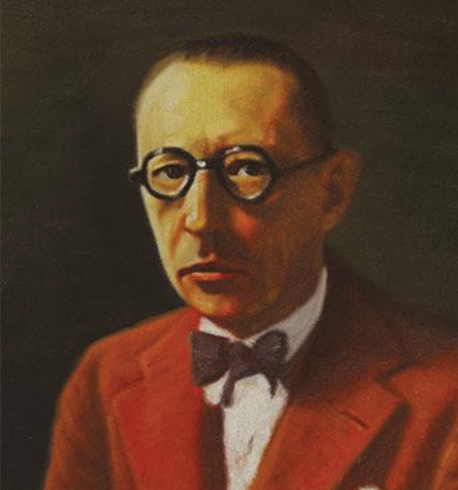
PROGRAM NOTES In today’s VINYL VIBRATIONS podcast, we explore Odd Meters. First, a quick primer on meter. If you are a musician… bear with me if you will…Rhythm is the arrangement of sounds in time. …Meter places time into groupings, called measures or bars. The meter signature, also known as the time signature, is noted as two numbers stacked one above the other….like a fraction. For example: 4/4. On top—–The number of beats in a bar or measure. And on bottom—-the type of note that represents one beat, most commonly it is a quarter note. Two most common time signatures are 3/4 three-four for three quarternotes per measure 4/4 four-four ….for four quarternotes per measure We find 3/4 time in the waltz, a simple 1-2-3 dance step, it’s a simple signature comprised of 3 quarter notes.   And 4/4 time can be found throughout pop, rock, country, even the classics, its a simple “even” signature comprised of 4 quarter notes. In today’s podcast we will hear ODD METERS starting with… 1 “The Rite of Spring”. Part II (The Sacrifice) “Sacrificial Dance”, Igor Stravinsky 2 “Take Five”, Dave Brubeck Quartet, album Time Out 3 “Toads of the Short Forest” Frank Zappa and the Mothers of Invention, album Weasles Ripped My Flesh 4 “Money” Pink Floyd, album The Dark Side of the Moon 5 “Good Morning, Good Morning”, album Sgt. Pepper’s Lonely Hearts Club Band – The Beatles 6 “Living in the Past”, Jethro Tull, stand-alone single M1 The Rite of Spring”. Part II (The Sacrifice) Sacrificial Dance by Igor Stravinsky Experts have said that the ballet The Rite of Spring, composed in 1913, changed music forever. It is famous for causing a riot in 1913 at its premiere in Paris. This is because the music and dancing was so different than anything people had heard before. The energy, rhythms and colorful sounds are amazing, even a century later. Igor Stravinsky was one of the first to introduce odd meters into western classical music in his “The Rite of Spring”. Rite of Spring is an example of THE ABSENCE OF A PREDICTABLE METRE or REFUSAL TO ADHERE TO TRADITIONAL METRE. At the time, “traditional” meant Ballet dance with 3/4 metre, a demure orchestra supporting, building, mirroring, the dance choreography. Instead, Rite of Spring demonstrates the uses of pulses and rhythms in music and dance. This is a complete departure from the norm. Dancers beat the pulse of music with their feet and arms. Dancers gather and disperse like the rhythmic formations in the music. The rhythm is blatant and out front. To create further tension (and frustration to the 1913 audience), the dance rhythm breaks from the music rhythm, in the last movement – Sacrificial Dance. The style of music is that there is no consistent downbeat. This arrangement was an outrage !! No consistent time ! Not done before. The Rite of Spring was premiered on Thursday, May 29, 1913 in Paris and was conducted by Pierre Monteux. The intensely rhythmic score and primitive stage performance shocked the audience —as Nijinsky’s choreography was a radical departure from classical ballet. The audience began to boo loudly. There were loud arguments in the audience followed by shouts and fistfights in the aisles. Unrest turned into a riot. The Paris police arrived …but even so, chaos reigned for the remainder of the performance. Music critic Abigail Wagner described it well – “The1913 audience’s shock at hearing Rite was akin to that of someone who has only read verse in iambic pentameter, reading a prose novel for the first time”. This is the climactic final of The Rite of Spring, the closing episode of the Sacrificial Dance from The Rite of Spring”. Igor Stravinsky M2 Take Five, Dave Brubeck Quartet Album Time Out. Recorded in New York at Columbia Records in 1959 American Jazz pianist born 1920. Brubeck had studied with the French composer Darius Milhaud, who in turn had been strongly influenced by Stravinsky, and is credited with the introduction of shifting rhythms that sparked a far-reaching surge of interest in jazz and popular music in the 1960s. Brubek shook up the jazz world in 1959 by his use of odd meters. He started to experiment in polyrhythms. After returning from a trip to Turkey in 1958, he produced an album of all original compositions in a variety of time signatures. This album “Time Out” was almost rejected by Columbia Records …But the third cut, “Take Five,” soon became the biggest-selling jazz single of all time. It is in 5/4 time . Take Five is in quintuple 5/4 time, that’s one-two-three-one-two-one-two-three-one-two-. The song is a jazz classic. There are 7 tracks on the album. ..all songs in odd or changing time. Such as 9/8, 5/4, 3/4, 6/4, and salted in with 4/4. Personnel Dave Brubeck – piano Paul Desmond – alto saxophone Eugene Wright – double bass Joe Morello – drums Appeared on the album Time Out in 1959 Columbia Records on 7″ record format M3 Toads of the Short Forest by Frank Zappa and the Mothers of Invention the album Weasles Ripped My Flesh . Toads of the Short Forest” was recorded 1969. Frank Zappa began writing classical music in high school, while at the same time playing drums in rhythm and blues bands—he later switched to electric guitar. He was a self-taught composer drummer and guitarist. His 1966 debut album with the Mothers of Invention, Freak Out!, combined songs in conventional rock and roll format with improvisations and sound collages. This song uses multiple time signatures a polyrhythm. You will hear zappa well into the song saying what time each musician is playing in. In “Toads Of The Short Forest” (from the album Weasels Ripped My Flesh), composer Frank Zappa explains: “At this very moment on stage we have drummer A playing in 7/8, drummer B playing in 3/4, the bass playing in 3/4, the organ playing in 5/8, the tambourine playing in 3/4, and the alto sax blowing his nose” (Mothers of Invention 1970). Personnel Frank Zappa – lead guitar Jimmy Carl Black – drums Art Tripp – drums Don Preston – organ, electronic effects Ian Underwood – alto saxophone (blowing its nose) Producer: Frank Zappa Produced in 1970 on Bizarre/Reprise Records M4 Money Pink Floyd in 7/4 time. The album – The Dark Side of the Moon 7/4 time, That’s ONE-two-three-four-five-six-seven. The song switches into 4/4 time for the excellent guitar solo by David Gilmour. This is the eighth studio album by English progressive rock band Pink Floyd. This song opens side two of the album. One distinctive element of “Money” is the rhythmic sequence of sound effects that begins the track and is heard throughout the first several bars. This was created by splicing together recordings Waters had made of clinking coins, a ringing cash register, tearing paper, a clicking machine…to construct a seven-beat effects loop!! The wonder and beauty of tape recorded effects — in the early years. Personnel David Gilmour — guitars, vocals Roger Waters — music, lyrics, bass guitar and tape effects Richard Wright — Wurlitzer electric piano Nick Mason — drums and tape effects Dick Parry — tenor saxophone Composer -the bassist, Roger Waters, composed all songs. Produced by Pink Floyd. Recorded at Abby Roads Studios London 1972-1973. Released by Gramaphone Company Ltd 1973 M5 Good Morning, Good Morning‘ from album Sgt. Pepper’s Lonely Hearts Club Band. The song has been transcribed as a mixture of 4/4, 3/4 and 5/4. Composed by John Lennon, credited to Lennon/McCartney. Recorded 1967, The guitar solo was played by Paul McCartney. Left handed, no doubt. Performed by The Beatles on the 1967 Sgt. Pepper’s Lonely Hearts Club Band album. The song has an unusual rhythmical feel. It does not use the same time signature throughout. Produced by George Martin Personnel John Lennon – double-tracked vocal, rhythm guitar Paul McCartney – backing vocal, lead guitar, bass George Harrison – backing vocal, lead guitar Ringo Starr – drums, tambourine …and several brass parts and musicians   M6 Living in the Past song by Jethro Tull composed 1969 and a 1969 single release. Composed by Ian Anderson It is notable for being written in the unusual 5/4 time signature. The 5/4 time signature is quickly noted from the beginning rhythmic bass pattern. ….1-2-3-1-2 …1-2-3-1-2 Personnel Ian Anderson – Flute, Lead Vocals Glenn Cornick – Bass Guitar Martin Barre – Guitar Clive Bunker – Drums Released in the US in the same year as their STAND UP album, in 1969, as a stand-alone single.Produced by Island Records. Also is on a 1972 compilation album, Living in the Past, by Jethro Tull.
NOW PLAYING
Odd Meters VV-006
No transcript for this episode yet
Similar Episodes
Mar 26, 2026 ·1m
Jan 2, 2026 ·47m
Dec 21, 2025 ·46m