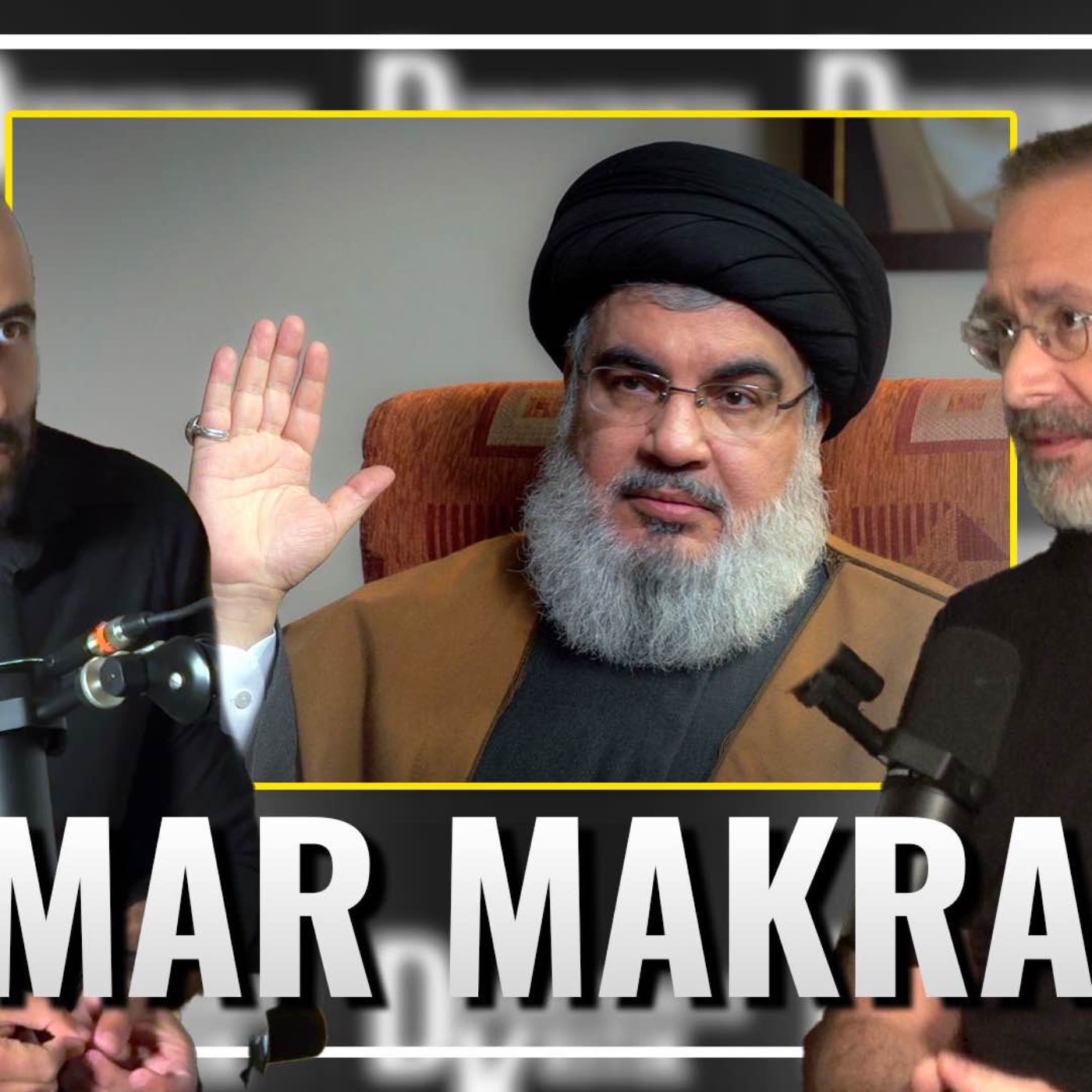
You're watching the constructive criticism. I'm Aaron Flam, and as I'm recording this Monday the 30th of September 2024, Israel has changed the board game in the Middle East. On September 27, Israel took out Hassan Nasrallah and quite a few others, in as well as Command Bunker under an apartment building in Beirut. The day before, on September 26, Israel had just taken out his Wallace drone unit chief in a strike the Tuesday before that it was Hezbollah's rocket chief Ibrahim Muhammad Qabbisi, and Friday before that it was Robin forces commander and head of Hezbollah operations Ibrahim Akhil.
Proceeded by the assassination of Faj Shukr, Pager explosions and Waki Twakis, taking out thousands of middle management terrorists in an operation that internet seemed to have dubbed the Grim Beeper. Combined with over 1600 attacks against military targets, Hezbollah is reeling from the first flurry of punches, and Israel don't seem to be letting up, so it's hard to keep up. The way Israel has responded to almost a year of Hezbollah aggression will be studied for generations to come. Nasrallah's successor is already dead, whomever he may be, and I'm just guessing it's a he considering Hezbollah's view of gender relations.
As the satirical ex-accounts, Nasar tweeted, choosing a new Hezbollah leader is a lot like choosing a new Pope. When one gets picked, you'll see a giant plume of smoke in the sky. Israel had apparently tracked Nasrallah for months before the assassination, showing that Israel has penetrated Hezbollah to its core. Within 48 hours since publishing this conversation, Israel has also attacked the Houdi terrorist infrastructure in Yemen, and there seems to have been another mysterious helicopter crashing Iran, killing a Houdi delegation together with IRGC commanders.
The map is being re-drawn in real time, as Hezbollah is now run by people, her week ago weren't important enough to be granted beeper privileges. When you're watching this, much might already have happened. The last few weeks has seen the war between Israel and Iran change theatre from Gaza to Lebanon with a series of astonishing attacks by Israel and Hezbollah following the improbable assassination of Hamas, Ismail Hania in Iran. For a wary Israeli public and friends of freedom all over the world, it is as if though Israel is finally finding its groove after almost a year of an excruciating war.
At the same time, Israel is handing the free world a blueprint for how to deal with terrorism. It should take notes instead of decrying the death of Hassan Nasrallah. This episode's guest, ex-Muslim podcast, or encounter extremism, educator Omar Makram, revisits deconstructive criticism, that is this podcast, to talk about the geopolitical shifts taking place. Enjoy.
Welcome back to deconstructive criticism. Sorry Omar Makram. Thank you very much. Have you been knighted yet?
Yeah, in one of my psychedelic trips maybe, but not reality. Sorry to hear that. So exciting, interesting times, as the Chinese would say. Very interesting.
But also not very surprising. No, not at all. I thought we should go through the last week's events methodically. So I've actually printed out a sort of a timeline.
Let us hear it. It's kind of a mess since, you know. So Hezbollah has been firing at Israel since October 8th, so since the beginning of the war. Yes.
And Israel has done a sort of tit for tat. And then a few days left of July, Hezbollah fires a rocket at the football field in northern Israel killing 12 Israeli Jews children. And Israel responds on July 30th by killing Fuad Shukur, who is a senior member of Hezbollah. And he's a designated global terrorist by the US State Department.
He's a founding member of his Ebola. He was probably involved in the 1983, was it? Beirut, Barak, Barak's, bombings killed hundreds of people, mostly American servicemen, but others as well. And then on 17th of September, Hezbollah's pagers started exploding, thousands of them, like 4,000 or maybe 5,000.
That was pretty cool. Especially since the day after when they had switched to the Wokki pokies, those started exploding. Yeah, a few years as well of Hezbollah. Yes, a thousand of them.
And then the Hezbollah leadership on the, was it? Let's see. And this was then on 20th of September, the Hezbollah leadership that was left decided to meet in an important building in person. And then Israel took out the building.
And the guy they killed was Ibrahim Akil, and Ahmed Webbe, and 20 of their closest officers. It's very obvious that the Mossad has an asset in their... They must have several, several assets. Also, I heard, most of the things you hear now are read or unconfirmed because the Mossad aren't releasing or even admitting to having rigged any pagers.
What pagers? Anyone. So, yeah, but I heard a rumor that they could track these pagers in real time as well, which means that they must have known, first of all, where all of these Hezbollah guys that had these pagers were at all times. And also, I guess if they disappear the pagers for a while, that must mean they are going underground.
So that means a fair share of tunnel entrances must have been compromised. And the pager explosion is so interesting because... So, for the official death count, the first days were like 12, and then they acted like maybe 30, but then you can see these leaked Hezbollah documents online. I don't read Arabic.
Have you seen them? I have seen them. I have not read them, actually. But no?
No. Unfortunately, we're using my iPhone as a camera now, so I can't take it out and show you. I will afterwards. But it says 879 killed Hezbollah fighters from the pager explosions.
Interesting. 500 blinded. 491 completely blinded. Well, damn.
That was one crippling attack. Yes. And I'm guessing because in February, Nasrallah said we should move away from smartphones, because those can be listened in on by Israel intelligence. So, we're going to buy pagers.
So, they start scouting the market, and then Israel also hears Nasrallah say this, and they promptly start a pager agency. But they were manufactured in Taiwan, right? I think, yes, the original brand is manufactured in Taiwan. But then they were distributed.
But then I think these were assembled by a subsidiary who got like a license to sell them. I heard Hungary. All right. All right.
See lots of rumors swirling around. And one can imagine that maybe they didn't give these pagers to anyone. They might have given like 4,000 pagers, maybe two mid-level management or important go-betweens between factions or units or cells. So, that's a real disruption to a communications network.
Yeah. And they're like, the chain of suppliers also infiltrated. This is also interesting. So, it's not someone who has just information about the operations.
It's someone who has access to other chain of supply that they can basically place explosives in pagers and walkie talkies and things like that, because it's possible that it's like the explosives were not placed by the manufacturer in the pager first that happened at a later stage. That's pretty interesting. But you told me on the phone when you texted and wanted to get together and have a talk about the events of the last few days that it's like watching a game of chess. Yes.
And I was talking to most of the other day and he was yesterday. He was telling me, but why are you talking about Iran all the time? It's Lebanon. And I was like, but don't you understand that all this is actually about Iran in the end.
He's like, how come nobody in the Swedish media talks about that? And that's an interesting point. Well, that's not true. I do.
And I've been, for years. Yes. Even before October 7th. True.
He means the service. But that's also interesting because if you listen even to the BBC and the B are just talking about Iran for the most part. Yeah. So this is, it's weird that Swedish public service has a blind spot on it.
Our wise masters here in Sweden has dained it so that we shouldn't confuse the general populace with the complexities of the outside world. We stick to basics. Damn bad. Those good.
Even the basics are not great because I was watching a twin, I think, last week or something. And in the beginning of this whole entanglement with Hezbollah, the recent entanglement, and the correspondent was saying that Israelis are against a conflict with Hezbollah. And that's actually not true. There has been an opinion poll just released, I can't remember by whom, but very recent, which showed that 52% of Israelis are actually in favor of Israel like, basically eliminating Hezbollah.
Yeah. But you have to understand. I think if you ask the question in Israel, would you like there to be peace? Most people would say yes.
I don't think, I think what you're seeing is that most Israelis realize that they have no choice. They cannot have a Hamas-like entity that is maybe four times the size and 10 times devlier on its northern border, waiting for another October 7th. They have always known, even before October 7th, they talked about Hamas as the tactical threat, Hezbollah is the strategic threat in Iran as the existential threat. And Hezbollah is effectively in the state of Lebanon.
They are in charge of Lebanon for Iran because they don't do anything if Iran doesn't give them permission. So they are an Iranian vessel. Yes, a vessel state. And Israel has always, as you can see from the last few days, Israel has always known there's going to be a war with Hezbollah.
Israel has prepared for the war with Hezbollah. This is not like Hamas, because a lot of people now, especially, for instance, Swedish state television said that a lot of Israelis wonder how Musad could miss October 7th, but explode thousands of pagers in Lebanon. Well, the thing is Hamas and Gaza and the Gaza Strip was under the auspices of the Shin Bet and the IDF, the Israeli Army, and Musad is a foreign intelligence service. So they keep their eyes outside.
So with the pagers, I mean, it's, it is kind of like a game of chess, isn't it? First, they take out the pagers the day after they take out the walk-it walkies when everyone's at funerals. And then when they meet in person, they take out the people directly, and then they start bombing 1300 targets rocket launchers, because Hezbollah has hundreds of thousands of rockets and missiles, but they don't have hundreds of thousands of rocket launchers and missile launchers. No, but have you noticed that Hezbollah is not going full berserk?
Yes. And I think that they just don't have that order from Iran. I think partly they don't have that order from Iran. They apparently, according to the headlines, Hezbollah begged Iran to step in and attack Israel directly.
And Iran has backed away from that proposition because they say it's a trap. The Israelis want us to attack directly, which I think might be true, actually. Because I mean, think about the order of thinking here. It's like first order pagers, second order rocket walkies, third order, and it's they have thought this through, you know, quite well.
And the psychological damage from gaining access to the innermost of your enemies, communication. I mean, that's what communications are, right? The way you talk to each other, it's your organ, it's the way you organize. They have actually compromised that in a severe way.
The psychological damage from a strike like that must be huge. The confusion must be huge. And then the day after when the walk-it walk is explode, suddenly you've got all these important people with special abilities, missing fingers and eyesight. Right.
But we know that it's not and balls, not exactly, not exactly operation. Yeah, it'll be different with those 72 versions now. But it's interesting what you said, actually, that it could be a trap that Israel wants to force Iran's hand to attack them, because that would be, okay, it sounds a bit counterintuitive, but that would be the perfect scenario for Israel, because Iran has to be neutralized. The regime there has to be has to go.
It's very different. They are the biggest sponsor of terrorism in the world, and have been for quite some time. And in the region, if you take Saudi and the United Arab Emirates, they are terrified of the prospect of Iran having a nuclear bomb, because this will totally change the dynamics in the region and will put Saudi out of commission. And this is something that Saudi really, really does not want.
If the Iranians get a bomb, the Saudis will get a bomb. Yes, there will be a nuclear race, an answer, yes. And that is a problem. And here's the thing, because the debate in Israel and outside of Israel, when I read for an affairs and stuff like that, they're all staring themselves blind at the Iranian bomb.
Is it possible to stop? In Israel, you have one side of generals and people with experience who say, it's not possible to stop. We've tried everything. We killed scientists, we bombed sites that develop parts of the nuclear program.
We inject their software with viruses. At most, we just delay the program. So eventually, they will get the bomb terrorism in the Middle East, will be under Iranian nuclear umbrella, and there's nothing really we can do about it. But here's the thing, everyone's staring at the bomb.
That's not the problem. The bomb is a tool, like any other tool, without moulas to wield it, it means nothing. So what you want to get rid of, as you say, are the moulas. If you get rid of the moulas, you get rid of Iranian nuclear program.
Yeah, that's not easy though. This is why it's a game of chess. But is it not? Because that's my question.
I think the window for attacking Iran is closing fast, especially with a Kamala with victory in the United States looming on the horizon. So this might be Israel's last opportunity. And if they take out, let's say, strategic points in Qum and Tehran, do you think the regime will stay in power? Or do you think the populace will rise up?
No, I think bombing alone will not be enough. I think you will have to have boots on the ground. Bombing alone will not take out the regime. This will not happen.
Especially since Iran is very good as asymmetrical warfare. And this is like their bread and butter almost. And in a sense, this is actually why they could be a problem for conventional armies, like even like Egypt and Saudi, they are not used to asymmetrical warfare that Iran has been driving in the region for quite some time. So this for them will be a challenge.
And that requires still boots on the ground. But the question is, how do you get support for it? And let's say Israel starts to bomb Iran today. What would happen?
The US would be reluctant to join in because Israel started the aggression. And the other countries in the region also would be reluctant. Saudi will be like, well, this is like unjustified right now to attack Iran. The same thing for Egypt and other countries.
They want more like calm for the time being. And you will have Hezbollah starting to like release its arsenal of Israel. What is smarter? What's going on now is not calm, even by Middle Eastern standards.
Yeah, I don't know. It's a mid-level. It's okay. This region has been through a lot.
Like if you take like the Lebanese Civil War, the Iran-Iraq War, Israel- Lebanon War. Yeah. The second Israel- Lebanon War. Now the third Israel- Lebanon War.
So and this was like one of the biggest mistakes that in hindsight, it was like a very bad strategic mistake taking out Saddam Hussein. Because like what the US did, it has removed the Assyrian obstacle to the Persians that has been there like since forever. And Saddam was to some extend the bulwark against Iran. They were like quite occupied with him.
And that was like a big strategic mistake. If you think about it, even if he was like not exactly friend of the West, but he was very empty. Iran. And that was, you know, that was not a good move.
And now we have like Iran in charge of its- I think it's too early to tell really if it was a good move a lot. I'm arriving at the conclusion that actually it is I think it was a bad move. He kept the Shia really under Iran's Shia under control there. And Iran's influencing the region was less than now, definitely.
I think the US had- But let's count it out. If Israel attacks Iran, Iran has promised that they will block the sound of vermuse. And then the US will be forced to go in because if they block the sound of vermuse, they block US allies from transporting oil. Yeah.
That's partly this, but this is like a- This is a catastrophe for Asia as well. Like that would totally cripple China, India, Korea and Japan. They are actually the most of the oil that goes out of there, goes to these countries. But how long do you think Iran could hold or if the US got involved?
45 minutes. It depends on how safe it will be because like there's two things like controlling the straight is one thing, but also the straight not being close, but also unsafe because of the whole mess that is unfolding. So there can be shipments like, no, I'm not going there. There's a fucking war.
Well, China has some food with Iran. Maybe they will ring them in- Not- It depends on what you- It depends on the stakes. Like if it was like the destruction of their nuclear capacity, Iran will not accept that because this is what they want. Like they cannot accept being toppled.
They can be like, well, we're friends with China. They're telling us to calm down. We might as well die now. No, it will not go like that.
But- You see how every road one takes leads you to the same conclusion. The moulas has to go. It's the only solution. Yes, but how and what timeline is what's interesting because it's actually probable- It's very possible right now.
I don't know if it's probable, but it's very possible right now that actually Iran has a weapon-grade uranium. It's possible that it could have within a year a nuclear bomb. Within a week? Two weeks.
It takes some time to like assemble. Those are the latest estimates or a few weeks, a few months and they will have several bombs. I read that the few weeks was to get like a weapon-grade uranium. Okay.
What it takes time to assemble a bomb and weaponize it. It can take between six months a year. And that estimate I read was in May. So yeah, it could be sometime in the upcoming few months.
Yes. And to provoke Iran to attack Israel, I think- And I think actually this is probably what Israel is thinking a little bit. You have to try to really eliminate Hezbollah because Iran does not want Hezbollah to disappear. So if they see that Hezbollah is facing an existential risk, they might intervene, but not before that.
They will not intervene in- They are waiting to see how it goes. It's their foothold on the Mediterranean. Yes. So it's part of the- Well, what Israel is called the octopus.
I don't like the term really because it has associations to antisemitism. It's what people used to say about the Jews. That they were like an octopus enveloping the world with its tentacles. But that is in effect what Iran is.
They have Hezbollah in the north. Hamas is also on the Mediterranean. It's on the border with Egypt. They are in Iranian-Wassen state, the Houthis in Yemen, another Wassen state.
And then you have Shia militias in Syria, Iraq, and probably a resistance group or other in Jordan. Since you don't like the octopus reference, it's more conventionally referred to as the Shia Crescent, Yemen, Lebanon, Syria, and Iraq. And the points of the questions are aimed at Israel right between those points. Yes.
And Hezbollah, slash Lebanon, is the most valuable asset for in that Crescent right now. Iraq is- They are not as strong. They are more- So you have the Islamic resistance in Iraq, under which there is the Hezbollah brigades, confusingly. This is separate from Hezbollah.
It just means part of God. Yes. And they are quite active right now. They have just, I think, didn't they just hit Ilat port with a drone yesterday?
I think- Or tried. I think they did, didn't they? I wonder how did the drone get there? It depends on what newspapers you are doing.
I think it's also interesting how, because it has to go either through Saudi or Jordan to get there. And I wonder which- If you read Hezbollah brigades monthly, then I'm betting they don't only hit Ilat, it burst into a thousand savage unicorns who ran through Israel impaling everyone on the rainbow colored horns. It's very possible. I believe that narrative.
But it's also interesting to see how you can make allies of different Arab countries. Because the situation there, you have the situation Arab countries is the opposite of that in Iran. So in Iran, you have a radical regime anti-West, anti-Israel, and more, more, more, more progressive society. In Arab countries- Yes, like 10% ruling the 90%.
Yes. In Arab countries, it's the opposite. So you have regimes that actually want to normalize relationships with Israel. But they have populations that are very, very anti-Israel.
So that- So really the moulas of Iran should rule the Arabs of the Middle East. So the Arab leaders should rule Iran. I think that's actually what Iran wants indirectly. Because we will get there.
But the thing is, so it's a very delicate balance. They don't want to provoke their population too much. That basically there will be protests on the street and so on. However, there is also another advantage for lack of democracy and lack of free press.
And the suspicion towards Western media. A lot of Arab countries like Jordan and Saudi, I think did recently when Iran showed these missiles that didn't intervene. I think Jordan Air Force will intervene then and even Saudi. So I think to protect Israel, but that does not reach the population.
You see, so there's no free press. So it's like the regime that says what's happening. And if the Western media says, well, the Saudis or the Egyptians or the Jordanians had this, they will just deny it and say, no, this is just like- Silence, we would never do that. So there you can use that to your advantage.
That's one thing. I think actually what you should do is to start to use your media to to fomend some kind of a demonization campaign against Iran as a threat, not to Israel, as a threat to the Arab countries. This is what you should try to push for right now until the Arab populations are more ready to have an even higher degree of antagonism towards Iran. And that would make it much, would give the Arab regime much more leeway to get there in that conflict, because they will have to get into that conflict.
You have to mobilize a lot of these armies, including the Saudis, to try to neutralize the Shia militias in Iraq, for example. You cannot have all these fronts and nobody's helping you. So that's one thing. And you have to see also what those countries want.
For example, the US, do you want to guess how much military aid the Egyptian army gets from the US annually? 10 billion? No, 1.3 billion dollars annually. That's thinking in Swedish terms.
Yes. Yeah. So by 13, 13- billion Swedish crimes. Yes.
And a lot of money. And Egypt has the second, I think, the second strongest army in the, or maybe even stronger than the Saudis. They might be the strongest army in the Arab countries. And they are so cash-strapped.
They have an economical crisis. They didn't know how to deal with it. So they are very vulnerable right now to, well, money. If you offer the money, they could be prepared to do stuff.
What stuff? Do you mean like P-Diddy type stuff or other stuff? I think it's, I think it's possible, it's possible with, with proper incentives to get the Egyptians to deal with Hamas. It's possible.
I think with proper incentives, you might reach some kind of like take care of Gaza for a while. Well, the Egyptians haven't been able to deal with the Muslim Brotherhood. So, and they haven't defeated ISIS in the Sinai Peninsula. Well, actually, the thing is, like, I would say they have been quite good in the Sinai Peninsula that we had like, in reading Egyptian papers again.
No, no, no. That's for sure. Like they had, because I had even read the swear, who were living in Sinai and so on, they, there were like really extreme problems with like terrorism there, like, you know, militia and so on. And the Egyptians, like Egyptian armies, just like they would go in and just like spray them and kill them.
And they are totally under control. Now, the, you don't hear any kind of like attacks on Egyptian forces in Sinai or anything. It was like this for a while. And this is gone, gone.
So you think they could handle Hamas? Handle and handle. Because the Muslim Brotherhood is another Muslim Brotherhood. It's like, they handled the Muslim Brotherhood.
Do you hear anything about the Muslim Brotherhood in Egypt? No, no, they're not there. Handle and handle. Like now we're talking about two things.
We're talking about maybe elimination on one, like the as in the ultimate goal, but also about keeping things at bay while you are trying to get that Iran, right? So if you try to neutralize the Palestinian militia or and Islamic Jihad and Hamas and so on to so that you don't have any kind of like, you don't need to engage them as in like Israelis in the US would don't need to engage them. And the same thing, for example, when it comes to Iraqi militia or Yemeni, some sort of if you if you try to have others keeping those at bay while you are dealing with Iran, that would be the way to go, I think right now. And Egypt, you just have to pump in a lot of cash for them to do that.
The Saudis, they need more partnerships, investments, things like this. Very, you have to be closer bodies with the US, even than the other day. And it's a two-prong thing because for them also, Iran is an existential risk, but they want a bit more motivation to put something more on the table. So more a closer relationship with the US when it comes to trade, they had like four-wide wanting to have like a free trade agreement with the US.
Well, I'm just a comedian in Sweden, I decide nothing. But yeah, do you think the Saudis might be interested in Qatar? Interesting way. Well, there are oil fields, fortune, an entire country.
I think Qatar will just sit back in this whole thing. Yesterday, they were given some visa-free status, the citizens of Qatar to the United States. They can go there without a visa as an exceptional partner to the United States. I found that quite disgusting actually.
Because they are one of the, together with Iran, one of the bigger drivers of terrorism. And personally, I think this is what I think. And as I said, I have no powers. I think Israel should maybe team up with Saudi, invade Qatar, take Qatar, give it to Saudi because the Arab world will never accept Israel controlling Qatar.
And then for 10% of the proceeds for the coming hundred years, the Saudis get Qatar. Good deal, no? I think the Saudis are more afraid of Iranian dominance over the Middle East that disrupts their interests totally. Yes, well, then, as you know, they don't like Qatar.
Qatar is playing fussy with Iran. Yeah, they are like playing both sides. There are countries that are playing both sides, including even the Iraqi regime right now. But I think actually what, so there are two sides of me, right?
One is the more principle side who thinks about ideology, religion and so on. And then the other pragmatic side who is like, okay, how do I just like, what moves do I have to do in order to reach my goal? And that would involve not antagonizing Qatar for the time being the largest US military base is in Qatar. Yes.
Yes. So you don't need like to disturb that right now when you will have your hand full when you said you were strapped for cash. The Egyptian army. The US can do there's a big pile of cash just the sound of our moves.
But I think I think the US can see what I'm saying. Yes, you have no cash. There's big cash there. Yes, they can do this later.
But I think for now the US actually can afford this because all this is like, you know, it's like petty cash for the US really if you look at their if they're they don't think Qatar is petty cash for the US since they've been bought up by Qatar since 2001. No, I mean like the money that Egypt would require right now. Yeah, it's Qatar is too much. Yes.
Too much. Yeah. Maybe in Vaid San Marino. No, if you give them Qatar, they would order something small and like petty change country.
If you give it C. Qatar, he might decide to invade Iran. I'd be like, okay, that's a good price. I'm going to Iran tomorrow.
Qatar has no army. No, they have no army, but you don't have a US military. Yes, that's their army. Yes.
And the same thing for like actually several like Arab countries there like the Kuwaitis. They also rely mostly on just like the US and so on. But also you have this. So the Sunnis in the Arab world, they really hate the Shia, but they hate the Jews more.
This is also another problem. And it's somewhat the problem in Lebanon as well. They hate Israel more than the hate Hezbollah. And this is like a tragedy in itself.
Even if like the majority don't really support Hezbollah, but they actually support Hezbollah against Israel. And this is unfortunate. So what do you think is the best move? Right now, I think Hassan Nasrallah is at the top of the pyramid quite alone right now.
And I think Hezbollah is in disarray. And I think this psychologically has taken a toll, which has damaged morale. And the US and France, they want a ceasefire. But the citizens of Israel, I think, don't want a ceasefire because they have 60 to 100,000 internal refugees in Israel, that want to return to their homes.
And they don't want to return to their homes if they have Hezbollah terror army on the border launching rockets at them. The UN promised to demilitarize southern Lebanon in resolution 1701. And they deployed... What do the units still do?
We can get to that. And they deploy beautiful troops that have acted as human shields for Hezbollah as they have amassed an enormous arsenal and built terror tunnels that would make Hamas green of envy. So Israel has no choice. They have to implement resolution 1701 since the UN has failed to do so.
And they have every right to do so. Which is? Well, southern Lebanon from the Litani River and downwards towards Israel is supposed to be a demilitarized zone. That means no Iranian cruise missiles or ballistics in private citizens homes.
And by the way, if you store a ballistic missile in your home, it is no longer considered a civilian home. It's a civilian home. It's a military town. So I think they have hundreds of thousands of missiles.
I don't think they have hundreds of thousands of launchers. And they also don't have all these people that were supposed to actually push the button. I mean, these people now have no eyes, fingers or balls. Which makes pushing buttons hard.
This also could explain partly why they're not as aggressive in the response. But the thing is, do you think that if Hezbollah is pushed north of the Litani River, they will not be able to reach Israel? No, they will still be able to reach Israel. But that will give the Israeli defenses a few more minutes.
That's a few more minutes to get into a shelter, a few more minutes for Iron Dome to lock in on target, a few more minutes for David Sling to assess what's coming at them. And that is worth quite a lot. There's a difference, I think, between sitting in your home, knowing you have four minutes to reach a shelter and sitting in your home, looking out the window and seeing Hezbollah on the other side of your fence, aiming at you with a launcher. So there's that.
And I mean, if let's say, Olan started the shelling's Yavla and Sweden had to evacuate all Swedes in that area of Sweden. I mean, how long do you think Sweden would take that? Because in Israel, that's been going on for a year now. And no nation would take that for a year.
And Israel has told Hezbollah that, you know, stop it or we're going to fuck you up. And then FAFO, they fucked around. And now they're finding out. But how long?
But what happened as soon as war starts, I mean, fog a war envelops everyone. So who knows where it goes from here? But did you foresee that the operation in Gaza will take that long? Or did you think it would be shorter?
No, I thought it would be much shorter. Much more I mean to actually. I'm a bit surprised. I have to say, I thought like it would take maybe half as much time.
But maybe the tunnel system and the amount of weaponry that had been allowed to mass in Gaza was just more than anyone could imagine, really. So I wonder, like, if Israel took that long with Hamas, how long would they take in with Hezbollah? And whether they There's the difference that I mentioned earlier, this is well, no, but Hezbollah is a war that Israel has prepared for. They didn't prepare for the Hamas war.
One's done. So you think they are more ready? Yes, I think it's obvious that they're more ready. Considering how it's going, because a lot of people after the Patriot attacks said it might be a war crime, the means of delivering this blow to Hezbollah might have been a war crime.
And then the Swedish professor on State Television, he said, Well, that depends. If this just is one off, then maybe it is terror, or maybe it's the start or launch of a bigger war than it's not a war crime. Personally, I don't think it could be considered a war crime either way, because sabotage is protected. And this is a former sabotage.
It's clearly aimed at an enemy that's launched an attack on Israel. And it's in that their communication devices. So obviously, this is legitimate. It was legitimate, even if it had been a one off, I think.
But as the campaign has continued. Yeah, so okay. So in our game of chess, we now push Hezbollah north of the Litania River and neutralize all the areas south of the Litania River. And next move is...
Go in and establish a buffer zone of 10 to 15 kilometers from Israel's border. That will need to be patrolled. And that will need to be patrolled by Israel. For good.
Until peace. Can you spread your forces that thin, in case you will be at war with Iran? Not with Israel's current army, but with Israel's coming army. Yes, coming army.
Well, the Israeli army has many Western armies. They reshape themselves into a more intelligent army that could do smaller incursions to enemy territory, smaller, quicker operations. But Ukraine, I think, has shown the world that we're back to World War I with drones, basically. So everyone is going to need to rearm the latest reports from, I think it was the National Defense Senate Committee, in which I read this a few days ago, is that it's a damning report of US defenses.
They are not prepared for pretty much anything. And it goes through what they need to do. And basically we're entering, if the US takes this report seriously, as they should, we're entering a new sort of Cold War, where the threat is a multi-front war, multi-arina war. And if all the arenas go hot at once, it will resemble a world war quite a lot.
It's a shame that actually the US has reduced its military capacity when it comes to its fleet. You know that the US fleet is way smaller now than it was in the 90s, for example. And this gives it a much smaller area of coverage, unfortunately, because you will really need to spread all over the region right now. Well, I think people talk about events chipping away at the Pax Amricana.
I'm sort of at, I've already arrived at the Pax Amricana has fallen. I think we're already in the multipolar world that Xi Jinping and Vladimir Putin want. Depends on who will be, actually not necessarily. It's difficult to predict how Trump would react to a Middle Eastern war, because he belongs to the isolationist wing, so he doesn't want the US to get involved and stuff.
But at the same time, he's very anti-Iran pro-Israel. So it's like... On the other hand, he also welcomed the Qataris to the US recently. You never know with him.
You never know with Democrats either. When people rebuild armies the way the US wants to, according to this report, or at least the report wants the US to do, I mean, go up from maybe 3-4% of GDP on defense spending to maybe 11 at the height of things the US spent maybe 16% on the fence. This affects all of society, of course. Especially if you're in a cold war with enemies that try to spy on you, you have to coordinate everything between all manners of agencies.
Everyone in society must know what the dangers are and how to respond to them. So this will change the West quite a lot over the coming decade, I think. And also what's happening in Israel and Lebanon right now. The US and France obviously wants a ceasefire agreement but I think Israel cannot accept one as things stand now.
So this will continue and the US will be dragged into war. And so will the EU and I mean, we already are at war with Russia. But how much do you think Israel is, if you would have to guess or based on what we read and so on, Israel is coordinating with the US when it comes to its moves? I think almost nothing now.
Really? This is from my perspective. And again, I'm just a Swedish Jewish comedian. I have no power.
I'm not an Israeli citizen. But if I was counting, I would say, if you want to do anything, you can't do it after a Kamala victory. So this is when you can do it now. And Joe Biden is more than a lame duck.
He's a senile half dead duck. Yes. So I don't think the Israelis are paying too much attention to Blinken at the moment, because it's obviously not Joe Biden running the show might be Jill Biden. I don't know.
But they're talking to Blinken and Hochstein. And Hochstein, Amas Hochstein was a mediator between Hezbollah and Israel. He's been at it for a year. But he has failed, right?
He was livid at Israel. He claims this is Israel's fault for exploding pages and attacking his ball. But as well as been attacking, he has failed to secure a piece for Israel now. And the UN has failed to secure a piece for Israel since decades or more.
Now Israel has to, you know, if you want something down right. All right. If we go back to the chess board, Hezbollah is above the Latani North of the Latani River. Next move, bomb nuclear sites of Iran.
Maybe. Maybe harbors easier. Money flows. Yeah.
But what is faster because before removing the mula, you have to delay the timeline for getting the bomb, their bomb, right? Until you're able to get there. And that would be might as well do both the ports and. I guess.
And then hope for a popular uprising. Hmm. How would your own respond? They would launch probably attack Israel.
And the US will probably intervene to defend the US and Israel or allies. They sort of have to some way or another. How much of Iran's missiles and drones and so on can if they basically try to saturate the defense systems, their defense systems of both that the US is providing. And because technically speaking, actually, the Saudis can move their air defense systems closer to Israel to be able to defend it, like or to participate in defending it actually.
They would probably scare that they would get shot themselves. The Saudis. And this white would have been actually better if like the there was better coordination with Arab countries. It's like I'm a bit like upset with the US that's like the US are afraid that Iran will turn into another Iraq or Afghanistan.
Yeah. Because they're, you know, they have big failures on their resume. But Iran is not Afghanistan nor is it Iraq. Iran is something quite different.
I mean, it's an old civilization. Yeah. Have you thought about like a bit of a darker scenario where the US is thinking that maybe the lesser of all evils on the least of all evils is that Iran actually gets the nuclear bomb? I think that's pretty much what Kamala was.
You think so? I think that Obama's the GCPOA, the deal between the US and Iran that's supposed to stop Iran from getting nukes is worthless. And I think everyone's staring themselves blind at the bomb. I think the mulas are the problem, not the bomb.
Get rid of the mulas. And then you don't have to worry about the bomb. At least not the mulas having the bomb because there won't be any mulas. I know that I don't think that the US is thinking that way at all.
No, obviously not. But here's the thing. I think Iran is the weakest link in the chain of Russia, China Iran. If you hurt Iran and the mulas, you hurt China energy wise because they get a lot of oil from Iran and you hurt Russia weapons wise because they get a lot of weapons from Iran.
Drones and missiles apparently. I'm not according to the protagonists themselves, but according to leaked intelligence, they're getting ballistic missiles from Iran. So from a Western perspective, in the short run, oil prices will spike. But in the medium run, we will probably get new value chains.
And in the long run, it will be a definite plus because it will be a world without an Islamist Iran. But this is why I'm so frustrated because all these things with some coordination can be mitigated. Like, for example, you can't really, if the US was in on the game, they could go to the Saudis and say, well, okay, it's time. We're going to attack Iran.
We need you to have a program for ramping up your oil production because basically Iran is going to be out of the game for a while. So yeah, get the schedule up and running. You kind of like secure that as well. There's a lot of things that could be done.
So it's frustrating that the US is just like deciding to sit back. They have a lot of power. And like, Well, I think the Democrat party wants to reshape the world order in a quite horrible way because they are deluded. How do you mean?
Well, they want a strong Iran in the Middle East. They want Iran. Yes, I think so. They think that everyone is basically the same and want the same things.
And as soon as Iran is welcomed into the fold of humanitarian western nations, they will realize that raping girls before their execution. So they can't go to heaven is a barbaric practice. And they should even abolish death penalty and make abortion mandatory, as well as sex change operation, although Iran is already the country in the world with the second most sex change operations. Because homosexuality does not exist in Rome.
So I think that they are fooling themselves. And I think you're right about the Republican party. There's a strong isolationist wing in the Republican party. And I think a lot of Americans of all stripes, all political stripes and ideologies are tired of playing empire.
But I think they don't understand how much of their wealth is tied to their position as an empire. And I don't think they are thinking of what the alternatives would be, which in this case is China. And I think that would be worse for the world. Because nature of words of vacuum.
So there will always be someone vying for the place of superpower or several people or nations vying for the place of superpowers in the world. And if the US retreats, then someone else will take their place. Yeah, well, you know, the thing is, I think actually, okay, several things, I don't think maybe the Democrats are like retarded, but I don't think they are that retarded that the thing that the molars can be, you know, welcomed into the fold because the molars explicitly, they're they're they're that's also another thing. Like the whole regime in Iran is not primarily about G.I.
slum. It's about the revolutionary ideology that they have, the anti-Western and the monarch, and this way also, how these are a bit like worried anti monarchist ideology that they want to spread the she has are not as hostile to us as the Sunnis are towards the Shia. We have people in the Western world in the highest echelons of power for echons, depending on how you pronounce it, that are basically a fifth column. I will give you an example.
The United Nations general secretary, as he's called, he's basically just a high paid secretary, Antonio Botelis. He said he said on Twitter, he said, I hope we don't the world cannot let Israel turn Lebanon into another Gaza. It's an interesting phrasing he uses because just the day before the Iranian new president had gone on CNN being interviewed by for his a karia and said the exact same thing. We cannot let the world cannot let Israel turn Lebanon into a new Gaza.
So they're using the exact same talking point. Interesting. And it is quite interesting. It's also interesting because it is not Israel that is turning Lebanon into a new Gaza.
It is the UN whose responsibility it has been to not let his ball ameliterize some Lebanon and they have failed. So Antonio Dares should go out on Twitter and publicly maybe in the general assembly since everyone's there at the moment and publicly apologize for failing. And while he's at it, he can apologize for everything else that the world has poured money into the UN for which they have failed at, which is everything. They fail at everything.
It's a worthless, worthless organization. It's filled with dictatorships. It's bullshit. For Western powers or at least for Sweden, it's where we send our socialist politicians when they made themselves impossible in Sweden.
Then we send them to New York or to Switzerland where they get a super high salary tax free that we pay and they can stay out of the public eye doing damage to the world instead of just locally here in Sweden. So if we want a UN, a true UN, maybe make a UN out of democracies. But look at the democracies of the world. They are not fairing well at the moment.
You know, I've been like, you have followed my kind of like, I would say, my journey for a while now. And I've been like a very pro-democracy liberal democracy and all that. But I'm getting I think way more pragmatic right now. Because one, it's kind of like naive to think that all countries in the world will be will turn into liberal democracies.
And there are way too many existential risks to let principles be above pragmatism right now. I think I think pragmatism should always be guided by principles. But then you will have to cooperate with countries like it's an above all, like the prejudice. But if you want pragmatism, then why don't why not just bow down to China immediately?
If you want pragmatism, it's not for our interest. Is it not? No, why not? Like a world.
Swedes are in extremely, I mean, used to be at least a very homogeneous population they love. It's basically it's always been a one-party state by free choice. So the economy of China might actually suit Sweden culturally better as a superpower than the US has done. The economy.
The individualism and their freedom of speech and ownership rights. I think when it comes to China, the US is on the right path actually. The economic supremacy of China would spell the downfall of Western economy. And this is why you cannot be an ally with China in that way.
But what I mean by pragmatism that you will basically need to get in bed with allies that will like the Saudis, the Egyptians and so on. Strange benefits. But that's always the case of how politics. Yeah.
Well, by principle, they might be dictators, but they're our dictators. Yeah, something like that. So principle wise, you shouldn't do it. You shouldn't like be in bed with them.
But I don't see other another way around it. So you're telling me we've gotten to the point where survival takes precedence? Yes. Yes.
So that's how bad it is, you think now? Yes. I don't think we're done yet. Really?
I think we're a bit off. I think so. What do you think would happen if Iran gets a nuclear bomb? Then we might be there.
That's them. I think we're there soon. Yeah. It's not now.
Yeah, but still time. Yeah. But if we're there, then it's game over. Yes.
But and to get there, you can get there alone. I mean, like to prevent that from happening. You can't do it alone. Well, that's true.
Or maybe that's the conventional wisdom. You think you can? But here's the thing. No one seems to be willing to help because nobody has been offered a deal.
I don't think so. Did you really think that the US went to and try to deal with the Egyptians, the Saudis and so on, to prepare them for a possible like full scale war in the Middle East and with Iran? I don't think so. I don't really don't think so.
I think what the US is investing right now is to try to basically Appeasement and to try to control Israel. Yes. And Appeasement is basically just pushing the cost forward because the cost of war is obviously very heavy. But the more you postpone it, the heavier the cost would be.
And this is why I'm thinking it's possible that actually the US is saying, okay, that's one possible scenario. That they are thinking, well, maybe the Middle Eastern project is done. Maybe we should pull out. I think there are voices for that.
I mean, the Trump wing of American politics, they know that America can become energy independent if they just start drilling and fracking. Actually, America is almost energy independent. So they wouldn't be hurt as much. And the thing is like actually, what 20% of the trade is with the EU.
So they need to protect the EU as a foreign market. So they also need energy for the EU, which has been traditionally dependent on Arab oil and Russian gas. So you still have to ramp up production if you want to protect your allies? I think it's okay.
We have been discussing things from the point of view of Israel so far. That way. I think we've been switching perspective. Because I think actually, if I was the US, there is a strong case to be made for here.
Like the US is an import country. It's not an export country. That's one thing, for example. This is why they can also afford having a trade war with China.
They have way more imports from China than exports to China. And this is why also the US retorted that they think that they can get into a trade war with China the same way the US can. They can't. They're very retarded here.
Such an armpit thing. They can't. They can't really. They just saw the US hour, the US were imposing tariffs on electric vehicles from China.
And then the EU, we are doing it as well as China. It's like, what? Fuck you. This is the US.
Well, anyways, I think what they are doing right now, both the Republicans and the Democrats, they will embark on some kind of like America first, America centralization. They want to move the ships industry, for example, to the US, the energy to the US, tech into the US. They are giving loans, subsidies, they are pumping in so much fucking money that EU has no chance actually to compete in that country. And this is also in preparation for war because they're disentagling value chains.
And that's what I'm saying. It's going to reshape everything. And they could be like, well, you know what? We're good.
Deal with your stuff over there. Middle East. But the thing with the United States is they've been isolationist before the two world wars that preceded the disposable coming one. And then they get dragged into the war anyways.
Because sooner or later, if you don't fight your enemies abroad, you will be forced to fight them on your own territory. And that is isn't that a more terrifying prospect? Isn't that why the EU is financing Ukraine to fight Russia? This is actually what's interesting because I think this was the republic, both the Democrats and the Republicans thought that until very recently, I think this kind of thinking is no longer popular among either parties.
They think this is this was actually a neoconservative bush administration kind of thinking that you have to take the fight to your enemy abroad or they will come to you and things like that. And they are looking at the cost benefit equation. And they're saying this has cost us way too much. Yes.
But they seem to forget one thing. The fact that they have been acting world police has made their currency, the reserve currency of the world, which has made American consumers very, very rich. And if they stop being the reserve currency of the world, they will become, well, they'll have to compete like any other country. Yeah.
And yeah. I think what they are trying to do now to do that through more economic coercion, they have, I think, Trump has said like any country who tries to move away from the US dollar will be basically dealing post tariffs on it and like sanctions and things like that. So I think they are shifting way more towards that kind of, you know, he's a businessman, he wants to do deals and that's it. Like he's like, he's like in a bazaar, like he has some Arab in him, this guy from this way, he can deal with him with them a little bit better.