Do you keep hearing podcast ads like this one, for example? But always wonder how you actually get involved with them for your own brand or organization? Well, it's easier than you think. We're Acast, and we give you the platform to do it all yourself.
Browse thousands of popular podcasts, choose the shows that match your perfect audience, set your budget, and launch. And if you want to hand, our podcast specialists are there to help you launch with confidence. This is podcast advertising without barriers. Get started at acast.com slash advertise.
But first, a big thank you for supporting my work, regardless of if you're supporting it as a patreon and patreon.com slash Aaron Flamm in one word via PayPal with Bitcoin or on Swiss double 0 4 6 7 6 8 9 4 3 7 3 7 double 0 4 6 7 6 8 9 4 3 7 3 7. My book, This is a Swedish Tiger is available as an ebook on Kindle or as a paperback on my web page Aaron Flamm dot com in both Swedish and English. The book analyzes the relationship between the Swedish social democrats and the socialists and later Islamists in the Palestinian movement and what they have in common, namely an anti-Semitism that can be traced back in an unbroken line to Nazi Germany. Omar Makran apparently did read the protocols of the elders of Zion as a young man.
So we know that some foreign anti-Semitic ideas have been incorporated into Middle Eastern culture. A few years ago, mine come for the bestseller across the Arab world. It probably still is considering Israeli Defense Forces found an earmarked and underlined copy of it on one of the perpetrators of the pogroms on October 7. Omar Makran came from Egypt to Sweden as a refugee.
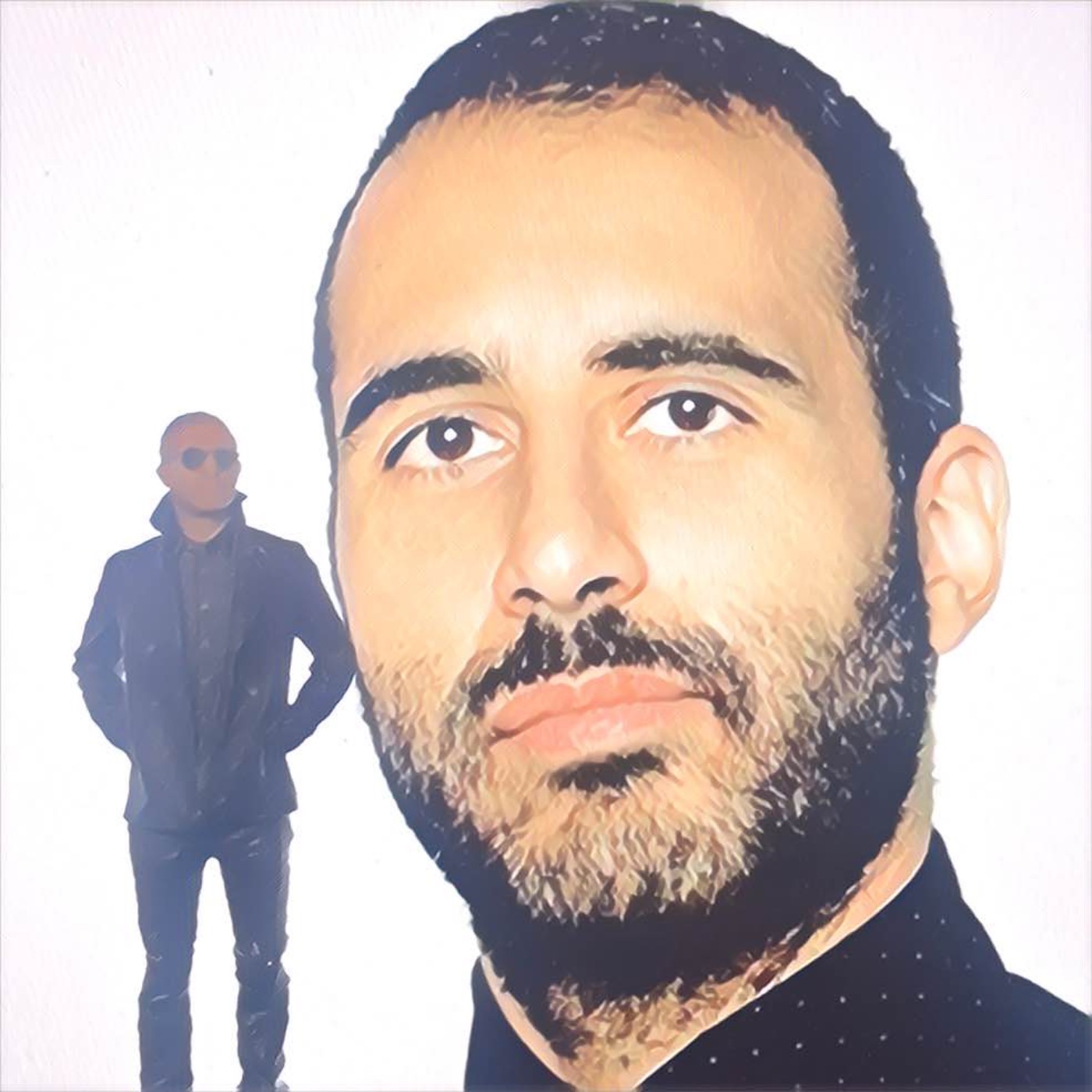
He fled because of his atheism. When the Swedish migration services didn't believe him, he filmed himself burning a Quran and published a video on YouTube. This was years before Quran burnings were a thing and no one seems to have taken notice, except me. I interviewed him about it and Omar has since been a guest on the podcast at least three or four times.
Neither one of us can remember exactly which. If you're interested, I suggest you listen to those episodes. Since he came to Sweden, he has worked against honor culture among Swedish migrant youth and broadcasts. The last supper system wanted him in Swedish together with some friends.
In their conversations, he sometimes mentions his background as a fundamentalist Muslim, but never seems to get any follow-up questions from his co-hosts. So I thought I'd ask him more about it. This was the result. Enjoy.
Welcome back to Deconstructive Criticism, Omar Makran. Thank you, Omar. So this is the third time you were participating in the podcast. Is it the third or the fourth?
I lost count. I seem to remember the last time we spoke, it was about post-modernism. And then before that, it was because you had burned a Quran. There was something in between, I think, about Islamism as well.
Was there anything so? All right. You're telling me we've already covered this subject? There's always new stuff to cover, I guess.
Yes, sir. This is the fourth attempt at debrief. So can you just tell me about your upbringing? First, your family.
Tell me, where are they? What's the climate? Do you want me to take you down my memory lane? Yes.
Yeah. All right, let's see. I was born in Cairo. Well, in another city, close to Cairo, but we were living in Cairo at the time.
It's my mother, she was after. Mothers when she gave birth to me. I'm the eldest son in the family, three other siblings. Yeah, I was.
It's a typical... Did your father do for a living? He had an import-export company. That sounds like a spy.
He was a businessman, and my mother, she's a French teacher. And, well, they were typical, I would say, maybe upper-middle-class family. And we had a really good education. I was sent to private schools, basically, where everything was taught in English.
But did you live at home or were they boarding schools? No, no, I lived at home. Although, in the beginning, the school ended around 6pm, I think, or 7pm. It was because they helped us also, like, there with their homework.
And it was one of the schools in Cairo at the time. And I was raised as a religious son. What denomination? Shafi.
And I'm not sure how extensive you want me to go. But as extensive as you want to. Oh, but... So, and my father encouraged me to read a lot.
And I was somewhat of a bookworm. I had, like, almost something which I still have until today. Like, some kind of knowledge addiction. Like, data addiction.
I want to consume as much data there is out there. But in the beginning, what type of books did your father want you to read? Like, mine, Kampfen, the... Tropical, the Elders of Zion.
Those, actually, that book I read later on, but it was at my own... Which one? Protocols of the Elders of Zion. So, one of the popular books in Egypt.
Yes. It probably still is. Probably it's experiencing a resurgence in sales right now. I'm sure.
Yeah. Oh. That I read around, I think I was maybe 13-14. Just like, quickly off from a bookstore.
And the schools you went to, was it like mathematics history? Yes, I think. Arabic, English, French, mathematics history, geography. Jew-hating.
No-dulating. That is not as much in school, I would say, but it's much more cultural and to some extent, well, religious as well, of course. For me, it's much more about religion. As much of what my software was.
It was religious more. Well, there's always an interplay between culture and religion, of course. But for me, I just like, since I believed some things to be the absolute truth from God, this was me, for me, the clearest instructions about what I should believe and behave in life, you know. And this is also, to some extent, explains why when I lost my faith in Islam completely, these instructions were no longer valid.
Sometimes I see that some people are a bit, I would say, find a bit strange that I have changed so radically. But for me, it was just about the instructions. I no longer thought the instructions were valid. So you're really like an OCD person and you were given faulty instructions.
Yeah. Or, yeah, instructions that I believed were true, which I at some point stopped believing they are. Tell me about these instructions. What type of person do they make you into?
I would say, like, yeah, what would be described by European standards as a, or Western standards as a reactionary person? How so? Very reactionary views on women, on sex, on sexuality, on sexual, like homosexuality, for example, about Jews, of course, all of anti-Semitism. It's like you have been given a manual of why you are here, what you're supposed to do, and what you're supposed to avoid in order to reach heaven and to avoid hell and more.
Goes for a lot of religions, though. Of course. Of course. But then if you take it, like, very much too hard, then it can become problematic here.
Because if you are a fundamentalist, that's not necessarily a bad thing if the fundamental of this ideology or religion that you believe are good or peaceful. Like, if you are a Jane, for example, a fundamentalist Jane who believes really too hard that he shouldn't harm anyone or any living soul, it's not necessarily problematic to be a fundamentalist Jane, but it's problematic to be a fundamentalist Muslim because there is a lot in the fundamental of Islam that is in direct clash with a lot of the values that exist in the West, most of the values that exist in the West, I would say. And that's not a very strange thing. If also, if you look back in history, Islam has always, almost always, had an anti-Western anti-European strain, not necessarily just because of the teachings of the religion, but because of the history itself.
Like Islam as an expansionary, acquisitive ideology, it basically clashed with the West because it wanted to invade the West. And the Muslims were defeated later, like the conquered Spain and they were defeated in France and so on. And this has never really went away because also there is a lot in the prophecies of the prophet and the hadith and so on that says, for example, that the Muslims will invade the land of Rome, which is supposedly the Romans, but it's much more interpreted as the Westerners. And since the very beginning of Islam, there were clashes with the Byzantines and so on.
So this kind of anti-Western grain or strain in Islam has always been there. It's almost like an identity that is formed in opposition to the Western identity in a sense. They are like Denmark and Sweden, as one way to see it. But the decadent, degenerate West and the righteous Muslims and this also has contributed a lot to the several Islamic revivals that have happened throughout history because there is always the desire or the attempt to return back to the fundamental of Islam as what will save the Muslims and what will basically make us Muslims great again if they go back to the religion.
Make Muslims great again. I like it. Yes. So it's a redeeming force to return to the fundamentalist Islam.
Exactly. For the most part, a lot of Muslims and a lot of Muslim countries, they see their fate, so to speak, as connected to Allah. This is the path and a lot of what they have been promised is also connected to how strict or how close they keep to the religion. And this is also how I saw things at the time.
So this was my worldview. And it's also interesting because considering what's going on right now as well, whether or not you're going to talk about that because I just not finished, but I reviewed your debate with Ali Gorgi and I discussed it. I don't know what to call it really. Tantrum.
Yes. And I've also watched his show with the two Hamas nicks who were on and got their view of history and I've read it before. I mean, the Arab view of this conflict and it leaves out a few chapters here and there. Yes.
And this way, what I try to point out to him also and this debate. Yeah. Now, because it's like it's very convenient, very convenient, but also it's not very strange. People tend to do that and groups of people tend to do that, especially if they are engaged in some sort of contrable religious holy war because this is also what our Muslims see this whole thing as.
And it's interesting also to think and to understand that for all of Muslims and Arabs, the holy war is more important than the land. So the if you if you are asking them, for example, to leave parts of what they see as their land Palestine and so on, they no longer have their holy war. Their holy war is the one that they have to be victorious over the Jews and take over the whole land from the river to the sea. And this in a sense, it's more important, which is in a sense also tragic because it's causing a lot of suffering and misery.
That's it. Yeah. And it's also heartbreaking that there's a lot of like people, especially children who are caught up in this. But you used to believe all this, right?
I did. I understand that side as well. And this is why I don't get so provoked when I like emotionally provoked when I hear how they talk and think because I used to think they can talk and change your mind on that topic because I'm guessing like knowing you sex was probably the first time you abandoned devout Islamism. I guess it could have been a catalyst, but it's not the reason.
No, I think it's just that why how I was so addicted to reading, it started to make me I think I was like at age nine, I was like subscribing to some like politics and science magazines and things like that. And I started to feel that I know a bit more than the others around me who are telling me about what and how the world is. And you know, most most religious people, including most Muslims, they take religion out of inheritance, not out of conviction, really. And at some point I wanted to study Islam very deeply in a way that I will have my own genuine faith.
But it's also a bit ironic because I approach this process, one thing to strengthen my face is to make it more genuine, you know, that I really study very deeply the Quran that had these the history of Islam and so on and have a very not original but very genuine faith that is not like somebody told me, okay, this is how it is, but like, no, that I know how it is. I have analyzed and have been have reasoned myself to a belief in my belief that I inherited. And the problem arose when the more I studied the more I read the less it made sense to me really. And I tried to reconcile it, I tried to reconcile, for example, the Quran and the hadith and that couldn't because there was like so many in a sense, contradictions, but it's also that to me, I saw I didn't see the point of the hadith at some at some point during this process.
This is a process that took around three years. So it was a longer process. And at some point I decided to leave Sony Islam and become a Quranist. So relying on the under Quran and what it says.
I remember at times when I became a Quranist, I was fasting during Ramadan and we were at the one of our relatives having the avatar and because I'm no longer Sunday in the Quran, it says that you should break your fast only when it's so dark that you cannot differentiate the white thread from the black thread. And while Sunday Muslims, they break their fast at the Magrib prayer, which is still like it's early. It's not that dark yet. And so it's like maybe around half an hour, it's not that much for the half an hour, maybe 40 minutes difference or something of the sort.
And I remember we were sitting on the Iftar table, all the food like laid on the table, then the add-in comes the call to prayer and everybody starts to eat. And then I'm just like not eating. And then my relatives like, they look at me and I was like, what's wrong with you? Like, why not eating?
Like didn't you hear the add-in? I was like, yeah, I heard. But you know, on the Quran, it says that you break your fast when it's so dark that you cannot differentiate the white thread from the black thread. They just looked at me as if I'm like a crazy person.
But it's like, I was like, just, it isn't the Quran, haven't you read it? But that's because of the hadith, of course, and the sun and so on. So yeah, I started to like reason myself through my beliefs, so to speak, and adjusting it in a way. So I left Sun Yistam and became a Quranist under a period of time.
But then I also, it was still not making much sense to me. I did not really understand the core message of like, which is shared in like Christianity and I'm also sure how this in Judaism because in Judaism there is no hell, right? No, no, no, no. So I didn't see the point of like this omnipotent God who could create human beings in whatever form he wants to create them and is omniscient.
So he knows what is going to happen in the future as well. But he created human beings weak in order to sin and he gets upset about them sinning, even though he saw this and this is how he created them. And although he's omnibonivalently decides to send them to suffer in hell for eternity because of the way he created them and what he has foreseen to happen will happen. So this basic premise did not make rational sense to me.
And then there was a lot of things that also it's like more and more when you really try to analyze the text, it sounds more like an angry human being rather than a, you know, the divine. And this is another thing that also did not appeal to me. And I guess this whole speculation, but I guess also during this period, there's also another thing that is useful when you know another language and you consume intellectual and cultural material that comes from a culture outside of your own, kind of like broadens your horizon a little bit. But also I would say there is this saying in Egypt and the Arab world that the West will corrupt the youth.
And in a sense this is true because it kind of like grows on you when you're watching, I don't know, like even things like friends for example and your sentence show, anything and you're like you're starting to have like, you don't see it's difficult to not to have sympathy for for others as well, not the cultures and you don't see why they need to like burn in hell or why the odd bad guy would have been done really. And then there's the sex part I guess. So a lot of factors that contributed to that. And I think also some personality traits apart from the whether OCD or autism or whatever.
I don't have like a personality that follows the crowd so much. And I'm not very a skittish person in general. I'm not afraid of consequences that much. So leaving religion especially like Islam, it's something very big to a lot of people that the very notion of it is scary enough to make you back off of even approaching this whole like doubt thing because you lose your family, your community, you will be pursued maybe by the law in your country, your life will be in danger.
So there's a lot of things that basically existential like many layers of existential threats that you will incur by getting into that territory. And for some reason, maybe I have a malfunctioning survival instinct or something. This does not work for me. So I was not very deterred by this, which makes it easier to like stray away from the so we just have to make all the children in the Arab world autistic.
That's one way to see it. But how would you reach a man like Ali that you discussed or discussed or had a tantrum? It's not possible. It's not possible.
It's not possible to change. Great question. When was the last time a display ad changed your mind? Now think about the last time a friend told you about something they loved.
Different feeling right? That's how podcast advertising works. A host who's built a real trust with their audience talks about your brand and their own words and their own voice. It doesn't interrupt the experience.
It's part of it. With ACast, you can access the world's largest podcast marketplace. Choose the right shows, the right audiences, the right format. Then watch the data tell you it worked.
You're not buying impressions. You're buying influence. Learn more by visiting ACast.com slash advertise. I think what has been also difficult here in the West and in Sweden is the complete lack of integration, cultural integration because of the volumes.
What you have done here is to replicate territories that are culturally geographically in the West, but culturally in the Middle East. And it's very strange if people here would think that the generations who have been born here or people who have come here, we would change their mind. But they are still living in their same culture. This what has happened.
It could have happened differently, but it would have required very different policies, which unfortunately it's too linked for. So what is to be done now then? I think one of the things that maybe should be really considered, for example, withdrawing citizenship from people who came here as adults maybe and got their citizenship as adults who are extremists who support organizations like Hamas. Or this is something I've been wrestling with and I still am to some extent.
Because you used to be a Quranist and you stopped believing and your life is also in danger. Right. And just as mine is because of being Jewish and Swedish. And you're a Swedish atheist Muslim, ex-Muslim, which makes you a target as well.
So you don't want to particularly share a country I suppose with people who you know wants to kill you. No, there is this aspect, but I mean, there are like considerations when it comes to maybe principles, when it comes to even like consequentialist considerations. What mechanism would you put in place to whether deport people who need to be deported on what basis and how can you have a mechanism to revoke citizenship, for example, and what would be the consequences of all that and how would you actually implement it in practice. And also when it comes to the idea of citizenship, how problematic it is, is it that Sweden basically had placed zero value in the citizenship of their country, of their nation.
And they have given citizenship left and right to people who do not believe in Sweden, who do not believe in the West or hostile to the West in many instances, who do not believe in liberal democracy or democracy for that matter, who do not believe in secularism. What is the effect of that on your country and your culture and by extension, long term, and your laws, this is also something people tend to have a very limited, something which surprises me, a very short term view of civilization and culture. They think in terms of two or three years, this is this is catastrophic if you are thinking about how to preserve your country and your culture and civilization. You have to think in terms of generations and how this what kind of society you want and how all these changes will impact it in the future for your children, grandchildren and their children.
I'm just like, I'm sure you've seen this Pew Research survey that says that Sweden within was it 30 years or 2050 or something will be 30% Muslim or something, I thought, 50% I don't remember. I don't remember either, but it's not so we could have a countdown clock on my webpage. Yeah. And people don't understand what the impact of that is on the country in the future.
What do you think will happen if this is why I'm also very suspicious of those Salafi life coaches? Are there Salafi life coaches? Like Medina's deadend and I'm like, yeah, and these people who try to basically spread Islamic fundamentalism as a way to save the youth in the suburbs. From criminality.
From criminality, which first of all, there's not really, there's not evidence that this thing works at all. Plus, it's also very dangerous because if you look at any kind of religious movement, especially puritanical movement, what you're teaching is not necessarily, or like the line that you're drawing is not necessarily the line that your students would want to draw. Like Osama bin Laden, for example, he drew the line attacking the Saudis. He knew that this is a red line.
It should not be trespassed. And he, this is what he kind of like instructed to his students. This is what he basically wanted to have and that, you know, don't attack the Saudis. His students deviated from that.
They, and this is why MBS is also becoming more, have been like clamping down on a lot of the clerics and so on. Because he's, he saw that, okay, they are starting also to attack us. And then the crisis comes from, from, from Al-Qaeda. And it's not like, so these Salafi like coaches, it's not like if they are teaching a more peaceful version of Islam, even if it's like a Salafi version or like fundamentalist version, but saying that, yeah, we should like, on the proselytizing in peace and like leave things to like the people in charge deal with and so on.
It's not like all of their students will come to the same conclusion. If they come closer and closer to the scriptures and have found the mentalist way, of course, some of them would become jihadi's. This is like, it's not rocket science to, to deduce that. Because there is a causality between the texts and the practice of theism.
Yes, yes. And this is also another thing that a lot of people are not seeing, which is also strange. It can be frustrating sometimes that people don't really want to spend time analyzing and thinking about things that are really beyond the upcoming couple of years. And that's it.
So they think, ah, well, we have a problem with criminality. Well, let's try to turn the suburbs into Salafi zones. Maybe then if they come closer to God, we will have less crime. And even if you say, well, yeah, but first of all, this has not been proven to work.
They're like, yeah, but what do we have to lose? Everything to lose. You have your future and your country to lose. So, oh, can be frustrating at times.
But when you were a fundamentalist, I mean, Colombia is extreme because then you don't even trust mine, come. Right. But were there like other Western philosophical influences that came into your education and what Arab intellectual influences came into your education? That's so interesting.
Yeah, I think it was more education at school, not so much Western philosophy. We don't really, yeah, well, slightly play to on Socrates, but there isn't any emphasis placed on them in that sense. A lot of like your philosophy is still derived from religion to a great extent and from the clerics. And there are, there have been these like more modern clerics who would dress like, I remember how appealing it.
This has been for a lot of people in Egypt as well because we have always been used to clerics and religious creatures, you know, being like they have like long beards, they are dressed in this traditional clothes and so on. And then more young people who dress in suits, shave beards and or like at least not long beards started to have these talk shows. They've become really popular in Egypt at the time. And we're talking now, end of the 90s.
Yeah, around end of the 90s, the beginning of like 2000, something like this. Exploded in Egypt. And it had a lot of like emphasis influence on people, including myself. But when it comes to West, now I have to say that most of the Western philosophy, it came afterwards after I left, rather.
So not a lot of the Marxism, Leninism. No, Plato is the one that maybe I started to get interested in at some point. When was that? It must be, it was under the same period when I was, when I started to examine Islam.
I started to maybe look into others, not necessarily to try to see which was the right path, but just I got curious about other philosophies, so to speak, but not before that. No, no. And when you like hated Israel, then right, yes, or the Jews. The Jews, yes.
And we're talking about ethnicity, Jew, not the delicious Jews made of the fruit. Yes. So how did you justify that? The Jews in Islam are portrayed quite often as the betrayers of God, of Allah.
They were supposedly the chosen people and we are, we have it on paper. God's Allah tried to give them chance after chance, but they were always portrayed as like treacherous, lying, covetous, they always like betrayed and killed the prophets that Allah sent to them, things like that. So there is a very, it's like the Jews are the people that God stretched out his hand to and they spat on it or bit it. And this is the root to the animosity against the Jews in Islam, I would say.
Black Friday, Medbethiat, Beethiat, is it? Pink Friday, Blue Thursday, Green Monday. One's fiat, is it Talia? Busy, and clearly.
And clearly, the hell of an event is a super convincing, super convincing, super important as well as the Medbethiat, the electoral, the electoral, the electoral, the electoral, the and the electoral, the electoral, the electoral, the electoral, the electoral, the electoral, the and the infinocia, the infincent, the infincent, the infincent, the infincent, the open. He kicked them out into the desert to die of starvation. Not all Abraham is very holy in Islam. Okay, really?
Yeah, because the, yeah. So the, I mean, if you want an original perpetrator, right? The animosity between the Jews and the Arabs, then a natural suspect would have been Abraham. You'd think, since he had the Arab slaves and, you know, kicked them out of his own.
You'd think, well, even though these stories are not really taught in Islam. So he's a hero. Yeah, yeah. Okay.
He's a holy figure. And he's seen as the continuation of Judaism and Christianity, that these three messages were actually sent by Allah. And it, what, what happened is that the Jews and the Christians, they have falsified Allah's true message, which included that Muhammad would be the final prophet also. Supposed?
Yes. And, and all these prophets, so to speak, they are very holy in Islam. And this is why sometimes I also, when people deny that the Israelis belong to that area, I tell them, it isn't Quran, you know that? Like, you know, who do you think that people of like Moses, Solomon, David, because these are holy prof, and they were the kings of the Israelites in the Quran.
Yeah. Like, where were they? Where were they? The word, the Palestinian is not mentioned.
No. And, but if I would still man their, their reply, they don't really get that far. But if I probably, okay, how I would have replied then is that yes, I agree, but they have betrayed God and lost their rights because of that. And this would be probably what a lot of people, so it, a lot of Muslims would think if you would come on this argument.
But it's also an interesting argument that pleased from a semi secular perspective, because right now there is an interaction between the so-called seculars or the West basically, who are somewhat friendly towards Islam and the Muslims. And the Muslims have to come up with arguments that are not super religious. So the argument would be, well, they never, they never had the right to this land. They were never there.
And you would point out that, you know, even in your book, they were there. And it's a bit difficult if we're having a discussion in a Western context that they would say, yeah, but they betrayed Allah and they lost their right, you know what I mean? But it's so, it's interesting to bring up that factoid that. Because when I read this guy, I mean, I sent you this article, remember?
Yeah. It's what his name is Hussein Abu Bakr Mansoor. And, and he writes a lot about Fanon, Transfannon, on the wretched of the earth. And I've read about that before from other sources.
And also, you know, Leninism, Marxism, seeping in through the Soviet support for a lot of Arab terror groups and militias during the Cold War, if nothing else. Right. So, but you noticed nothing of that in your upbringing. No, not necessarily.
The West has just like been, even if there was no colonialism, if there was nothing of the sort, the West would have still been the enemy because of the incompatibility in the way of life and beliefs. And also what our fundamentalist Muslims or conservative Muslims see what will happen. Like, there are these, how would you call them in English? It's the prophecies that things that will happen before Judgment Day, which includes a path to the Muslims basically being at the top of the world.
Things include that also Jesus will come down and he will rule on earth for 40 years, things of the sort and the anti-Christ coming and all these things, they are believed by many Muslims. And in that there is this antagonism between the Muslims and the decadent West, the people who are, because the Muslims they are, the people who are chosen by God and they will inherit the earth. And this includes a clash with others who are other forces that exist right now, including the West and the Jews. I also read this article in German Focus about German man who works with mostly migrant youth around 7,000 of them per day, apparently in his, he has some sort of organization, works with them.
And he says that the hatred against Jews on the West is unimaginable. And he doesn't see any possibility of reaching these people. No, I don't see that either. So why would you make Sweden your last stand?
I mean, obviously Sweden will be overtaken before many other Western countries, because Sweden is always ahead of the curve, we always trans-setters internationally. No, it's true. Why? First of all, I was not, when I came here, I was not aware that the situation is as it is.
I told you. Like the first thing I did. It was too late, I was here. I was just over freaking.
Time machine going back by the way. Going to another country. Yeah. So that's one thing.
Another thing, I think it's kind of like triggering almost like a, some kind of war mentality. Yes. Yes. That I feel that I don't want to back off.
And I see some chance of winning that we still win. There is a possibility to like, no one is greater than in Egypt, wouldn't you say? Exactly. Yes.
So here I have a, there is a better chance to win than in the Middle East, definitely. But that would require all of policies that are very radical. And I don't know if the current political parties have the guts and stomach to. Obviously not.
You don't think, sometimes I see glimpses of it's, because here there is a lot of like, ideology is one thing. And you can have like, how to say, fine or refined values and think nicely of people I want to be kind until basically shots start to get fired near your kids. And then it's no longer about, but shots have been fired around kids here already for years now. But I think it's, this would explain why also a certain party is getting more popular.
But it will, it will reach a tipping point. When more and more people will say, no, no, no, this is enough. We cannot be that, we cannot be turning the other cheek all the time. But they would have to sacrifice true liberal values.
It's possible it will come to that. No, it has to come to that. We're talking about stemming a demographic explosion of radicalism in Sweden within the next three decades, right? Yeah.
Yeah. So like pure mathematics stipulate that you have to deport a lot of people. Yes. Yes.
Which in turn means you have to, well, annal citizenship. Yeah. But which is, let's face it, against most legal principles. And in that case, but if it's a war, then you have the Un Don Tog's logger, right?
You have the exception from normal state affairs. Yeah. But this thing, like this is what I've been wrestling with. Is there like some kind of fail safe that should protect liberal democracy?
I mean, if you, because how I see this like that, sometimes you have your values, your culture, but sometimes you have to step outside of it a little bit in order to actually preserve it. Yes. And maybe this is what it will come to. Maybe I don't see how it would come to anything else.
Yeah. Maybe people will realize, well, maybe we made a mistake to give citizenship to a lot of like Muslim fundamentalists. Maybe this is basically the death of a liberal democracy. And that's not a normative statement.
It's a descriptive statement that this is just like what it will lead to. Like if we have a big portion of our citizens who do not believe in liberal democracy and another portion who are kind of like, I don't know, submissive people who just cower in fear, then no longer have a liberal democracy. Then you might as well do something to try to protect it. Well, you saw the pictures from London the other day, right?
It's 300,000 people marching, so to speak, quote unquote, for Palestine, which is against Israel, as you probably know. And when asked the London Metropolitan Police just says, well, what do you want us to do? We're outnumbered. So you say video, some of the police officers, like high officers, who lead the protests.
Right. But this is also another thing that is worth to talk about, something I've been thinking about as well, the security risk when it comes to, because more and more of people who do not believe in liberal democracy and have citizenship will come into key positions. Like what happens when you have like a big portion of those people who are now ready to some extent like journalists, but also in the police, in the military members of parliament. Oh, members of parliament.
You're my little hodge is a prime example. Exactly. But imagine like, if you have, I don't know, a third of the parliament's like that. Yeah.
At some point. I can very easily imagine that. And I don't know. How come nobody has become paranoid?
It's because Pew statistics tell me that that would be reasonable. A third of parliament. Yeah. I have been before a bit more optimistic because I was optimistic about like the upcoming generations, you know, that maybe there is chance that most of them will change their minds.
But the problem with segregation here, like I was saying, it becomes a replication of the cultures of the Middle East. They are stuck there. Yes. Well, and our ratio is piss poor compared to the article I read in the German Focus magazine.
He said the 12 year old came up to me and said, first we will cut the throat of the Jews and then the Christians in that order. So he knows what he wants to do in life. 12 years old. I wanted to join Hamas during that time.
That's when I was in that age. Yeah. Because you know, they are the Harry Styles of the Middle East. Yeah.
Pretty much. I'm not a problem with joining a band. I'm a teenager. Maybe we should form a band or we join Hamas.
Yeah. Yeah. Maybe. I mean, I think people also, this is why it's a bit useful to have been there and not to have lived that they underestimate the exhilaration of believing that you are in the Holy War.
You know, it's something that's very uplifting in a sense. Oh, I'm sure. Because, you know, people who are having these experiences, they are not like psychopath. They are not like crazy people.
They just have these certain beliefs that lead them to act and think in the way they do. And this is also why it's a bit dangerous because let's say if it was only a minority who is like that because of personality traits or whatever. But that's not really the case. It's like just like the belief system.
But what is like making it even more difficult here, the presence of factions on the left who seem to have this, they are like jihadi commies. They think that they are the new, I don't know, Castro's and Yavaras, they want to have this like, Kai Saikis Ekman comes to mind, for example, I'm speculating here. But I imagine in a sense that she's like feeling some sort of acceleration in a way. Of course.
To feel that she's like a freedom fighter and she's like trying to stand up against oppression and things of the sort. And you have, I guess, a lot of people who have these kinds of feelings and I guess... The processes. Oh, Greta.
I was on the board years ago when I interviewed him about the woke left and he said, well, it's all resort. And I was like, no, but there's a fair share of Marx in here too. And then the seventh of October happened in Israel with the barbarity and you see the left reacted that they've fallen over it. They're like, oh, these heroes.
And you're like, oh, that's the idea of the noble savage. It's a roso-ian idea. And the other time the board proves to be right again. Because there's a fair share of that in the left.
The adulation of the noble savage. Right. Definitely. It's just like a toxic combination that I'm not so sure.
And also another thing of the security risks. People in power. They tend to be often Machiavellian. And if suddenly you have a big portion of your voter base that are giving you votes who have these ideas, it becomes not even...
We're not talking about ideology here. It becomes for your self-interest. Very difficult to go against them. So if you have a lot of people who have Muslim or Middle Eastern background who support Palestine or like the want to let secular society or whatever, they don't like liberal democracy.
But they are giving you their votes. It's very difficult to say, well, no, sorry. We only want people who believe in secularism and people who are against Hamas. But that's why the Social Democrats defend Jamal Al-Haj as a member of parliament tooth and claw.
Because they know that he delivers votes for them. Lots of votes. And that's the writings on the wall if you're a Jew in this country. I mean, it's obviously...
They're not even making the effort to turn the tide. So I mean, they said 10 million in extra money for the Jewish congregations for security. I mean, that, yeah, sure, that protects you against terror. But it doesn't make the country at large livable if you know that there's a fair share of your compatriots who'd rather see you dead.
Right. And there's no doubt that that's what's going on. I don't know if you saw the pictures from the latest demonstration in Stockholm outside of parliament. It was like 3,000 people and they're shouting from the river to the sea.
Palestine will be free. And how will we achieve that? Well, Intifada, Intifada. And I mean, I've seen propolisinians and Arabs defend that by saying, well, Intifada, it just means shaking off.
It's just like a hair musical type insight where you just shake off the old regime. But I mean, I've seen pictures of Intifada. They always look like violent uprisings. We are stone throwings and burning tires and sometimes gunfire.
So for me, when I hear from the river to the sea and how that will be achieved is by Intifada. And I know what they're saying. They're saying they want to kill me. Yeah, it is indeed a sorry state of affairs.
But what do you think should happen then? What I think will happen is, well, I think Sweden, as it stands now, is pretty much lost. But it seems to me that, for instance, in France, I saw that Marie LePence party had joined the pro-Israel rally and the left had been shut out. So maybe France has reached that tipping point you were talking about.
And I say, for instance, Douglas Murray in England called for deportation of Hamas sympathizers, which would indicate, well, he's a front runner, I think. But it would indicate at least that sentiment is alive in well in England. I think it's probably alive here in Sweden. There are some, I think, Svelden and Croton and the D have been talking about whether revoking citizenship or deporting people.
Well, the Rotana are starting to approach that territory as well. They have to talk about it. I've been talking about the political political rights. So I think actually we're moving there.
But the problem is how I see it is that how will it go in practice? We're not even succeeding to deport people who are classed by this apple. It's like violent extremists and high-techuritarists because, yeah, I don't know. It is.
That is the question. It is not like Hamlet says whether it is nobler in the mind to suffer the slings and arrows or outrageous fortune. But if the Swedish social services and so on can actually start kidnapping Muslim children and deport them. Well, I think this is a bit, it's a dark fault and I take no pleasure in it.
But unfortunately, I don't think there will be no human nature. I don't think there will be a sufficient push in that direction except after a couple of terrorist attacks which are a question of when, not if, it will happen. And a lot of what, all the changes, the radical changes that come to society are the product of fear quite often. Fear is a great motivator to try to save yourself because if you're not afraid, you will not try to save yourself because you're not afraid.
So I think this is what it will take, unfortunately. Yeah, I think you're right. Bleak though it is. So thank you for coming to Deconstructive Criticism, Omar Makan.
Always a pleasure. Thank you for listening to Deconstructive Criticism. This episode's guest was Omar Makran. I hope you found it enlightening.
We will explore this subject with other voices too later on. You can find Omar on Twitter slash X and in the podcast, sistamualtidom slash the last supper, which is in Swedish, although Omar speaks English to the others. Thank you for supporting my work. Regardless of if you're supporting it as a patreon on patreon.com slash Aaron Flamm, Aaron Flamm in one word, the PayPal with Bitcoin or on swish W0 4 6 7 6 8 9 4 3 7 3 7 W0 4 6 7 6 8 9 4 3 7 3 7 My book, This is a Swedish Tiger is available as an ebook on Kindle or as a paperback on my webpage, AaronFlamm.com, both Swedish and English.
The book analyzes the relationship between the Swedish social democrats and the socialists and later islamists in the Palestinian movement and what they have in common, namely an anti-Semitism that can be traced back in an unbroken line to Nazi Germany. I am Aaron Flamm until next have a good unit of time. While every other channel is fighting for your customers attention, podcasts are where they've already given it. No one accidentally listens to a podcast for 45 minutes.
They choose to be here. They trust the voice in their ears. When that voice talks about your brand, it doesn't sound like advertising. It sounds like a recommendation from a front.
Acast gives you that trust at scale. Digital precision, post-read authenticity and performance data that proves it worked. Don't fight for attention. Buy it with Acast.
Learn more by visiting acast.com slash advertise.