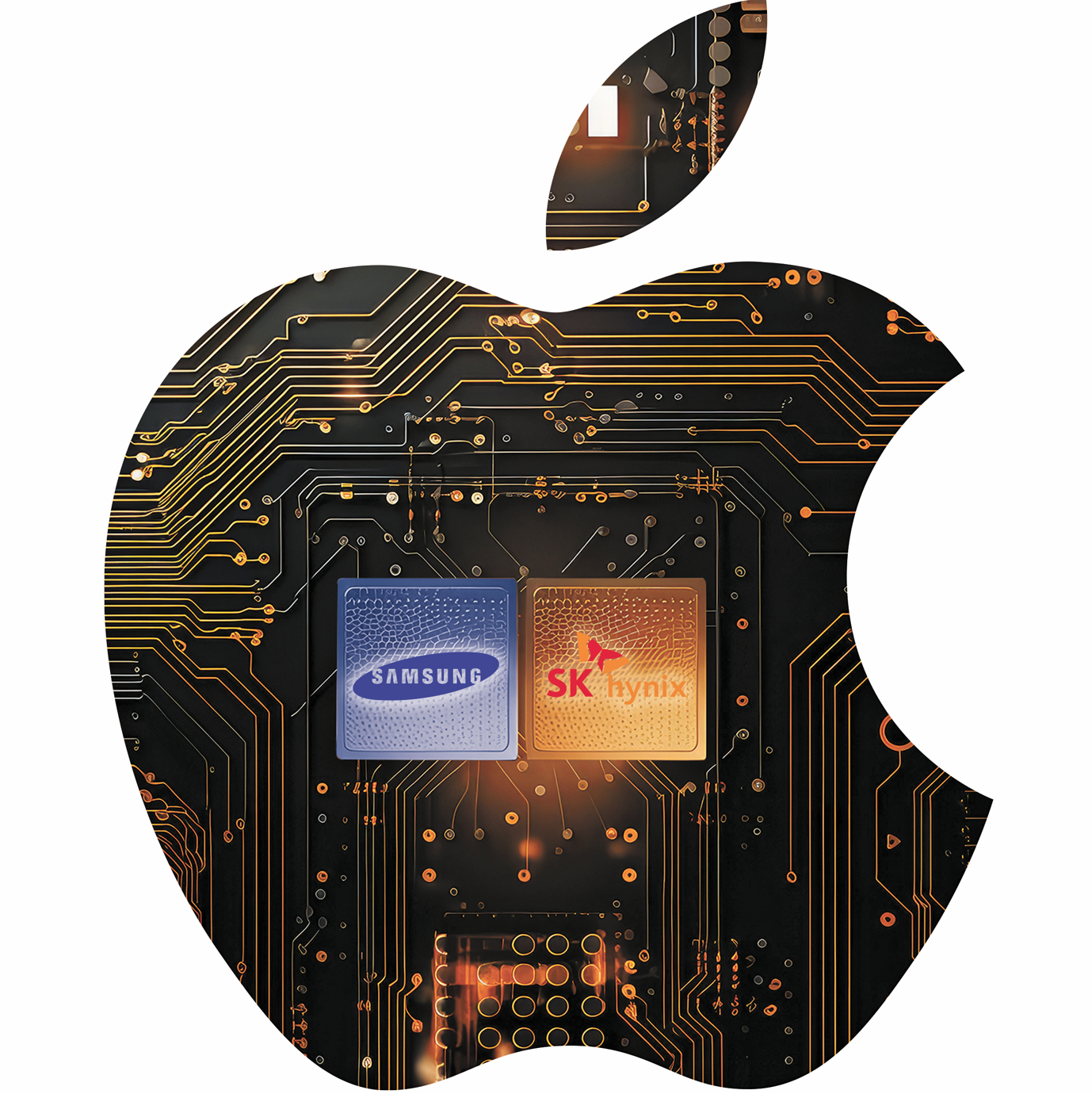
Once-dominant over chip suppliers, Apple sidelined by Nvidia, Google episode artwork

EPISODE · May 17, 2026 · 4 MIN

Once-dominant over chip suppliers, Apple sidelined by Nvidia, Google

from Korea JoongAng Daily - Daily News from Korea · host LEE JAE-LIM

This article is by Lee Jae-lim and read by an artificial voice. [NEWS ANALYSIS] From semiconductors and camera modules to displays, Apple has long wielded enormous influence over suppliers thanks to its massive order volumes and the prestige that comes with being part of its supply chain. But when it comes to memory chips, that dominance is slipping. The device manufacturer now finds itself competing for chip supply against other U.S. tech giants since the AI boom upended the industry's established order. Demand is tilting increasingly toward U.S. hyperscalers such as Nvidia and Google, which are aggressively moving to secure high-end memory chips that are already in prolonged short supply. That supply flows primarily from two Korean chipmakers, Samsung Electronics and SK hynix. Apple, alongside its rivals, is now scrambling to secure dynamic random access memory (DRAM) chips, the prices of which continue to surge as memory suppliers shift focus toward high-performance chips known as high bandwidth memory (HBM), driven by massive orders from Nvidia. The pivot toward profitable HBM has, paradoxically, driven up consumer DRAM prices due to a supply shortage. The AI boom has also changed the way Apple secures chip agreements with Korean manufacturers. Where procurement contracts were once largely informal and short-lived, tech giants are now lining up to sign long-term supply deals spanning up to five years with the two Korean chipmakers. "Before the AI era, long-term supply agreements were not binding or as lengthy as the ones that are being contracted now," said a senior executive at the semiconductor industry who requested anonymity. "Back then, big buyers like Apple held the power. Even when contracts spanned a year at most, there were no penalties if they chose not to fulfill their end of the bargain. The agreements were signed on the basis of trust." Samsung and SK hynix have not disclosed which companies they have signed long-term supply agreements with, but Samsung has already secured several, according to its latest earnings calls. Since January, multiple reports have noted that sales executives from Big Techs such as Apple, Amazon, Google and Dell have been stationed at business hotels in Gyeonggi, where Samsung's and SK hynix's chip facilities and headquarters are located. Apple's position is further complicated by the fact that even high-performance consumer DRAM, such as low-power double data rate (LPDDR) chips, is increasingly being channeled to AI servers, leaving device makers competing for a far smaller slice of the supply. "LPDDR products with the highest reliability and the highest capacity are no longer being developed with personal devices in mind," said a source in the semiconductor industry, requesting anonymity. "All three major DRAM manufacturers — whether it's Samsung, SK hynix or Micron — are producing these components in Socamm form factors to be integrated with CPUs in AI servers." Socamm modules consist of repackaged LPDDR chips originally designed for smartphones, allowing CPUs to access low-power memory within AI servers. Kim Dong-won, an analyst at KB Securities, also attributed the memory crunch to U.S. hyperscalers absorbing DRAM supply for their data centers. Second-quarter DRAM and NAND prices are anticipated to exceed earlier projections, with an on-year price increase of 194 percent for DRAM and 244 percent for NAND in 2026, according to KB Securities. "Current second-quarter price appreciation is being driven primarily by server DRAM and enterprise SSDs [solid-state drives], with AI data center operators absorbing 70 percent of total memory shipments," Kim said. This leaves device manufacturers like Apple with little choice but to procure chips at a costly price. Reports indicate that the U.S. company is now securing large volumes without negotiating separate price discounts, a move widely interpreted as an effort to assert greater control over its component procurement pipeline and s...

This article is by Lee Jae-lim and read by an artificial voice. [NEWS ANALYSIS] From semiconductors and camera modules to displays, Apple has long wielded enormous influence over suppliers thanks to its massive order volumes and the prestige that comes with being part of its supply chain. But when it comes to memory chips, that dominance is slipping. The device manufacturer now finds itself competing for chip supply against other U.S. tech giants since the AI boom upended the industry's established order. Demand is tilting increasingly toward U.S. hyperscalers such as Nvidia and Google, which are aggressively moving to secure high-end memory chips that are already in prolonged short supply. That supply flows primarily from two Korean chipmakers, Samsung Electronics and SK hynix. Apple, alongside its rivals, is now scrambling to secure dynamic random access memory (DRAM) chips, the prices of which continue to surge as memory suppliers shift focus toward high-performance chips known as high bandwidth memory (HBM), driven by massive orders from Nvidia. The pivot toward profitable HBM has, paradoxically, driven up consumer DRAM prices due to a supply shortage. The AI boom has also changed the way Apple secures chip agreements with Korean manufacturers. Where procurement contracts were once largely informal and short-lived, tech giants are now lining up to sign long-term supply deals spanning up to five years with the two Korean chipmakers. "Before the AI era, long-term supply agreements were not binding or as lengthy as the ones that are being contracted now," said a senior executive at the semiconductor industry who requested anonymity. "Back then, big buyers like Apple held the power. Even when contracts spanned a year at most, there were no penalties if they chose not to fulfill their end of the bargain. The agreements were signed on the basis of trust." Samsung and SK hynix have not disclosed which companies they have signed long-term supply agreements with, but Samsung has already secured several, according to its latest earnings calls. Since January, multiple reports have noted that sales executives from Big Techs such as Apple, Amazon, Google and Dell have been stationed at business hotels in Gyeonggi, where Samsung's and SK hynix's chip facilities and headquarters are located. Apple's position is further complicated by the fact that even high-performance consumer DRAM, such as low-power double data rate (LPDDR) chips, is increasingly being channeled to AI servers, leaving device makers competing for a far smaller slice of the supply. "LPDDR products with the highest reliability and the highest capacity are no longer being developed with personal devices in mind," said a source in the semiconductor industry, requesting anonymity. "All three major DRAM manufacturers — whether it's Samsung, SK hynix or Micron — are producing these components in Socamm form factors to be integrated with CPUs in AI servers." Socamm modules consist of repackaged LPDDR chips originally designed for smartphones, allowing CPUs to access low-power memory within AI servers. Kim Dong-won, an analyst at KB Securities, also attributed the memory crunch to U.S. hyperscalers absorbing DRAM supply for their data centers. Second-quarter DRAM and NAND prices are anticipated to exceed earlier projections, with an on-year price increase of 194 percent for DRAM and 244 percent for NAND in 2026, according to KB Securities. "Current second-quarter price appreciation is being driven primarily by server DRAM and enterprise SSDs [solid-state drives], with AI data center operators absorbing 70 percent of total memory shipments," Kim said. This leaves device manufacturers like Apple with little choice but to procure chips at a costly price. Reports indicate that the U.S. company is now securing large volumes without negotiating separate price discounts, a move widely interpreted as an effort to assert greater control over its component procurement pipeline and s...

NOW PLAYING

Once-dominant over chip suppliers, Apple sidelined by Nvidia, Google

0:00 4:56

No transcript for this episode yet

We transcribe on demand. Request one and we'll notify you when it's ready — usually under 10 minutes.

No similar episodes found.

No similar podcasts found.

Frequently Asked Questions

How long is this episode of Korea JoongAng Daily - Daily News from Korea?

This episode is 4 minutes long.

When was this Korea JoongAng Daily - Daily News from Korea episode published?

This episode was published on May 17, 2026.

What is this episode about?

This article is by Lee Jae-lim and read by an artificial voice. [NEWS ANALYSIS] From semiconductors and camera modules to displays, Apple has long wielded enormous influence over suppliers thanks to its massive order volumes and the prestige that...

Can I download this Korea JoongAng Daily - Daily News from Korea episode?

Yes, you can download this episode by clicking the download button on the episode player, or subscribe to the podcast in your preferred podcast app for automatic downloads.
URL copied to clipboard!