
EPISODE · Jun 3, 2026 · 4 MIN
Piazza del Nettuno-ingl
from The Squares of Bologna · host ASPPI
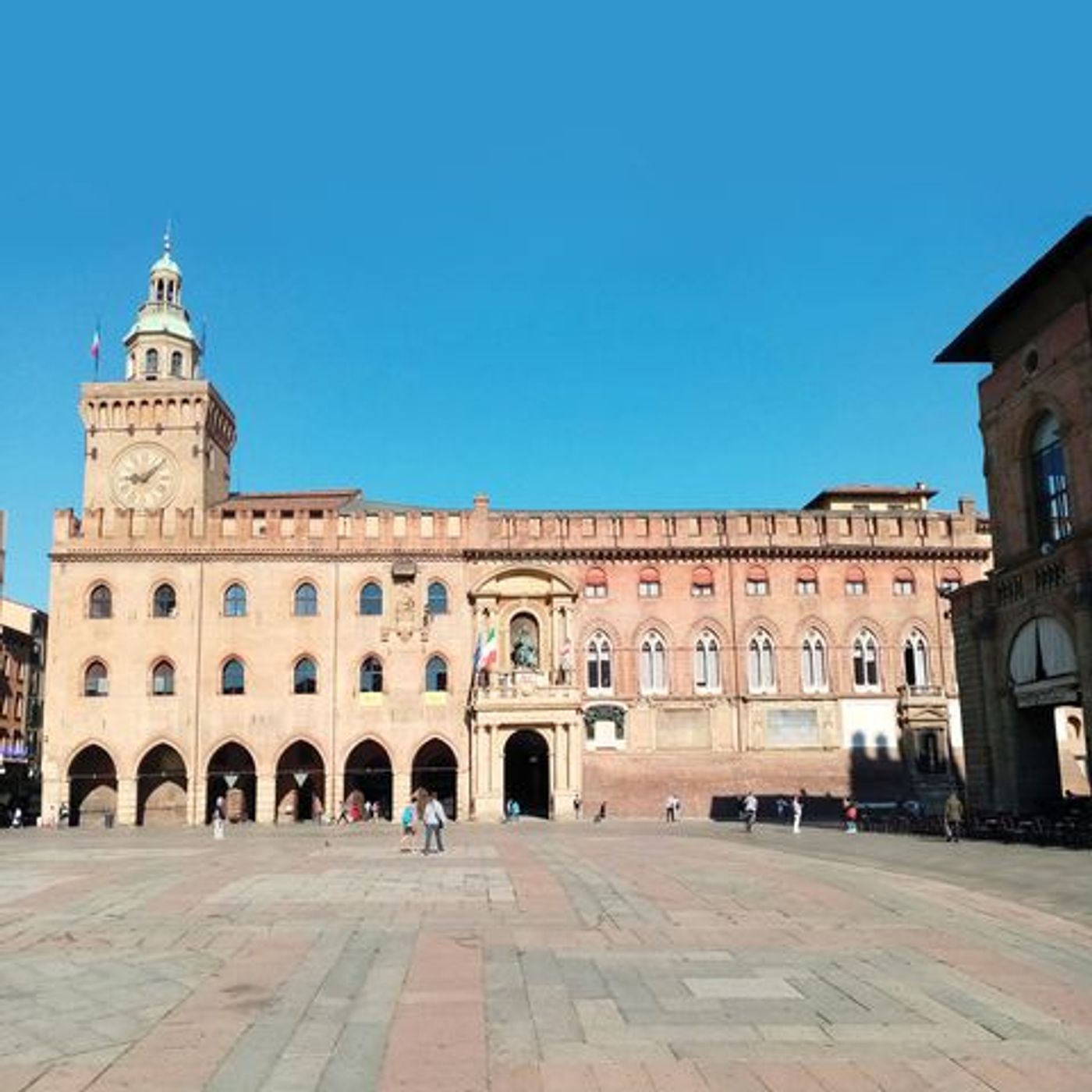
PIAZZA DEL NETTUNO In the vibrant heart of Bologna, just a few steps from Piazza Maggiore, lies Piazza del Nettuno—one of the city’s most significant urban spaces in terms of artistic, political, and symbolic value. The square is named after the monumental Fountain of Neptune, familiarly called “il Gigante” (the Giant) by the people of Bologna. It was created between 1563 and 1566 by the Flemish sculptor Jean de Boulogne, known as Giambologna, based on a design by the architect Tommaso Laureti. From the beginning, this space was conceived as a visible manifestation of papal power within a city that had for centuries maintained a strong communal tradition. The Fountain of Neptune was commissioned by the papal legate Cardinal Pier Donato Cesi to celebrate the Church’s control over Bologna following its final incorporation into the Papal States. As such, it is not only a masterpiece of Mannerist sculpture but also a political object. The sea god, who dominates the composition with an expansive gesture of his hand, symbolizes the organizing power of the pope who, like Neptune over the seas, governs the Italian cities. At Neptune’s feet are four cherubs, representing the Ganges, Nile, Amazon, and Danube rivers—symbolizing the waterways of the continents then known. The sirens and female figures at the base of the fountain, which spray water from their breasts, were considered scandalous at the time! But Giambologna defended them, stating that these sirens represent abundance, fertility, and life flowing with water, alluding to the prosperity that the papal government promised to ensure. Another clever visual trick is found in the statue’s left hand. Giambologna, under direct orders from the pope, had to sculpt Neptune’s genitalia modestly. However, the artist is said to have added a hidden visual device: when viewed from a specific spot (known as “the black stone” or “the stone of shame”), the outstretched thumb of the left hand creates the optical illusion of an erect male organ. This detail, perhaps intentionally ironic, highlights Giambologna’s ingenuity and his subtle critique of ecclesiastical authority, introducing an element of ambiguity and symbolic complexity into the work. According to tradition, stepping on that spot is said to bring good luck—especially to students awaiting exams—who refer to it as the “lucky point.” In 1926, Neptune’s trident was adopted as the symbol by the newly founded Bolognese car manufacturer Maserati for its now-famous logo. The square connects Piazza Maggiore with Via dell’Indipendenza, making it a key junction between medieval Bologna and the post-unification 19th-century city. On the western side of the square stands the Palazzo del Podestà, while on the northern side is the Palazzo di Re Enzo, bearing witness to the city’s ancient civic power. The slightly off-center placement of the fountain was carefully designed so that visitors arriving from Via Ugo Bassi could see it from afar, enhancing its visual impact. Over the centuries, Piazza del Nettuno has served many functions: a venue for public celebrations, speeches, political rallies, and religious ceremonies. During the Fascist period, the Pavaglione portico and the square were used for regime gatherings and proclamations. After World War II, the square became a key space for civic memory. Inside the Sala d’Ercole of the Salaborsa Library (which overlooks the square), a plaque honors the fallen Bolognese partisans. Today, Piazza del Nettuno hosts cultural initiatives, musical events, and public gatherings. One of the square’s most significant features is the Salaborsa Library, inaugurated in 2001 within the Palazzo d’Accursio, symbolizing Bologna’s cultural rebirth in the 21st century. Inside, visible through a glass floor, are the remains of the ancient Roman settlement of Bononia, giving this space a historical depth that connects the modern city to its millennia-old layers. Piazza del Nettuno is much more than a decorative square: it is a living space where art, power, history, and community intersect. It reflects the identity of Bologna—a city that has managed to preserve the traces of its past while embracing openness, participation, and innovation. Through the forms of Mannerist sculpture, the geometries of the square, and the social practices that animate it, Piazza del Nettuno remains a lens through which to read the civic consciousness and collective spirit of the city of Bologna.
Embed this episode
NOW PLAYING
Piazza del Nettuno-ingl
No transcript for this episode yet
Similar Episodes
No similar episodes found.
Similar Podcasts
No similar podcasts found.