
EPISODE · Oct 5, 2024 · 53 MIN
PLG + Sales are better together
from Thrivecast · host Anushka Karmakar
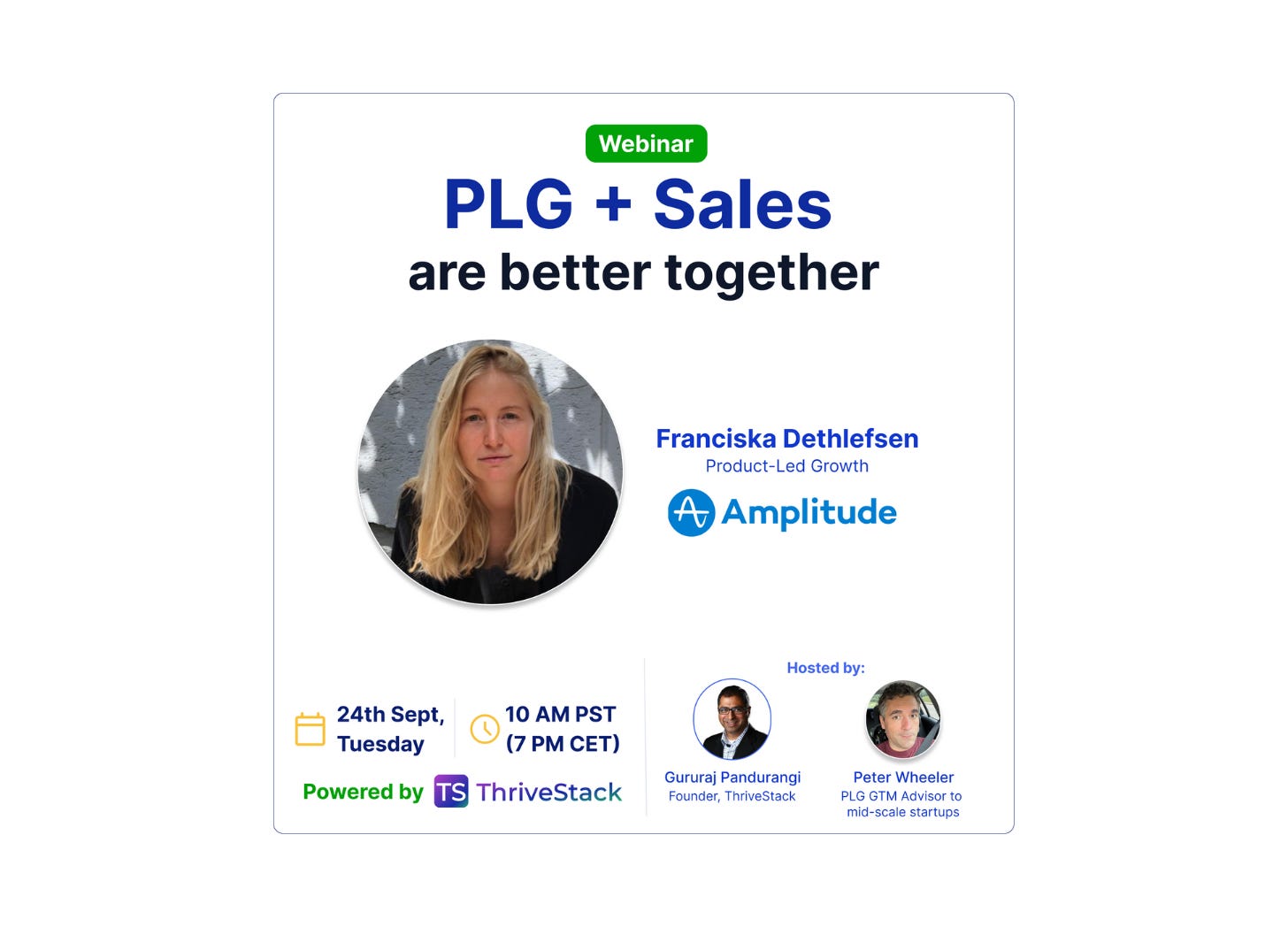
Balancing Product-Led Growth (PLG) with traditional sales efforts can be challenging but rewarding. With insights from Amplitude’s Franciska Dethlefsen, the session explored how self-serve and sales motions can work together without compromise. Hosted by Gururaj Pandurangi and Peter Wheeler, the discussion highlighted Amplitude’s journey to integrate PLG and sales seamlessly, with collaboration and timing as key themes.Understanding Product-Led Sales (PLS) Without the JargonFranciska Dethlefsen broke down Product-Led Sales (PLS) as the practice of driving sales through the product itself. She explained that it’s not just about getting users to sign up for a free trial—PLS aims to use the product experience to create qualified leads.Amplitude’s approach to PLS is simple: use the product as a channel to generate and qualify sales opportunities. For instance, they utilize product usage data to identify which users are ready for deeper engagement, whether that means a demo, a trial extension, or support with setup.As Peter Wheeler noted, the term “product-led sales” might be misleading—it’s more like "product-assisted sales." The product becomes a powerful tool to assist and enable the sales process, providing context to the sales team on when and how to approach a user.When and How to Reach Out to UsersTiming is everything in user outreach. Early interventions—like contacting a user immediately after sign-up—can often miss the mark and make users feel pressured.The key is to qualify leads before intervening. Distinguish between high-potential enterprise users who may need early sales support, and smaller users who benefit from independent exploration. Focusing on product signals—such as usage patterns or specific actions—can guide when to engage effectively.It’s about offering value at the right moment, not hard-selling. By monitoring user behavior, outreach becomes more helpful and timely, aligning with user intent and readiness.Amplitude’s Path to Building a Balanced PLG and Sales MotionAmplitude’s transition to a balanced PLG and sales strategy involved a cultural shift. Moving from a primarily sales-led model to one that incorporates PLG required building collaboration between growth and sales teams. The change wasn’t just structural—it was about ensuring both teams saw the value in working together.Early on, the focus was on establishing trust. Instead of seeing the self-serve model as a threat to larger deals, the sales team recognized that product-led users often ended up being stronger leads. This alignment allowed them to reach out to users at the right time, with a clear understanding of user intent and needs.Additionally, managing concerns around cannibalization—where self-serve might seem to undercut traditional sales efforts—was crucial. By focusing sales efforts on larger accounts and leaving smaller users to a self-serve experience, Amplitude successfully integrated both motions, ensuring no missed opportunities and a more efficient approach to growth.Getting Users to Activate ThemselvesActivation plays a key role in any PLG strategy. At Amplitude, activation means users can set up and explore the product independently, without needing support.Steps to Improve Onboarding:* Expand Low-Code/No-Code Options: Amplitude made it easier for non-technical users to connect data sources like GA4 or HubSpot.* Reduce Friction for Quick Wins: The team focused on helping users reach their "aha" moment faster, simplifying setup to enable early value.* Offer Pre-Built Templates: Providing ready-made templates for dashboards and metrics let users gain quick insights, making the product feel immediately useful.These steps deepened user engagement and ensured a smooth self-activation process.How Growth Teams Scale User ActivationAmplitude’s growth team focused on creating a seamless self-activation journey. Rather than relying on direct sales interactions, they leaned into scalable strategies:The team first experimented with onboarding flows, tweaking them to improve how quickly users could access and experience value. They knew that early wins were crucial, so they tested and refined how users were introduced to core features.To reduce barriers, Amplitude introduced low-code/no-code solutions. Users could connect their data sources—such as GA4 and HubSpot—without technical obstacles, accelerating their onboarding and activation process.Lastly, they built in product guidance, encouraging users to discover deeper features on their own. These prompts nudged users to explore and make use of more advanced functionalities, enhancing both engagement and long-term retention.By focusing on these steps, the growth team scaled activation effectively across a wide user base.Maximizing Value from Free UsersFree users can significantly contribute to product growth, but they come with their own set of considerations. Here’s a look at the pros and cons of engaging and maintaining a free user base:Pros:* Brand Advocacy & Community Building: Free users often become brand advocates, spreading the word organically and bringing new users to the product.* Potential Pipeline for Conversions: While they may start as free users, many eventually convert to paid plans, especially when they see sustained value.* Product Feedback & Data: Free users provide valuable feedback and usage data, helping refine the product experience for everyone.Cons:* Costs of Maintaining Free Plans: Supporting free users requires resources, including infrastructure and support, which can be a significant investment without direct returns.* Lower Conversion Rates: Not all free users convert to paid plans, which can mean many may use resources without contributing to revenue.* Complexity in User Segmentation: It can be challenging to balance offering enough value to free users while differentiating the experience for paying customers.The net effect? The value of community-building and potential conversions often outweighs the downsides, but maintaining a free plan needs to be strategic and sustainable.Aligning Sales and Product for PLG SuccessHere’s a step-by-step guide to achieving alignment:* Build Transparency: Create open channels for sharing user data and insights between product and sales teams. This ensures both sides understand how users interact with the product and where opportunities lie.* Leverage Product Usage Data: Use data to qualify leads and identify high-potential accounts. Sales teams should have access to metrics like activation rates, feature adoption, and user behavior to approach leads at the right time.* Refine Team Roles: Adjust job descriptions to reflect a balance between PLG and sales motions. Roles should be flexible enough to support self-serve journeys while providing personalized touchpoints for qualified leads.* Build a Supportive Tech Stack: Implement tools that allow seamless access to user data and collaboration between teams. The right infrastructure helps both product and sales work toward common goals and track the impact of their efforts.* Create Mutual Wins: Highlight successes where product-led growth translates into sales opportunities. Celebrating these wins builds trust between teams and encourages continued collaboration.Additionally, focus on setting shared targets that encourage both teams to work toward common outcomes. Aligning key performance indicators (KPIs) ensures that sales and product teams share accountability for growth, fostering a unified approach to achieving PLG goals.Final Thought“It’s a much better sales conversation when you talk to an activated user in an activated account that loves the product. Different types of sales conversations—they go quicker, and you don’t need to demo. It’s a whole different sales motion.” – Franciska Dethlefsen This is a public episode. If you would like to discuss this with other subscribers or get access to bonus episodes, visit www.hybridgtm.com
Embed this episode
NOW PLAYING
PLG + Sales are better together
No transcript for this episode yet
Similar Episodes
No similar episodes found.