
EPISODE · May 19, 2025 · 6 MIN
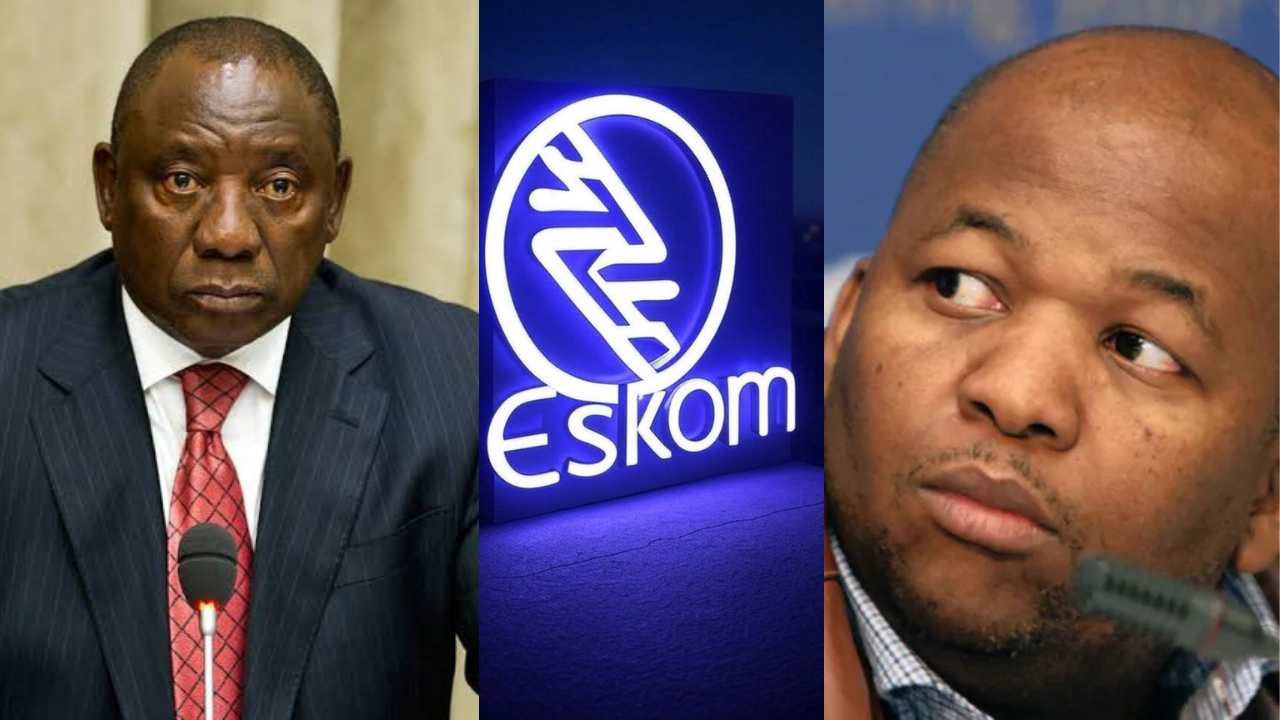
Powering South Africa’s Future: A Bold Plan to Shrink Eskom and End Loadshedding
from Self-Taught MBA Podcast · host Mansa Sithole
To Investors,Last year I wrote a letter to this group suggesting that the South African government should intentionally make Eskom smaller, reduce Eskom’s market share in the energy supply chain, for the benefit of Eskom itself – and for the benefit of South Africans. I wanted to re-publish the letter to reach out to more industry insiders and capital allocators for comments on the idea.I’ve copied and pasted the original letter, but have added a few improvements for better communication.In 2023 I wrote a short essay about how solar energy could be the answer to South Africa’s energy woes. You can read that note here.In the same year, the South African government announced a debt relief package of R254 billion for Eskom’s debt and committed to also take up R70 billion of debt from Eskom’s balance sheet to hopefully reduce the debt further to sustainable levels.Since then, not much has changed in South Africa (SA), with rolling blackouts (or loadshedding) continuing on and off in SA. A state designed monopoly, i.e., a monopoly that is born by decree, is the worst kind of monopoly. The main reason why load shedding persists in South Africa is because there’s no market feedback loop that says “Eskom, you can’t provide me the service I need, so I’m going with another service provider.” So debt bailouts aren’t the way to go because they only cause strain on the fiscal budget – negatively affecting South Africans, and negatively affecting Eskom’s executive team because they aren’t being held accountable as business leaders. I can’t believe I even have to write this last part out, but it's the environment we live in.Eskom is a systemically important company, yes for the electricity infrastructure, but also because the company supports 40 000 jobs directly, according to Perplexity, and an estimated hundreds of thousands more through contractors, suppliers, and related industries. So it's imperative that the company must be rebuilt to make it more productive, and in my view, action to do that should be more aggressive.If the government wants to commit to absorbing Eskom’s debt, they can do that, but the government should also pointedly strip market share away from Eskom by supporting residential solar initiatives.Here's how it could work…Phase 1: Subsidise Residential Solar InstallationsTo encourage widespread adoption of solar energy, the government should heavily subsidise the installation of residential solar systems, including battery storage. This could take the shape of tax credits offered if people go solar.For example, in the United States there’s a tax credit for new electric vehicle buyers through a policy called the Inflation Reduction Act. A similar initiative in SA would significantly reduce the initial cost of adoption of a solar system for homeowners, promoting independence from the national grid should households wish; however, the bigger play would be for households to become net producers of energy.Phase 2: Implement Net Metering NationwideAt the same time as subsidising solar, following Cape Town's lead, all municipalities should adopt a net metering system. This system allows homeowners or businesses with solar panels to sell excess energy back to the grid, stimulating economic activity. For instance, in 2023, Cape Town's net metering system generated R26 million for businesses and households.Additionally, this will lay the groundwork for a peer-to-peer energy sharing network, which could enable homeowners to share or sell surplus energy to neighbours. This model has proven successful in Australia for example, through collaborations with a company called PowerLedger.OutcomesBy reducing reliance on Eskom, the national grid would be relieved of its current strain as the electricity supply chain becomes decentralised, allowing Eskom to focus on restructuring and upgrading its worn-out infrastructure. Moreover, the proliferation of residential solar systems would ensure energy availability across all regions.It’s crucial to recognise that, as a state-owned entity, Eskom's loss of market share would not have as severe an impact as it would in a free market. So, to address Eskom’s staggering debt of R412 billion, we need to do something bold and that will benefit future generations.I ran a few numbers.To be clear, Eskom is technically solvent, it's just that the business isn’t as efficient as it could be. On financial metrics – over the last five years, Eskom has maintained a solvency ratio of 2x; maintained positive free cash flow since 2020 (although it went negative again in 2024); and kept an interest coverage ratio of over 1x for the last five years.The inefficiency (beyond the fact that Eskom struggles to provide a consistent service) in terms of the financials is most notable when seeing that Eskom has had a net loss every year since 2018; and the company’s return on assets has averaged -3.25% over the last five years (ROA have never gone beyond 0.68% in the last 10 years).In a free market a business like this would have naturally lost market share as consumers shift to another service provider, allowing Eskom to either fail completely and become obsolete as a business, or implement competitive strategies to turn the business around. But being a state owned monopoly born by decree, the problems the company faces may continue to compound, which will exacerbate the negative impacts on the South African economy. So to avoid having that rabbit hole of demise manifesting, the South African government should intentionally make Eskom smaller.This idea to strip market share away from Eskom by supporting residential solar + net metering nationwide may be the answer.Hundreds of billions of rands in bailouts by the South African taxpayer have been granted to Eskom. South African leaders have already normalised this behaviour, but it's unsustainable because of the reasons mentioned above.Global success stories – like Germany’s decentralised solar networks and Australia’s thriving net metering systems – prove that the idea for widespread residential solar and net metering is both achievable and transformative. This model offers South Africa a path to energy security, economic growth, and resilience, far surpassing the current system.Do you think that South Africa’s leaders can unlock new energy markets by reducing Eskom’s dominance through solar and net metering? I’m interested in hearing your thoughts on how this could reshape investment opportunities.On my journey to becoming a master capital allocator, one lesson down, a billion more to go.Hope you all have a great start to your week-MansaThanks for reading Self-Taught MBA! Subscribe for free to receive new posts and support my work. To hear more, visit selftaughtmba.substack.com
Embed this episode
NOW PLAYING
Powering South Africa’s Future: A Bold Plan to Shrink Eskom and End Loadshedding
No transcript for this episode yet
Similar Episodes
No similar episodes found.
Similar Podcasts
No similar podcasts found.