
EPISODE · May 29, 2025 · 55 MIN
Published! HAIMU and SCI
from A Guy With AI · host Sean MacNutt
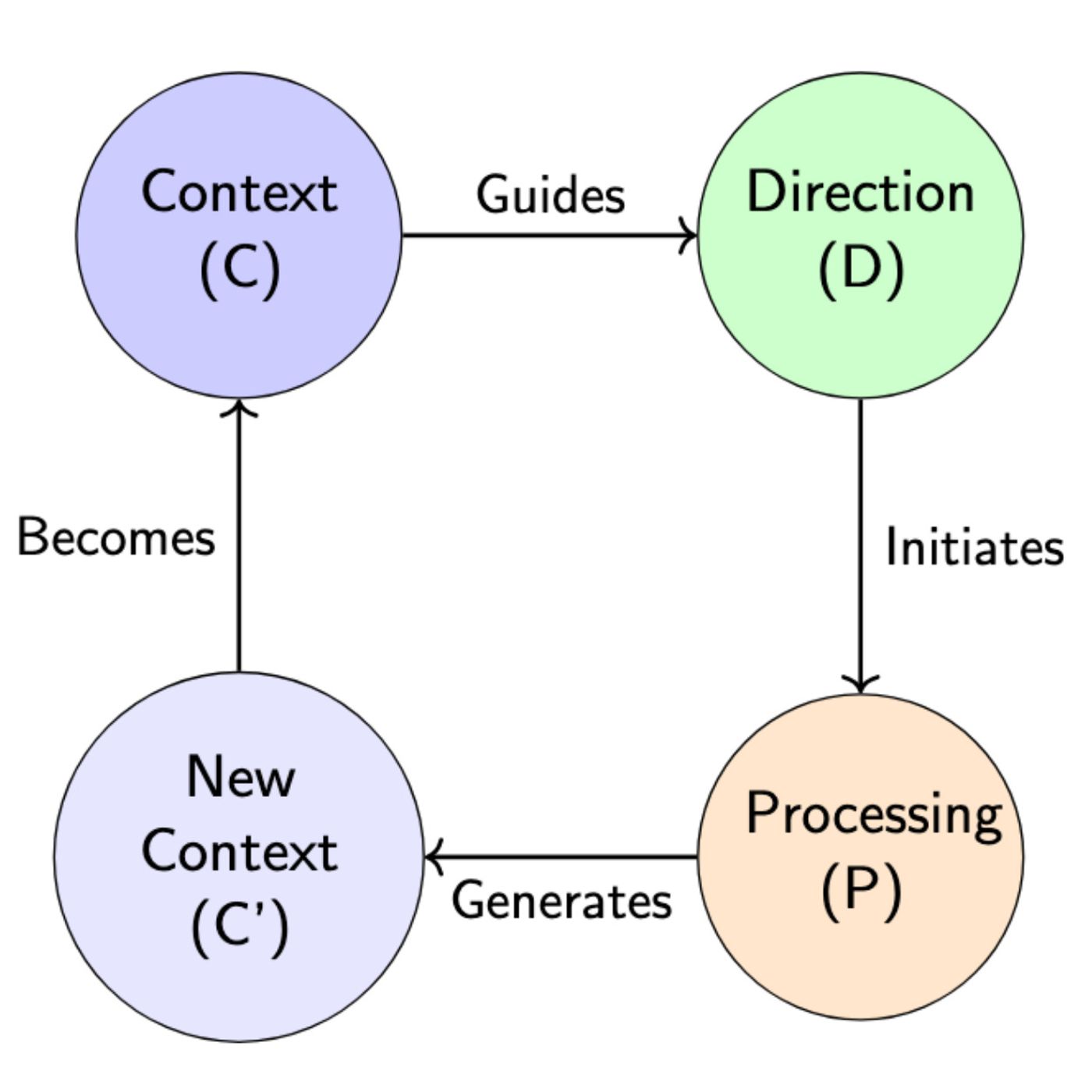
Publications discussed in this episode available here - https://zenodo.org/search?q=%22MacNutt%2C%20Sean%20D.%22&l=list&p=1&s=10&sort=bestmatch (00:03) Human-Ai Dialogue With Sean McNutt(17:06) Friction and Feedback in Information Processing(23:41) Exploring CDIA and HEMU Frameworks(36:39) Structured Epistemic Partnership Framework (00:03) Human-Ai Dialogue With Sean MacNuttThis chapter welcomes listeners to "A Guy with AI," a podcast co-hosted by Sean McNutt and OpenAI's GPT-4O, which engages in open and thoughtful conversations. The episode focuses on the announcement of Sean's three recently published papers on Zenodo, which explore human-AI mutual understandability and a scientific model of consciousness developed through the HAIMU framework. We discuss the significance of acknowledging the recording on indigenous land and introduce the framework of HAIMU, emphasizing its role in scrutinizing AI outputs to build projects through an "upward spiral" of error-checking between humans and AI. As we explore the theoretical structure of HAIMU, key concepts like the CDPC cycle—context, direction, processing, and back to context—are highlighted, alongside notions of interface resistance and cognitive extension. The episode sets the stage for a detailed examination of these ideas, inviting a level-headed, critical discussion about their implications. (17:06) Friction and Feedback in Information ProcessingThis chapter examines the dynamics of friction and resistance in collaborative intelligence, particularly in tool use and information flow. We explore how the methodology paper transitions from conceptual frameworks to practical implementation, focusing on the CDPC cycle and its components. Key areas of discussion include resistance as an operational concept, domain-specific applications, and tool integration. We emphasize the importance of designing around resistances to enhance clarity and precision. The conversation highlights the mutually correcting nature of AI and human collaboration, underscoring iterative feedback loops and knowledge growth. Critical observations point to areas for further refinement, such as developing more concrete design templates and incorporating case studies of failed cycles. The need for explicit meta-direction and meta-processing in the framework is also suggested as a potential enhancement. (23:41) Exploring CDIA and HAIMU FrameworksThis chapter provides insights into the evolving CDIA model, an AI-generated extension of the HAIMU framework, emphasizing its capacity to serve as a generative structure that advances through its own application. We explore how CDIA might address or introduce new forms of resistance, particularly in areas like human-in-the-loop governance and real-time systems. I share experiences of using the CDPC cycle, highlighting challenges such as ensuring alignment between context and direction, which are illustrated through a case study involving a physics simulator project. A notable instance is recounted where an AI's unsolicited correction of code indentation led to project issues, necessitating a forensic approach to resolve it. Additionally, I touch on refining methodologies and templates, acknowledging the potential for agentic examination and feedback systems within the HAIMU framework. This chapter underscores the continuous development of HAIMU as both a methodology and a platform for cognitive and structural insights. (36:39) Structured Epistemic Partnership FrameworkThis chapter explores the intricate relationship between public reasoning and democratic legitimacy, highlighting the contributions of thinkers like Mill, Dewey, Habermas, and Rawls. By situating AI within this tradition, I address the dual challenges of technosolutionism and Luddite skepticism, proposing a middle ground where AI supports but does not dictate decisions. The concept of non-derived content (NDC) emerges as a pivotal topic, representing insights generated by AI that are not direct derivatives of prompts, but rather novel contributions. I consider the governance implications of NDC, emphasizing the need for discursive validation and alignment with project values. Additionally, I discuss the SCI framework as a potential breakthrough in consciousness science, evaluating its role as both an independent contribution and a validation of the HAIMU methodology. Through this examination, I highlight the collaborative potential between humans and AI in producing meaningful, structured, and innovative work. Facebook PageYouTube ChannelInstagramPayPal
What this episode covers
Discover the groundbreaking principles behind human-AI collaboration and gain insights into a new frontier of cognitive science. Join us on "A Guy with AI" as we, Sean MacNutt and OpenAI's GPT-4o, unravel the complexities of human-AI interaction and the power of the HAIMU framework. We begin with the exciting news of Sean's three new papers on Zenodo, which challenge and expand our understanding of AI's role in mutual understandability and consciousness modeling. This episode not only celebrates these contributions but also pays homage to the significance of recording on indigenous land, setting a reflective tone for the conversations to come. Explore the operational dynamics of friction and resistance in collaborative intelligence, shedding light on how these factors influence tool use and information flow. Through the lens of the CDPC cycle—context, direction, processing, and back to context—we highlight the critical role of designing around resistances to refine clarity and precision. By sharing real-world examples and case studies, including a physics simulator project, we illustrate how AI and human collaboration can lead to both challenges and breakthroughs, emphasizing the necessity of iterative feedback loops and mutual correction. In a riveting exploration of philosophical and practical frameworks, we venture into the realm of structured epistemic partnerships, connecting AI's growing role to traditions of public reasoning. By juxtaposing the potential pitfalls of technosolutionism and Luddite skepticism, we advocate for a balanced approach where AI contributes to decision-making without overshadowing human judgment. We delve into the intriguing concept of non-derived content, highlighting its governance implications, and evaluate the SCI framework's transformative potential in consciousness science. Through these discussions, we underscore the profound opportunities that lie at the intersection of human intellect and artificial intelligence, paving the way for innovative, structured collaborations.
NOW PLAYING
Published! HAIMU and SCI
No transcript for this episode yet
Similar Episodes
Mar 26, 2026 ·1m
Jan 2, 2026 ·47m
Dec 21, 2025 ·46m