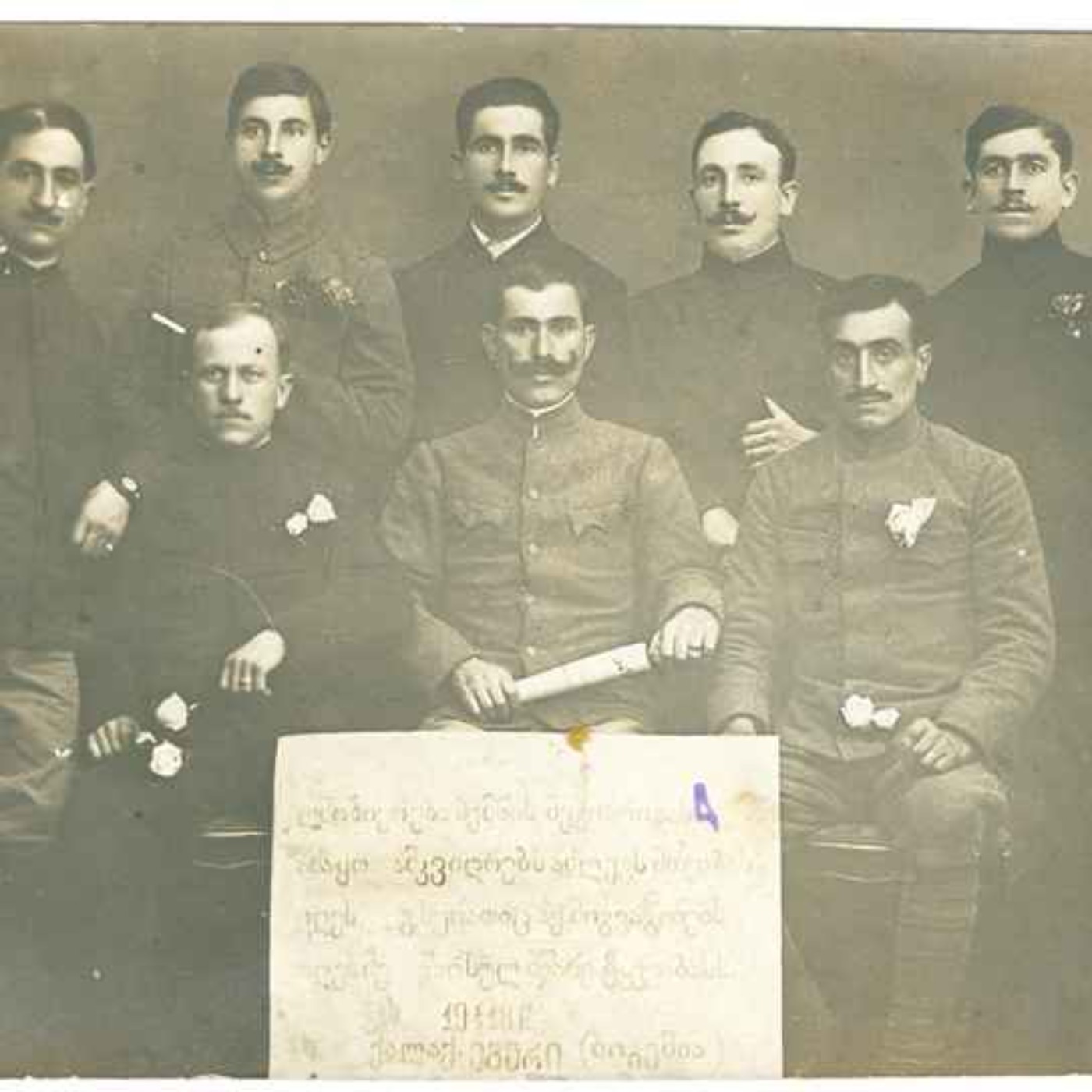
Recording Georgians in WWI POW Camps episode artwork

EPISODE · Feb 10, 2025 · 1H 4M

Recording Georgians in WWI POW Camps

from The Eurasian Knot

In 1916, the German anthropologist Rudolf Pöch and musicologist Robert Lach set out to the Eger prisoner of war camp with a unique research agenda: to record the language and folk songs of Georgian prisoners from the Russian Empire. The recording equipment was clunky and its recordings scratchy and faint. Nevertheless, Pöch and Lach were doing some innovative recordings, not just in terms of their ethnographic research, but using multi-channel recording to capture Georgian polyphonic singing. What were these recordings for? How did they fit into theories of race science of the time? And just who was Lavrosi Mamaldze, the Georgian singer these recordings documented? The Eurasian Knot wanted to learn more and sat down with Brian Fairley to talk about his deep dive into early twentieth century audio recording in WWI POW camps.Guest:Brian Fairley is the UCIS Postdoctoral Fellow at the University of Pittsburgh. He studies song, sound, and media across historical and ethnographic settings. His manuscript, “Separating Sounds: A Media History of Georgian Polyphony,” excavates a series of experimental recordings of Georgian music from 1916 to today, showing how prominent scholars and scientists repeatedly tried to capture this elusive musical tradition on record.Send us your sounds! PatreonKnotty News Hosted on Acast. See acast.com/privacy for more information.

In 1916, the German anthropologist Rudolf Pöch and musicologist Robert Lach set out to the Eger prisoner of war camp with a unique research agenda: to record the language and folk songs of Georgian prisoners from the Russian Empire. The recording equipment was clunky and its recordings scratchy and faint. Nevertheless, Pöch and Lach were doing some innovative recordings, not just in terms of their ethnographic research, but using multi-channel recording to capture Georgian polyphonic singing. What were these recordings for? How did they fit into theories of race science of the time? And just who was Lavrosi Mamaldze, the Georgian singer these recordings documented? The Eurasian Knot wanted to learn more and sat down with Brian Fairley to talk about his deep dive into early twentieth century audio recording in WWI POW camps.Guest:Brian Fairley is the UCIS Postdoctoral Fellow at the University of Pittsburgh. He studies song, sound, and media across historical and ethnographic settings. His manuscript, “Separating Sounds: A Media History of Georgian Polyphony,” excavates a series of experimental recordings of Georgian music from 1916 to today, showing how prominent scholars and scientists repeatedly tried to capture this elusive musical tradition on record.Send us your sounds! PatreonKnotty News Hosted on Acast. See acast.com/privacy for more information.

NOW PLAYING

Recording Georgians in WWI POW Camps

0:00 1:04:01

No transcript for this episode yet

We transcribe on demand. Request one and we'll notify you when it's ready — usually under 10 minutes.

Frequently Asked Questions

How long is this episode of The Eurasian Knot?

This episode is 1 hour and 4 minutes long.

When was this The Eurasian Knot episode published?

This episode was published on February 10, 2025.

What is this episode about?

In 1916, the German anthropologist Rudolf Pöch and musicologist Robert Lach set out to the Eger prisoner of war camp with a unique research agenda: to record the language and folk songs of Georgian prisoners from the Russian Empire. The recording...

Can I download this The Eurasian Knot episode?

Yes, you can download this episode by clicking the download button on the episode player, or subscribe to the podcast in your preferred podcast app for automatic downloads.
URL copied to clipboard!