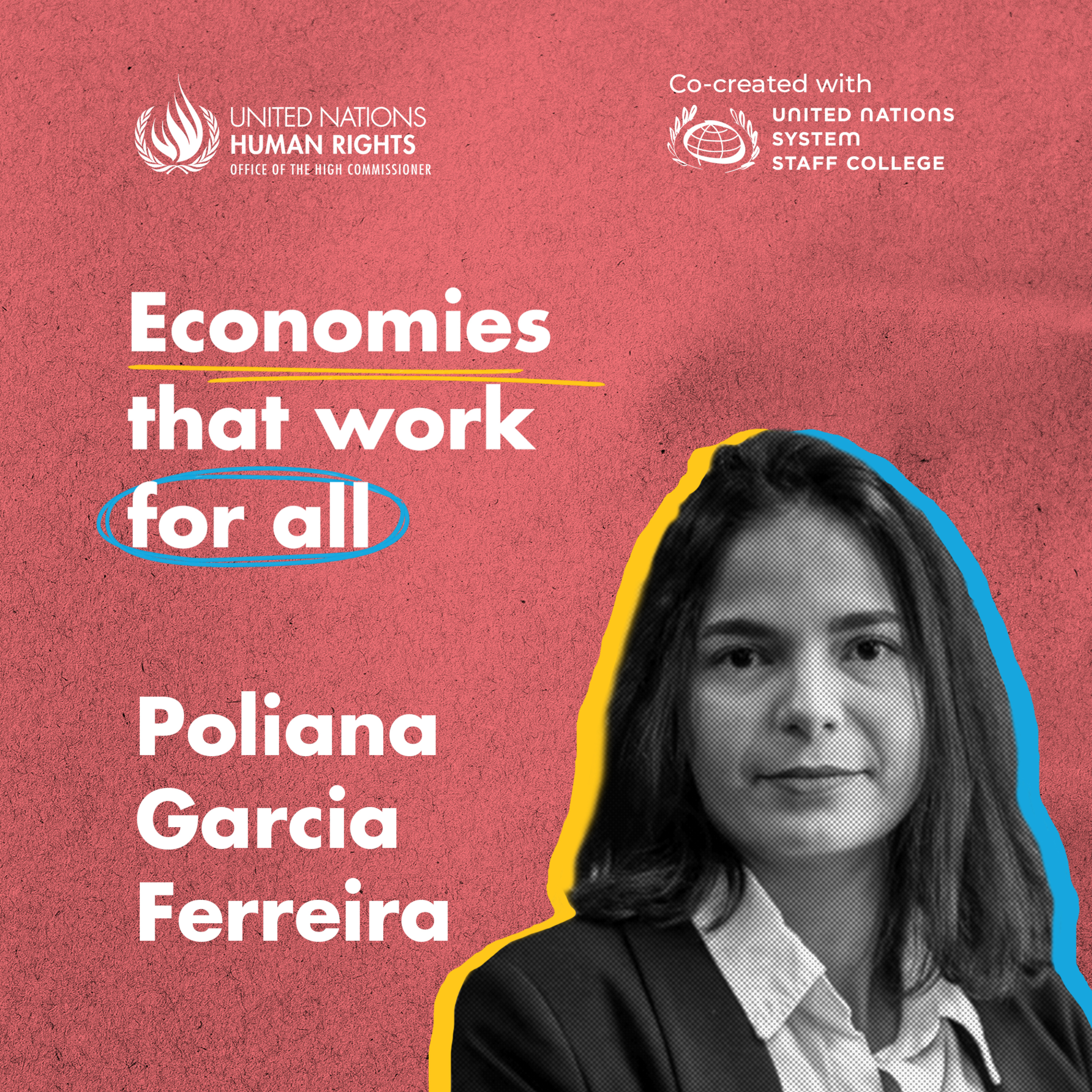
Reducing Inequality: Inside Brazil's approach to a fairer taxation that shapes redistribution episode artwork

EPISODE · Apr 7, 2026 · 25 MIN

Reducing Inequality: Inside Brazil's approach to a fairer taxation that shapes redistribution

from Economies that work - for all · host United Nations System Staff College

In the second episode of Economies that work-for all, we are pleased to welcome Poliana Garcia Ferreira, General Coordinator of International Tax Cooperation in Brazil, for an in-depth conversation on poverty and extreme economic inequality in developing countries. Using Brazil as a case study, the episode explores how governments can leverage fiscal policy, progressive taxation, and targeted social spending to address entrenched poverty and reshape unequal economic structures. Framed within the broader field of social policy and the human rights economy, the discussion highlights how the strategic and intentional use of public finance tools can shift the status quo and expand access to economic opportunity. The conversation further examines why tax policy can no longer be treated as purely a national concern. In today’s globalized economy, multinational corporations and ultra-wealthy individuals pay way less taxes than they should, while the poorer are overburdened. As Ms. Garcia Ferreira emphasizes, transparent dialogue and coordinated cooperation — both domestically and internationally — are essential to building an intelligent and effective global tax architecture that strengthen human rights and support a life with dignity for all. If you’d like to learn more about the Human Rights Economy, the work of OHCHR or UNSSC, check this link. 

In the second episode of Economies that work-for all, we are pleased to welcome Poliana Garcia Ferreira, General Coordinator of International Tax Cooperation in Brazil, for an in-depth conversation on poverty and extreme economic inequality in developing countries. Using Brazil as a case study, the episode explores how governments can leverage fiscal policy, progressive taxation, and targeted social spending to address entrenched poverty and reshape unequal economic structures. Framed within the broader field of social policy and the human rights economy, the discussion highlights how the strategic and intentional use of public finance tools can shift the status quo and expand access to economic opportunity. The conversation further examines why tax policy can no longer be treated as purely a national concern. In today’s globalized economy, multinational corporations and ultra-wealthy individuals pay way less taxes than they should, while the poorer are overburdened. As Ms. Garcia Ferreira emphasizes, transparent dialogue and coordinated cooperation — both domestically and internationally — are essential to building an intelligent and effective global tax architecture that strengthen human rights and support a life with dignity for all. If you’d like to learn more about the Human Rights Economy, the work of OHCHR or UNSSC, check this link.

NOW PLAYING

Reducing Inequality: Inside Brazil's approach to a fairer taxation that shapes redistribution

0:00 25:07

No transcript for this episode yet

We transcribe on demand. Request one and we'll notify you when it's ready — usually under 10 minutes.

French Your Way Jessica: Native French teacher founder of French Your Way Boost your French listening skills and test your comprehension with this one of a kind series of podcasts. Get the chance to listen to a real conversation between native speakers talking at normal speed AND customise your learning experience through carefully designed sets of questions (2 levels of difficulty) available for download at www.frenchvoicespodcast.com. All interviews also come with the transcript. French teacher Jessica interviews native speakers of French from around the world who share a bit of their life and passion. Where else would you meet in one same place a French yoga teacher based in Melbourne, a soap manufacturer from Provence, or a couple cycling around the world? That Hoarder: Overcome Compulsive Hoarding That Hoarder Hoarding disorder is stigmatised and people who hoard feel vast amounts of shame. This podcast began life as an audio diary, an anonymous outlet for somebody with this weird condition. That Hoarder speaks about her experiences living with compulsive hoarding, she interviews therapists, academics, researchers, children of hoarders, professional organisers and influencers, and she shares insight and tips for others with the problem. Listened to by people who hoard as well as those who love them and those who work with them, Overcome Compulsive Hoarding with That Hoarder aims to shatter the stigma, share the truth and speak openly and honestly to improve lives. The Small Business Startup School – Business Notes | Financial Literacy | Retail Psychology – For Professionals & Entrepreneurs The Small Business Startup School Inc. Starting or buying a small business? While personal circumstances may vary, business patterns remain timeless. On The Small Business Startup School, we explore strategies, insights, and practical solutions to help entrepreneurs confidently navigate their journey.Hosted by Ola Williams—a retail entrepreneur, fintech founder, and financial coach with over two decades of experience—this podcast marries financial awareness and retail psychology with optimism to deliver actionable takeaways.Join us to learn, grow, and connect as we uncover the keys to business success.Let’s continue to learn together and be encouraged to keep on connecting! HOMELAND HOMELAND The Church is a body not a building. It's the bride of Jesus Christ! Jesus is coming back for a mature bride. That means it's time for the church of Jesus Christ to move from milk to meat. This is the hour of maturity!HOMELAND is an announcement that the church is being set free. Only the church has the ability to transform the world. The kingdom's of this world will become the kingdoms of our Lord and Savior!All of creation has been waiting for this moment! Sons and daughters of God are rising up and taking their seat!

Frequently Asked Questions

How long is this episode of Economies that work - for all?

This episode is 25 minutes long.

When was this Economies that work - for all episode published?

This episode was published on April 7, 2026.

What is this episode about?

In the second episode of Economies that work-for all, we are pleased to welcome Poliana Garcia Ferreira, General Coordinator of International Tax Cooperation in Brazil, for an in-depth conversation on poverty and extreme economic inequality in...

Can I download this Economies that work - for all episode?

Yes, you can download this episode by clicking the download button on the episode player, or subscribe to the podcast in your preferred podcast app for automatic downloads.
URL copied to clipboard!