
EPISODE · Jun 2, 2026 · 15 MIN
Restlessness Is a Red Flag: Catching Sneaky Subdural Hematomas Early
from Healthy Skin Life · host Brooke Wallace
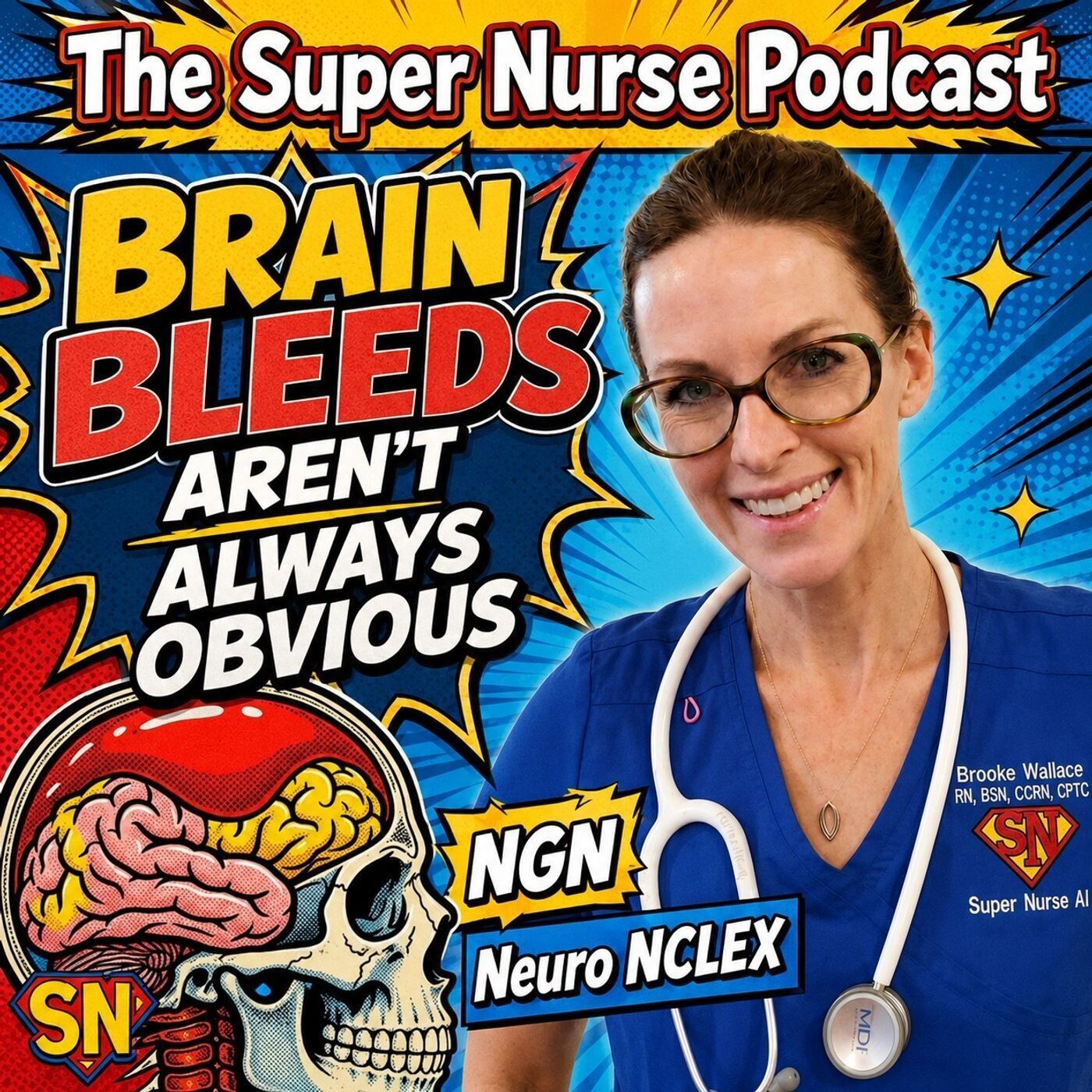
👉 Watch the video on YouTube @SuperNurseAI This episode focuses on catching sneaky subdural hematomas early, before the patient reaches obvious late-stage neurological decline. The discussion starts with the “bone box” concept: the brain is enclosed inside a rigid skull, which means swelling or bleeding has very little room to expand. Using the Monro-Kellie doctrine, we review how the skull holds brain tissue, blood, and cerebrospinal fluid in a delicate balance. When a bleed takes up more space, the body may temporarily compensate by shifting cerebrospinal fluid or compressing blood vessels, but once those compensatory mechanisms run out, intracranial pressure can rise quickly. The episode compares epidural and subdural hematomas in practical bedside terms. Epidural hematomas are typically arterial bleeds, which means they are high-pressure, fast, and dramatic. Subdural hematomas are usually venous bleeds, which makes them slower, sneakier, and easier to miss because the patient may appear stable for hours or even days. A major focus is early neurological deterioration. The first signs may not look like classic “neuro” symptoms. Instead, the patient may become suddenly restless, irritable, confused, agitated, combative, or “not themselves.” In a head trauma or post-neuro surgery patient, that behavior change should trigger a focused neuro assessment, not automatic sedation. The episode also explains why vomiting without nausea is an important red flag. In rising intracranial pressure, vomiting can occur because pressure mechanically stimulates the vomiting center in the medulla. That means a neuro patient who suddenly vomits without warning needs immediate assessment. Cushing’s triad is reviewed as a late and dangerous sign of increased intracranial pressure and possible brainstem compression. The classic pattern includes systolic hypertension with widening pulse pressure, bradycardia, and irregular respirations. The episode also covers other late signs such as fixed and dilated pupils, decorticate posturing, and decerebrate posturing. Key nursing interventions include keeping the head of bed elevated at least 30 degrees, maintaining the neck in a midline position, avoiding unnecessary suctioning, preventing straining, and reducing anything that could increase pressure inside the skull. If suctioning is required, the nurse should hyperoxygenate first, suction quickly, and avoid prolonged stimulation. Mannitol is explained as an osmotic diuretic that pulls fluid out of swollen brain tissue and into the bloodstream. The major nursing concern is that this sudden fluid shift can increase circulating volume and place stress on the heart and lungs, so nurses must monitor for crackles and signs of pulmonary edema. The episode also highlights an important neuro priority: even if a patient becomes hypotensive, Trendelenburg is not appropriate for a patient with increased intracranial pressure. Blood pressure should be supported with fluids or vasopressors while keeping the head elevated to protect the brain. The main takeaway is simple: restlessness is a red flag in neuro nursing. If a neuro patient suddenly becomes restless, confused, combative, or different from baseline, wake them up, assess them, check their pupils, evaluate level of consciousness, and escalate concerns early. Catching subtle neuro changes is how nurses help prevent brain herniation and protect what is inside the “bone box.” Timestamps 00:00 – Why neuro ICU feels terrifying The episode opens with the reality of walking into a neuro ICU room and realizing how quickly a brain injury patient can decline. 00:45 – The “bone box” concept The skull is explained as a rigid container with very little room for swelling, bleeding, or pressure changes. 01:35 – Monro-Kellie doctrine made simple Brain tissue, blood, and cerebrospinal fluid must stay balanced inside the skull. When one increases, something else has to shift or get compressed. 02:30 – Epidural vs. subdural hematomas A clear breakdown of fast arterial epidural bleeds versus slower venous subdural bleeds. 03:30 – Why subdural hematomas are so sneaky Subdural bleeds can hide for hours or even days because the brain compensates until it suddenly runs out of room. 04:25 – Restlessness as an early red flag Sudden agitation, irritability, confusion, or personality change can be an early sign of rising intracranial pressure. 05:35 – Why you should not just sedate the patient Behavior changes in a neuro patient should trigger a focused neuro assessment, not automatic sedation or dismissal as “just a bad mood.” 06:25 – Vomiting without nausea Sudden vomiting with no warning can happen when rising pressure mechanically stimulates the vomiting center in the brainstem. 07:30 – What happens when pressure keeps rising If early signs are missed, pressure can force the brain downward toward the foramen magnum and cause herniation. 08:10 – Cushing’s triad explained Systolic hypertension with widening pulse pressure, bradycardia, and irregular respirations are late signs of brainstem compression. 09:35 – Late signs: pupils and posturing Fixed, dilated pupils, decorticate posturing, and decerebrate posturing signal serious neurological deterioration. 10:30 – Positioning to protect the brain Keep the head of bed elevated at least 30 degrees and the neck midline to promote venous drainage and reduce pressure. 11:30 – Avoiding pressure spikes The episode reviews avoiding straining, Valsalva, excessive coughing, and unnecessary suctioning in patients at risk for increased ICP. 12:15 – Suctioning precautions If suctioning is necessary, hyperoxygenate first, suction quickly, and keep the pass short to avoid increasing ICP. 12:55 – Mannitol and nursing monitoring Mannitol pulls fluid out of swollen brain tissue, but nurses must monitor lung sounds for crackles and signs of pulmonary edema. 13:55 – Why Trendelenburg is dangerous in ICP Even with hypotension, neuro patients with increased ICP should not be placed in Trendelenburg because it can worsen pressure in the skull. 14:35 – Final nursing takeaway If a neuro patient suddenly becomes restless, confused, combative, or “not themselves,” wake them up, assess them, and escalate early. 15:05 – Closing A reminder that nurses are the bedside line of defense for catching subtle neuro changes before brain herniation occurs. Want to reach out? Send an email to [email protected] or visit SuperNurse.ai The content presented in The Super Nurse Podcast is for educational purposes only and should not be considered medical advice. The host and creators are not responsible for any clinical decisions made based on this content. Always adhere to your institution’s policies and consult appropriate healthcare professionals when making patient care decisions. The content presented in The Super Nurse Podcast is for educational purposes only and should not be considered medical advice. The host and creators are not responsible for any clinical decisions made based on this content. Always adhere to your institution’s policies and consult appropriate healthcare professionals when making patient care decisions.
Embed this episode
What this episode covers
👉 Watch the video on YouTube @SuperNurseAI This episode focuses on catching sneaky subdural hematomas early, before the patient reaches obvious late-stage neurological decline. The discussion starts with the “bone box” concept: the brain is enclosed in...
NOW PLAYING
Restlessness Is a Red Flag: Catching Sneaky Subdural Hematomas Early
No transcript for this episode yet
Similar Episodes
No similar episodes found.
Similar Podcasts
No similar podcasts found.