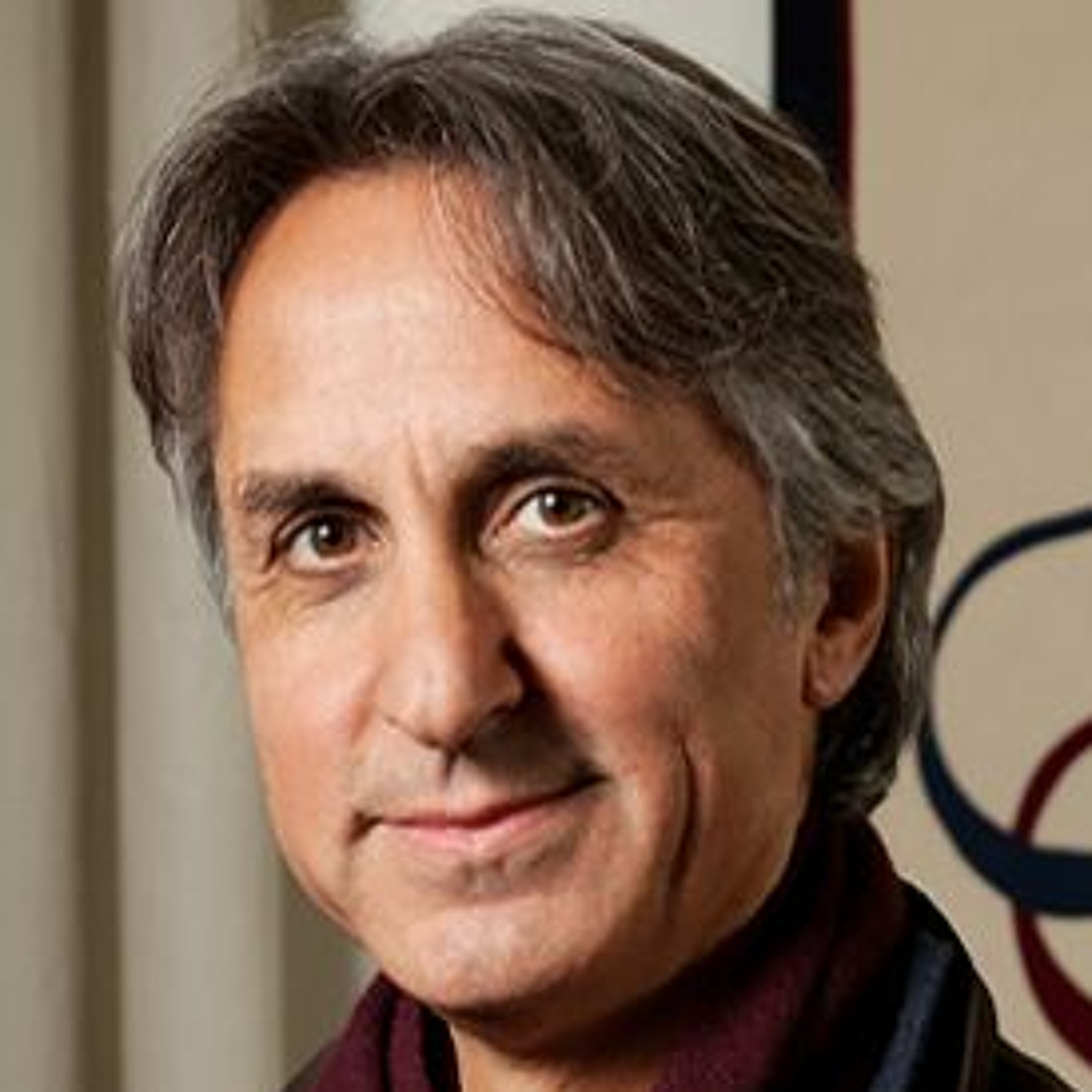
Revolution Without Revolutionaries: A Conversation with Asef Bayat (S. 6, Ep. 18) episode artwork

EPISODE · Mar 26, 2018 · 21 MIN

Revolution Without Revolutionaries: A Conversation with Asef Bayat (S. 6, Ep. 18)

from POMEPS Middle East Political Science Podcast · host Marc Lynch

On this week's podcast, Asef Bayat talks about his new book, Revolution Without Revolutionaries: Making Sense of the Arab Spring, (Stanford University Press, 2017) a comparative analysis on the 2011 revolutions and those of the 1970s. "These [2011] revolutions happened at a time when the very idea of revolution, the very concept of revolution had dissipated," says Bayat. "The activists were not thinking in terms of revolution in the way that the activists in the 1970s or earlier during the Cold War had been thinking about revolution. They were reading about revolutions, about the experiences, having groups, and so forth." Asef Bayat is the Catherine and Bruce Bastian Professor of Global and Transnational Studies and Professor of Sociology at the University of Illinois, Urbana-Champaign. He is the author of Life as Politics: How Ordinary People Change the Middle East (Stanford, 2009, 2013) and Making Islam Democratic: Social Movements and the Post-Islamist Turn (Stanford, 2007). "In the case of say Iran, women who have been forced to wear hijab- some do who voluntarily wear hijab, but many others do not want to wear hijab- pull back their hijabs back, and back, and back.  And they do it not necessarily as a movement collectively but rather they do it in their everyday life, individually while they are on the street or on a bus. And then you do it. She's doing it, he's doing it, and many others are doing it. And you're also noticing each other doing it. There is what is called a passive network among these people. It is a collective action which is somewhat encroaching into the law of this state or norms. By doing so the hope is to create alternative norms in society."

On this week's podcast, Asef Bayat talks about his new book, Revolution Without Revolutionaries: Making Sense of the Arab Spring, (Stanford University Press, 2017) a comparative analysis on the 2011 revolutions and those of the 1970s. "These [2011] revolutions happened at a time when the very idea of revolution, the very concept of revolution had dissipated," says Bayat. "The activists were not thinking in terms of revolution in the way that the activists in the 1970s or earlier during the Cold War had been thinking about revolution. They were reading about revolutions, about the experiences, having groups, and so forth." Asef Bayat is the Catherine and Bruce Bastian Professor of Global and Transnational Studies and Professor of Sociology at the University of Illinois, Urbana-Champaign. He is the author of Life as Politics: How Ordinary People Change the Middle East (Stanford, 2009, 2013) and Making Islam Democratic: Social Movements and the Post-Islamist Turn (Stanford, 2007). "In the case of say Iran, women who have been forced to wear hijab- some do who voluntarily wear hijab, but many others do not want to wear hijab- pull back their hijabs back, and back, and back.  And they do it not necessarily as a movement collectively but rather they do it in their everyday life, individually while they are on the street or on a bus. And then you do it. She's doing it, he's doing it, and many others are doing it. And you're also noticing each other doing it. There is what is called a passive network among these people. It is a collective action which is somewhat encroaching into the law of this state or norms. By doing so the hope is to create alternative norms in society."

NOW PLAYING

Revolution Without Revolutionaries: A Conversation with Asef Bayat (S. 6, Ep. 18)

0:00 21:50

No transcript for this episode yet

We transcribe on demand. Request one and we'll notify you when it's ready — usually under 10 minutes.

MG Show MG Show The MG Show, hosted by Jeffrey Pedersen and Shannon Townsend, is a leading alternative media platform dedicated to uncovering the truth behind today’s most pressing political issues. Launched in 2019, the show has grown exponentially, offering unfiltered insights, comprehensive research, and real-time analysis. With a commitment to independent journalism and factual integrity, the MG Show empowers its audience with knowledge and encourages active participation in the political discourse. That Hoarder: Overcome Compulsive Hoarding That Hoarder Hoarding disorder is stigmatised and people who hoard feel vast amounts of shame. This podcast began life as an audio diary, an anonymous outlet for somebody with this weird condition. That Hoarder speaks about her experiences living with compulsive hoarding, she interviews therapists, academics, researchers, children of hoarders, professional organisers and influencers, and she shares insight and tips for others with the problem. Listened to by people who hoard as well as those who love them and those who work with them, Overcome Compulsive Hoarding with That Hoarder aims to shatter the stigma, share the truth and speak openly and honestly to improve lives. The Small Business Startup School – Business Notes | Financial Literacy | Retail Psychology – For Professionals & Entrepreneurs The Small Business Startup School Inc. Starting or buying a small business? While personal circumstances may vary, business patterns remain timeless. On The Small Business Startup School, we explore strategies, insights, and practical solutions to help entrepreneurs confidently navigate their journey.Hosted by Ola Williams—a retail entrepreneur, fintech founder, and financial coach with over two decades of experience—this podcast marries financial awareness and retail psychology with optimism to deliver actionable takeaways.Join us to learn, grow, and connect as we uncover the keys to business success.Let’s continue to learn together and be encouraged to keep on connecting! DIOSA. Carolina Sanper This podcast is a sacred space created by Carolina Sanper where you connect with your inner wisdom and embody your magnetic feminine power.It is the realization that the mystical realm is where you plant the seeds of your desired reality.It is a portal to your true essence: awareness, presence, and receiving with ease. Welcome home, DIOSA. 🖤

Frequently Asked Questions

How long is this episode of POMEPS Middle East Political Science Podcast?

This episode is 21 minutes long.

When was this POMEPS Middle East Political Science Podcast episode published?

This episode was published on March 26, 2018.

What is this episode about?

On this week's podcast, Asef Bayat talks about his new book, Revolution Without Revolutionaries: Making Sense of the Arab Spring, (Stanford University Press, 2017) a comparative analysis on the 2011 revolutions and those of the 1970s. "These [2011]...

Can I download this POMEPS Middle East Political Science Podcast episode?

Yes, you can download this episode by clicking the download button on the episode player, or subscribe to the podcast in your preferred podcast app for automatic downloads.
URL copied to clipboard!