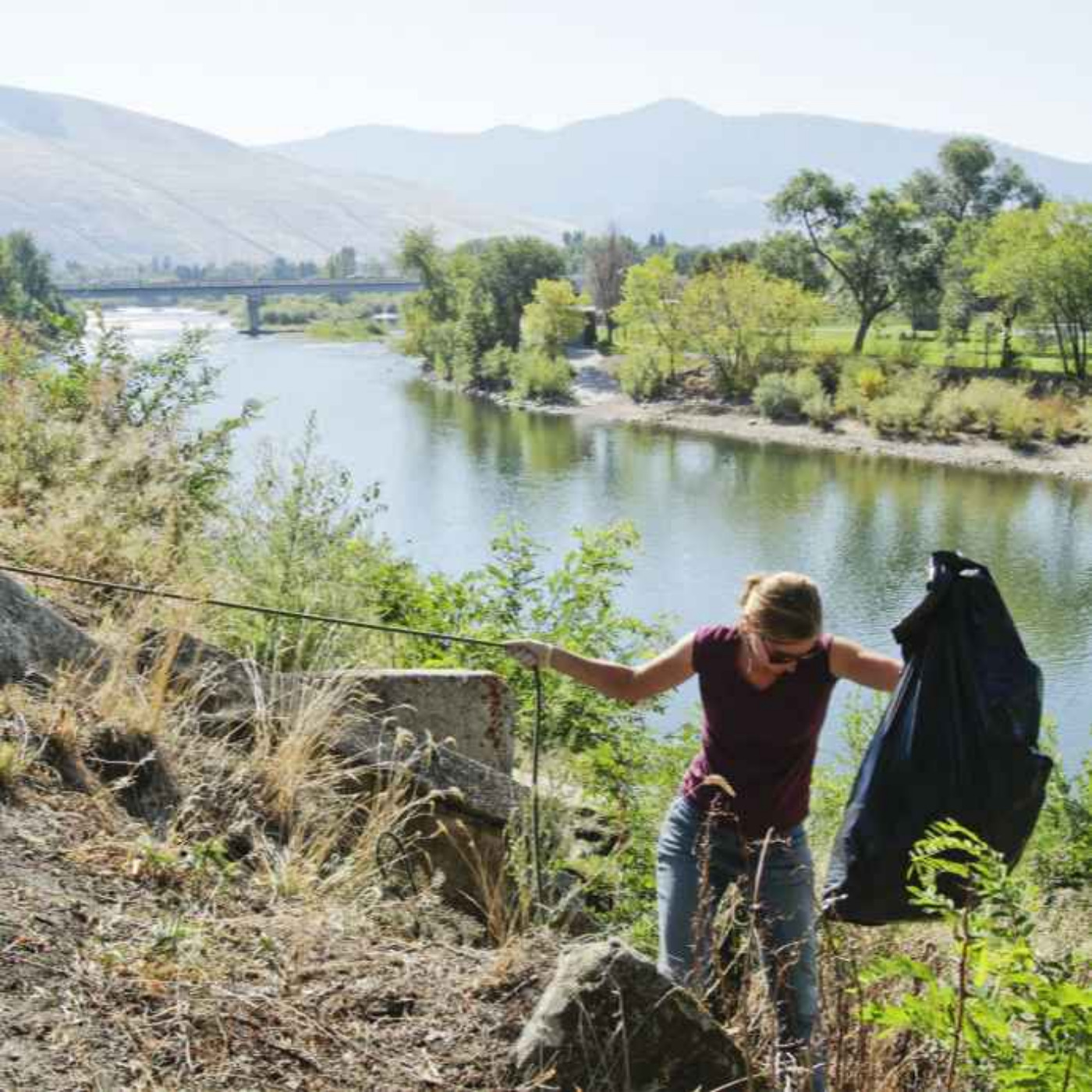
River Conservation & Cleanup featuring the Clark Fork River.
Recorded on the edge of the Clark Fork River. A wonderful way to spend time with family and socially distance outside is to pick up garbage on the river this spring!
An episode of the The Trail Less Traveled podcast, hosted by Mandela Leola van Eeden, titled "River Conservation & Cleanup featuring the Clark Fork River." was published on March 7, 2021 and runs 42 minutes.
March 7, 2021 ·42m · The Trail Less Traveled
Summary
Since 1985, the Clark Fork Coalition has worked to restore and protect the Clark Fork River basin, a 22,000 square mile area draining western Montana and northern Idaho. The Coalition's work is science-based and results oriented, and the organization strives to connect communities to the recovery of the Clark Fork River and its tributaries. Get involved as a volunteer with the Coalition at clarkfork.org.Is superfund cleanup of mining wastes in the Clark Fork making a difference? Yes! At least it is in terms of total amounts of copper and arsenic. And that’s especially good news because both are toxic: copper is extremely bad for fish, and arsenic is poisonous for people.It took decades of hard work by advocates for the river to make cleanup happen. Today we’re seeing tangible benefits from that unwavering commitment to a clean and healthy Clark Fork. What is Superfund?Thousands of contaminated sites exist nationally due to hazardous waste being dumped, left out in the open, or otherwise improperly managed. These sites include manufacturing facilities, processing plants, landfills and mining sites. In the late 1970s, toxic waste dumps received national attention when the public learned about the risks to human health and the environment posed by contaminated sites. In response, Congress established the Comprehensive Environmental Response, Compensation and Liability Act (CERCLA) in 1980. CERCLA is informally called Superfund. It allows EPA to clean up contaminated sites. It also forces the parties responsible for the contamination to either perform cleanups or reimburse the government for EPA-led cleanup work. When there is no viable responsible party, Superfund gives EPA the funds and authority to clean up contaminated sites. Superfund’s goals are to: Protect human health and the environment by cleaning up contaminated sites;Make responsible parties pay for cleanup work;Involve communities in the Superfund process; andReturn Superfund sites to productive use. Hosted on Acast. See acast.com/privacy for more information.
Episode Description
Since 1985, the Clark Fork Coalition has worked to restore and protect the Clark Fork River basin, a 22,000 square mile area draining western Montana and northern Idaho. The Coalition's work is science-based and results oriented, and the organization strives to connect communities to the recovery of the Clark Fork River and its tributaries. Get involved as a volunteer with the Coalition at clarkfork.org.
Is superfund cleanup of mining wastes in the Clark Fork making a difference? Yes! At least it is in terms of total amounts of copper and arsenic. And that’s especially good news because both are toxic: copper is extremely bad for fish, and arsenic is poisonous for people.
It took decades of hard work by advocates for the river to make cleanup happen. Today we’re seeing tangible benefits from that unwavering commitment to a clean and healthy Clark Fork.
What is Superfund?
Thousands of contaminated sites exist nationally due to hazardous waste being dumped, left out in the open, or otherwise improperly managed. These sites include manufacturing facilities, processing plants, landfills and mining sites.
In the late 1970s, toxic waste dumps received national attention when the public learned about the risks to human health and the environment posed by contaminated sites.
In response, Congress established the Comprehensive Environmental Response, Compensation and Liability Act (CERCLA) in 1980.
CERCLA is informally called Superfund. It allows EPA to clean up contaminated sites. It also forces the parties responsible for the contamination to either perform cleanups or reimburse the government for EPA-led cleanup work.
When there is no viable responsible party, Superfund gives EPA the funds and authority to clean up contaminated sites.
Superfund’s goals are to:
- Protect human health and the environment by cleaning up contaminated sites;
- Make responsible parties pay for cleanup work;
- Involve communities in the Superfund process; and
- Return Superfund sites to productive use.
Hosted on Acast. See acast.com/privacy for more information.
Similar Episodes
Aug 23, 2025 ·22m
May 5, 2025 ·7m
Feb 24, 2025 ·16m
Jan 20, 2025 ·8m
Jan 8, 2025 ·8m